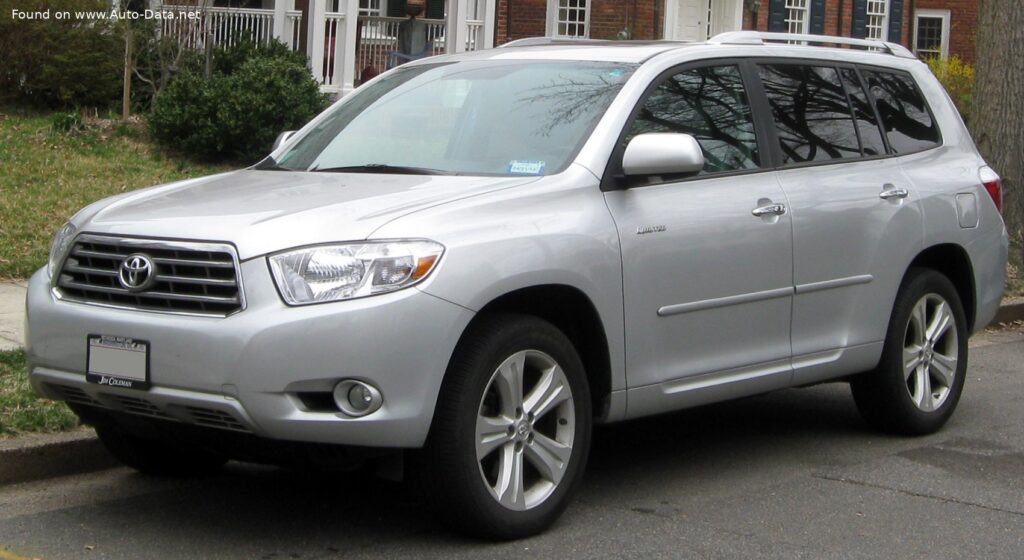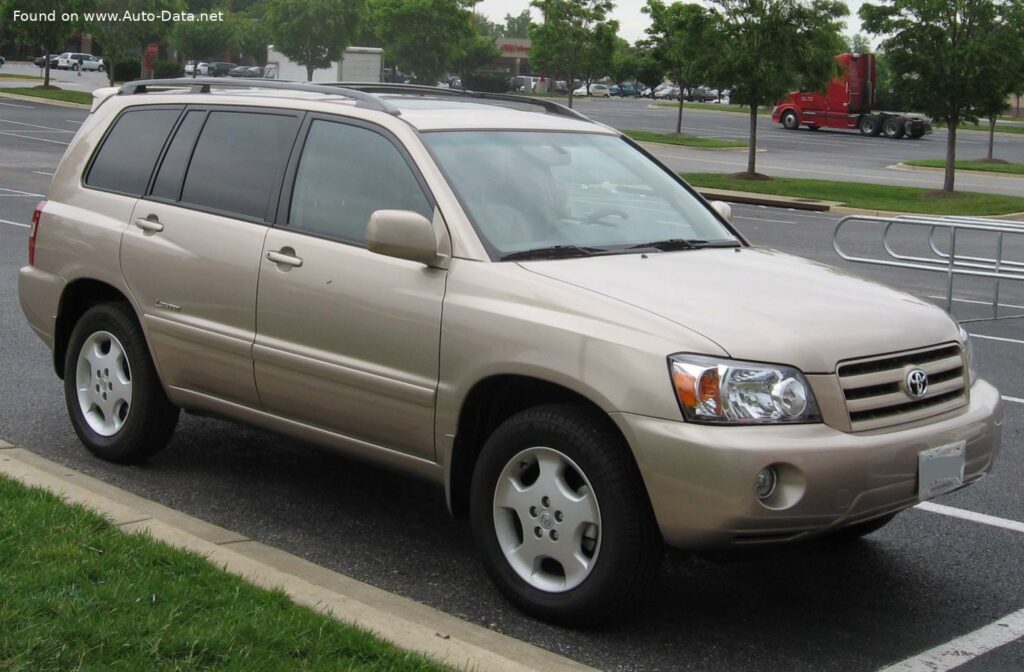
Toyota Highlander I 3.0 V6 24V (223 Hp) Overview
The Toyota Highlander, introduced for the 2001 model year, marked a significant pivot in the sport utility vehicle (SUV) landscape, particularly in the North American market. The first-generation Toyota Highlander I 3.0 V6 24V (223 Hp), produced from 2000 to 2007, distinguished itself as one of the pioneering mid-size crossover SUVs. Built on a unibody platform shared with the venerable Toyota Camry and Lexus RX, it offered a more car-like driving experience, superior fuel efficiency, and enhanced comfort compared to the traditional, truck-based SUVs prevalent at the time. This approach resonated strongly with American families seeking the utility of an SUV without the ruggedness or less refined dynamics of its body-on-frame counterparts.
Positioned strategically between the compact RAV4 and the more off-road capable 4Runner, the Highlander quickly carved out its niche. It was marketed as a practical, reliable, and comfortable family vehicle, emphasizing its road manners and spacious interior. The specific variant, the Toyota Highlander I 3.0 V6 24V (223 Hp), represented a popular and potent powertrain option, providing a robust blend of performance for daily commuting, highway cruising, and light towing duties, further solidifying its appeal in a competitive segment.
Engine and Performance: The Heart of the Toyota Highlander I 3.0 V6 24V
Powertrain Architecture and Engine Specifications
At the core of this particular Highlander model was Toyota’s well-regarded 1MZ-FE engine. This 3.0-liter V6, featuring a 24-valve DOHC (Double Overhead Camshaft) valvetrain, was renowned for its smoothness, reliability, and efficient power delivery. With a displacement of 2995 cm³ (182.77 cu. in.), the naturally aspirated engine utilized a multi-port manifold injection system to produce a healthy 223 horsepower at 5800 rpm. Torque output was equally impressive for its class, peaking at 222.01 lb.-ft. (301 Nm) at 4400 rpm, providing ample thrust for acceleration and highway passing.
The engine’s configuration as a front, transverse-mounted V6, combined with a 10.5:1 compression ratio, contributed to its refined operation and responsiveness. The bore and stroke measurements of 87.5 mm (3.44 in.) and 83 mm (3.27 in.), respectively, indicated a slightly oversquare design, favoring higher revs and horsepower output without sacrificing low-end torque. Engine oil capacity was 4.7 liters (4.97 US qt), and the cooling system held 9.5 liters (10.04 US qt) of coolant, ensuring efficient thermal management.
Performance Dynamics and Fuel Economy
Power was delivered to the front wheels via a dependable 4-speed automatic transmission. While later models and some trims offered an all-wheel-drive (AWD) option, the front-wheel-drive (FWD) configuration of this specific variant underscored its focus on on-road performance and efficiency. This setup allowed the Highlander I 3.0 V6 24V to achieve commendable acceleration figures for its segment. It could sprint from 0 to 60 mph in a brisk 8.1 seconds (0-100 km/h in 8.5 seconds), making it one of the quicker mid-size SUVs of its era. The top speed was electronically limited to 111.85 mph (180 km/h), a common practice for SUVs to prioritize stability and safety.
Despite its robust performance, the 3.0-liter V6 Highlander also delivered respectable fuel economy. EPA estimates for the FWD model were around 19 US mpg in urban driving and 24 US mpg on the highway. This balance of power and efficiency was a significant selling point, appealing to consumers who needed versatility but were conscious of operating costs. The vehicle’s weight-to-power ratio of 7.4 kg/Hp (134.3 Hp/tonne) and weight-to-torque ratio of 5.5 kg/Nm (181.3 Nm/tonne) further illustrated its well-engineered performance characteristics.
Design and Features: Practicality Meets Comfort
Exterior and Interior Design Philosophy
The first-generation Toyota Highlander embodied a design philosophy focused on understated elegance and functionality. Its SUV body type featured five doors and seating for five occupants, though some later iterations or optional configurations offered a third row. The exterior styling was clean and contemporary for its time, eschewing the aggressive, truck-like aesthetics of many competitors. With a length of 184.45 inches (4685 mm), a width of 71.85 inches (1825 mm), and a height of 68.31 inches (1735 mm), the Highlander presented a substantial yet manageable footprint. The 106.89-inch (2715 mm) wheelbase contributed to a stable ride and a spacious cabin.
Inside, the Highlander prioritized comfort and practicality. The cabin offered generous head- and legroom, and the high seating position provided excellent visibility. Materials were durable and well-fitted, reflecting Toyota’s reputation for quality. The instrument panel was straightforward and user-friendly, with controls intuitively placed.
Functionality and Safety Features
The Highlander’s unibody construction, departing from traditional body-on-frame SUV designs, allowed for a lower floor and a more car-like ride, enhancing passenger comfort and handling. The suspension system, featuring Spring Struts at the front and Coil Springs at the rear, further contributed to its refined on-road manners. Braking performance was handled by ventilated discs at the front and disc brakes at the rear, complemented by an Anti-lock Braking System (ABS) as a standard assisting feature, providing confident stopping power.
Cargo capacity was a strong suit, with a minimum trunk space of 38.49 cu. ft. (1090 liters), expandable to an impressive 113.18 cu. ft. (3205 liters) with the rear seats folded down. This ample space made the Highlander highly versatile for family trips, grocery runs, or hauling gear. The fuel tank capacity of 19.81 US gallons (75 liters) ensured a decent cruising range. Standard features included hydraulic power steering with a rack and pinion system, providing responsive and easy maneuverability. The vehicle rode on 225/70 R16 tires, offering a good balance of comfort and traction.
Technical Specifications: Toyota Highlander I 3.0 V6 24V (223 Hp)
| Category | Specification |
|---|---|
| General Information | |
| Brand | Toyota |
| Model | Highlander |
| Generation | Highlander I |
| Engine Type | 3.0 V6 24V (223 Hp) |
| Start of Production | 2000 year |
| End of Production | 2007 year |
| Powertrain Architecture | Internal Combustion engine |
| Body type | SUV |
| Seats | 5 |
| Doors | 5 |
| Performance Specs | |
| Fuel Consumption (City) | 12.4 l/100 km (19 US mpg) |
| Fuel Consumption (Highway) | 9.8 l/100 km (24 US mpg) |
| Fuel Type | Petrol (Gasoline) |
| Acceleration 0 – 60 mph | 8.1 sec |
| Acceleration 0 – 100 km/h | 8.5 sec |
| Maximum Speed | 180 km/h (111.85 mph) |
| Weight-to-Power Ratio | 7.4 kg/Hp (134.3 Hp/tonne) |
| Weight-to-Torque Ratio | 5.5 kg/Nm (181.3 Nm/tonne) |
| Engine Specs | |
| Power | 223 Hp @ 5800 rpm |
| Power per liter | 74.5 Hp/l |
| Torque | 301 Nm @ 4400 rpm (222.01 lb.-ft. @ 4400 rpm) |
| Engine Layout | Front, Transverse |
| Engine Model/Code | 1MZ-FE |
| Engine Displacement | 2995 cm³ (3.0 liters / 182.77 cu. in.) |
| Number of Cylinders | 6 |
| Engine Configuration | V-engine |
| Cylinder Bore | 87.5 mm (3.44 in.) |
| Piston Stroke | 83 mm (3.27 in.) |
| Compression Ratio | 10.5:1 |
| Valves per Cylinder | 4 |
| Fuel Injection System | Multi-port manifold injection |
| Engine Aspiration | Naturally aspirated engine |
| Valvetrain | DOHC |
| Engine Oil Capacity | 4.7 l (4.97 US qt) |
| Coolant Capacity | 9.5 l (10.04 US qt) |
| Space, Volume and Weights | |
| Curb Weight | 1660 kg (3659.67 lbs.) |
| Trunk (Boot) Space – Minimum | 1090 l (38.49 cu. ft.) |
| Trunk (Boot) Space – Maximum | 3205 l (113.18 cu. ft.) |
| Fuel Tank Capacity | 75 l (19.81 US gal) |
| Dimensions | |
| Length | 4685 mm (184.45 in.) |
| Width | 1825 mm (71.85 in.) |
| Height | 1735 mm (68.31 in.) |
| Wheelbase | 2715 mm (106.89 in.) |
| Front Track | 1580 mm (62.2 in.) |
| Rear (Back) Track | 1565 mm (61.61 in.) |
| Drivetrain, Brakes and Suspension Specs | |
| Drivetrain Architecture | Internal Combustion engine (ICE) drives the front wheels |
| Drive Wheel | Front wheel drive |
| Number of Gears & Type | 4 gears, automatic transmission |
| Front Suspension | Spring Strut |
| Rear Suspension | Coil spring |
| Front Brakes | Ventilated discs |
| Rear Brakes | Disc |
| Assisting Systems | ABS (Anti-lock braking system) |
| Steering Type | Steering rack and pinion |
| Power Steering | Hydraulic Steering |
| Tires Size | 225/70 R16 |
Legacy and Market Impact
The first-generation Toyota Highlander, especially with the robust 3.0 V6 24V engine, left an indelible mark on the automotive industry, particularly in the United States. It was a pioneering force in the burgeoning crossover SUV segment, demonstrating that consumers desired the utility and commanding view of an SUV without sacrificing the comfortable ride, handling, and fuel efficiency of a sedan. Before the Highlander, many SUVs were still largely truck-based, offering ruggedness but often at the expense of on-road refinement. Toyota’s decision to build the Highlander on a modified Camry platform proved to be prescient.
Its primary competitors in the mid-size SUV segment included traditional body-on-frame vehicles like the Ford Explorer and Chevrolet Trailblazer, but also emerging car-based rivals such as the Honda Pilot (which arrived slightly later) and the Nissan Murano. The Highlander distinguished itself with its legendary Toyota reliability, excellent resale value, and a reputation for being a no-fuss, dependable family hauler. It wasn’t designed for extreme off-roading, but rather for navigating suburban landscapes, highway trips, and light-duty towing, a role it performed exceptionally well.
The success of the Toyota Highlander I cemented the crossover concept as a mainstream choice for American families. Its comfortable ride, quiet interior, spacious cargo area, and solid performance made it an attractive alternative to minivans and larger, less fuel-efficient SUVs. It helped to redefine what an “SUV” could be, paving the way for a generation of car-based utility vehicles that now dominate the market. Its lasting legacy is evident in the continued popularity of the Highlander nameplate and the widespread adoption of unibody construction across the SUV segment, proving that comfort, efficiency, and practicality could coexist with utility. The 3.0 V6 model, in particular, provided a sweet spot of performance and refinement that many buyers sought, contributing significantly to its enduring appeal.