The Mitsubishi Minica V: A Quintessential Japanese Kei Car
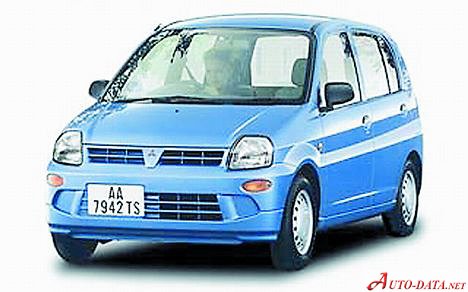
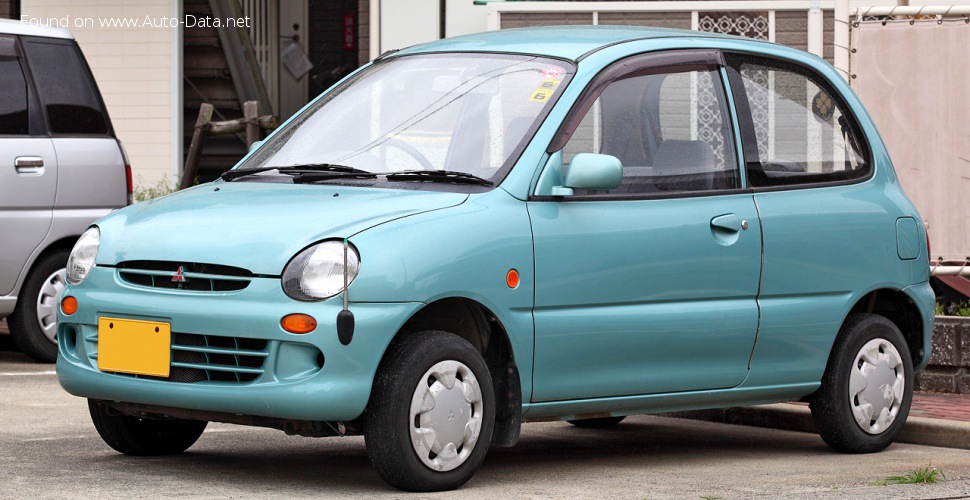
The Mitsubishi Minica V 0.66 CE (40 Hp) Automatic represents the fifth generation of Mitsubishi’s long-running Minica series, a nameplate synonymous with the Japanese “kei car” segment. Produced from 1993 to 1999, this iteration of the Minica was a cornerstone of urban mobility in Japan, meticulously engineered to comply with the nation’s stringent kei car regulations. These regulations, designed to encourage the production of small, fuel-efficient vehicles, offer significant tax and insurance benefits to owners, making kei cars an incredibly popular choice for commuters and small families in Japan’s densely populated cities. While never officially imported or sold in the United States, the Minica V embodies a design philosophy focused on maximum utility within minimal dimensions, a concept largely foreign to the North American automotive market. It served as an affordable, practical, and highly efficient solution for everyday transportation, showcasing Mitsubishi’s expertise in crafting compact vehicles tailored to specific regional demands.
The Minica V arrived at a time when the kei car market was highly competitive, pushing manufacturers to innovate within the segment’s constraints. This particular variant, powered by a 0.66-liter engine paired with an automatic transmission, epitomized the practicality and ease of use that defined its class. Its design and engineering choices reflect a pragmatic approach to vehicle manufacturing, prioritizing low running costs, maneuverability, and a surprisingly spacious interior for its footprint. The Minica V’s legacy is rooted in its reliable performance and its integral role in providing accessible personal transportation for millions of Japanese citizens throughout the 1990s.
Engine and Performance: Powering the Mitsubishi Minica V
Under the hood of the Mitsubishi Minica V 0.66 CE (40 Hp) Automatic lies a compact yet remarkably efficient powertrain specifically designed for the kei car class. The heart of this vehicle is a naturally aspirated 0.66-liter (657 cm³) inline three-cylinder engine. This configuration, with its small displacement and three cylinders, was a common choice for kei cars, offering an optimal balance of compactness, low weight, and fuel efficiency necessary to meet the demanding segment regulations. The engine produces a modest 40 horsepower at 6000 rpm, which, when combined with its peak torque of 37.62 lb.-ft. (51 Nm) at 4000 rpm, delivers adequate thrust for urban driving conditions.
The engine features a single overhead camshaft (OHC) valvetrain with two valves per cylinder, a straightforward and reliable design for the era. Fuel delivery was managed by a carburetor, a system known for its simplicity and robustness, though less precise than the electronic fuel injection systems that were becoming more common in larger vehicles during the 1990s. With a compression ratio of 9.8:1, the engine was designed to run on readily available gasoline. Its front, transverse layout, combined with front-wheel drive, is a classic configuration for compact cars, maximizing interior space and enhancing traction in adverse conditions.
Performance figures, while not indicative of a sports car, are respectable for a vehicle of its class and purpose. The Minica V could achieve a top speed of approximately 68.35 mph (110 km/h), making it capable of handling suburban roads and occasional highway stretches, though its primary domain was city driving. Its impressive fuel economy, rated at 58.8 US mpg (4 l/100 km) combined, was a major selling point, significantly reducing the cost of ownership. The power-to-weight ratio of 16.3 kg/Hp (61.5 Hp/tonne) and torque-to-weight ratio of 12.7 kg/Nm (78.5 Nm/tonne) highlight its lightweight construction and efficient use of its limited power output. The three-speed automatic transmission, while not offering the numerous ratios of modern gearboxes, provided smooth and convenient operation, making the Minica V an easy car to drive in stop-and-go traffic.
Design and Features: Practicality in a Compact Package
The design of the Mitsubishi Minica V is a testament to the “form follows function” principle, expertly applied within the confines of Japan’s kei car regulations. As a 3-door hatchback, it offered a practical and versatile body style, ideal for urban environments where parking and maneuverability are paramount. Measuring just 129.72 inches (3295 mm) in length, 54.92 inches (1395 mm) in width, and 58.07 inches (1475 mm) in height, the Minica V’s exterior dimensions were minimized to fit within the kei car category, yet its design aimed to maximize interior space for its four occupants.
The compact wheelbase of 89.76 inches (2280 mm) contributed to the Minica V’s exceptional agility, allowing for a remarkably tight minimum turning circle of 27.56 feet (8.4 m). This made navigating narrow city streets and tight parking spots an effortless task. Despite its diminutive size, Mitsubishi engineers worked to ensure a comfortable ride, employing a spring strut front suspension and a coil spring rear suspension setup. This combination provided a balanced ride quality, absorbing road imperfections typical of city driving.
For braking, the Minica V was equipped with disc brakes at the front and drum brakes at the rear, a standard configuration for many compact cars of its era, providing reliable stopping power. A notable safety feature for a kei car in the mid-1990s was the inclusion of ABS (Anti-lock Braking System), enhancing control during emergency braking situations. Steering was managed by a rack and pinion system with hydraulic power steering, offering light and responsive feedback, which further contributed to the car’s ease of maneuverability in urban settings. The vehicle rode on 145/65 R13 tires, mounted on 12-inch wheel rims, a practical choice balancing comfort, grip, and cost-effectiveness. The Minica V’s design, while understated, was optimized for its specific market, offering a blend of efficiency, practicality, and ease of use that resonated strongly with Japanese consumers.
Technical Specifications
| General Information | |
|---|---|
| Brand | Mitsubishi |
| Model | Minica |
| Generation | Minica V |
| Type (Engine) | 0.66 CE (40 Hp) Automatic |
| Start of Production | 1993 year |
| End of Production | 1999 year |
| Powertrain Architecture | Internal Combustion engine |
| Body type | Hatchback |
| Seats | 4 |
| Doors | 3 |
| Performance Specifications | |
| Fuel Consumption (Combined) | 4 l/100 km (58.8 US mpg) |
| Fuel Type | Petrol (Gasoline) |
| Maximum Speed | 110 km/h (68.35 mph) |
| Weight-to-Power Ratio | 16.3 kg/Hp (61.5 Hp/tonne) |
| Weight-to-Torque Ratio | 12.7 kg/Nm (78.5 Nm/tonne) |
| Engine Specifications | |
| Power | 40 Hp @ 6000 rpm |
| Power per Liter | 60.9 Hp/l |
| Torque | 51 Nm @ 4000 rpm (37.62 lb.-ft. @ 4000 rpm) |
| Engine Layout | Front, Transverse |
| Engine Displacement | 657 cm³ (40.09 cu. in.) |
| Number of Cylinders | 3 |
| Engine Configuration | Inline |
| Cylinder Bore | 65 mm (2.56 in.) |
| Piston Stroke | 66 mm (2.6 in.) |
| Compression Ratio | 9.8:1 |
| Number of Valves per Cylinder | 2 |
| Fuel Injection System | Carburetor |
| Engine Aspiration | Naturally aspirated engine |
| Valvetrain | OHC |
| Space, Volume, and Weights | |
| Kerb Weight | 650 kg (1433 lbs.) |
| Fuel Tank Capacity | 32 l (8.45 US gal) |
| Dimensions | |
| Length | 3295 mm (129.72 in.) |
| Width | 1395 mm (54.92 in.) |
| Height | 1475 mm (58.07 in.) |
| Wheelbase | 2280 mm (89.76 in.) |
| Front Track | 1215 mm (47.83 in.) |
| Rear (Back) Track | 1215 mm (47.83 in.) |
| Minimum Turning Circle | 8.4 m (27.56 ft.) |
| Drivetrain, Brakes, and Suspension | |
| Drivetrain Architecture | The Internal combustion engine (ICE) drives the front wheels of the vehicle. |
| Drive Wheel | Front-wheel drive |
| Number of Gears and Type of Gearbox | 3 gears, automatic transmission |
| Front Suspension | Spring Strut |
| Rear Suspension | Coil spring |
| Front Brakes | Disc |
| Rear Brakes | Drum |
| Assisting Systems | ABS (Anti-lock braking system) |
| Steering Type | Steering rack and pinion |
| Power Steering | Hydraulic Steering |
| Tires Size | 145/65 R13 R |
| Wheel Rims Size | 12 |
Legacy and Market Impact of the Mitsubishi Minica V
The Mitsubishi Minica V played a significant role in the highly competitive Japanese kei car market during its production run from 1993 to 1999. As a vehicle designed specifically to meet Japan’s unique kei car regulations, it was never officially distributed in the United States or most other international markets. Its legacy is therefore deeply intertwined with the automotive culture and urban infrastructure of Japan.
In its home market, the Minica V was a direct competitor to other popular kei car models such as the Suzuki Alto, Daihatsu Mira, and Subaru Vivio. These vehicles all vied for market share by offering maximum practicality, low running costs, and ease of maneuverability within the strict dimensional and engine displacement limits. The Minica V stood out for its robust build quality, reliable powertrain, and sensible design. Its availability with a 3-speed automatic transmission made it particularly appealing to a broad demographic, including city commuters and those seeking a hassle-free driving experience.
The Minica series, with the V generation being a crucial part, demonstrated Mitsubishi’s commitment to the small car segment and its ability to innovate within tight regulatory frameworks. It contributed to the company’s reputation for producing dependable and efficient vehicles. For many Japanese households, a kei car like the Minica V served as an essential second car or the primary mode of transport for daily errands and short commutes, benefiting from lower taxes, reduced insurance premiums, and often preferential parking in urban centers.
Its historical significance lies in its embodiment of the kei car philosophy: providing essential transportation in a compact, economical, and environmentally conscious package. While the Minica V lacked the glamour of larger, more powerful cars, its impact on everyday life in Japan was profound. It helped to keep cities moving efficiently, offered accessible personal mobility, and showcased how clever engineering could extract significant utility from a minimal footprint. The Minica V, like its kei car brethren, represented a pragmatic solution to the challenges of driving in densely populated areas, a testament to Japanese automotive ingenuity that continues to influence modern compact car design globally, even if the specific models remain largely confined to their domestic market.