The Toyota RAV4 V 2.0 (149 Hp): A Global Compact SUV Stalwart
The Toyota RAV4, an acronym for “Recreational Activity Vehicle: 4-wheel drive,” has been a pioneering force in the compact SUV segment since its inception in 1994. The fifth generation, known as the RAV4 V, debuted in 2018 and quickly reaffirmed its status as a global sales leader. This particular variant, the
Toyota RAV4 V 2.0 (149 Hp)
, produced from November 2019 to September 2021, represents a key offering in markets prioritizing efficiency and traditional internal combustion powertrains, often serving as an accessible entry point into the popular SUV segment outside of North America, where hybrid options tend to dominate the RAV4 lineup. Built on the Toyota New Global Architecture (TNGA-K) platform, this iteration of the RAV4 boasts enhanced rigidity, improved handling, and a more sophisticated ride quality compared to its predecessors. It continues Toyota’s legacy of reliability and practicality, packaged in a contemporary and rugged design.
While the North American market largely embraced the RAV4’s hybrid and more powerful gasoline engines, this 2.0-liter, naturally aspirated, front-wheel-drive variant with a manual transmission was strategically positioned for regions like Europe, Asia, and other international markets where fuel economy, lower emissions standards (like Euro 5), and a simpler, more direct driving experience are highly valued. It maintains the RAV4’s core utility as a five-door, five-seat SUV, offering a blend of city maneuverability and capability for light off-road excursions, making it a versatile choice for a wide demographic of buyers.
Engine & Performance of the Toyota RAV4 V 2.0 (149 Hp)
At the heart of this particular RAV4 V is Toyota’s M20A-FKS engine, a naturally aspirated 2.0-liter (1987 cm³, or 121.25 cubic inches) inline four-cylinder powerplant. This engine is a modern example of Toyota’s Dynamic Force engine family, designed for both power and efficiency. It features a high compression ratio of 13:1 and utilizes an advanced fuel injection system that combines direct injection with multi-port manifold injection, optimizing fuel delivery across various engine speeds and loads. This sophisticated setup contributes to better fuel economy and reduced emissions.
The M20A-FKS engine delivers a respectable 149 horsepower at 6600 rpm, translating to a power-per-liter output of 75 horsepower per liter. Torque peaks at 206 Nm (151.94 lb.-ft.) across a broad range from 4400 to 4900 rpm, providing ample pulling power for daily driving and highway cruising. Power is sent to the front wheels via a precise 6-speed manual transmission, offering a more engaging driving experience for those who prefer to select their own gears. This powertrain architecture, with the engine mounted front-transverse, is typical for front-wheel-drive compact SUVs, maximizing interior space and efficiency.
Performance figures for the
Toyota RAV4 V 2.0 (149 Hp)
are competitive within its segment. It accelerates from 0 to 62 mph (100 km/h) in 9.8 seconds, with a calculated 0-60 mph time of 9.3 seconds, and reaches a maximum speed of 118.06 mph (190 km/h). Fuel economy is a strong suit, with a combined rating of 6.8 l/100 km, which translates to an impressive 34.6 US mpg. Urban consumption stands at 8.6 l/100 km (27.4 US mpg), and extra-urban driving yields 5.7 l/100 km (41.3 US mpg). CO2 emissions are rated at 155 g/km, adhering to the Euro 5 emission standard, reflecting its commitment to environmental responsibility in its target markets.
Design & Features
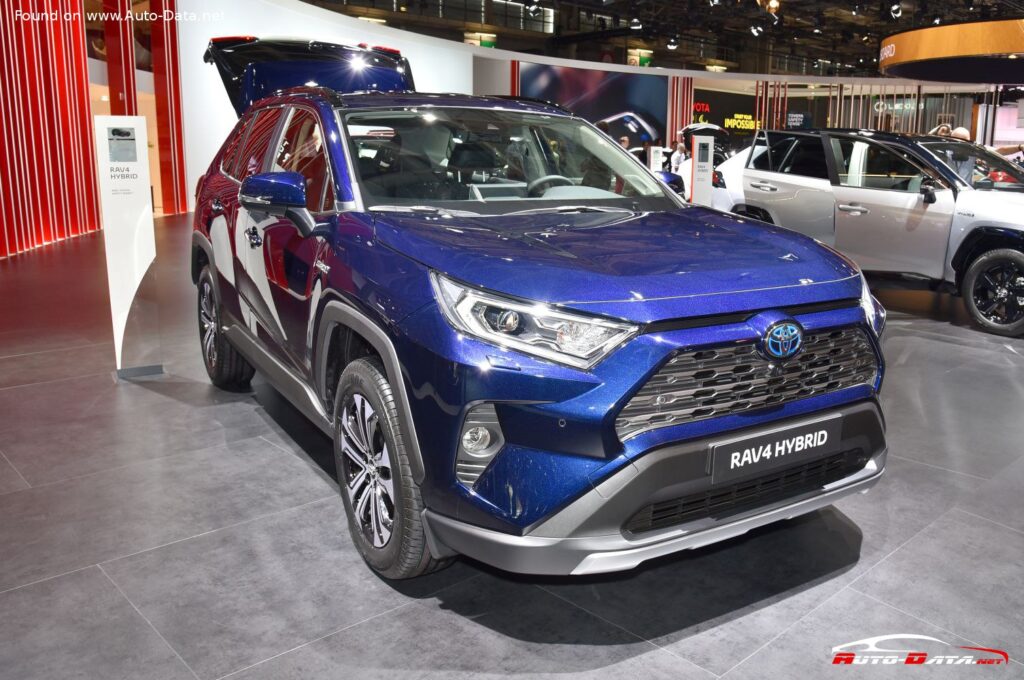
The fifth-generation Toyota RAV4 ushered in a more assertive and robust design language, moving away from the softer lines of its predecessors. This iteration of the
Toyota RAV4 V
adopts a more chiseled and angular aesthetic, reflecting a greater emphasis on SUV ruggedness while retaining a contemporary urban appeal. The body type is a traditional 5-door SUV, accommodating five occupants comfortably. Its dimensions – 181.1 inches (4600 mm) in length, 73.03 inches (1855 mm) in width, and 66.34 inches (1685 mm) in height – place it firmly in the compact SUV category, offering a good balance between interior space and exterior maneuverability. The 105.91-inch (2690 mm) wheelbase contributes to a stable ride and generous cabin room.
Inside, the RAV4 V offers a practical and well-appointed cabin. The trunk space is substantial, providing a minimum of 20.48 cubic feet (580 liters) of cargo volume, expandable with the rear seats folded, making it suitable for families and adventurers alike. Key features include a robust suspension setup, with an independent MacPherson strut system at the front and an independent coil spring rear suspension, ensuring a comfortable ride over varying road conditions. The braking system comprises ventilated discs at the front and solid discs at the rear, supported by an Anti-lock Braking System (ABS) for enhanced safety. The electric power steering system, with a rack and pinion setup, provides precise control and ease of parking, evidenced by a relatively tight minimum turning circle of 36.09 feet (11.0 meters). The vehicle rides on 225/65 R17 tires, providing a good balance of grip and ride comfort, complemented by a ground clearance of 7.68 inches (195 mm), which is adequate for light off-road trails and navigating urban obstacles.
Technical Specifications
| Toyota RAV4 V 2.0 (149 Hp) – Technical Specifications | |
|---|---|
|
General Information |
|
| Brand | Toyota |
| Model | RAV4 |
| Generation | RAV4 V |
| Type (Engine) | 2.0 (149 Hp) |
| Production Start | November, 2019 |
| Production End | September, 2021 |
| Powertrain Architecture | Internal Combustion engine |
| Body type | SUV |
| Seats | 5 |
| Doors | 5 |
|
Performance Specs |
|
| Fuel Consumption (Urban) | 8.6 l/100 km (27.4 US mpg) |
| Fuel Consumption (Extra Urban) | 5.7 l/100 km (41.3 US mpg) |
| Fuel Consumption (Combined) | 6.8 l/100 km (34.6 US mpg) |
| CO2 Emissions | 155 g/km |
| Fuel Type | Petrol (Gasoline) |
| Acceleration 0-62 mph (0-100 km/h) | 9.8 sec |
| Acceleration 0-60 mph (Calculated) | 9.3 sec |
| Maximum Speed | 118.06 mph (190 km/h) |
| Emission Standard | Euro 5 |
| Weight-to-Power Ratio | 10.5 kg/Hp (94.9 Hp/tonne) |
| Weight-to-Torque Ratio | 7.6 kg/Nm (131.2 Nm/tonne) |
|
Engine Specs |
|
| Power | 149 Hp @ 6600 rpm |
| Power per Liter | 75 Hp/l |
| Torque | 206 Nm (151.94 lb.-ft.) @ 4400-4900 rpm |
| Engine Layout | Front, Transverse |
| Engine Model/Code | M20A-FKS |
| Engine Displacement | 1987 cm³ (2.0 L, 121.25 cu. in.) |
| Number of Cylinders | 4 |
| Engine Configuration | Inline |
| Cylinder Bore | 80.5 mm (3.17 in.) |
| Piston Stroke | 97.6 mm (3.84 in.) |
| Compression Ratio | 13:1 |
| Valves per Cylinder | 4 |
| Fuel Injection System | Direct injection and Multi-port manifold injection |
| Engine Aspiration | Naturally aspirated |
| Valvetrain | DOHC |
| Engine Oil Capacity | 4.3 l (4.54 US qt) |
| Coolant Capacity | 6.4 l (6.76 US qt) |
| Engine Systems | Particulate filter |
|
Space, Volume and Weights |
|
| Kerb Weight | 1570-1575 kg (3461.26 – 3472.28 lbs.) |
| Max. Weight (Gross Vehicle Weight) | 2015 kg (4442.31 lbs.) |
| Max Load | 440-445 kg (970.03 – 981.06 lbs.) |
| Trunk (Boot) Space – Minimum | 580 l (20.48 cu. ft.) |
| Fuel Tank Capacity | 55 l (14.53 US gal) |
| Permitted Trailer Load with Brakes (12%) | 1500 kg (3306.93 lbs.) |
| Permitted Trailer Load without Brakes | 750 kg (1653.47 lbs.) |
|
Dimensions |
|
| Length | 4600 mm (181.1 in.) |
| Width | 1855 mm (73.03 in.) |
| Height | 1685 mm (66.34 in.) |
| Wheelbase | 2690 mm (105.91 in.) |
| Front Track | 1600 mm (62.99 in.) |
| Rear (Back) Track | 1630 mm (64.17 in.) |
| Front Overhang | 925 mm (36.42 in.) |
| Rear Overhang | 985 mm (38.78 in.) |
| Ride Height (Ground Clearance) | 195 mm (7.68 in.) |
| Minimum Turning Circle (Turning Diameter) | 11.0 m (36.09 ft.) |
|
Drivetrain, Brakes and Suspension Specs |
|
| Drivetrain Architecture | Internal combustion engine drives the front wheels. |
| Drive Wheel | Front wheel drive |
| Number of Gears and Type of Gearbox | 6 gears, manual transmission |
| Front Suspension | Independent, McPherson with coil spring and anti-roll bar |
| Rear Suspension | Independent coil spring |
| Front Brakes | Ventilated discs |
| Rear Brakes | Disc |
| Assisting Systems | ABS (Anti-lock braking system) |
| Steering Type | Steering rack and pinion |
| Power Steering | Electric Steering |
| Tires Size | 225/65 R17 |
Legacy & Market Impact
The Toyota RAV4’s legacy is undeniable, having established itself as a benchmark in the compact SUV segment for its blend of practicality, reliability, and increasingly, efficiency. The fifth-generation RAV4 V, including this 2.0-liter variant, continued this tradition, solidifying its reputation as a highly dependable and versatile vehicle. While the North American market gravitated towards the more powerful 2.5-liter gasoline and hybrid powertrains, the
Toyota RAV4 V 2.0 (149 Hp)
carved out a significant niche in markets where factors like purchase price, fuel economy, and manual transmission preference play a larger role.
In its primary markets, this RAV4 variant competed fiercely with a host of other popular compact SUVs. Key rivals included the Volkswagen Tiguan, Mazda CX-5, Nissan Qashqai (known as the Rogue Sport in the US), Hyundai Tucson, and Kia Sportage. What set the RAV4 apart was its long-standing reputation for bulletproof reliability, low running costs, and strong resale value, attributes that Toyota has consistently delivered. The 2.0-liter engine, while not the most powerful in the lineup, offered a compelling balance of performance and fuel efficiency, making it an economical choice for many buyers. Its Euro 5 emission standard compliance also made it suitable for the stringent environmental regulations in many European countries during its production run.
The RAV4 V’s impact extended beyond just sales figures; it influenced design trends in the compact SUV space, pushing towards more rugged and adventurous styling cues. Its TNGA-K platform provided a solid foundation for improved driving dynamics, making the vehicle more enjoyable to drive while maintaining its utilitarian roots. The availability of a manual transmission in this variant further catered to a segment of drivers who appreciate a more connected driving experience, a feature increasingly rare in modern SUVs. Overall, the Toyota RAV4 V 2.0 (149 Hp) stands as a testament to Toyota’s global strategy, offering a tailored product that effectively met the specific demands and preferences of diverse international markets, contributing significantly to the RAV4’s enduring success as a global automotive icon.