The Nissan Sylphy (B17) 1.6 (116 Hp) CVT: A Global Compact Sedan for the Masses
The Nissan Sylphy (B17) represents the third generation of Nissan’s compact sedan, a nameplate primarily targeted at Asian markets, particularly Southeast Asia and China, as well as parts of Latin America and the Middle East. Produced from 2012 to 2016, this iteration of the Sylphy was designed to offer a compelling blend of spaciousness, comfort, and fuel efficiency in a highly competitive segment. While not officially sold in the United States under the Sylphy name, its platform and underlying philosophy were closely related to the Nissan Sentra offered in North America during the same period, showcasing Nissan’s global strategy for its C-segment offerings. The specific variant, the Nissan Sylphy (B17) 1.6 (116 Hp) CVT, was a core model, balancing adequate performance with economical operation, a crucial factor for its target demographic.
This generation of the Sylphy was part of Nissan’s “Pure Drive” initiative, emphasizing improved fuel economy and reduced emissions across its lineup. It aimed to build on the success of its predecessors by offering a more refined driving experience and a greater emphasis on interior quality and passenger comfort, distinguishing itself in markets where compact sedans serve as primary family vehicles or popular fleet options. Its design language embraced a more mature and upscale aesthetic compared to some rivals, signaling Nissan’s intent to elevate the Sylphy’s perceived value.
Engine & Performance: The Heart of the Nissan Sylphy (B17)
Powering the Nissan Sylphy (B17) 1.6 (116 Hp) CVT is Nissan’s venerable HR16DE engine, a naturally aspirated 1.6-liter (1598 cm3 or 97.52 cu. in.) inline-four gasoline unit. This engine is renowned for its reliability, smooth operation, and fuel efficiency, characteristics that are highly valued in the markets where the Sylphy competes. It delivers a respectable 116 horsepower at 6000 rpm, which, when coupled with 113.58 lb.-ft. (154 Nm) of torque peaking at 4000 rpm, provides sufficient motivation for daily driving and highway cruising. The power output of 72.6 Hp per liter is indicative of a well-tuned, non-turbocharged engine focused on broad usability rather than outright performance.
The powertrain architecture is a straightforward front, transverse engine layout, driving the front wheels. A key component of this variant’s efficiency and smooth operation is its XTRONIC Continuously Variable Transmission (CVT). Nissan has been a significant proponent of CVT technology, and the XTRONIC unit in the Sylphy (B17) is designed to provide seamless acceleration and optimize engine speed for the best possible fuel economy. Unlike traditional automatic transmissions with fixed gear ratios, the CVT continuously adjusts to maintain the engine in its most efficient power band, contributing to the car’s impressive weight-to-power ratio of 10.5 kg/Hp (95.5 Hp/tonne) and a weight-to-torque ratio of 7.9 kg/Nm (126.7 Nm/tonne).
The HR16DE engine features a DOHC (Double Overhead Camshaft) valvetrain with 4 valves per cylinder, ensuring efficient breathing and combustion. Fuel delivery is handled by a multi-port manifold injection system, a proven and reliable technology. With an engine oil capacity of 3 liters (3.17 US quarts) and a coolant capacity of 6.6 liters (6.97 US quarts), the Sylphy (B17) is designed for ease of maintenance and long-term durability, crucial aspects for owners in developing and emerging markets.
Design & Features: Comfort and Practicality
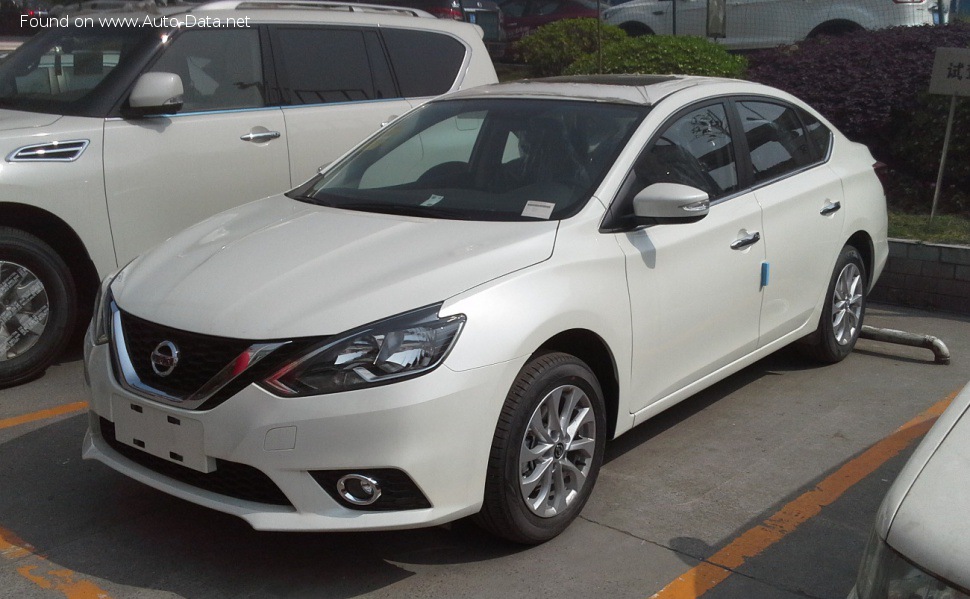
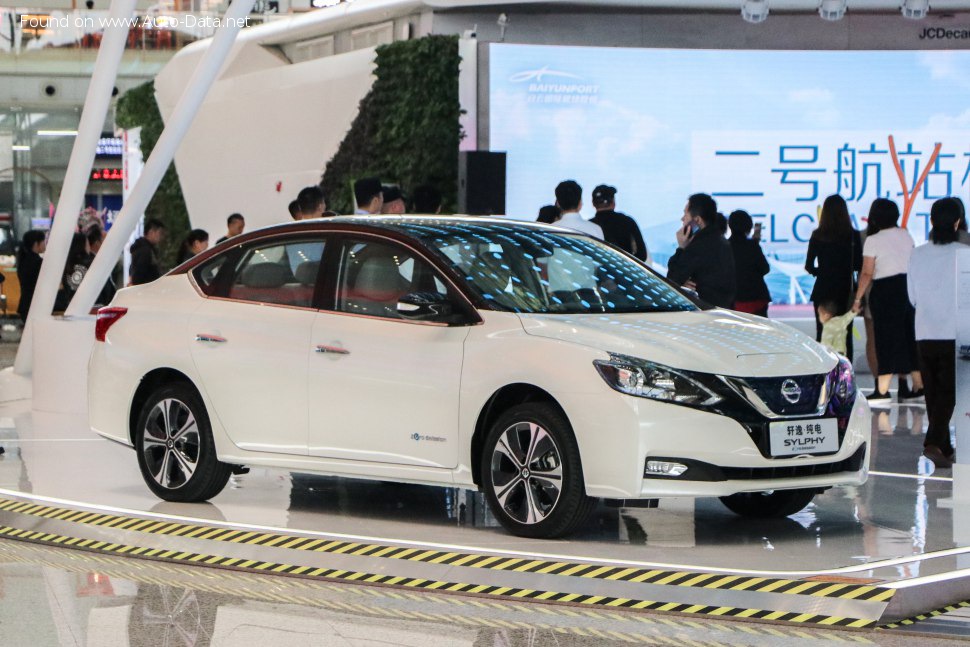
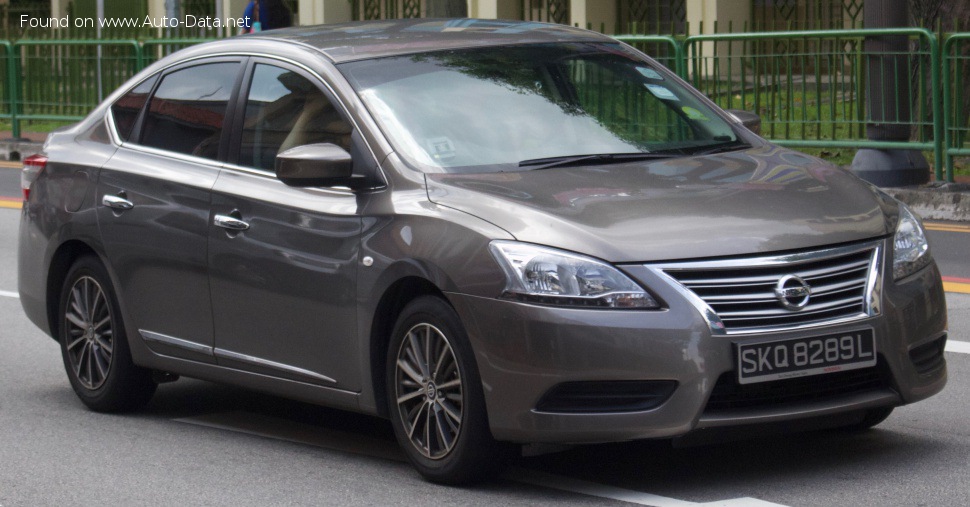
The Nissan Sylphy (B17) adopted a more sophisticated and aerodynamic design compared to its predecessor. With a length of 181.69 inches (4615 mm), a width of 69.29 inches (1760 mm), and a height of 58.86 inches (1495 mm), it presented a substantial and elegant profile for a compact sedan. The wheelbase of 106.3 inches (2700 mm) was particularly noteworthy, contributing significantly to the car’s generous interior space, especially for rear passengers, a key selling point in markets where rear-seat comfort is a high priority.
The body type is a classic 4-door sedan, accommodating five occupants comfortably. The design emphasized flowing lines and a refined front fascia, often featuring chrome accents, to give it an upscale appearance. The standard tire size was 195/60 R16, mounted on 16-inch wheel rims, providing a good balance between ride comfort and handling stability. The suspension setup consisted of an independent McPherson strut system with coil springs and an anti-roll bar at the front, and a semi-independent rear suspension with coil springs. This configuration is typical for the segment, offering a compliant ride suitable for varying road conditions while maintaining predictable handling.
Inside, the Sylphy (B17) focused on creating a spacious and inviting cabin. Materials were chosen for durability and ease of cleaning, with an emphasis on ergonomic design for controls. The trunk space was a significant highlight, offering a generous 18.01 cu. ft. (510 liters), making it highly practical for families and individuals needing ample cargo capacity. Safety features, while varying by market, typically included an Anti-lock Braking System (ABS) as standard, enhancing braking control. The steering system utilized a rack and pinion setup, offering direct and responsive feedback for urban driving and highway stability.
Technical Specifications: Nissan Sylphy (B17) 1.6 (116 Hp) CVT
| Category | Specification | US Equivalent / Notes |
|---|---|---|
| Brand | Nissan | |
| Model | Sylphy | |
| Generation | Sylphy (B17) | |
| Type (Engine) | 1.6 (116 Hp) CVT | |
| Production Start | 2012 year | |
| Production End | 2016 year | |
| Powertrain Architecture | Internal Combustion engine | |
| Body type | Sedan | 4 Doors, 5 Seats |
| Performance Specs | ||
| Fuel Type | Petrol (Gasoline) | |
| Weight-to-power ratio | 10.5 kg/Hp | 95.5 Hp/tonne |
| Weight-to-torque ratio | 7.9 kg/Nm | 126.7 Nm/tonne |
| Engine Specs | ||
| Power | 116 Hp @ 6000 rpm | |
| Power per liter | 72.6 Hp/l | |
| Torque | 154 Nm @ 4000 rpm | 113.58 lb.-ft. @ 4000 rpm |
| Engine layout | Front, Transverse | |
| Engine Model/Code | HR16DE | |
| Engine displacement | 1598 cm3 | 1.6 liters / 97.52 cu. in. |
| Number of cylinders | 4 | |
| Engine configuration | Inline | |
| Cylinder Bore | 78 mm | 3.07 in. |
| Piston Stroke | 83.6 mm | 3.29 in. |
| Number of valves per cylinder | 4 | |
| Fuel injection system | Multi-port manifold injection | |
| Engine aspiration | Naturally aspirated engine | |
| Valvetrain | DOHC | |
| Engine oil capacity | 3 l | 3.17 US qt |
| Coolant | 6.6 l | 6.97 US qt |
| Space, Volume and Weights | ||
| Kerb Weight | 1215 kg | 2678.62 lbs. |
| Trunk (boot) space – minimum | 510 l | 18.01 cu. ft. |
| Fuel tank capacity | 52 l | 13.74 US gal |
| Dimensions | ||
| Length | 4615 mm | 181.69 in. |
| Width | 1760 mm | 69.29 in. |
| Height | 1495 mm | 58.86 in. |
| Wheelbase | 2700 mm | 106.3 in. |
| Front track | 1540 mm | 60.63 in. |
| Rear (Back) track | 1540 mm | 60.63 in. |
| Drivetrain, Brakes and Suspension Specs | ||
| Drivetrain Architecture | ICE drives front wheels | |
| Drive wheel | Front wheel drive | |
| Gearbox type | automatic transmission XTRONIC CVT | |
| Front suspension | Independent, McPherson with coil spring and anti-roll bar | |
| Rear suspension | Semi-independent, coil spring | |
| Front brakes | Ventilated discs | |
| Rear brakes | Disc | |
| Assisting systems | ABS (Anti-lock braking system) | |
| Steering type | Steering rack and pinion | |
| Tires size | 195/60 R16 | |
| Wheel rims size | 16 | |
Legacy & Market Impact of the Nissan Sylphy (B17)
The Nissan Sylphy (B17) 1.6 (116 Hp) CVT carved out a significant niche for itself in various international markets, particularly in Asia. It was positioned as a reliable, spacious, and fuel-efficient option for families and fleet operators seeking a practical compact sedan. Its primary competitors varied by region but generally included vehicles like the Honda City/Civic, Toyota Corolla Altis, Hyundai Elantra, and Mazda 3. In many markets, the Sylphy was praised for its comfortable ride, quiet cabin, and impressive rear legroom, often outclassing rivals in these specific aspects.
Nissan’s strategy with the Sylphy (B17) was to offer a compelling value proposition, blending modern aesthetics with proven mechanicals. The widespread adoption of the XTRONIC CVT in this model highlighted Nissan’s commitment to efficiency and smooth power delivery, which resonated well with consumers looking for an easy-to-drive and economical vehicle. The HR16DE engine, already a staple in Nissan’s global compact car lineup, further cemented the Sylphy’s reputation for dependability and low running costs.
While the Sylphy nameplate itself might be unfamiliar to American consumers, its underpinnings and market positioning reflect a global automotive trend towards highly efficient, comfortable, and practical compact sedans. Its success in emerging markets demonstrated Nissan’s ability to tailor vehicles to specific regional preferences, such as a preference for rear-seat space and a comfortable, absorbent ride over aggressive handling dynamics. The Sylphy (B17) played a crucial role in strengthening Nissan’s presence in key international markets, contributing to the brand’s global sales volume and maintaining its competitive edge in the compact segment. Its legacy is one of quiet competence, delivering on the promise of affordable, comfortable, and reliable transportation for millions of drivers worldwide.