The Mitsubishi Minica V 0.66 i 16V ST-4WD (55 Hp): A Kei Car Icon
The Mitsubishi Minica V 0.66 i 16V ST-4WD (55 Hp) represents a significant chapter in the long-running history of Mitsubishi Motors’ venerable Minica nameplate, particularly within the highly specialized and regulated Japanese Kei car segment. Produced from 1993 to 1999, this fifth-generation Minica exemplified the ingenuity and practicality required for these diminutive vehicles. The Minica V, with its specific 0.66 i 16V ST-4WD (55 Hp) configuration, was a three-door hatchback designed to maximize interior space and utility while adhering to Japan’s strict Kei car dimensions and engine displacement limits. It was a testament to Mitsubishi’s engineering prowess, offering a blend of efficiency, maneuverability, and surprising capability, including an all-wheel-drive system, that made it a popular choice for urban and rural Japanese consumers alike.
The Kei car, or keijidōsha, category in Japan, translates literally to “light automobile.” These vehicles benefit from tax and insurance breaks, as well as exemptions from certain parking regulations in crowded urban areas, making them an economically attractive option. For the Minica V, this meant a design philosophy centered on compact exterior dimensions, a small-displacement engine, and a focus on fuel economy and practicality. While never officially imported to the United States, the Mitsubishi Minica V is a fascinating study in automotive design, showcasing how manufacturers adapt to unique market demands and regulatory frameworks.
Engine and Performance of the Mitsubishi Minica V 0.66 i 16V ST-4WD (55 Hp)
At the heart of the Mitsubishi Minica V 0.66 i 16V ST-4WD (55 Hp) was a meticulously engineered, naturally aspirated 0.66-liter (659 cm3, or 40.21 cubic inches) inline four-cylinder engine. This powerplant was a marvel of compact engineering, specifically designed to meet the stringent Kei car regulations of the era while providing respectable performance for its class. With a bore of 2.36 inches (60 mm) and a piston stroke of 2.30 inches (58.3 mm), this engine featured a 16-valve OHC (Overhead Camshaft) valvetrain, a sophisticated setup for such a small engine, allowing for better breathing and efficiency.
The engine produced a peak output of 55 horsepower at a relatively high 7000 revolutions per minute (rpm), indicating its free-revving nature. Torque figures stood at 44.25 lb.-ft. (60 Nm) delivered at 5000 rpm, providing adequate pulling power for city driving and light loads. Fuel was delivered via a multi-port manifold injection system, ensuring precise fuel metering and improved combustion efficiency. This combination contributed to an impressive combined fuel economy of approximately 48 US mpg (4.9 liters per 100 km), making it an incredibly economical choice for daily commuting.
A key distinguishing feature of this particular Minica V variant was its “ST-4WD” (Super Select 4WD, or similar advanced system for its class) all-wheel-drive powertrain architecture. This system provided enhanced traction and stability, a valuable asset in Japan’s diverse weather conditions, from snowy mountainous regions to rain-slicked urban streets. Power was routed through a precise 5-speed manual transmission, offering drivers full control over the engine’s output and contributing to the car’s engaging driving dynamics. The vehicle’s top speed was rated at 68.35 mph (110 km/h), a practical limit for its intended urban and suburban usage. With a curb weight of just 1565.28 lbs. (710 kg), the Minica V boasted a weight-to-power ratio of 12.9 kg/Hp (77.5 Hp/tonne), highlighting its nimble and efficient character.
Design and Features
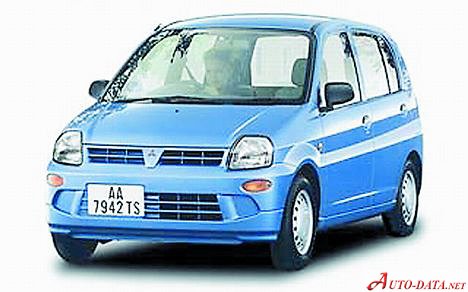
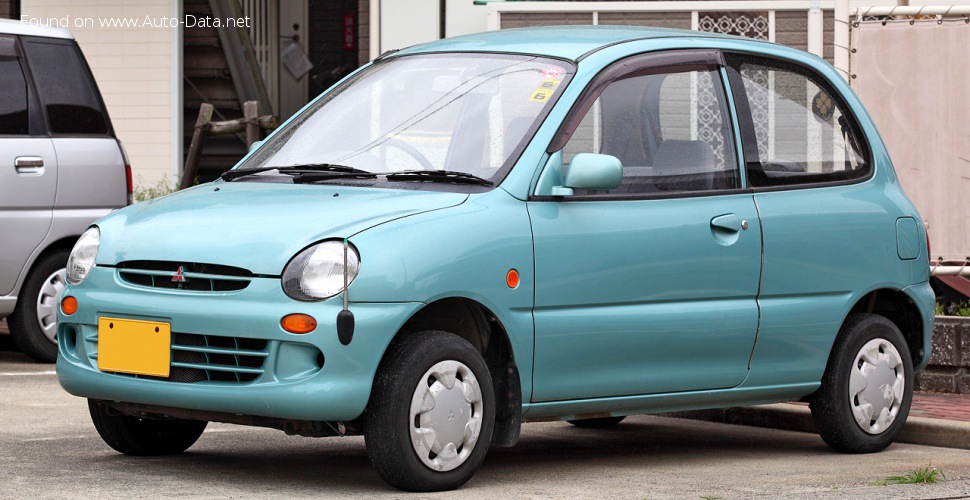
The Mitsubishi Minica V 0.66 i 16V ST-4WD (55 Hp) was designed as a practical and space-efficient 3-door hatchback, offering seating for four occupants. Its exterior dimensions were strictly dictated by Kei car regulations, resulting in a compact footprint that made it exceptionally maneuverable in congested Japanese cities. The vehicle measured 129.72 inches (3295 mm) in length, 54.92 inches (1395 mm) in width, and 59.25 inches (1505 mm) in height. The wheelbase of 89.76 inches (2280 mm) was maximized to provide as much interior volume as possible within its constrained length, contributing to a surprisingly roomy cabin for its size.
Design-wise, the Minica V adopted the functional aesthetic common to Kei cars of the 1990s. Its relatively tall and boxy profile was not merely for styling but was a deliberate choice to enhance interior headroom and cargo capacity. The large windows provided excellent visibility, a crucial factor for navigating tight urban environments. The vehicle’s compact dimensions were further complemented by a remarkably small minimum turning circle of 30.18 feet (9.2 meters), making U-turns and parking in tight spots effortless. The front and rear track widths were identical at 47.83 inches (1215 mm), contributing to a stable stance for a vehicle of its height.
In terms of features, the Minica V 0.66 i 16V ST-4WD (55 Hp) was equipped with a robust set of mechanicals for its class. The suspension system utilized independent Spring Struts for the front wheels and a Coil Spring setup for the rear, providing a comfortable ride and predictable handling. Braking duties were handled by disc brakes at the front and drum brakes at the rear, a common and cost-effective combination for small vehicles of the era. Notably, the vehicle also included ABS (Anti-lock Braking System) as an assisting system, a significant safety feature for a Kei car in the 1990s, enhancing control during emergency braking. Steering was managed by a rack and pinion system, assisted by hydraulic power steering, ensuring light and responsive feedback to the driver. The car rode on 155/70 R13S tires, providing a good balance of grip and ride comfort for its size.
Technical Specifications
| Category | Specification |
|---|---|
| Brand | Mitsubishi |
| Model | Minica |
| Generation | Minica V |
| Type (Engine) | 0.66 i 16V ST-4WD (55 Hp) |
| Start of Production | 1993 year |
| End of Production | 1999 year |
| Powertrain Architecture | Internal Combustion engine |
| Body Type | Hatchback |
| Seats | 4 |
| Doors | 3 |
| Fuel Consumption (combined) | 4.9 l/100 km (48 US mpg / 57.6 UK mpg) |
| Fuel Type | Petrol (Gasoline) |
| Maximum Speed | 110 km/h (68.35 mph) |
| Weight-to-Power Ratio | 12.9 kg/Hp (77.5 Hp/tonne) |
| Weight-to-Torque Ratio | 11.8 kg/Nm (84.5 Nm/tonne) |
| Power | 55 Hp @ 7000 rpm |
| Power per Liter | 83.5 Hp/l |
| Torque | 60 Nm @ 5000 rpm (44.25 lb.-ft. @ 5000 rpm) |
| Engine Layout | Front, Transverse |
| Engine Displacement | 659 cm3 (0.66 liters / 40.21 cu. in.) |
| Number of Cylinders | 4 |
| Engine Configuration | Inline |
| Cylinder Bore | 60 mm (2.36 in.) |
| Piston Stroke | 58.3 mm (2.3 in.) |
| Compression Ratio | 8.5:1 |
| Number of Valves per Cylinder | 4 |
| Fuel Injection System | Multi-port manifold injection |
| Engine Aspiration | Naturally aspirated engine |
| Valvetrain | OHC |
| Kerb Weight | 710 kg (1565.28 lbs.) |
| Fuel Tank Capacity | 32 l (8.45 US gal / 7.04 UK gal) |
| Length | 3295 mm (129.72 in.) |
| Width | 1395 mm (54.92 in.) |
| Height | 1505 mm (59.25 in.) |
| Wheelbase | 2280 mm (89.76 in.) |
| Front Track | 1215 mm (47.83 in.) |
| Rear (Back) Track | 1215 mm (47.83 in.) |
| Minimum Turning Circle | 9.2 m (30.18 ft.) |
| Drive Wheel | All-wheel drive (4×4) |
| Number of Gears and Type of Gearbox | 5 gears, manual transmission |
| Front Suspension | Spring Strut |
| Rear Suspension | Coil spring |
| Front Brakes | Disc |
| Rear Brakes | Drum |
| Assisting Systems | ABS (Anti-lock braking system) |
| Steering Type | Steering rack and pinion |
| Power Steering | Hydraulic Steering |
| Tires Size | 155/70 R13S |
Legacy and Market Impact
The Mitsubishi Minica, and specifically the V generation with its 0.66 i 16V ST-4WD (55 Hp) variant, holds a significant place in Japan’s automotive history. As a long-running nameplate dating back to 1962, the Minica consistently evolved to meet the changing demands of the Kei car segment. The fifth generation, produced through the 1990s, solidified its reputation as a highly practical, economical, and surprisingly capable urban transporter.
In its primary market, Japan, the Minica V competed fiercely with other popular Kei cars like the Suzuki Alto, Daihatsu Mira, and Honda Life. What set the Minica V 0.66 i 16V ST-4WD apart was its combination of a relatively advanced 16-valve engine, excellent fuel efficiency, and the added security and traction of an all-wheel-drive system. This AWD capability was a major selling point, especially in regions of Japan prone to heavy snowfall or requiring access to unpaved roads, making it a versatile choice for a wide range of consumers beyond just city dwellers.
The Minica V’s design philosophy, prioritizing maximum interior space within minimal external dimensions, made it an ideal vehicle for navigating Japan’s often narrow streets and limited parking. Its affordability, low running costs (thanks to Kei car tax benefits and impressive fuel economy), and robust mechanicals ensured its popularity throughout its production run. The inclusion of features like ABS, hydraulic power steering, and a 5-speed manual transmission further enhanced its appeal, offering a driving experience that was both comfortable and engaging for its class.
While the Mitsubishi Minica V was never officially sold in the United States, its existence highlights the vast differences in automotive markets and consumer preferences globally. In the US, the demand for larger, more powerful vehicles, combined with differing safety and emissions regulations, meant that Kei cars like the Minica would have struggled to find a niche. However, its engineering brilliance and success in its intended market underscore the global diversity of automotive design and the specialized solutions developed to meet specific regional needs. Today, the Minica V is remembered as a reliable, efficient, and iconic example of Japanese Kei car engineering, a small car with a big impact on its local market.