Introduction to the Volvo V60 II Cross Country
The Volvo V60 II Cross Country represents a compelling fusion of traditional Swedish practicality, contemporary design, and advanced powertrain technology. Introduced in March 2020, this second-generation V60 variant carves out a distinctive niche in the premium mid-size segment, blending the versatility of a station wagon (known as an estate in many markets) with the elevated ride height and rugged aesthetics of a crossover. The specific model under review, the Volvo V60 II Cross Country 2.0 B5 (250 Hp) Mild Hybrid AWD Automatic, exemplifies Volvo’s commitment to efficiency, performance, and its renowned safety standards, all wrapped in a sophisticated, go-anywhere package.
Building upon Volvo’s long-standing heritage of capable and family-friendly wagons, the V60 Cross Country variant enhances its appeal with increased ground clearance and protective body cladding, making it suitable for light off-road excursions or simply navigating challenging weather conditions. This particular iteration features a Mild Hybrid Electric Vehicle (MHEV) powertrain, showcasing Volvo’s strategic shift towards electrification across its lineup. The B5 designation signifies a gasoline (petrol) engine paired with a mild-hybrid system, delivering a robust 250 horsepower to all four wheels through an intelligent automatic transmission, making it a highly competitive and desirable option for discerning buyers in North America and beyond.
Powertrain and Performance: The Volvo V60 II Cross Country B5 Mild Hybrid
At the heart of the Volvo V60 II Cross Country B5 model lies a sophisticated 2.0-liter (1969 cm3 or 120.16 cu. in.) inline four-cylinder engine, designated by the code B420T2. This internal combustion engine (ICE) is a marvel of modern engineering, featuring direct injection, a turbocharger, and an intercooler to maximize power output and efficiency. It produces a healthy 250 horsepower at a range of 5400-5700 rpm, complemented by a substantial 258.15 lb.-ft. (350 Nm) of torque available across a broad band from 1800-4800 rpm. This wide torque curve ensures responsive acceleration and strong pulling power in various driving scenarios.
The “Mild Hybrid” aspect of the B5 powertrain is crucial to its modern performance and efficiency. This MHEV system incorporates a 14 horsepower electric motor that contributes an additional 29.5 lb.-ft. (40 Nm) of torque. While not capable of propelling the vehicle solely on electric power for extended distances, this power-assist hybrid system significantly enhances the driving experience. It provides an instantaneous torque boost during acceleration, aids in smoother and quicker engine restarts for the Start & Stop System, and recovers kinetic energy during braking through regenerative technology, which then charges a small battery. This integrated approach contributes to improved fuel economy and reduced emissions, helping the vehicle meet stringent Euro 6d emission standards.
Power is seamlessly delivered to all four wheels through an advanced 8-speed Geartronic automatic transmission. The All-Wheel Drive (AWD) architecture is designed for optimal traction and stability; the internal combustion engine and electric motor primarily drive the front wheels, with the rear wheels engaging automatically via an electrically or mechanically controlled clutch when additional grip is required. This intelligent system ensures confidence-inspiring handling, whether on slick roads or unpaved paths.
Performance figures for the Volvo V60 II Cross Country 2.0 B5 are impressive for its segment. It accelerates from 0 to 60 mph in a swift 6.6 seconds, or 0 to 100 km/h in 6.9 seconds, demonstrating its capability to merge onto highways or overtake with ease. The top speed is electronically limited to 111.85 mph (180 km/h), a common practice by Volvo to prioritize safety and sustainability. Fuel economy, measured under the WLTP cycle, shows a combined consumption of 35.1 – 30.5 US mpg (6.7-7.7 l/100 km), which is commendable for an AWD vehicle of this size and power output, further underscoring the benefits of its mild-hybrid technology.
Design and Features of the V60 II Cross Country
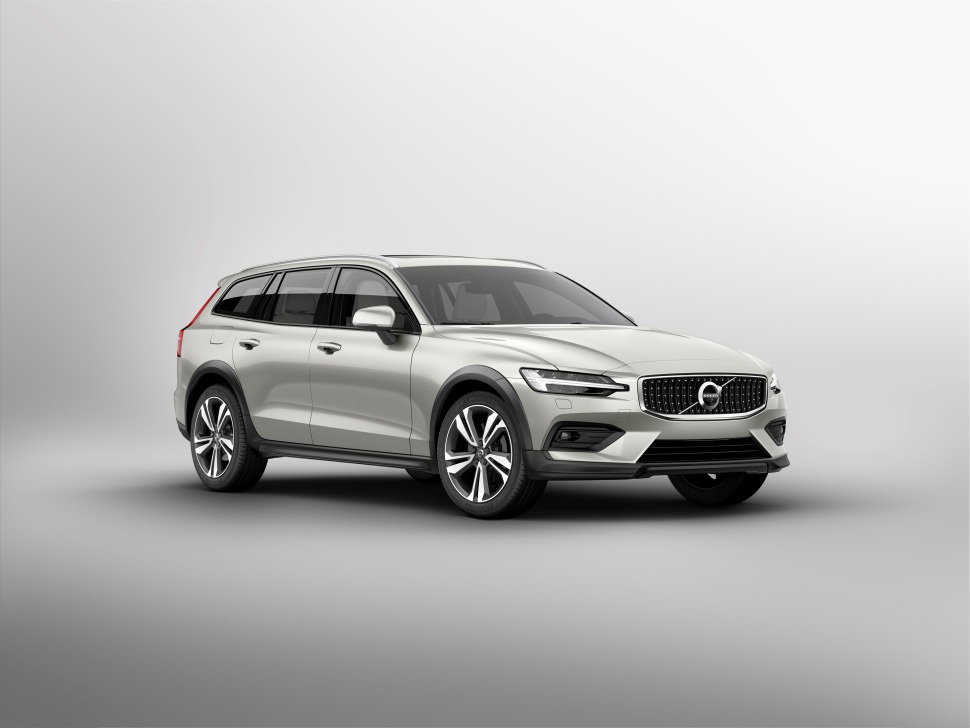
The design of the Volvo V60 II Cross Country masterfully blends the sleek lines of the standard V60 wagon with distinctive rugged elements. Its body type is described as both a station wagon (estate) and a crossover, reflecting its dual nature. With a length of 188.35 inches (4784 mm), a width of 72.83 inches (1850 mm, or 80.31 inches including mirrors), and a height of 59.02 inches (1499 mm), the V60 Cross Country maintains a substantial road presence. The critical differentiating factor is its impressive 8.27 inches (210 mm) of ground clearance, significantly more than the standard V60, enhancing its capability over rough terrain and through snow.
Visually, the Cross Country variant stands out with its robust black plastic body cladding around the wheel arches and lower body, skid plates at the front and rear, and a unique grille design. These features not only provide practical protection but also contribute to its adventurous aesthetic. Volvo’s signature “Thor’s Hammer” LED daytime running lights and distinctive vertical taillights ensure it is immediately recognizable as a modern Volvo.
Inside, the V60 Cross Country offers a spacious and elegantly appointed cabin designed for five occupants across its five doors. Volvo is renowned for its ergonomic and minimalist interior design, emphasizing high-quality materials and intuitive controls. The trunk space is highly versatile, offering a minimum of 18.68 cu. ft. (529 liters) with all seats in place, expanding to a generous 50.89 cu. ft. (1441 liters) when the rear seats are folded down, making it exceptionally practical for families and active lifestyles. The vehicle also boasts a maximum roof load of 165.35 lbs. (75 kg) and a substantial permitted trailer load with brakes of 3968.32 lbs. (1800 kg), further enhancing its utility.
Beyond aesthetics and practicality, the V60 Cross Country is packed with features designed for comfort, convenience, and, most importantly, safety. Standard assisting systems include ABS (Anti-lock braking system), and as a modern Volvo, it would feature a comprehensive suite of advanced driver-assistance systems (ADAS) such as lane-keeping aid, road sign information, and city safety collision avoidance technology (though not explicitly listed in the raw data, these are hallmarks of a 2020 Volvo). The steering is an electric rack and pinion system, providing precise and effortless maneuverability. The suspension system, featuring a double wishbone front with a transverse stabilizer and a rear setup with a transverse stabilizer and leaf spring, is tuned to offer a comfortable ride quality while maintaining composed handling, even with the elevated ride height. Disc brakes on both front (345 mm) and rear wheels provide strong stopping power. The vehicle can be equipped with various wheel sizes, including 18, 19, or 20 inches, allowing for personalization and performance tuning.
Technical Specifications
| Category | Specification | US/Imperial Equivalent |
|---|---|---|
| Brand | Volvo | |
| Model | V60 II Cross Country | |
| Type (Engine) | 2.0 B5 (250 Hp) Mild Hybrid AWD Automatic | |
| Start of Production | March, 2020 | |
| Powertrain Architecture | MHEV (Mild Hybrid Electric Vehicle) | |
| Body Type | Station wagon (estate), Crossover | |
| Seats | 5 | |
| Doors | 5 | |
| Performance Specs | ||
| Combined Fuel Consumption (WLTP) | 6.7-7.7 l/100 km | 35.1 – 30.5 US mpg |
| Combined Fuel Consumption (NEDC) | 6.7 l/100 km | 35.1 US mpg |
| CO2 Emissions (WLTP) | 152-173 g/km | |
| CO2 Emissions (NEDC) | 152 g/km | |
| Fuel Type | Petrol (Gasoline) | |
| Acceleration 0 – 60 mph | 6.6 sec | |
| Acceleration 0 – 100 km/h | 6.9 sec | |
| Maximum Speed | 180 km/h | 111.85 mph |
| Braking 100 km/h – 0 | 35 m | 114.83 ft |
| Emission Standard | Euro 6d | |
| Electric Cars and Hybrids Specs | ||
| Electric Motor Power | 14 Hp | |
| Electric Motor Torque | 40 Nm | 29.5 lb.-ft. |
| Internal Combustion Engine Specs | ||
| Power | 250 Hp @ 5400-5700 rpm | |
| Power per liter | 127 Hp/l | |
| Torque | 350 Nm @ 1800-4800 rpm | 258.15 lb.-ft. @ 1800-4800 rpm |
| Maximum Engine Speed | 6200 rpm | |
| Engine Layout | Front, Transverse | |
| Engine Model/Code | B420T2 | |
| Engine Displacement | 1969 cm3 | 2.0 Liters / 120.16 cu. in. |
| Number of Cylinders | 4 | |
| Engine Configuration | Inline | |
| Cylinder Bore | 82 mm | 3.23 in. |
| Piston Stroke | 93.2 mm | 3.67 in. |
| Compression Ratio | 10.5:1 | |
| Valves per Cylinder | 4 | |
| Fuel Injection System | Direct injection | |
| Engine Aspiration | Turbocharger, Intercooler | |
| Valvetrain | DOHC | |
| Engine Oil Capacity | 6.1 l | 6.45 US qt / 5.37 UK qt |
| Engine Systems | Start & Stop System, Particulate filter | |
| Space, Volume and Weights | ||
| Trunk (boot) Space – Minimum | 529 l | 18.68 cu. ft. |
| Trunk (boot) Space – Maximum | 1441 l | 50.89 cu. ft. |
| Fuel Tank Capacity | 71 l | 18.76 US gal / 15.62 UK gal |
| Max. Roof Load | 75 kg | 165.35 lbs. |
| Permitted Trailer Load with Brakes (12%) | 1800 kg | 3968.32 lbs. |
| Permitted Trailer Load without Brakes | 750 kg | 1653.47 lbs. |
| Dimensions | ||
| Length | 4784 mm | 188.35 in. |
| Width | 1850 mm | 72.83 in. |
| Width with Mirrors Folded | 1916 mm | 75.43 in. |
| Width Including Mirrors | 2040 mm | 80.31 in. |
| Height | 1499 mm | 59.02 in. |
| Wheelbase | 2875 mm | 113.19 in. |
| Front Track | 1636-1649 mm | 64.41 – 64.92 in. |
| Rear Track | 1621-1633 mm | 63.82 – 64.29 in. |
| Ride Height (Ground Clearance) | 210 mm | 8.27 in. |
| Drag Coefficient (Cd) | 0.33 | |
| Minimum Turning Circle | 11.7 m | 38.39 ft. |
| Drivetrain, Brakes and Suspension Specs | ||
| Drivetrain Architecture | ICE and electric motor permanently drive front wheels; rear wheels driven via clutch when necessary. | |
| Drive Wheel | All wheel drive (4×4) | |
| Number of Gears and Type of Gearbox | 8 gears, automatic transmission Geartronic | |
| Front Suspension | Double wishbone, Transverse stabilizer | |
| Rear Suspension | Transverse stabilizer, Leaf spring | |
| Front Brakes | Disc, 345 mm | |
| Rear Brakes | Disc | |
| Assisting Systems | ABS (Anti-lock braking system) | |
| Steering Type | Steering rack and pinion | |
| Power Steering | Electric Steering | |
| Wheel Rims Size | 18; 19; 20 | |
Legacy and Market Impact
The Volvo V60 II Cross Country, particularly the B5 Mild Hybrid variant, stands as a testament to Volvo’s enduring legacy in the automotive world. For decades, Volvo has been synonymous with safety, robust engineering, and practical station wagons. The Cross Country line, introduced in the late 1990s with the V70 Cross Country, ingeniously adapted the traditional wagon formula to meet a growing consumer demand for vehicles with greater versatility and a more adventurous stance, without fully committing to the larger footprint and often higher fuel consumption of a traditional SUV.
In the North American market, where the station wagon segment has largely been eclipsed by SUVs and crossovers, the V60 Cross Country carves out a distinct and appreciated niche. It appeals to buyers who desire the refined driving dynamics and lower center of gravity of a car, combined with the all-weather capability of all-wheel drive and the added utility of increased ground clearance. Its primary competitors in the premium segment include the Audi A4 Allroad and, to some extent, the Subaru Outback, though the Volvo positions itself with a more luxurious and distinctly Scandinavian aesthetic. In Europe, it also faces competition from models like the Mercedes-Benz C-Class All-Terrain.
The introduction of the B5 Mild Hybrid powertrain in 2020 underscores Volvo’s commitment to sustainability and its broader electrification strategy. While a mild hybrid system offers more subtle benefits compared to a full plug-in hybrid or battery-electric vehicle, it represents a crucial step in improving efficiency and reducing emissions across its internal combustion