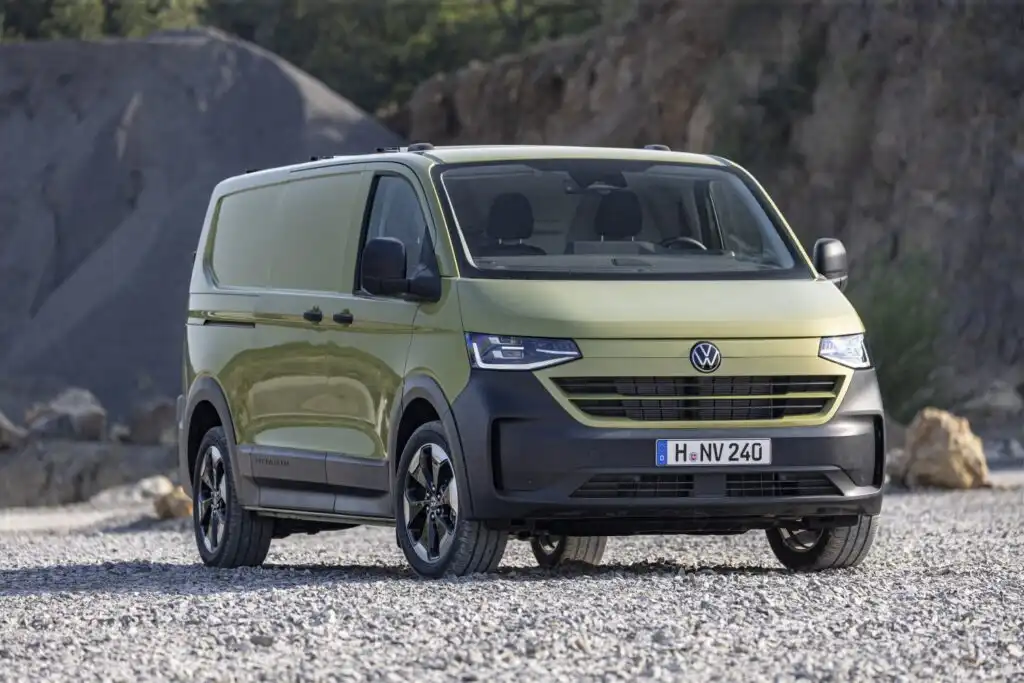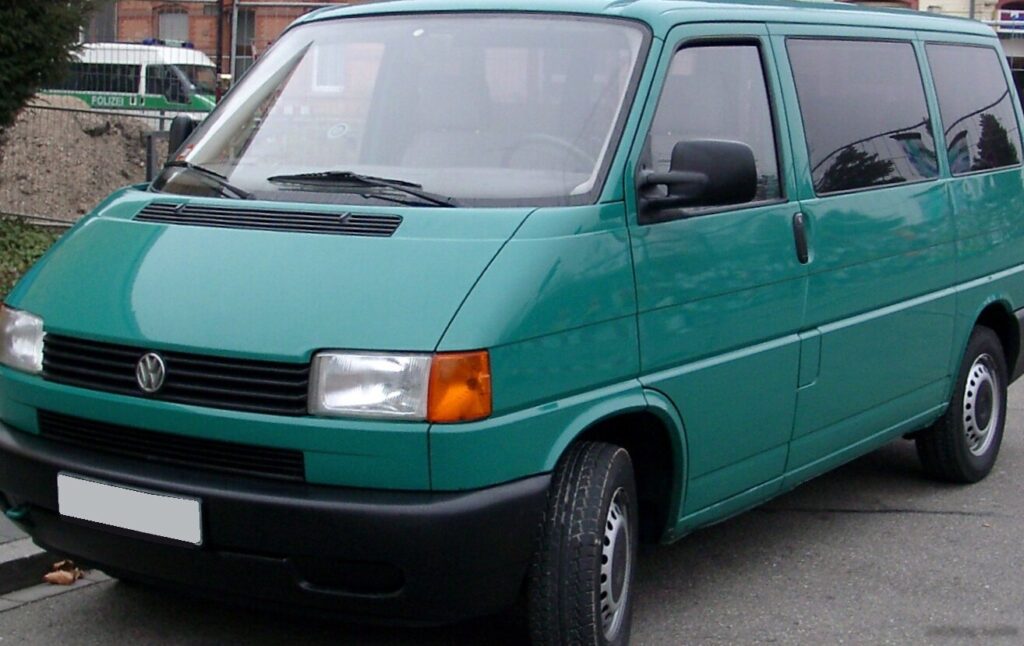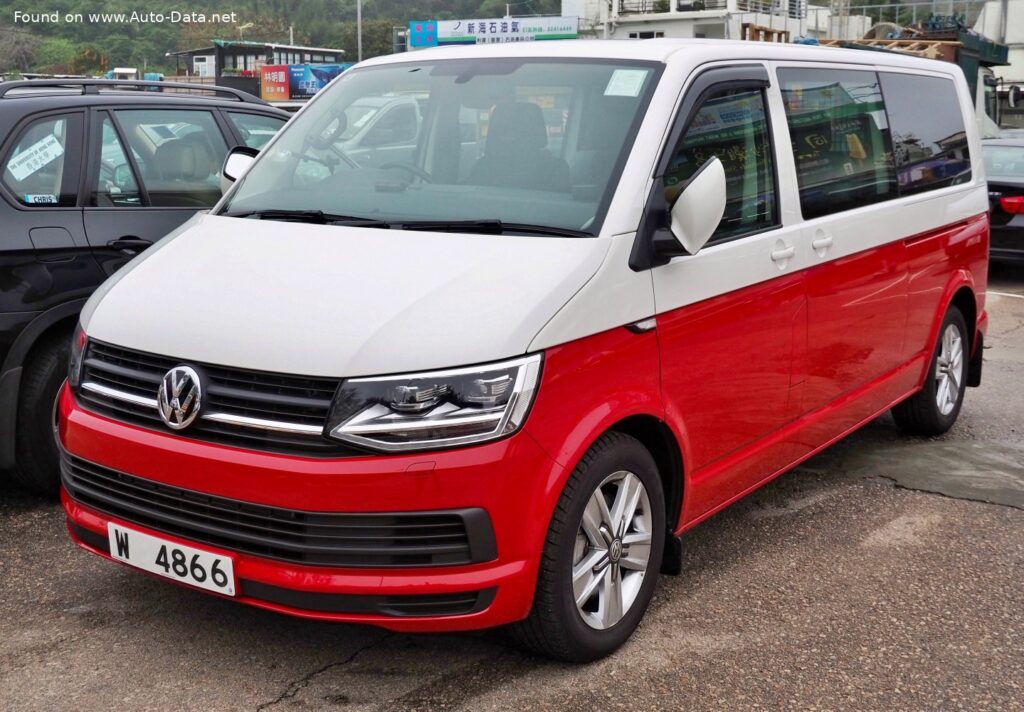
The Volkswagen Transporter (T6) Kombi: A European Workhorse of Utility and Versatility
The Volkswagen Transporter (T6) Kombi represents the sixth generation of Volkswagen’s iconic light commercial vehicle (LCV) line, a lineage that traces its roots back to the legendary Type 2 (Bus) of the 1950s. Produced from 2018 to 2019 in this specific configuration, the T6 Kombi continued the tradition of offering a highly versatile platform, equally adept at hauling cargo as it was at transporting passengers. While not directly sold in the United States in this exact form, the Transporter series is a cornerstone of the European automotive landscape, revered for its robust engineering, practical design, and long-standing reliability. The particular variant under scrutiny, the 2.0 TDI (114 Hp) L1H2, highlights a common and highly efficient powertrain option paired with a standard wheelbase (L1) and a high roof (H2), catering to a broad spectrum of commercial and private users across Europe and other international markets.
This generation, the T6, built upon the strengths of its predecessors, refining comfort, safety, and efficiency while maintaining the hallmark utility that defines the Transporter. The Kombi designation specifically refers to its mixed-use capability, bridging the gap between a dedicated panel van and a full passenger shuttle. It offers a flexible interior that can be configured with anywhere from four to nine seats, making it an ideal choice for businesses requiring both load-carrying capacity and people-moving ability, or for large families and adventure seekers who value space and adaptability.
Engine and Performance of the Volkswagen Transporter (T6) Kombi
At the heart of this particular Volkswagen Transporter (T6) Kombi variant is a 2.0-liter TDI (Turbocharged Direct Injection) diesel engine, known internally by codes such as EA288, CXHB, or CXGC. This inline four-cylinder powerplant is a staple across Volkswagen Group’s European lineup, celebrated for its balance of power, torque, and fuel efficiency. With a displacement of 1968 cubic centimeters (120.09 cu. in.), the engine delivers a respectable 114 horsepower at a broad range of 3200-4000 rpm, ensuring consistent power delivery under varying loads. More critically for a commercial vehicle, it produces a robust 184.39 lb.-ft. of torque, available from a low 1400 rpm all the way up to 3200 rpm. This wide torque band is crucial for effortless urban driving, highway cruising, and especially for handling heavy payloads or towing trailers without excessive strain.
The engine’s design incorporates a DOHC (Double Overhead Camshaft) valvetrain with four valves per cylinder, optimizing airflow and combustion efficiency. Fuel is delivered via a sophisticated common rail diesel injection system, which, combined with a turbocharger and intercooler, ensures precise fuel atomization and optimal air-fuel mixture, contributing to both performance and emissions control. With a compression ratio of 15.5:1, the engine operates efficiently, extracting maximum energy from the diesel fuel. Power is channeled to the front wheels through a durable 5-speed manual transmission, a choice that emphasizes driver engagement and cost-effectiveness, common in European commercial vehicles.
In terms of performance, the Transporter (T6) Kombi 2.0 TDI (114 Hp) is not built for speed, but rather for reliable, consistent operation. It achieves 0-60 mph in a measured 15.2 seconds, with a top speed of 98.18 mph. These figures are entirely appropriate for its intended purpose as a versatile utility vehicle. Where it truly shines is in its fuel economy and environmental compliance. The vehicle meets the stringent Euro 6d TEMP-EVAP emission standard, a testament to its advanced emissions control systems, which include a particulate filter and a Start & Stop system to further reduce fuel consumption and CO2 emissions (170-185 g/km) in urban environments. Combined fuel consumption ranges from 33.1 to 36.2 US mpg, making it an economical choice for businesses and individuals alike, especially given the rising fuel costs in its primary markets.
Design and Features: The Versatility of the Volkswagen Transporter (T6) Kombi
The design of the Volkswagen Transporter (T6) Kombi is a masterclass in functional aesthetics, blending modern Volkswagen styling cues with the practical demands of a commercial van. As a “Van” body type with 4-5 doors and seating for 4-9 occupants, its primary attribute is versatility. The L1H2 designation is key: “L1” signifies the standard wheelbase of 118.11 inches, offering a balanced footprint for maneuverability and interior space, while “H2” denotes the high roof configuration. This elevated roofline, providing an overall height of 85.71 inches, significantly enhances interior volume, making it more comfortable for passengers and allowing for much larger or taller cargo items, with a maximum trunk (boot) space of an impressive 236.61 cu. ft.
The exterior dimensions – a length of 193.07 inches and a width of 74.96 inches (90.43 inches including mirrors) – contribute to its practicality, allowing it to navigate urban environments while still offering substantial internal capacity. The ground clearance of 7.91 inches provides adequate capability for light-duty work off paved roads. Its minimum turning circle of 39.04 feet is commendable for a vehicle of its size, aiding maneuverability in tight spaces.
Underneath its utilitarian skin, the T6 Kombi features a well-engineered chassis designed for both durability and comfort. The front suspension employs an independent McPherson strut setup with coil springs and an anti-roll bar, while the rear features an independent coil spring, wishbone, and transverse stabilizer arrangement. This sophisticated suspension system, unusual for many commercial vehicles, contributes to a more car-like driving experience, enhancing stability, handling, and passenger comfort, even when fully loaded. Braking is handled by ventilated discs both front (308×29.5 mm) and rear (294×22 mm), complemented by an ABS (Anti-lock Braking System) for enhanced safety. Hydraulic rack and pinion steering provides direct feedback and ease of control.
Practical features abound, including a substantial maximum payload capacity ranging from 1935.66 to 2482.41 lbs., and a robust towing capability of 4850.17 lbs. with braked trailers. A 70-liter (18.49 US gal) fuel tank ensures a good operating range, while a 13-liter (3.43 US gal) AdBlue tank supports its advanced emissions system. The ability to carry a roof load of up to 220.46 lbs. further underscores its utility, making it a truly adaptable vehicle for a wide array of tasks.
Technical Specifications
| Category | Specification |
|---|---|
| General Information | |
| Brand | Volkswagen |
| Model | Transporter |
| Generation | Transporter (T6) Kombi |
| Type (Engine) | 2.0 TDI (114 Hp) L1H2 |
| Start of Production | 2018 year |
| End of Production | 2019 year |
| Powertrain Architecture | Internal Combustion engine |
| Body Type | Van |
| Seats | 4-9 |
| Doors | 4-5 |
| Performance Specs | |
| Fuel consumption (economy) – urban (NEDC, WLTP equivalent) | 30.2 – 27.7 US mpg |
| Fuel consumption (economy) – extra urban (NEDC, WLTP equivalent) | 40.6 – 37.3 US mpg |
| Fuel consumption (economy) – combined (NEDC, WLTP equivalent) | 36.2 – 33.1 US mpg |
| CO2 emissions (NEDC, WLTP equivalent) | 170-185 g/km |
| Fuel Type | Diesel |
| Acceleration 0 – 60 mph | 15.2 sec |
| Maximum speed | 98.18 mph |
| Emission standard | Euro 6d TEMP-EVAP |
| Weight-to-power ratio | 15.1 kg/Hp, 66.2 Hp/tonne |
| Weight-to-torque ratio | 6.9 kg/Nm, 145.2 Nm/tonne |
| Engine Specs | |
| Power | 114 Hp @ 3200-4000 rpm |
| Power per liter | 57.9 Hp/l |
| Torque | 184.39 lb.-ft. @ 1400-3200 rpm |
| Engine layout | Front, Transverse |
| Engine Model/Code | EA288 / CXHB, CXGC |
| Engine displacement | 120.09 cu. in. (2.0 Liters) |
| Number of cylinders | 4 |
| Engine configuration | Inline |
| Cylinder Bore | 3.19 in. |
| Piston Stroke | 3.76 in. |
| Compression ratio | 15.5:1 |
| Number of valves per cylinder | 4 |
| Fuel injection system | Diesel Commonrail |
| Engine aspiration | Turbocharger, Intercooler |
| Valvetrain | DOHC |
| Engine oil capacity | 7.82 US qt |
| Engine systems | Start & Stop System, Particulate filter |
| Space, Volume and Weights | |
| Kerb Weight | 3796.36 – 4572.39 lbs. |
| Max. weight | 5732.02 – 7054.79 lbs. |
| Max load | 1935.66 – 2482.41 lbs. |
| Trunk (boot) space – maximum | 236.61 cu. ft. |
| Fuel tank capacity | 18.49 US gal |
| AdBlue tank | 3.43 US gal |
| Max. roof load | 220.46 lbs. |
| Permitted trailer load with brakes (12%) | 4850.17 lbs. |
| Permitted trailer load without brakes | 1653.47 lbs. |
| Permitted towbar download | 220.46 lbs. |
| Dimensions | |
| Length | 193.07 in. |
| Width | 74.96 in. |
| Width including mirrors | 90.43 in. |
| Height | 85.71 in. |
| Wheelbase | 118.11 in. |
| Front overhang | 35.75 in. |
| Rear overhang | 39.09 in. |
| Ride height (ground clearance) | 7.91 in. |
| Minimum turning circle (turning diameter) | 39.04 ft. |
| Approach angle | 21.2° |
| Departure angle | 16.2° |
| Ramp-over (brakeover) angle | 13.7° |
| Drivetrain, Brakes and Suspension Specs | |
| Drivetrain Architecture | The Internal combustion engine (ICE) drives the front wheels of the vehicle. |
| Drive wheel | Front wheel drive |
| Number of gears and type of gearbox | 5 gears, manual transmission |
| Front suspension | Independent, type McPherson with coil spring and anti-roll bar |
| Rear suspension | Independent coil spring, Wishbone, Transverse stabilizer |
| Front brakes | Ventilated discs, 308×29.5 mm |
| Rear brakes | Ventilated discs, 294×22 mm |
| Assisting systems | ABS (Anti-lock braking system) |
| Steering type | Steering rack and pinion |
| Power steering | Hydraulic Steering |
| Tires size | 205/65 R16; 215/65 R16 |
| Wheel rims size | 6.5J x 16 |
Legacy and Market Impact of the Volkswagen Transporter (T6) Kombi
The Volkswagen Transporter series, and specifically the T6 generation, holds a formidable position in the European and international light commercial vehicle markets. Its legacy is built on decades of continuous evolution, starting from the iconic T1 “Bus” or “Microbus,” which established the template for versatile, practical vans. The T6 Kombi continued this tradition, earning a reputation as a highly reliable, durable, and adaptable vehicle that transcends typical commercial usage.
In its primary markets, the Volkswagen Transporter (T6) Kombi is seen as a benchmark for its segment. Its competitors include other strong contenders like the Mercedes-Benz Vito, Ford Transit Custom, Renault Trafic, and Opel Vivaro. However, the Transporter often distinguishes itself with a slightly more premium feel, superior driving dynamics for a van, and a strong brand image that commands excellent resale values. This perception of quality and longevity makes it a preferred choice for many businesses, from small tradespeople to large fleet operators, as well as for families and individuals seeking a robust and spacious multi-purpose vehicle.
The Kombi variant, with its flexible seating and cargo configurations, plays a particularly crucial role. It’s not just a workhorse; it’s also a popular base for camper conversions, a shuttle for hotels and tour operators, and a reliable family vehicle for those needing significant space. The L1H2 configuration, with its high roof, is especially valued for these applications, offering generous headroom and cargo volume that standard roof models cannot match. The 2.0 TDI engine, even in its 114 Hp guise, contributes significantly to this success by offering a pragmatic blend of fuel efficiency and sufficient power for varied tasks, keeping running costs manageable for its owners.
The Transporter’s impact extends beyond mere sales figures; it has become a cultural icon, particularly in Europe. Its robust build quality, coupled with Volkswagen’s reputation for engineering, ensures that many Transporters remain on the road for decades, cementing its status as a trusted companion for work and adventure. The T6 generation, including the Kombi, further solidified this legacy, embodying the continuous evolution of a classic concept to meet modern demands for efficiency, safety, and versatility, ensuring its relevance and popularity well into the future.