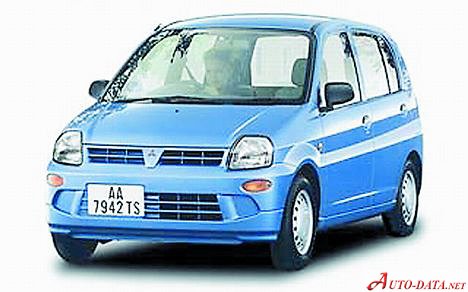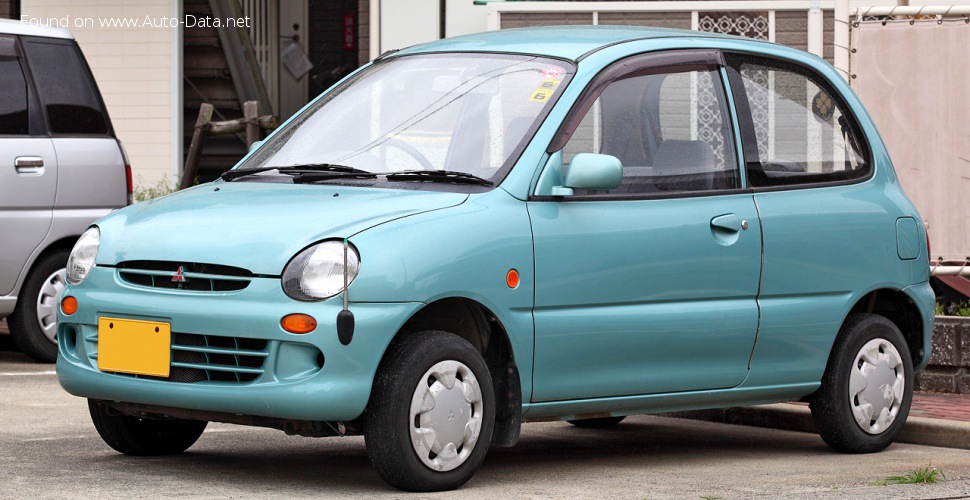
Introduction to the Mitsubishi Minica V 0.66 i 20V SR-Z (64 Hp)
The Mitsubishi Minica, a venerable nameplate in the Japanese automotive landscape, has long been synonymous with the compact and highly regulated “Kei car” segment. The fifth-generation Minica, produced from 1993 to 1999, represented a significant evolution for the model, blending practicality with surprising technological prowess. Among its various trims, the Mitsubishi Minica V 0.66 i 20V SR-Z (64 Hp) stood out as a performance-oriented variant, offering a spirited driving experience within the strict confines of Japan’s Kei car regulations. This particular model, a 3-door hatchback, was a testament to Mitsubishi’s engineering capabilities, cramming advanced features and a turbocharged engine into a diminutive package designed primarily for the dense urban environments of its home market. While never officially imported to the United States, the Minica V 0.66 i 20V SR-Z offers a fascinating glimpse into the unique automotive culture and engineering challenges of the Japanese Kei segment, showcasing how maximum performance can be extracted from minimal displacement.
Engineering and Performance: The Heart of the Mitsubishi Minica V 0.66 i 20V SR-Z (64 Hp)
At the core of the Mitsubishi Minica V 0.66 i 20V SR-Z (64 Hp) was a marvel of miniaturized engineering: a 0.66-liter (659 cm3) inline four-cylinder engine. Codenamed the 4A30, this powerplant was not just any small engine; it was a highly sophisticated unit featuring Double Overhead Camshafts (DOHC) and an impressive five valves per cylinder. This 20-valve configuration, rare even in larger engines of the era, allowed for optimized airflow and combustion efficiency, crucial for extracting maximum performance from such a small displacement.
To further boost its output, Mitsubishi equipped the SR-Z with a turbocharger, a common strategy in the Kei segment to meet the segment’s maximum power output. This setup enabled the engine to produce a robust 64 horsepower at a high 7000 rpm, hitting the absolute ceiling mandated by Kei car regulations. Torque output was equally impressive for its size, delivering 71.54 lb.-ft. (97 Nm) at a relatively low 3500 rpm, ensuring decent responsiveness in city driving. The engine’s high specific output of 97.1 HP per liter underscored its advanced design and the engineering effort involved in achieving such figures from a sub-one-liter engine.
Power was delivered to the front wheels via a precise 5-speed manual transmission, offering an engaging driving experience that appealed to enthusiasts. This combination allowed the lightweight Minica SR-Z, with a curb weight of just 1543.24 pounds (700 kg), to achieve a top speed of 65.24 mph (105 km/h). While this might seem modest by American standards, it was more than adequate for Japanese urban and highway conditions, where speed limits and traffic density often limit higher velocities. The vehicle’s exceptional weight-to-power ratio of 10.9 kg/Hp further contributed to its nimble feel and surprisingly sprightly acceleration. Furthermore, the Minica V SR-Z boasted remarkable fuel efficiency, achieving an impressive 54.7 US mpg (4.3 l/100 km) in combined driving, a critical selling point in a market focused on economy and environmental considerations.
Design and Features of the Mitsubishi Minica V
The Mitsubishi Minica V, particularly in its SR-Z trim, showcased a design philosophy driven by both practicality and a hint of sportiness. As a 3-door hatchback, it offered a compact footprint ideal for navigating congested city streets and fitting into tight parking spaces. Despite its diminutive exterior dimensions—measuring just 129.72 inches in length, 54.92 inches in width, and 58.