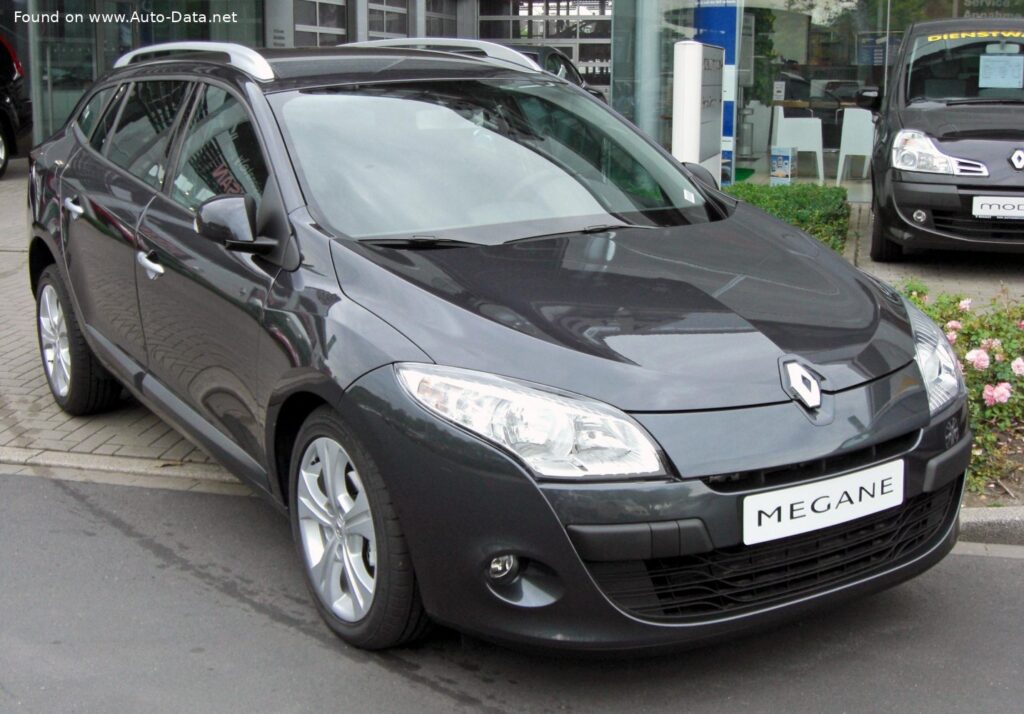
Renault Megane III Grandtour 2.0 dCi (150 Hp) FAP Automatic
The Renault Megane III Grandtour 2.0 dCi (150 Hp) FAP Automatic represents a significant offering within the highly competitive European compact segment, specifically targeting families and individuals prioritizing practicality, fuel efficiency, and a comfortable driving experience. Produced between 2010 and 2012, this particular iteration of the third-generation Megane Grandtour, known as an estate or station wagon in the US, combined a potent yet economical diesel powertrain with an automatic transmission, making it a compelling choice for long-distance cruising and daily utility across the continent. While never officially sold in the United States, the Megane Grandtour exemplified Renault’s commitment to delivering well-rounded vehicles tailored to the specific demands and preferences of its primary European market, where diesel engines and station wagons held a much stronger appeal than in North America. This model underscored Renault’s engineering prowess in balancing performance with environmental considerations, adhering to the Euro 5 emission standards of its time.
Engine and Performance of the Renault Megane III Grandtour
At the heart of this Renault Megane III Grandtour variant was a robust 2.0-liter (1995 cm³ or 121.74 cu. in.) dCi inline four-cylinder diesel engine, internally designated M9R 615. This powerplant was a testament to modern diesel technology, featuring a common rail fuel injection system, a turbocharger, and an intercooler to optimize both power output and efficiency. It delivered a respectable 150 horsepower at 4000 rpm, translating to a power per liter figure of 75.2 Hp/l. More impressively for a family-oriented vehicle, the engine generated a substantial 265.52 lb.-ft. (360 Nm) of torque from a low 2000 rpm, providing excellent pulling power and effortless acceleration, even when fully loaded.
Power was seamlessly managed by a 6-speed automatic transmission, driving the front wheels. This combination contributed to a smooth and refined driving experience, a key selling point in its segment. Performance figures were solid for its class, with the Megane Grandtour capable of accelerating from 0 to 60 mph in a brisk 9.0 seconds, and achieving a top speed of 130.49 mph (210 km/h).
Fuel economy was a major highlight, reflecting the efficiency of diesel engines prevalent in Europe. The vehicle achieved a combined fuel consumption rating of 35.6 US mpg (6.6 l/100 km), with urban consumption at 27 US mpg (8.7 l/100 km) and an impressive extra-urban figure of 42.8 US mpg (5.5 l/100 km). Furthermore, equipped with a Diesel Particulate Filter (FAP), the Megane Grandtour met the stringent Euro 5 emission standards, with CO2 emissions rated at 175 g/km, showcasing its commitment to environmental responsibility for its era. The engine’s compression ratio of 15:1 and 2 valves per cylinder further contributed to its efficiency and responsiveness.
Design and Features
The Megane III Grandtour adopted a more conventional and universally appealing design language compared to its predecessor, moving away from the polarizing “bustle-back” rear of the Megane II hatchback. As a 5-door station wagon (estate), it prioritized practicality and cargo versatility. Its dimensions were well-suited for European roads and parking, measuring 179.49 inches in length, 69.53 inches in width, and 57.52 inches in height, with a wheelbase of 106.42 inches. The sleek profile was complemented by a drag coefficient (Cd) of 0.32, aiding in both fuel efficiency and reduced wind noise.
Inside, the Megane Grandtour offered a comfortable and spacious cabin for five occupants. The true strength of the station wagon body style was its cargo capacity. With the rear seats in place, it provided a generous 18.5 cubic feet (524 liters) of trunk space, which could expand to an impressive 56.33 cubic feet (1595 liters) with the rear seats folded down. This made it an ideal choice for families, offering ample room for luggage, groceries, or sports equipment. The vehicle also boasted a substantial maximum load capacity of 1091.29 lbs (495 kg) and a permitted trailer load with brakes of 2866.01 lbs (1300 kg), further enhancing its utility.
Key features included a robust suspension setup with an independent McPherson type at the front and a torsion beam at the rear, providing a balanced ride and handling. Braking power was supplied by ventilated discs at the front and disc brakes at the rear, complemented by an Anti-lock Braking System (ABS) for enhanced safety. The electric power steering system offered light and precise control, making urban maneuvers easier with a minimum turning circle of 36.25 feet (11.05 meters). The car rode on 17-inch wheel rims fitted with 205/50 R17 tires, contributing to both its aesthetic appeal and road holding.
Technical Specifications
| Category | Specification |
|---|---|
| Brand | Renault |
| Model | Megane III Grandtour |
| Engine Type | 2.0 dCi (150 Hp) FAP Automatic |
| Production Years | 2010 – 2012 |
| Body Type | Station wagon (estate), 5 Doors, 5 Seats |
| Powertrain Architecture | Internal Combustion engine, Front-wheel drive |
| Fuel Type | Diesel |
| Fuel Consumption (Urban) | 27 US mpg (8.7 l/100 km) |
| Fuel Consumption (Extra Urban) | 42.8 US mpg (5.5 l/100 km) |
| Fuel Consumption (Combined) | 35.6 US mpg (6.6 l/100 km) |
| CO2 Emissions | 175 g/km |
| Emission Standard | Euro 5 |
| Acceleration 0-60 mph | 9.0 sec |
| Maximum Speed | 130.49 mph (210 km/h) |
| Power | 150 Hp @ 4000 rpm |
| Torque | 265.52 lb.-ft. (360 Nm) @ 2000 rpm |
| Engine Displacement | 2.0 liters (1995 cm³, 121.74 cu. in.) |
| Number of Cylinders | 4, Inline |
| Bore x Stroke | 3.31 in (84 mm) x 3.54 in (90 mm) |
| Compression Ratio | 15:1 |
| Fuel Injection System | Diesel Commonrail |
| Engine Aspiration | Turbocharger, Intercooler |
| Engine Oil Capacity | 7.4 US qt (7 l) |
| Coolant Capacity | 7.4 US qt (7 l) |
| Engine Systems | Particulate filter (FAP) |
| Kerb Weight | 3194.5 lbs (1449 kg) |
| Maximum Weight | 4285.79 lbs (1944 kg) |
| Maximum Load | 1091.29 lbs (495 kg) |
| Trunk Space (Min/Max) | 18.5 – 56.33 cu. ft. (524 – 1595 l) |
| Fuel Tank Capacity | 15.85 US gal (60 l) |
| Length | 179.49 in (4559 mm) |
| Width | 69.53 in (1766 mm) |
| Height | 57.52 in (1461 mm) |
| Wheelbase | 106.42 in (2703 mm) |
| Front Track | 60.87 in (1546 mm) |
| Rear Track | 60.91 in (1547 mm) |
| Ground Clearance | 4.72 in (120 mm) |
| Minimum Turning Circle | 36.25 ft (11.05 m) |
| Gearbox Type | 6 gears, automatic transmission |
| Front Suspension | Independent type McPherson |
| Rear Suspension | Torsion beam |
| Front Brakes | Ventilated discs |
| Rear Brakes | Disc |
| Assisting Systems | ABS (Anti-lock braking system) |
| Steering Type | Steering rack and pinion, Electric Steering |
| Tires Size | 205/50 R17 |
| Wheel Rims Size | 17 inches |
Legacy and Market Impact in Europe
The Renault Megane III Grandtour 2.0 dCi (150 Hp) FAP Automatic carved out a significant niche in the highly competitive European C-segment. It was designed to appeal to a broad demographic, from young families needing versatile space to business users requiring an economical and comfortable commuter. Its reputation was built on a foundation of reliability, comfort, and, crucially for the European market, exceptional fuel efficiency from its diesel powertrain.
In its home market, the Megane Grandtour faced stiff competition from a host of established rivals. Key competitors included the Volkswagen Golf Variant (known as Jetta SportWagen in some markets), Ford Focus Wagon, Opel Astra Sports Tourer, Peugeot 308 SW, and the Skoda Octavia Combi. Against these formidable opponents, the Megane distinguished itself with its distinctive French styling, a focus on ride comfort, and a strong value proposition. Renault’s long-standing presence and extensive dealer network across Europe also contributed to its sustained popularity.
The inclusion of the 2.0 dCi engine with a particulate filter and automatic transmission was particularly impactful. Diesel engines were, and to some extent still are, a cornerstone of the European automotive landscape, favored for their torque characteristics and lower fuel consumption, especially for high-mileage drivers. The automatic gearbox offered convenience in increasingly congested urban environments and on long highway journeys, providing a smooth alternative to manual transmissions. This specific powertrain configuration represented a sweet spot for many European buyers, blending performance with efficiency and ease of use.
Historically, the Megane III Grandtour played a vital role in maintaining Renault’s market share in the compact segment. It showcased the brand’s ability to adapt to evolving consumer preferences and stricter emission regulations while delivering a practical and enjoyable vehicle. While it never crossed the Atlantic to US shores, its design, engineering, and market success in Europe provided a clear example of how automotive manufacturers tailor their offerings to specific regional demands, reinforcing Renault’s identity as a leader in innovative and practical family vehicles in its primary markets. Its legacy is one of a dependable, efficient, and well-designed family hauler that met the practical needs of European drivers during its production run.