The Volvo V60 II Cross Country 2.0 D4 (190 Hp) AWD Automatic: A Ruggedly Refined Estate
The Volvo V60 II Cross Country 2.0 D4 (190 Hp) AWD Automatic represents the second generation of Volvo’s popular V60 estate, specifically in its adventurous Cross Country guise. Introduced in July 2018, this particular diesel-powered all-wheel-drive variant, manufactured until July 2020, carved out a distinct niche in the European premium mid-size segment. Blending the practicality and elegant lines of a traditional station wagon with the enhanced capability and rugged aesthetic of a crossover, the V60 II Cross Country was designed for consumers seeking versatility without sacrificing luxury or driving dynamics. While its specific diesel powertrain was primarily targeted at European markets due to differing fuel preferences and emission standards, the broader Cross Country concept resonated globally, including in the United States, offering a compelling alternative to conventional SUVs.
The Volvo V60 II Cross Country: A Blend of Elegance and Rugged Capability
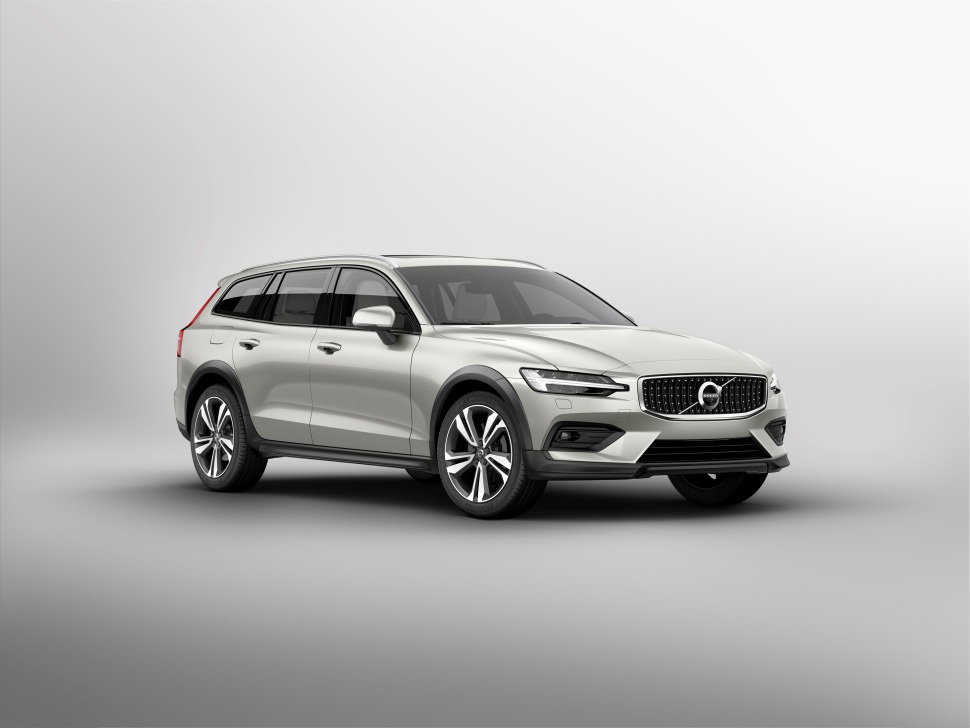
Volvo has a long-standing tradition of producing Cross Country models, beginning in the late 1990s, offering vehicles that combine the best attributes of a wagon and an SUV. The second-generation V60 Cross Country continued this legacy, built on Volvo’s advanced Scalable Product Architecture (SPA) platform, which also underpins larger Volvo models like the S90, V90, and XC60. This platform provided a strong foundation for both safety and dynamic performance. The Cross Country variant distinguished itself from the standard V60 estate with increased ride height, protective body cladding, and unique styling elements that emphasized its adventurous spirit.
Positioned as a premium offering, the V60 II Cross Country appealed to a demographic that valued functionality, safety, and sophisticated design. Its five-door, five-seat configuration made it a practical choice for families, while the All-Wheel Drive (AWD) system and elevated ground clearance ensured confidence on varied terrains, from snowy mountain passes to unpaved country roads. This particular 2.0 D4 (190 Hp) AWD Automatic variant was a cornerstone of its powertrain lineup in markets where diesel engines were highly favored for their torque and fuel efficiency.
Powertrain and Performance of the Volvo V60 II Cross Country
At the heart of this particular Volvo V60 II Cross Country was a robust 2.0-liter D4 inline-four diesel engine, designated by Volvo as D4204T14. This powerplant delivered a respectable 190 horsepower at 4250 rpm, providing ample thrust for highway cruising and confident overtaking. More notably, the engine produced a substantial 295.02 lb.-ft. of torque across a broad and accessible rev range, from 1750 to 2500 rpm. This high torque output, characteristic of modern diesel engines, was crucial for the vehicle’s strong acceleration and towing capabilities, making it feel responsive and capable in various driving scenarios.
The engine’s advanced design featured a common rail fuel injection system, complemented by a turbocharger and intercooler, optimizing both power delivery and fuel efficiency. It was mated to a smooth and responsive 8-speed automatic transmission, which seamlessly managed power to all four wheels through Volvo’s sophisticated All-Wheel Drive system. This combination allowed the V60 II Cross Country 2.0 D4 to accelerate from 0 to 60 mph in a swift 7.8 seconds, with a top speed electronically limited to 130.49 mph. Despite its strong performance, this powertrain was also designed with efficiency in mind. According to WLTP standards, combined fuel consumption ranged from 5.5-6.5 liters per 100 km, translating to an impressive 42.8 – 36.2 US mpg, making it a very economical choice for long-distance travel. Its adherence to the Euro 6d emission standard, aided by a particulate filter, highlighted Volvo’s commitment to reducing environmental impact in its diesel offerings.
Design Philosophy and Interior Comfort
The design of the Volvo V60 II Cross Country reflected Volvo’s contemporary Scandinavian design language, characterized by clean lines, elegant proportions, and a focus on functionality. The body style, a station wagon (estate) with crossover elements, maintained the V60’s inherent elegance while adding a rugged edge. The increased ride height of 8.27 inches provided better ground clearance for light off-road excursions, while black plastic cladding around the wheel arches and lower body panels offered protection and a visual distinction. The signature “Thor’s Hammer” LED daytime running lights and prominent grille firmly established its Volvo identity.
Inside, the V60 II Cross Country offered a premium and ergonomically designed cabin. With seating for five occupants, the interior emphasized comfort, high-quality materials, and intuitive technology. Volvo’s commitment to interior design was evident in the minimalist dashboard, vertically oriented Sensus infotainment system, and comfortable, supportive seats. Practicality was a key strength; the cargo area provided a generous 31.71 cubic feet of space with the rear seats up, expanding to an impressive 50.89 cubic feet when the seats were folded down, making it highly versatile for carrying luggage, sports equipment, or everyday essentials. The vehicle’s dimensions—188.35 inches in length, 72.83 inches in width, and 59.02 inches in height—contributed to a spacious interior without making the vehicle unwieldy in urban environments. Furthermore, a substantial permissible trailer load of 4409.25 lbs. (with brakes) underscored its utility.
Advanced Safety and Technology
As a Volvo, safety was paramount for the V60 II Cross Country. While the provided data specifically mentions ABS (Anti-lock braking system), the vehicle was equipped with a comprehensive suite of active and passive safety features, a hallmark of the brand. Built on the SPA platform, it utilized high-strength steel and advanced crumple zones to protect occupants. Beyond structural integrity, modern Volvos of this era came standard with an array of advanced driver-assistance systems (ADAS), often including City Safety (automatic emergency braking with pedestrian, cyclist, and large animal detection), Lane Keeping Aid, Run-off Road Mitigation, and Oncoming Lane Mitigation. These systems collectively worked to prevent accidents and mitigate their severity, reinforcing Volvo’s reputation as a leader in automotive safety.
Technologically, the V60 II Cross Country featured an intuitive infotainment system, digital driver display, and connectivity options that were standard for premium vehicles of its time. Electric power steering and a refined chassis with a double wishbone front suspension and an innovative leaf spring rear suspension provided a comfortable yet engaging driving experience, characteristic of Volvo’s modern vehicles.
Technical Specifications of the Volvo V60 II Cross Country 2.0 D4 (190 Hp) AWD Automatic
| Category | Specification | Value |
|---|---|---|
| Brand | Volvo | |
| Model | V60 | |
| Generation | V60 II Cross Country | |
| Type (Engine) | 2.0 D4 (190 Hp) AWD Automatic | |
| Start of Production | July, 2018 year | |
| End of Production | July, 2020 year | |
| Powertrain Architecture | Internal Combustion engine | |
| Body type | Station wagon (estate), Crossover | |
| Seats | 5 | |
| Doors | 5 | |
| Performance Specs | ||
| Fuel consumption (Low speed, WLTP) | 7.3-8.0 l/100 km (32.2 – 29.4 US mpg) | |
| Fuel consumption (Medium speed, WLTP) | 5.9-6.7 l/100 km (39.9 – 35.1 US mpg) | |
| Fuel consumption (High speed, WLTP) | 4.8-5.7 l/100 km (49 – 41.3 US mpg) | |
| Fuel consumption (Very high speed, WLTP) | 5.3-6.4 l/100 km (44.4 – 36.8 US mpg) | |
| Combined fuel consumption (WLTP) | 5.5-6.5 l/100 km (42.8 – 36.2 US mpg) | |
| CO2 emissions (WLTP) | 145-145 g/km | |
| Combined fuel consumption (NEDC) | 5.9-6.6 l/100 km (39.9 – 35.6 US mpg) | |
| CO2 emissions (NEDC) | 155-173 g/km | |
| Fuel Type | Diesel | |
| Acceleration 0 – 60 mph (Calculated) | 7.8 sec | |
| Acceleration 0 – 100 km/h | 8.2 sec | |
| Maximum speed | 210 km/h (130.49 mph) | |
| Braking distance 100 km/h – 0 | 35 m | |
| Emission standard | Euro 6d | |
| Engine Specs | ||
| Power | 190 Hp @ 4250 rpm | |
| Power per liter | 96.5 Hp/l | |
| Torque | 400 Nm @ 1750-2500 rpm (295.02 lb.-ft.) | |
| Engine layout | Front, Transverse | |
| Engine Model/Code | D4204T14 | |
| Engine displacement | 1969 cm3 (120.16 cu. in.) | |
| Number of cylinders | 4 | |
| Engine configuration | Inline | |
| Cylinder Bore | 82 mm (3.23 in.) | |
| Piston Stroke | 93.2 mm (3.67 in.) | |
| Compression ratio | 15.8:1 | |
| Number of valves per cylinder | 4 | |
| Fuel injection system | Diesel Commonrail | |
| Engine aspiration | Turbocharger, Intercooler | |
| Engine oil capacity | 5.2 l (5.49 US qt) | |
| Engine systems | Particulate filter | |
| Space, Volume and Weights | ||
| Trunk (boot) space – minimum | 898 l (31.71 cu. ft.) | |
| Trunk (boot) space – maximum | 1441 l (50.89 cu. ft.) | |
| Fuel tank capacity | 60 l (15.85 US gal) | |
| Max. roof load | 75 kg (165.35 lbs.) | |
| Permitted trailer load with brakes (12%) | 2000 kg (4409.25 lbs.) | |
| Dimensions | ||
| Length | 4784 mm (188.35 in.) | |
| Width | 1850 mm (72.83 in.) | |
| Width with mirrors folded | 1916 mm (75.43 in.) | |
| Width including mirrors | 2040 mm (80.31 in.) | |
| Height | 1499 mm (59.02 in.) | |
| Wheelbase | 2874 mm (113.15 in.) | |
| Front track | 1636-1649 mm (64.41 – 64.92 in.) | |
| Rear (Back) track | 1621-1633 mm (63.82 – 64.29 in.) | |
| Ride height (ground clearance) | 210 mm (8.27 in.) | |
| Drag coefficient (Cd) | 0.33 | |
| Minimum turning circle (turning diameter) | 11.3 m (37.07 ft.) | |
| Drivetrain, Brakes and Suspension Specs | ||
| Drive wheel | All wheel drive (4×4) | |
| Number of gears and type of gearbox | 8 gears, automatic transmission | |
| Front suspension | Double wishbone | |
| Rear suspension | Leaf spring | |
| Assisting systems | ABS (Anti-lock braking system) | |
| Steering type | Steering rack and pinion | |
| Power steering | Electric Steering | |
| Wheel rims size | 16; 17; 18 | |
Market Position and Legacy
The Volvo V60 II Cross Country, particularly with the 2.0 D4 (190 Hp) AWD Automatic powertrain, occupied a unique and respected position in the European automotive market. It appealed to buyers who appreciated the driving dynamics and fuel efficiency of a station wagon but desired the added ground clearance, rugged styling, and all-weather capability of an SUV. In this segment, its primary competitors included premium offerings such as the Audi A4 Allroad, the Volkswagen Passat Alltrack, and, to some extent, the Subaru Outback, though Volvo positioned itself with a distinctly more luxurious and design-forward approach.
The V60 Cross Country’s reputation was built on its unwavering commitment to safety, its sophisticated Scandinavian design, and its practical versatility. It offered a compelling blend of premium features, robust performance, and excellent fuel economy, particularly important for European buyers. This specific D4 diesel engine variant contributed significantly to its market success by providing a powerful yet efficient option for long-distance drivers and those with towing needs. Its legacy is one of smart engineering and thoughtful design, demonstrating that a vehicle can be both elegant and capable, bridging the gap between traditional estates and the burgeoning SUV market. The V60 II Cross Country reinforced Volvo’s identity as a brand that champions practicality, safety, and understated luxury, continuing a successful lineage of versatile and adventurous vehicles.