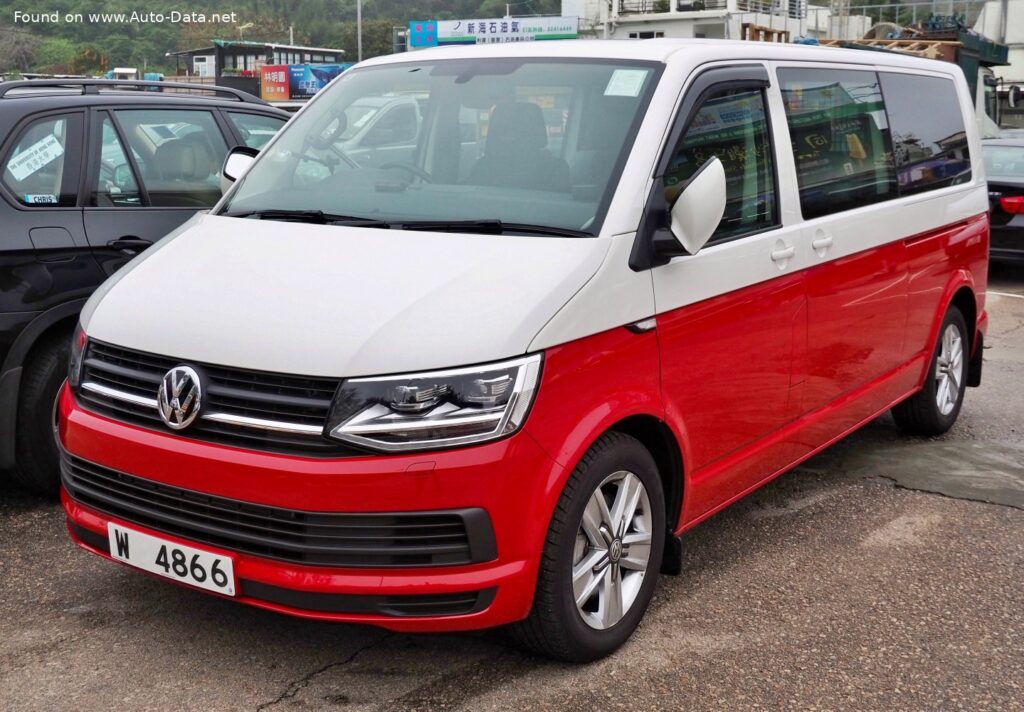
The Volkswagen Transporter (T6) Kombi 2.0 TDI (114 Hp) L2H2: A European Utility Icon
The Volkswagen Transporter (T6) Kombi 2.0 TDI (114 Hp) L2H2 represents a crucial iteration in the storied lineage of Volkswagen’s venerable Transporter series, a vehicle synonymous with versatility, reliability, and robust utility across Europe and beyond. Produced between 2018 and 2019, this specific variant of the sixth-generation Transporter, or T6, served as a cornerstone of Volkswagen Commercial Vehicles’ offerings, catering to a wide array of needs from professional tradespeople to large families and shuttle services. The “Kombi” designation highlights its dual-purpose nature, capable of comfortably seating multiple passengers while simultaneously offering substantial cargo capacity. The “L2H2” further specifies its dimensions: a long wheelbase (L2) paired with a high roof (H2), maximizing interior volume for both occupants and freight.
While the Transporter series holds a legendary status globally, particularly in its home market of Europe, it has historically maintained a more niche presence in the United States, where Volkswagen’s commercial van offerings have varied. Nevertheless, its engineering excellence and practical design are universally recognized. This article will delve into the technical specifications, design philosophy, and market impact of this particular Transporter T6 model, providing an expert analysis through an American English lens.
Engine and Performance of the Volkswagen Transporter (T6) Kombi 2.0 TDI (114 Hp) L2H2
At the heart of the Volkswagen Transporter (T6) Kombi 2.0 TDI (114 Hp) L2H2 lies a highly efficient and proven powertrain: the 2.0-liter TDI (Turbocharged Direct Injection) diesel engine. This inline four-cylinder unit, identified by engine codes like EA288, is a staple across Volkswagen Group vehicles, renowned for its balance of power, torque, and fuel economy. For this specific Transporter variant, the engine delivers 114 horsepower at a broad range of 3200-4000 rpm, coupled with a robust 184.39 lb.-ft. of torque available from a low 1400 rpm up to 3200 rpm. This wide torque band is particularly beneficial for a utility vehicle, ensuring strong pulling power for heavy loads and smooth acceleration even at lower engine speeds.
The engine’s architecture features a DOHC (Double Overhead Camshaft) valvetrain with four valves per cylinder, a diesel common-rail fuel injection system, and forced induction via a turbocharger and intercooler. These technologies contribute to its impressive power per liter of 57.9 horsepower. Power is efficiently transmitted to the front wheels through a durable 5-speed manual transmission, a common choice for its reliability and direct feel in commercial applications.
Performance figures for a vehicle of this type prioritize utility over outright speed. The Transporter (T6) Kombi 2.0 TDI (114 Hp) L2H2 accelerates from 0 to 60 mph in a respectable 15.2 seconds, with a maximum speed of 98.18 mph. These figures are entirely adequate for its intended purpose, whether navigating urban environments or cruising on highways. Fuel economy is a strong suit, with combined cycle estimates ranging from 31.8 to 35.6 US mpg. These figures, derived from NEDC (New European Driving Cycle) and WLTP equivalent tests, underscore its efficiency. Furthermore, the vehicle adheres to the stringent Euro 6d TEMP-EVAP emissions standard, incorporating a Start & Stop system and a particulate filter, along with an AdBlue tank, to minimize environmental impact.
Design and Features
The design of the Volkswagen Transporter (T6) Kombi 2.0 TDI (114 Hp) L2H2 is a testament to functional elegance, a hallmark of the Transporter series. As a van body type, it prioritizes practicality and interior volume. The “Kombi” designation signifies its ability to flexibly switch between passenger transport and cargo hauling, typically offering seating for 4 to 9 occupants across its 4 or 5 doors. The L2H2 configuration is particularly noteworthy, denoting its long wheelbase of 133.86 inches and high roof, which results in an overall length of 208.82 inches and a height of 85.43 inches. This generous size translates into an enormous maximum trunk (boot) space of 275.45 cubic feet, making it exceptionally well-suited for professional logistics, large families, or specialized conversions.
The interior is designed for durability and ergonomics, crucial for a vehicle that often serves as a mobile office or a primary mode of transport for demanding tasks. While specific interior amenities can vary by trim, the focus is on robust materials and intuitive controls. On the practical front, the Transporter features a substantial curb weight ranging from 3933.05 to 5013.31 lbs, with a maximum permissible gross weight of 6172.94 to 7054.79 lbs. This allows for an impressive maximum payload capacity of 2041.48 to 2239.9 lbs. Towing capabilities are also robust, with a permitted trailer load of 4850.17 lbs with brakes and 1653.47 lbs without brakes.
Underneath, the Transporter (T6) Kombi employs an independent suspension system both front and rear, featuring McPherson struts with coil springs and an anti-roll bar at the front, and an independent coil spring, wishbone, and transverse stabilizer setup at the rear. This sophisticated suspension ensures a comfortable ride and stable handling, even when fully loaded. Braking is handled by ventilated discs on both the front (308×29.5 mm) and rear (294×22 mm) axles, complemented by an Anti-lock Braking System (ABS) for enhanced safety. Hydraulic power steering provides precise control, and the vehicle rides on 205/65 R16 or 215/65 R16 tires, mounted on 6.5J x 16 wheel rims.
Technical Specifications: Volkswagen Transporter (T6) Kombi 2.0 TDI (114 Hp) L2H2
| Category | Specification |
|---|---|
| General Information | |
| Brand | Volkswagen |
| Model | Transporter |
| Generation | Transporter (T6) Kombi |
| Type (Engine) | 2.0 TDI (114 Hp) L2H2 |
| Start of Production | 2018 year |
| End of Production | 2019 year |
| Powertrain Architecture | Internal Combustion engine |
| Body Type | Van |
| Seats | 4-9 |
| Doors | 4-5 |
| Performance Specifications | |
| Fuel Consumption (Urban, NEDC/WLTP equivalent) | 26.7 – 29.8 US mpg |
| Fuel Consumption (Extra Urban, NEDC/WLTP equivalent) | 35.1 – 39.9 US mpg |
| Fuel Consumption (Combined, NEDC/WLTP equivalent) | 31.8 – 35.6 US mpg |
| CO2 Emissions (NEDC/WLTP equivalent) | 173-194 g/km |
| Fuel Type | Diesel |
| Acceleration 0-60 mph | 15.2 sec |
| Maximum Speed | 98.18 mph |
| Emission Standard | Euro 6d TEMP-EVAP |
| Weight-to-Power Ratio | 15.6 kg/Hp (34.39 lbs/Hp) |
| Weight-to-Torque Ratio | 7.1 kg/Nm (15.65 lbs/Nm) |
| Engine Specifications | |
| Power | 114 Hp @ 3200-4000 rpm |
| Power per liter | 57.9 Hp/l |
| Torque | 184.39 lb.-ft. @ 1400-3200 rpm |
| Engine Layout | Front, Transverse |
| Engine Model/Code | EA288 / CXHB, CXGC |
| Engine Displacement | 2.0 liters (1968 cm3 / 120.09 cu. in.) |
| Number of Cylinders | 4 |
| Engine Configuration | Inline |
| Cylinder Bore | 3.19 in. (81 mm) |
| Piston Stroke | 3.76 in. (95.5 mm) |
| Compression Ratio | 15.5:1 |
| Number of Valves per Cylinder | 4 |
| Fuel Injection System | Diesel Commonrail |
| Engine Aspiration | Turbocharger, Intercooler |
| Valvetrain | DOHC |
| Engine Oil Capacity | 7.82 US qt (7.4 l) |
| Engine Systems | Start & Stop System, Particulate filter |
| Space, Volume and Weights | |
| Kerb Weight | 3933.05 – 5013.31 lbs (1784-2274 kg) |
| Max. Weight | 6172.94 – 7054.79 lbs (2800-3200 kg) |
| Max Load | 2041.48 – 2239.9 lbs (926-1016 kg) |
| Trunk (boot) Space – Maximum | 275.45 cu. ft. (7800 l) |
| Fuel Tank Capacity | 18.49 US gal (70 l) |
| AdBlue Tank | 3.43 US gal (13 l) |
| Max. Roof Load | 220.46 lbs (100 kg) |
| Permitted Trailer Load with Brakes (12%) | 4850.17 lbs (2200 kg) |
| Permitted Trailer Load without Brakes | 1653.47 lbs (750 kg) |
| Permitted Towbar Download | 220.46 lbs (100 kg) |
| Dimensions | |
| Length | 208.82 in. (5304 mm) |
| Width | 74.96 in. (1904 mm) |
| Width including mirrors | 90.43 in. (2297 mm) |
| Height | 85.43 in. (2170 mm) |
| Wheelbase | 133.86 in. (3400 mm) |
| Front Overhang | 35.75 in. (908 mm) |
| Rear Overhang | 39.09 in. (993 mm) |
| Ride Height (Ground Clearance) | 7.95 in. (202 mm) |
| Minimum Turning Circle (Turning Diameter) | 43.31 ft. (13.2 m) |
| Approach Angle | 21.2° |
| Departure Angle | 16.2° |
| Ramp-over (Brakeover) Angle | 12.2° |
| Drivetrain, Brakes and Suspension | |
| Drivetrain Architecture | The Internal combustion engine (ICE) drives the front wheels of the vehicle. |
| Drive Wheel | Front wheel drive |
| Number of Gears and Type of Gearbox | 5 gears, manual transmission |
| Front Suspension | Independent, type McPherson with coil spring and anti-roll bar |
| Rear Suspension | Independent coil spring, Wishbone, Transverse stabilizer |
| Front Brakes | Ventilated discs, 308×29.5 mm |
| Rear Brakes | Ventilated discs, 294×22 mm |
| Assisting Systems | ABS (Anti-lock braking system) |
| Steering Type | Steering rack and pinion |
| Power Steering | Hydraulic Steering |
| Tires Size | 205/65 R16; 215/65 R16 |
| Wheel Rims Size | 6.5J x 16 |
Legacy and Market Impact
The Volkswagen Transporter’s legacy is immense, dating back to the iconic Type 2 “Microbus” of the 1950s. Each subsequent generation has built upon this heritage, evolving to meet the changing demands of the commercial and passenger vehicle markets. The T6 generation, including the Volkswagen Transporter (T6) Kombi 2.0 TDI (114 Hp) L2H2, continued this tradition of excellence, solidifying its reputation as a benchmark in the European light commercial vehicle segment.
In its primary markets, particularly across Europe, the T6 Transporter was a ubiquitous sight, serving as the backbone for countless small businesses, delivery services, and trades. Its versatility meant it could be configured as a bare-bones panel van, a comfortable multi-passenger shuttle (like the Kombi), or a luxurious Caravelle/Multivan. The Kombi variant, in particular, was prized for its ability to effortlessly transition between carrying tools and materials during the week and transporting family or sports equipment on the weekends, making it a highly adaptable solution for diverse lifestyles and professional requirements.
Competitors in the fiercely contested European van market included formidable rivals such as the Mercedes-Benz Vito, Ford Transit Custom, Renault Trafic, Peugeot Expert, and Citroën Jumpy. However, the Transporter consistently held its own, often setting standards for build quality, residual values, and a comprehensive dealer network. Its strong brand image, rooted in decades of reliability and innovation, ensured its continued popularity.
The 2.0 TDI (114 Hp) L2H2 model, with its efficient diesel engine and practical dimensions, was a particularly strong contender for fleets and individuals seeking a cost-effective yet capable workhorse. Its compliance with the Euro 6d TEMP-EVAP emissions standards showcased Volkswagen’s commitment to environmental responsibility, a critical factor in European vehicle purchasing decisions. Beyond its commercial applications, the Transporter also remained a popular choice for camper van conversions, leveraging its robust chassis and spacious interior for leisure pursuits.
In summary, the Volkswagen Transporter (T6) Kombi 2.0 TDI (114 Hp) L2H2 is more than just a commercial vehicle; it’s a testament to enduring design, practical engineering, and a deep understanding of market needs. Its contribution to logistics, small businesses, and family transport in Europe during its production run was significant, cementing its place as a modern icon of utility and versatility.