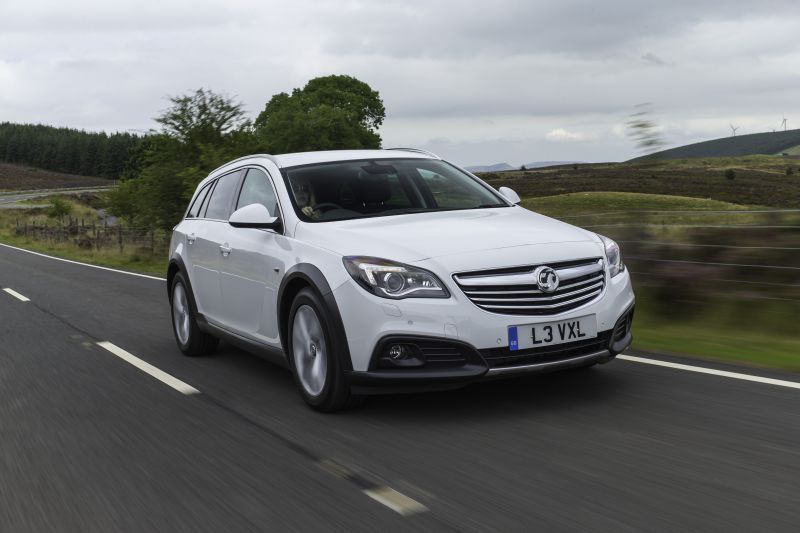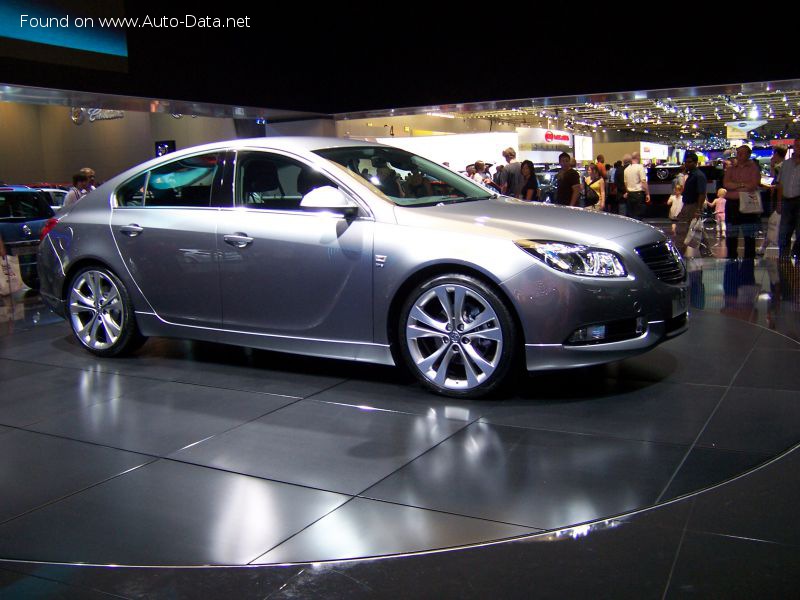
Vauxhall Insignia I Sports Tourer (facelift 2013) 1.6i Turbo ecoTEC (170 Hp) Automatic
The Vauxhall Insignia, a cornerstone of General Motors’ European portfolio, served as a prominent mid-size to large family car, primarily marketed in the United Kingdom under the Vauxhall badge and across mainland Europe as the Opel Insignia. Introduced in 2008 as a successor to the long-running Vectra, the Insignia marked a significant shift for the brand, aiming for a more premium design, enhanced technology, and improved driving dynamics. The model under scrutiny, the Vauxhall Insignia I Sports Tourer (facelift 2013), represents the updated iteration of the first generation, specifically featuring the efficient 1.6i Turbo ecoTEC engine paired with an automatic transmission.
This facelifted model, produced from 2013 to 2017, was designed to reinvigorate the Insignia’s appeal in the highly competitive D-segment. The “Sports Tourer” designation indicates the station wagon (or estate) body style, which was particularly popular in Europe for its blend of sedan-like driving characteristics with superior cargo capacity and family-friendly practicality. The 2013 refresh brought subtle but impactful styling revisions, interior upgrades, and a range of new or updated powertrains, including the advanced 1.6-liter turbocharged gasoline engine, emphasizing efficiency without compromising performance. As a vehicle not directly sold in the United States, the Insignia’s role was crucial in bolstering Vauxhall and Opel’s market share against formidable European rivals.
Engine and Performance of the Vauxhall Insignia I Sports Tourer (facelift 2013)
At the heart of this specific Vauxhall Insignia I Sports Tourer (facelift 2013) variant lies the 1.6i Turbo ecoTEC engine, a testament to modern engineering focused on balancing power with environmental responsibility. This powerplant, identified by engine codes A16XHT or B16SHL, is an inline four-cylinder unit with a displacement of 1598 cm³ (97.52 cu. in.). It utilizes a DOHC (Double Overhead Camshaft) valvetrain with four valves per cylinder, ensuring optimal airflow and combustion efficiency.
The engine’s performance is significantly boosted by a turbocharger and intercooler system, allowing it to produce an impressive 170 horsepower at 4250 rpm. This power output, coupled with direct fuel injection, translates to a robust 106.4 horsepower per liter, a strong figure for its class. Torque delivery is equally compelling, peaking at 260 Nm (191.77 lb.-ft.) across a wide band from 1650 to 4250 rpm. This broad torque curve ensures responsive acceleration and flexible driving characteristics, whether navigating urban traffic or cruising on the highway.
Power is channeled to the front wheels via a sophisticated 6-speed automatic transmission, providing smooth and seamless gear changes. This drivetrain architecture, typical for the segment, prioritizes efficiency and ease of use. Performance figures include an acceleration from 0 to 60 mph in a respectable 9.9 seconds, with a maximum speed of 126.76 mph (204 km/h). Despite its performance capabilities, the ecoTEC engine is designed for efficiency, achieving a combined fuel economy of 34.6 US mpg (6.8 l/100 km) and meeting the Euro 5 emission standard with CO2 emissions of 159 g/km.
Design and Features
The 2013 facelift brought a refreshed aesthetic to the Insignia, maintaining its sleek and dynamic profile while introducing more contemporary elements. The Sports Tourer body type, a practical station wagon (estate), offers a generous five-door configuration and comfortable seating for five occupants. Its elongated silhouette, measuring 193.43 inches (4913 mm) in length, emphasizes both elegance and utility. The width, including mirrors, extends to 82.05 inches (2084 mm), contributing to a substantial road presence.
Inside, the Insignia I Sports Tourer aimed for a premium feel with improved materials and an updated infotainment system, though specific details beyond the technical data are implicit for the era. The primary focus of the Sports Tourer variant is its versatility and cargo capacity. It boasts a minimum trunk space of 19.07 cu. ft. (540 liters), which expands dramatically to a cavernous 54.03 cu. ft. (1530 liters) with the rear seats folded down, making it highly suitable for families, outdoor enthusiasts, or professionals requiring significant hauling capability.
Underneath its refined exterior, the Insignia features a well-engineered chassis. The front suspension employs an independent McPherson strut system with coil springs and an anti-roll bar, providing a balance of comfort and precise handling. The rear utilizes an independent multi-link suspension, further enhancing ride quality and stability. Braking is handled by ventilated discs at the front and solid discs at the rear, complemented by an Anti-lock Braking System (ABS) for enhanced safety and control during emergency stops. The vehicle rides on 17-inch wheel rims, fitted with 225/55 R17 tires, offering a good compromise between grip, comfort, and visual appeal.
Technical Specifications
| Category | Specification | US Equivalent |
|---|---|---|
| Brand | Vauxhall | |
| Model | Insignia | |
| Generation | Insignia I Sports Tourer (facelift 2013) | |
| Type (Engine) | 1.6i Turbo ecoTEC (170 Hp) Automatic | |
| Start of production | 2013 year | |
| End of production | 2017 year | |
| Powertrain Architecture | Internal Combustion engine | |
| Body type | Station wagon (estate) | |
| Seats | 5 | |
| Doors | 5 | |
| Performance Specs | ||
| Fuel consumption (urban) | 9.1 l/100 km | 25.8 US mpg |
| Fuel consumption (extra urban) | 5.4 l/100 km | 43.6 US mpg |
| Fuel consumption (combined) | 6.8 l/100 km | 34.6 US mpg |
| CO2 emissions | 159 g/km | |
| Fuel Type | Petrol (Gasoline) | |
| Acceleration 0 – 60 mph | 9.9 sec | |
| Acceleration 0 – 100 km/h | 10.4 sec | |
| Maximum speed | 204 km/h | 126.76 mph |
| Emission standard | Euro 5 | |
| Weight-to-power ratio | 10 kg/Hp | 99.9 Hp/tonne |
| Weight-to-torque ratio | 6.5 kg/Nm | 152.9 Nm/tonne |
| Engine Specs | ||
| Power | 170 Hp @ 4250 rpm | |
| Power per liter | 106.4 Hp/l | |
| Torque | 260 Nm @ 1650-4250 rpm | 191.77 lb.-ft. @ 1650-4250 rpm |
| Engine layout | Front, Transverse | |
| Engine Model/Code | A16XHT, B16SHL | |
| Engine displacement | 1598 cm³ | 97.52 cu. in. |
| Number of cylinders | 4 | |
| Engine configuration | Inline | |
| Cylinder Bore | 79 mm | 3.11 in. |
| Piston Stroke | 81.5 mm | 3.21 in. |
| Number of valves per cylinder | 4 | |
| Fuel injection system | Direct injection | |
| Engine aspiration | Turbocharger, Intercooler | |
| Valvetrain | DOHC | |
| Engine oil capacity | 5.5 l | 5.81 US qt |
| Coolant | 5.8 l | 6.13 US qt |
| Space, Volume and Weights | ||
| Kerb Weight | 1701 kg | 3750.06 lbs. |
| Max. weight | 2255 kg | 4971.42 lbs. |
| Max load | 554 kg | 1221.36 lbs. |
| Trunk (boot) space – minimum | 540 l | 19.07 cu. ft. |
| Trunk (boot) space – maximum | 1530 l | 54.03 cu. ft. |
| Fuel tank capacity | 70 l | 18.49 US gal |
| Permitted trailer load with brakes (12%) | 1700 kg | 3747.86 lbs. |
| Permitted trailer load without brakes | 750 kg | 1653.47 lbs. |
| Dimensions | ||
| Length | 4913 mm | 193.43 in. |
| Width | 1856 mm | 73.07 in. |
| Width including mirrors | 2084 mm | 82.05 in. |
| Height | 1513 mm | 59.57 in. |
| Wheelbase | 2737 mm | 107.76 in. |
| Front overhang | 1020 mm | 40.16 in. |
| Rear overhang | 1156 mm | 45.51 in. |
| Minimum turning circle (turning diameter) | 11.4 m | 37.4 ft. |
| Drivetrain, Brakes and Suspension Specs | ||
| Drivetrain Architecture | Front wheel drive (ICE drives front wheels) | |
| Drive wheel | Front wheel drive | |
| Number of gears and type of gearbox | 6 gears, automatic transmission | |
| Front suspension | Independent, type McPherson with coil spring and anti-roll bar | |
| Rear suspension | Independent multi-link suspension | |
| Front brakes | Ventilated discs | |
| Rear brakes | Disc | |
| Assisting systems | ABS (Anti-lock braking system) | |
| Tires size | 225/55 R17 | |
| Wheel rims size | 17 inches | |
Legacy and Market Impact
The Vauxhall Insignia, and its Opel counterpart, represented a pivotal product for General Motors in the European market. The first generation, including the facelifted 2013 model, was tasked with elevating the brand’s image and competing effectively in a segment dominated by established players like the Ford Mondeo, Volkswagen Passat, Skoda Superb, and Peugeot 508. The Insignia achieved considerable success in this endeavor, earning critical acclaim and strong sales figures, particularly in the UK.
The 2013 facelift, with its refined styling, updated interior, and enhanced powertrain options like the 1.6i Turbo ecoTEC, played a crucial role in maintaining the Insignia’s competitiveness. The “ecoTEC” branding highlighted Vauxhall’s commitment to improved fuel efficiency and lower emissions, a growing priority for European consumers and regulatory bodies. This particular engine offered a compelling blend of performance for daily driving and reasonable running costs, making it an attractive option for both private buyers and fleet operators.
The Sports Tourer variant, in particular, solidified the Insignia’s reputation as a highly practical and versatile vehicle. Its expansive cargo area, comfortable seating, and robust towing capabilities (up to 3747.86 lbs. with brakes) made it a popular choice for families and businesses that required more utility than a traditional sedan could offer. The Insignia’s design, which broke away from the more conservative lines of its Vectra predecessor, was widely praised for its sleekness and modern appeal, helping to shed the brand’s previous utilitarian image.
Ultimately, the Vauxhall Insignia I Sports Tourer (facelift 2013) contributed significantly to Vauxhall’s market standing, demonstrating the brand’s ability to produce a stylish, comfortable, and technologically advanced vehicle that could hold its own against premium and mainstream competitors. It underscored a strategic direction for GM in Europe, focusing on quality, efficiency, and design appeal, leaving a legacy as a successful and well-regarded family car in its primary markets.