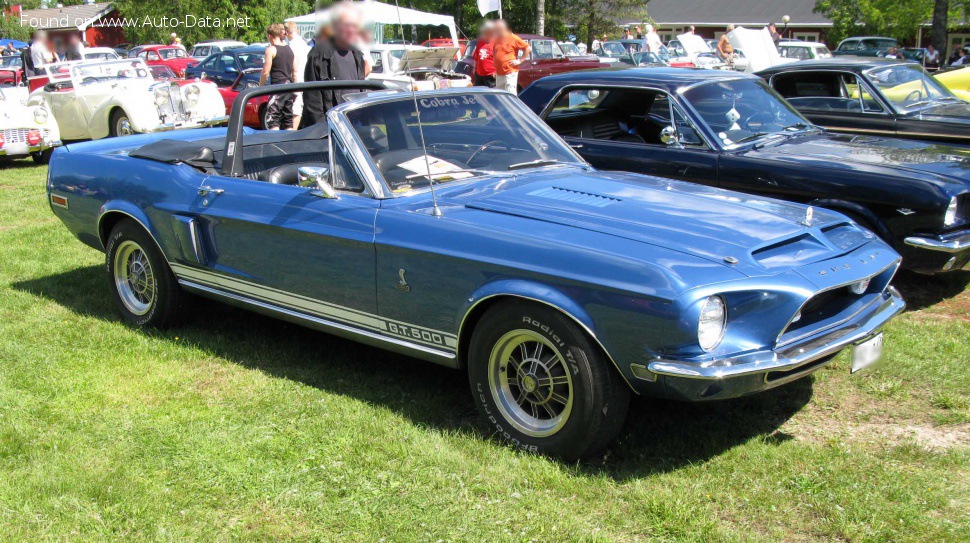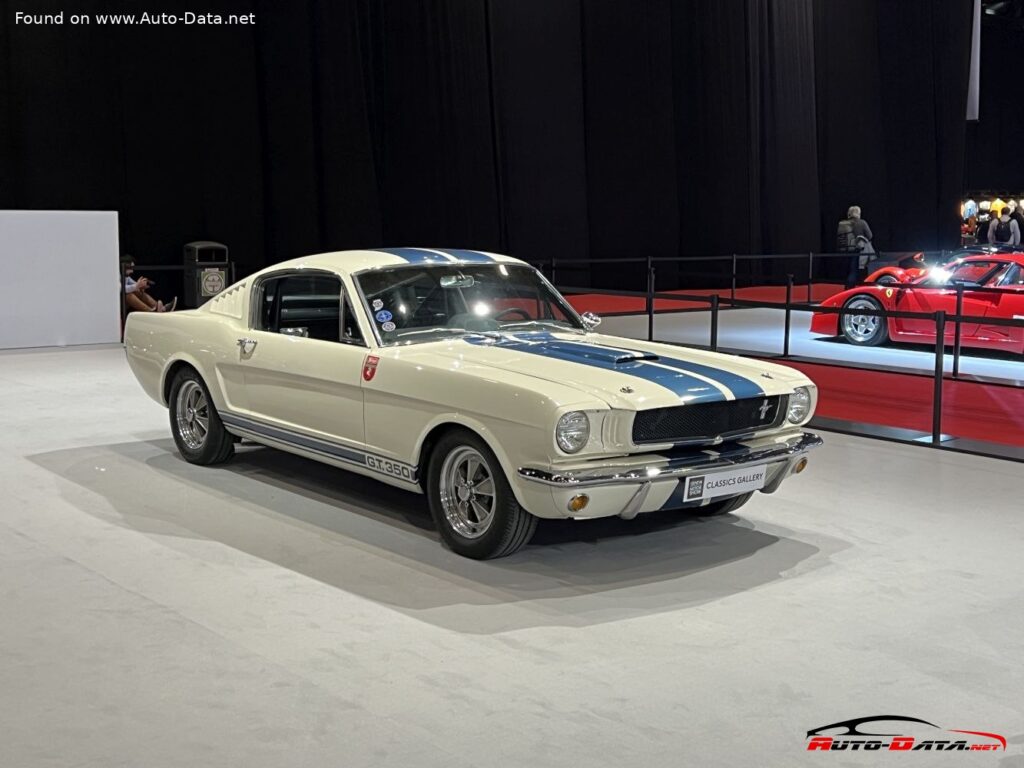
Introduction to the Ford Shelby I GT 350R
The Ford Shelby I GT 350R represents a seminal chapter in American automotive history, a purpose-built racing machine derived from the iconic Ford Mustang. Introduced in 1965, the GT 350R was not merely a performance variant but a homologation special, meticulously crafted by Carroll Shelby and his team to dominate the Sports Car Club of America (SCCA) production road racing series. This first-generation Shelby Mustang, often referred to as the “Shelby I,” redefined the capabilities of American muscle cars on the track, blending raw power with significantly enhanced handling and braking dynamics. Its development marked a pivotal moment for Ford’s image, transforming the Mustang from a popular pony car into a formidable racing contender.
While the broader Shelby Mustang line, encompassing various GT350 and GT500 models, spanned from 1965 to 1970, the GT 350R specifically refers to the most aggressive, race-ready iteration of the original 1965-1966 GT350. Its primary market was the United States, where it quickly became a legend for its uncompromising performance and distinctive, no-frills racing aesthetic. With a potent 4.7-liter (289 cubic inch) V8 engine producing a formidable 355 horsepower, combined with a lightweight chassis and advanced suspension for its era, the GT 350R was a formidable competitor, solidifying Shelby American’s reputation as a premier performance tuner and manufacturer. It was a car designed to win, and win it did, leaving an indelible mark on motorsports and performance car development.
Engineering and Performance of the Ford Shelby I GT 350R
Powertrain and Dynamics of the Ford Shelby I GT 350R
At the heart of the Ford Shelby I GT 350R was its highly-tuned 4.7-liter (288.46 cubic inch) V8 engine, a modified version of Ford’s robust Windsor small-block. This naturally aspirated unit, fed by a sophisticated four-barrel carburetor, was engineered for maximum output and responsiveness under racing conditions. It generated an impressive 355 horsepower at 5400 rpm, a significant boost over the standard Mustang’s output, and delivered a robust 350.34 lb.-ft. of torque at 3200 rpm. This raw power was achieved through a high compression ratio of 11.6:1, precision-machined cylinders with a bore of 4 inches and a piston stroke of 2.87 inches, and a free-breathing setup that included optimized intake and exhaust systems. Each cylinder featured four valves, enhancing airflow and combustion efficiency for peak performance throughout the rev range.
The engine was longitudinally mounted in the front of the vehicle, driving the rear wheels through a robust 4-speed manual transmission. This classic rear-wheel-drive architecture, combined with the lightweight construction, resulted in an exceptional power-to-weight ratio of just 3.3 kg/Hp (approximately 7.28 lbs/Hp), translating to 304.7 Hp per tonne. The torque-to-weight ratio was equally impressive at 2.5 kg/Nm (407.7 Nm per tonne). These figures underscored the GT 350R’s capability for explosive acceleration and high-speed performance on the race track, allowing it to accelerate fiercely out of corners and achieve impressive straight-line speeds. The suspension and braking systems were also significantly upgraded from the standard Mustang. Featuring large, fade-resistant disc brakes at both the front and rear, a pioneering feature for a production-derived car of its time, the GT 350R ensured superior stopping power and endurance under extreme racing conditions, crucial for maintaining competitive lap times.
Design and Features: The Race-Bred Shelby Aesthetic
Bodywork and Interior Philosophy
The design of the Ford Shelby I GT 350R was a direct reflection of its singular racing purpose. Based on the 2-door coupe body style of the Ford Mustang, it was meticulously stripped of non-essential amenities to minimize weight and maximize performance. While retaining the basic silhouette of the Mustang, the GT 350R featured numerous modifications that gave it an aggressive, purposeful stance unmistakable on the track. Exterior enhancements included a redesigned front fascia with a larger air intake for enhanced engine and brake cooling, a lightweight fiberglass hood with a functional scoop to aid in heat dissipation, and Plexiglas rear windows on some early models to further reduce weight. The overall length of 181.61 inches, width of 68.19 inches, and a notably low height of 51.18 inches, combined with a robust wheelbase of 107.99 inches, contributed to its agile handling characteristics and low center of gravity.
Inside, the GT 350R was Spartan by design, prioritizing function over comfort. The rear seats, present in the standard Mustang coupe and listed as a general specification for the Shelby I generation, were famously removed entirely in the R-model for weight savings and racing classification, often replaced by a fiberglass shelf or simply left bare. Driver and passenger were ensconced in racing bucket seats, accompanied by a competition-spec steering wheel and essential gauges providing critical information. Safety, in the context of 1960s racing, focused on structural integrity, driver containment through harness points, and a roll bar, rather than modern passive safety systems. The car’s curb weight of 2568.39 lbs (1165 kg) was astonishingly light for a V8-powered vehicle of its size, a testament to Shelby American’s relentless pursuit of weight reduction