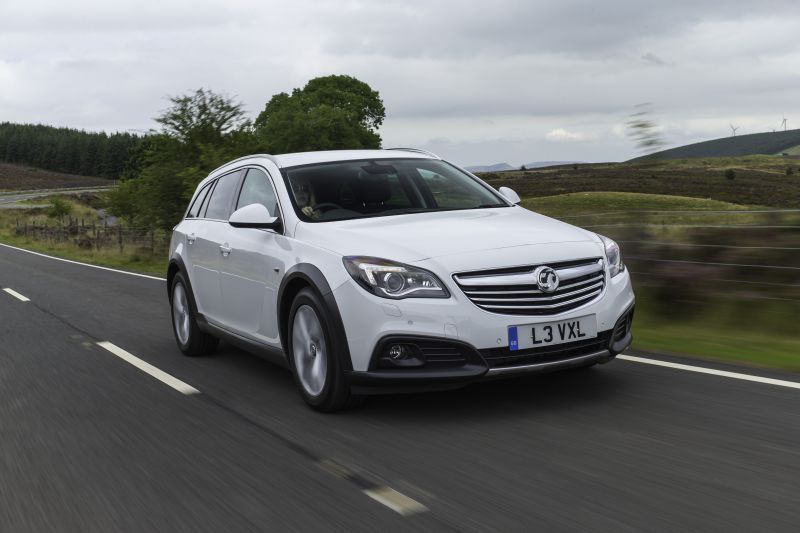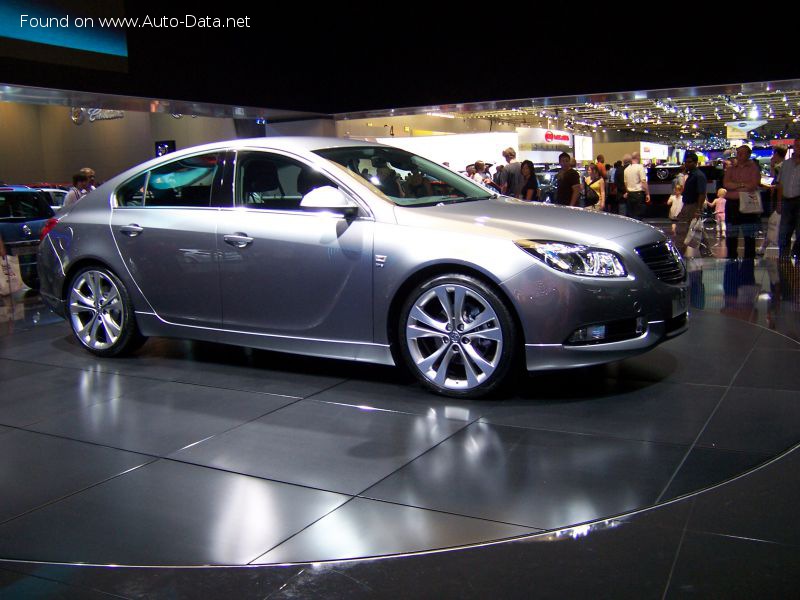
The Vauxhall Insignia I Sports Tourer (facelift 2013): A Practical European Performer
The Vauxhall Insignia I Sports Tourer (facelift 2013) represents the refreshed iteration of Vauxhall’s successful mid-size (D-segment) family and fleet vehicle. Launched in 2013 and produced until 2017, this generation of the Insignia aimed to solidify its position in the highly competitive European market, offering a compelling blend of style, practicality, and efficiency. As the British arm of General Motors Europe, Vauxhall’s Insignia shared its platform and engineering with the Opel Insignia, a model that found its way to North American shores as the Buick Regal, albeit primarily in sedan and later TourX wagon forms. The Sports Tourer, or station wagon variant, was particularly significant in Europe, catering to buyers who required extensive cargo capacity without compromising on driving dynamics or comfort. This particular specification, featuring the 1.6i Turbo ecoTEC engine with 170 horsepower and a Start/Stop system, was a testament to the era’s growing demand for turbocharged gasoline engines that could deliver both robust performance and improved fuel economy.
Engine and Performance: The 1.6i Turbo ecoTEC Heartbeat
At the core of this particular Vauxhall Insignia I Sports Tourer (facelift 2013) model is a sophisticated 1.6-liter (1598 cm³ or 97.52 cu. in.) inline-four gasoline engine, designated as the 1.6i Turbo ecoTEC. This powerplant was engineered with efficiency and responsiveness in mind, featuring direct injection, a turbocharger, and an intercooler to maximize power output and fuel atomization. The dual overhead camshaft (DOHC) valvetrain further contributed to its efficient operation across the rev range.
The engine delivers a respectable 170 horsepower at a relatively low 4250 rpm, a characteristic of modern turbocharged engines designed for strong low-end and mid-range torque. Peak torque stands at an impressive 191.77 lb.-ft. (260 Nm), available across a broad plateau from 1650 rpm all the way up to 4250 rpm. This wide torque band ensures excellent drivability, making the Insignia feel responsive in everyday traffic and capable of confident overtakes on the highway.
Power is channeled to the front wheels via a smooth-shifting 6-speed manual transmission, providing an engaging driving experience. Performance figures are solid for a family wagon of its size and engine displacement: the Insignia I Sports Tourer (facelift 2013) 1.6i Turbo ecoTEC can accelerate from 0 to 60 mph in an estimated 9.3 seconds (0-100 km/h in 9.8 seconds), and reach a top speed of 132.97 mph (214 km/h). The inclusion of a Start/Stop system was a key feature for this ecoTEC variant, automatically shutting off the engine when the vehicle is stationary and restarting it when the clutch is engaged, thereby reducing fuel consumption and CO2 emissions in urban environments.
Fuel efficiency was a significant selling point for this model. The combined fuel consumption is rated at 37.9 US mpg (6.2 l/100 km), with urban consumption at 30.2 US mpg (7.8 l/100 km) and extra-urban figures reaching an impressive 44.4 US mpg (5.3 l/100 km). With CO2 emissions of 146 g/km, the vehicle met Euro 5 emission standards, reflecting its commitment to environmental responsibility for its time.
Design and Features: Practicality Meets Refinement in the Vauxhall Insignia I Sports Tourer (facelift 2013)
The Vauxhall Insignia I Sports Tourer (facelift 2013) maintained the original Insignia’s sleek and dynamic design philosophy, refined with subtle updates to keep it fresh and competitive. The “Sports Tourer” designation aptly describes its body style: a five-door station wagon designed to blend the versatility of a utility vehicle with the sporty aesthetics of a sedan. The facelift typically brought revised front and rear fascias, including updated grille designs, headlamps, and taillights, giving it a more modern and cohesive appearance.
Measuring 193.43 inches (4913 mm) in length, 73.07 inches (1856 mm) in width (82.05 inches or 2084 mm including mirrors), and 59.57 inches (1513 mm) in height, the Insignia Sports Tourer presented a substantial road presence. Its long wheelbase of 107.76 inches (2737 mm) contributed to a stable ride and generous interior space for its five occupants. The turning circle of 37.4 feet (11.4 m) was reasonable for a vehicle of its size, aiding maneuverability in tighter urban settings.
Interior design focused on ergonomics, comfort, and practicality. As a station wagon, cargo capacity was a major strength. The trunk offered a minimum of 19.07 cu. ft. (540 liters) of space with all seats in place, expanding to a cavernous 54.03 cu. ft. (1530 liters) when the rear seats were folded down, making it highly suitable for families, outdoor enthusiasts, or those requiring significant hauling capability. The maximum payload capacity was 1291.91 lbs. (586 kg), with a curb weight of 3668.49 lbs. (1664 kg).
From a mechanical and safety standpoint, the Insignia was well-equipped. It featured an independent McPherson strut front suspension with coil springs and an anti-roll bar, paired with an independent multi-link rear suspension, providing a balanced ride that absorbed road imperfections while maintaining composure during spirited driving. Braking duties were handled by ventilated discs at the front and disc brakes at the rear, supported by an Anti-lock Braking System (ABS) for enhanced stopping power and control. The vehicle rode on 17-inch wheels shod with 225/55 R17 tires, offering a good compromise between ride comfort and grip.
Technical Specifications
| Feature | Specification |
|---|---|
| General Information | |
| Brand | Vauxhall |
| Model | Insignia |
| Generation | Insignia I Sports Tourer (facelift 2013) |
| Engine Type | 1.6i Turbo ecoTEC (170 Hp) Start/Stop |
| Production Start | 2013 year |
| Production End | 2017 year |
| Powertrain Architecture | Internal Combustion engine |
| Body Type | Station wagon (estate) |
| Seats | 5 |
| Doors | 5 |
| Performance Specs | |
| Fuel Consumption (Urban) | 30.2 US mpg (7.8 l/100 km) |
| Fuel Consumption (Extra Urban) | 44.4 US mpg (5.3 l/100 km) |
| Fuel Consumption (Combined) | 37.9 US mpg (6.2 l/100 km) |
| CO2 Emissions | 146 g/km |
| Fuel Type | Petrol (Gasoline) |
| Acceleration 0-60 mph | 9.3 seconds |
| Acceleration 0-100 km/h | 9.8 seconds |
| Maximum Speed | 132.97 mph (214 km/h) |
| Emission Standard | Euro 5 |
| Weight-to-Power Ratio | 9.8 kg/Hp (102.2 Hp/tonne) |
| Weight-to-Torque Ratio | 6.4 kg/Nm (156.3 Nm/tonne) |
| Engine Specs | |
| Power | 170 Hp @ 4250 rpm |
| Power per liter | 106.4 Hp/l |
| Torque | 191.77 lb.-ft. (260 Nm) @ 1650-4250 rpm |
| Engine Layout | Front, Transverse |
| Engine Model/Code | A16XHT, B16SHL |
| Engine Displacement | 1.6 liters (1598 cm³ / 97.52 cu. in.) |
| Number of Cylinders | 4 |
| Engine Configuration | Inline |
| Cylinder Bore | 3.11 in. (79 mm) |
| Piston Stroke | 3.21 in. (81.5 mm) |
| Number of Valves per Cylinder | 4 |
| Fuel Injection System | Direct injection |
| Engine Aspiration | Turbocharger, Intercooler |
| Valvetrain | DOHC |
| Engine Oil Capacity | 5.81 US qt (5.5 l) |
| Coolant Capacity | 6.13 US qt (5.8 l) |
| Engine Systems | Start & Stop System |
| Space, Volume and Weights | |
| Kerb Weight | 3668.49 lbs. (1664 kg) |
| Max. Weight | 4960.4 lbs. (2250 kg) |
| Max Load | 1291.91 lbs. (586 kg) |
| Trunk (boot) Space – Minimum | 19.07 cu. ft. (540 l) |
| Trunk (boot) Space – Maximum | 54.03 cu. ft. (1530 l) |
| Fuel Tank Capacity | 18.49 US gal (70 l) |
| Permitted Trailer Load with Brakes (12%) | 3747.86 lbs. (1700 kg) |
| Permitted Trailer Load without Brakes | 1653.47 lbs. (750 kg) |
| Dimensions | |
| Length | 193.43 in. (4913 mm) |
| Width | 73.07 in. (1856 mm) |
| Width Including Mirrors | 82.05 in. (2084 mm) |
| Height | 59.57 in. (1513 mm) |
| Wheelbase | 107.76 in. (2737 mm) |
| Front Overhang | 40.16 in. (1020 mm) |
| Rear Overhang | 45.51 in. (1156 mm) |
| Minimum Turning Circle (Turning Diameter) | 37.4 ft. (11.4 m) |
| Drivetrain, Brakes and Suspension Specs | |
| Drivetrain Architecture | Front-wheel drive (Internal Combustion engine drives front wheels) |
| Drive Wheel | Front wheel drive |
| Number of Gears and Type of Gearbox | 6 gears, manual transmission |
| Front Suspension | Independent, McPherson with coil spring and anti-roll bar |
| Rear Suspension | Independent multi-link suspension |
| Front Brakes | Ventilated discs |
| Rear Brakes | Disc |
| Assisting Systems | ABS (Anti-lock braking system) |
| Tires Size | 225/55 R17 |
| Wheel Rims Size | 17 inches |
Legacy and Market Impact
The Vauxhall Insignia I Sports Tourer (facelift 2013) carved out a significant niche in the European D-segment, particularly within its home market of the United Kingdom. It competed directly against established rivals such as the Ford Mondeo Estate, Volkswagen Passat Variant, Mazda6 Wagon, and the rapidly growing Skoda Superb Combi. Its reputation was built on a foundation of solid build quality, a comfortable and composed ride, and immense practicality, making it a favored choice for both private families and large corporate fleets.
The introduction of the 1.6i Turbo ecoTEC (170 Hp) Start/Stop engine further enhanced the Insignia’s appeal. This powertrain was emblematic of a broader industry trend towards “right-sizing” engines, demonstrating that a smaller displacement, turbocharged gasoline engine could deliver comparable, if not superior, performance to larger naturally aspirated units, all while offering significant gains in fuel efficiency and reduced emissions. This made it an attractive proposition for company car drivers, who often face tax implications based on CO2 output, and for private buyers seeking to balance running costs with everyday performance.
Globally, the Insignia platform showcased General Motors’ ability to develop a versatile mid-size architecture that could be adapted for various markets and brands. While the Vauxhall Insignia remained a European staple, its Opel counterpart provided the basis for the Buick Regal in North America, highlighting the shared engineering prowess and design language across GM’s international portfolio. The Sports Tourer, in particular, represented a segment that, while facing increasing pressure from SUVs, maintained a loyal following among those who valued driving dynamics, efficiency, and cargo space in a more traditional car format.
Ultimately, the Vauxhall Insignia I Sports Tourer (facelift 2013) with its 1.6i Turbo ecoTEC engine played a crucial role in Vauxhall’s lineup. It was a modern, efficient, and highly practical vehicle that upheld the brand’s commitment to offering stylish and capable cars for the everyday consumer, leaving a legacy as a well-rounded and competitive player in a demanding market segment.