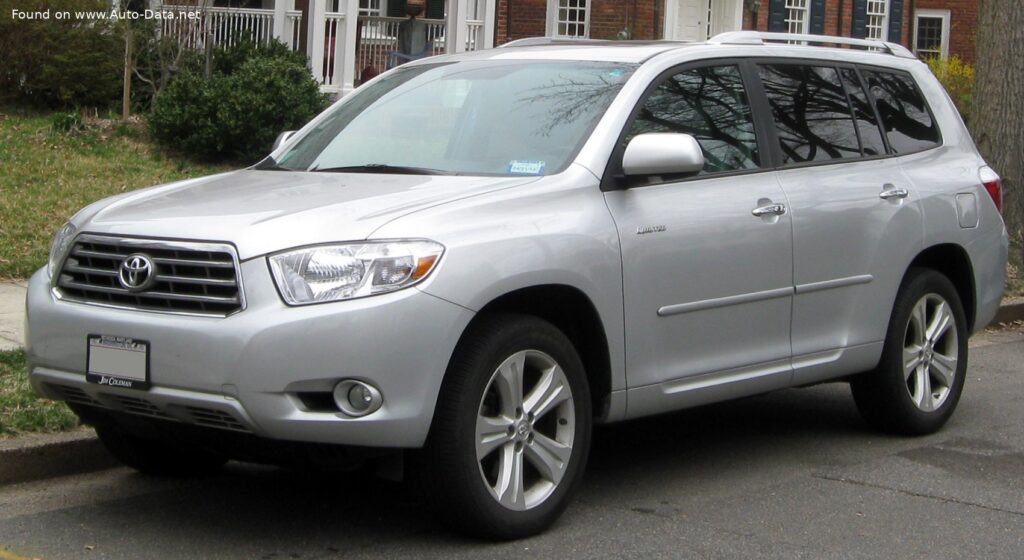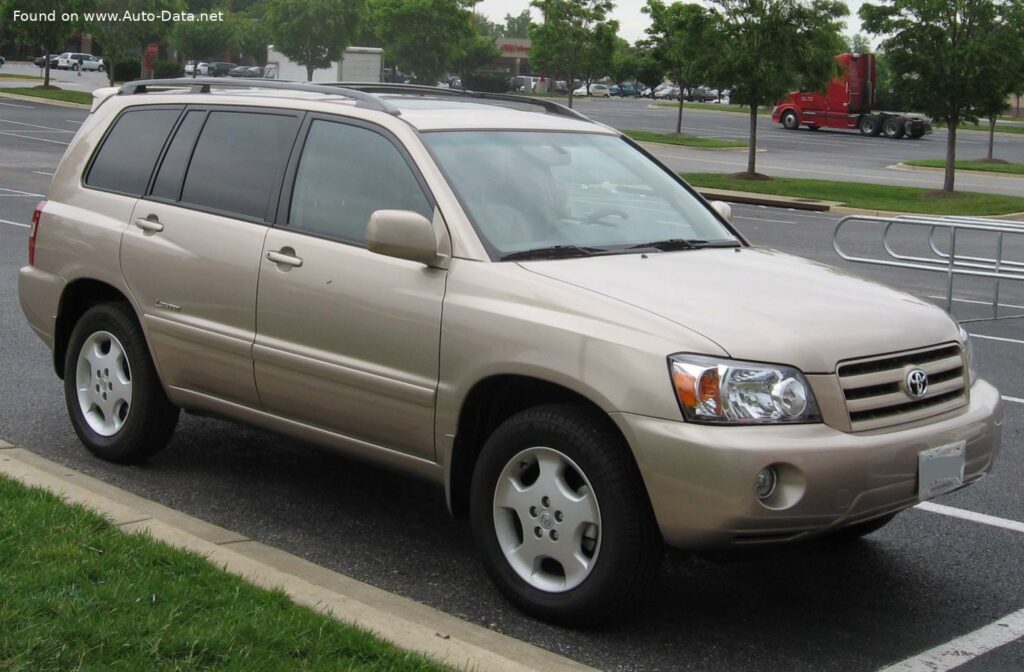
The First Generation Toyota Highlander: A Pioneer in the Crossover Segment
The Toyota Highlander I 3.3 i V6 24V 4WD (232 Hp) represents a pivotal moment in the evolution of the sport utility vehicle (SUV) market. Introduced for the 2001 model year, the first-generation Highlander, known as the XU20 in Toyota’s internal nomenclature, carved out a significant niche as one of the earliest mainstream mid-size crossover SUVs. Unlike many of its contemporaries that were built on truck platforms, the Highlander was engineered on a unibody platform derived from the Toyota Camry and Lexus RX. This fundamental design choice gave it car-like ride comfort, handling, and fuel efficiency, appealing to a growing segment of consumers who desired SUV utility without the ruggedness and often harsher dynamics of traditional body-on-frame designs.
The specific variant under review, the 3.3 i V6 24V 4WD with 232 horsepower, was introduced during a mid-cycle refresh in 2003 and remained a cornerstone of the Highlander lineup until the end of the first generation’s production in 2007. This iteration brought a more potent engine option and refined features, solidifying the Highlander’s reputation as a practical, reliable, and comfortable family vehicle. It was a direct response to market demands for more sophisticated and passenger-friendly SUVs, positioning Toyota as a leader in defining the modern crossover segment in North America and beyond.
Toyota Highlander I 3.3 i V6 24V 4WD (232 Hp): Powertrain and Dynamics
At the heart of the 2003-2007 Toyota Highlander I 3.3 i V6 24V 4WD (232 Hp) was the robust 3MZ-FE engine. This 3.3-liter (3311 cm³ or 202.05 cubic inches) V6 powerplant was a naturally aspirated unit, featuring a multi-port manifold injection system and 24 valves, with four valves per cylinder, optimizing both intake and exhaust flow for efficient combustion. This engine delivered a respectable 232 horsepower at 5800 rpm, providing ample power for daily driving, highway cruising, and light towing duties. Torque output was equally impressive for its class, peaking at 241.92 lb.-ft. (328 Nm) at 4400 rpm, ensuring strong acceleration from a standstill and confident passing maneuvers.
Power was seamlessly managed by a 4-speed automatic transmission, a common and reliable choice for vehicles of this era. While modern transmissions boast more gears, the 4-speed unit in the Highlander was well-matched to the V6 engine’s power band, offering smooth shifts and contributing to the vehicle’s overall user-friendly character. The all-wheel-drive (4WD) powertrain architecture provided enhanced traction and stability, particularly beneficial in adverse weather conditions like rain or snow, or on unpaved roads. This system automatically distributed power to all four wheels as needed, ensuring a confident and secure driving experience without requiring driver intervention.
Performance figures for this configuration were competitive, with a top speed of approximately 108.74 mph (175 km/h). The vehicle’s weight-to-power ratio stood at 7.6 kg/Hp (131.8 Hp/tonne), indicating a well-balanced power delivery for its curb weight of 3880.14 lbs (1760 kg). The engine’s reputation for longevity and minimal maintenance requirements further underscored Toyota’s commitment to reliability, a key selling point for the Highlander and a significant factor in its sustained market appeal.
Design, Comfort, and Safety Features of the Highlander I
The first-generation Toyota Highlander sported a clean, understated design that prioritized functionality and passenger comfort. As a 5-door SUV, it offered easy access to both front and rear seating, accommodating up to five occupants. Its exterior dimensions – a length of 184.65 inches (4690 mm), a width of 71.85 inches (1825 mm), and a height of 68.11 inches (1730 mm) – positioned it perfectly in the mid-size segment, making it maneuverable in urban environments while still providing substantial interior volume. The wheelbase of 106.89 inches (2715 mm) contributed to a stable ride and generous cabin space.
Inside, the Highlander was designed with practicality in mind. The cabin was spacious, offering comfortable seating and intuitive controls. Cargo flexibility was a major advantage, with a minimum trunk space of 10.49 cubic feet (297 liters) behind the rear seats, expanding dramatically to an impressive 80.59 cubic feet (2282 liters) when the rear seats were folded down. This expansive cargo area made the Highlander an ideal choice for families, adventurers, and anyone needing versatile hauling capabilities.
Underneath its unassuming exterior, the Highlander featured a well-engineered chassis. The front suspension utilized a spring strut design, while the rear employed coil springs, a combination that delivered a smooth and composed ride characteristic of a passenger car rather than a truck. Stopping power was provided by ventilated disc brakes at the front and disc brakes at the rear, complemented by an Anti-lock Braking System (ABS) for enhanced safety during emergency braking. The hydraulic power steering system, based on a steering rack and pinion setup, offered precise control and a comfortable steering feel. Standard 225/65 R17 tires provided a good balance of grip and ride comfort. For its time, the Highlander also included essential safety features such as multiple airbags and crumple zones, reflecting Toyota’s commitment to occupant protection.
Technical Specifications: Toyota Highlander I 3.3 i V6 24V 4WD (232 Hp)
| Category | Specification | Value |
|---|---|---|
| General Information | ||
| Brand | Toyota | |
| Model | Highlander | |
| Generation | Highlander I | |
| Type (Engine) | 3.3 i V6 24V 4WD (232 Hp) | |
| Start of Production | 2003 year | |
| End of Production | 2007 year | |
| Powertrain Architecture | Internal Combustion engine | |
| Body type | SUV | |
| Seats | 5 | |
| Doors | 5 | |
| Performance Specs | ||
| Fuel Type | Petrol (Gasoline) | |
| Maximum speed | 108.74 mph (175 km/h) | |
| Weight-to-power ratio | 7.6 kg/Hp, 131.8 Hp/tonne | |
| Weight-to-torque ratio | 5.4 kg/Nm, 186.4 Nm/tonne | |
| Engine Specs | ||
| Power | 232 Hp @ 5800 rpm | |
| Power per liter | 70.1 Hp/l | |
| Torque | 241.92 lb.-ft. @ 4400 rpm (328 Nm @ 4400 rpm) | |
| Engine layout | Front, Transverse | |
| Engine Model/Code | 3MZ-FE | |
| Engine displacement | 3.3 Liters (3311 cm³ / 202.05 cu. in.) | |
| Number of cylinders | 6 | |
| Engine configuration | V-engine | |
| Number of valves per cylinder | 4 | |
| Fuel injection system | Multi-port manifold injection | |
| Engine aspiration | Naturally aspirated engine | |
| Engine oil capacity | 4.97 US qt (4.7 l) | |
| Coolant capacity | 9.93 US qt (9.4 l) | |
| Space, Volume and Weights | ||
| Kerb Weight | 3880.14 lbs (1760 kg) | |
| Max. weight (Gross Vehicle Weight) | 5361.64 lbs (2432 kg) | |
| Max load | 1481.51 lbs (672 kg) | |
| Trunk (boot) space – minimum | 10.49 cu. ft. (297 l) | |
| Trunk (boot) space – maximum | 80.59 cu. ft. (2282 l) | |
| Fuel tank capacity | 19.81 US gal (75 l) | |
| Dimensions | ||
| Length | 184.65 in (4690 mm) | |
| Width | 71.85 in (1825 mm) | |
| Height | 68.11 in (1730 mm) | |
| Wheelbase | 106.89 in (2715 mm) | |
| Front track | 62.01 in (1575 mm) | |
| Rear (Back) track | 61.22 in (1555 mm) | |
| Drivetrain, Brakes and Suspension Specs | ||
| Drive wheel | All wheel drive (4×4) | |
| Number of gears and type of gearbox | 4 gears, automatic transmission | |
| Front suspension | Spring Strut | |
| Rear suspension | Coil spring | |
| Front brakes | Ventilated discs | |
| Rear brakes | Disc | |
| Assisting systems | ABS (Anti-lock braking system) | |
| Steering type | Steering rack and pinion | |
| Power steering | Hydraulic Steering | |
| Tires size | 225/65 R17 | |
Legacy and Market Impact of the Toyota Highlander I
The first-generation Toyota Highlander, particularly the 3.3-liter V6 variant, left an indelible mark on the automotive landscape, particularly in the North American market. It arrived at a time when consumer preferences were rapidly shifting away from traditional, truck-based SUVs towards more refined, comfortable, and fuel-efficient alternatives. The Highlander directly competed with vehicles like the Honda Pilot and Nissan Murano, both of which also embraced the unibody crossover concept, but it also drew buyers away from more rugged offerings like the Ford Explorer and Chevrolet TrailBlazer, which were still largely truck-derived.
Toyota’s reputation for unparalleled reliability and durability played a crucial role in the Highlander’s success. Owners frequently lauded its trouble-free operation, strong resale value, and comfortable ride, making it a highly recommended choice for families seeking a dependable daily driver. Its car-like handling, combined with the versatility of an SUV’s cargo capacity and the added assurance of all-wheel drive, struck a perfect balance for many buyers. The 3.3-liter V6 engine, in particular, was praised for its smooth power delivery and robust performance, which was more than adequate for most driving scenarios.
The Highlander’s success validated the crossover concept and demonstrated that a large segment of the market desired the aesthetics and utility of an SUV without the compromises in ride quality, handling, and fuel economy often associated with truck platforms. It effectively bridged the gap between sedans and traditional SUVs, providing a compelling option for suburban families. The first-generation Highlander’s strong sales and positive reception set the stage for its successors, establishing the model as a perennial best-seller in the mid-size crossover segment and influencing countless other manufacturers to adopt similar strategies. Its legacy is not just one of a popular vehicle, but of a trailblazer that helped redefine what an SUV could be for the modern consumer.