
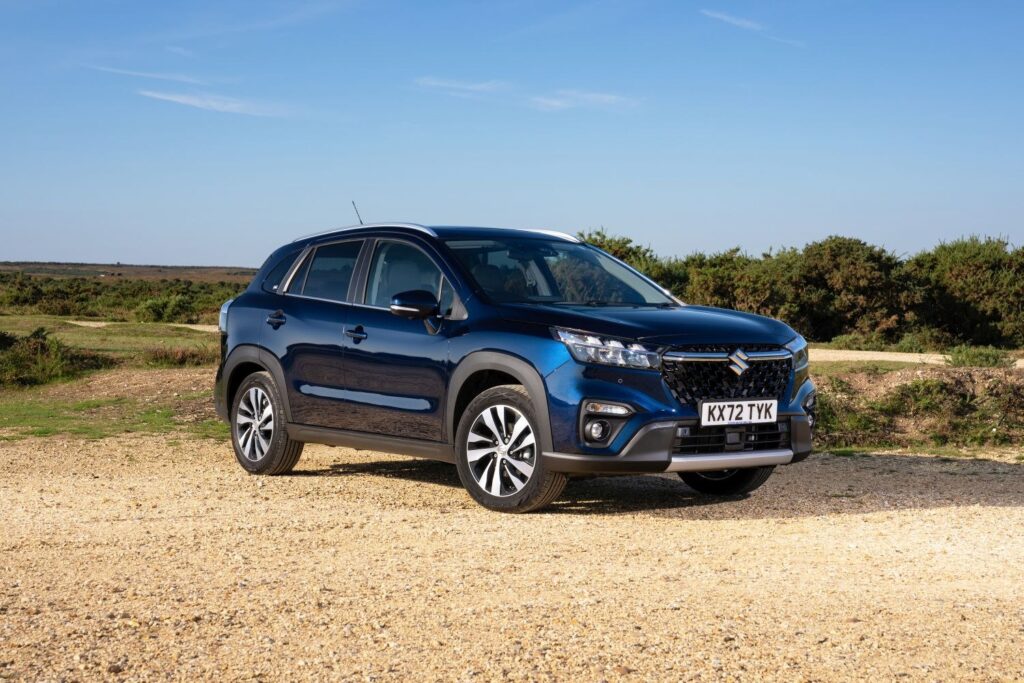
The 2025 Suzuki S-Cross III: A Global Compact Crossover Embracing Mild Hybrid Technology
The 2025 Suzuki S-Cross III represents the third generation of Suzuki’s popular compact crossover SUV, a vehicle primarily designed for and sold in markets across Europe, Asia, and other international regions where its blend of practicality, efficiency, and compact dimensions resonates strongly with consumers. While not a mainstream offering in the United States, the S-Cross III exemplifies Suzuki’s commitment to producing capable and economical vehicles tailored for global tastes. This latest iteration, launching in August 2025, continues to build on its predecessors’ reputation for reliability and versatility, now integrating a sophisticated mild-hybrid powertrain to enhance fuel efficiency and reduce emissions.
Positioned as a family-friendly C-segment (compact) SUV, the Suzuki S-Cross III aims to offer a compelling package for buyers seeking a spacious interior, elevated driving position, and modern amenities within a manageable footprint. The specific variant under review, the 1.4 BOOSTERJET (110 Hp) Mild Hybrid, highlights Suzuki’s strategic shift towards electrification, providing a practical and environmentally conscious option in the highly competitive compact crossover segment.
Powertrain and Performance: The 1.4 BOOSTERJET Mild Hybrid System
Suzuki S-Cross III Engine Architecture and Efficiency
At the heart of the 2025 Suzuki S-Cross III 1.4 BOOSTERJET Mild Hybrid is an intelligently integrated MHEV (Mild Hybrid Electric Vehicle) powertrain. This system combines a robust internal combustion engine with an electric motor to deliver a balance of performance and exceptional fuel economy, a critical factor for its target markets. The mild hybrid architecture means the electric motor primarily assists the gasoline engine, providing torque fill during acceleration and enabling features like enhanced start-stop functionality and regenerative braking.
The internal combustion engine is Suzuki’s proven K14D 1.4-liter (1373 cm3 or 83.79 cu. in.) BOOSTERJET unit. This inline four-cylinder engine features direct injection, a turbocharger, and an intercooler, optimizing power delivery and efficiency. It produces a respectable 110 horsepower at 4500 rpm and a substantial 173.33 lb.-ft. of torque, available across a broad range from 2000 to 2500 rpm. This low-end torque is particularly beneficial for city driving and provides a responsive feel.
Complementing the gasoline engine is a compact, synchronous electric motor, integrated directly into the transmission. This electric motor contributes an additional 17 horsepower and a notable 36.88 lb.-ft. of torque. It operates on a 48-volt lithium-ion battery system, strategically located below the floor between the front and rear seats, ensuring optimal weight distribution and minimal intrusion into passenger or cargo space. The combined efforts of the engine and motor drive the front wheels through a precise 6-speed manual transmission, offering an engaging driving experience.
Performance figures for the S-Cross III 1.4 BOOSTERJET Mild Hybrid are competitive within its class. It accelerates from 0 to 60 mph in an estimated 10.8 seconds and can reach a top speed of 114.95 mph. However, where this powertrain truly shines is in its fuel efficiency. According to WLTP (Worldwide Harmonized Light Vehicles Test Procedure) standards, the combined fuel consumption is an impressive 43.6 US mpg (5.4 l/100 km). CO2 emissions are kept low at 121-122 g/km, allowing it to meet stringent Euro 6e-bis emission standards, underscoring its environmental credentials.
Design and Features of the Suzuki S-Cross III
The 2025 Suzuki S-Cross III maintains its identity as a practical and appealing compact crossover SUV. With a body type defined as a 5-door, 5-seat SUV/Crossover, it offers a blend of rugged styling cues and urban sophistication. Its dimensions position it as a highly maneuverable vehicle suitable for both city streets and longer journeys. The overall length measures 169.29 inches (4300 mm), with a width of 70.28 inches (1785 mm) and a height of 62.4 inches (1585 mm). A wheelbase of 102.36 inches (2600 mm) contributes to a stable ride and generous interior volume.
The design language of the S-Cross III is likely to feature contemporary aesthetics, with a focus on a strong road presence, efficient aerodynamics, and practical elements. The ground clearance of 6.89 inches (175 mm) provides adequate capability for light off-road excursions or navigating challenging urban environments. The vehicle’s compact turning circle of 35.43 feet (10.8 m) further enhances its agility in tight spaces.
Inside, the S-Cross III prioritizes passenger comfort and cargo versatility. With seating for five occupants, the cabin is designed to be ergonomic and user-friendly. The cargo area is particularly flexible, offering a minimum trunk space of 15.19 cubic feet (430 liters) with all seats in place. When the rear seats are folded, this expands significantly to 43.44 cubic feet (1230 liters), making it capable of accommodating larger items for family trips or hauling duties.
Standard features for a modern vehicle like the S-Cross III include a comprehensive suite of safety and convenience technologies. While specific details beyond ABS (Anti-lock Braking System) are not provided, it can be anticipated that the 2025 model will incorporate advanced driver-assistance systems (ADAS) prevalent in its segment, such as multiple airbags, electronic stability control, and possibly features like lane-keeping assist or adaptive cruise control, depending on trim levels. The steering system is an electric power-assisted rack and pinion setup, ensuring light and precise handling.
The S-Cross III rides on 17-inch wheel rims, fitted with 215/55 R17 tires, providing a good balance between ride comfort and handling dynamics. The suspension system comprises an independent MacPherson strut setup at the front and a torsion beam axle at the rear, a common and effective configuration for compact crossovers that balances cost, space efficiency, and ride quality. Braking is handled by ventilated discs at the front and solid discs at the rear, complemented by ABS for confident stopping power.
Technical Specifications
| Category | Specification |
|---|---|
| General Information | |
| Brand | Suzuki |
| Model | SX4 S-Cross |
| Generation | S-Cross III |
| Type (Engine) | 1.4 BOOSTERJET (110 Hp) Mild Hybrid |
| Start of Production | August, 2025 |
| Powertrain Architecture | MHEV (Mild Hybrid Electric Vehicle) |
| Body Type | SUV, Crossover |
| Seats | 5 |
| Doors | 5 |
| Performance Specifications | |
| Combined Fuel Consumption (WLTP) | 5.4 l/100 km (43.6 US mpg) |
| CO2 Emissions (WLTP) | 121-122 g/km |
| Fuel Type | Gasoline |
| Acceleration 0-60 mph | 10.8 sec |
| Maximum Speed | 114.95 mph (185 km/h) |
| Emission Standard | Euro 6e-bis |
| Electric Cars and Hybrids Specs | |
| Battery Voltage | 48 V |
| Battery Technology | Lithium-ion (Li-Ion) |
| Battery Location | Below the floor, between front and rear seats |
| Electric Motor Power | 17 Hp |
| Electric Motor Torque | 36.88 lb.-ft. (50 Nm) |
| Electric Motor Location | Integrated into the transmission |
| Electric Motor Type | Synchronous |
| Internal Combustion Engine Specs | |
| Power | 110 Hp @ 4500 rpm |
| Torque | 173.33 lb.-ft. (235 Nm) @ 2000-2500 rpm |
| Engine Layout | Front, Transverse |
| Engine Model/Code | K14D |
| Engine Displacement | 1.4 liters (1373 cm3 / 83.79 cu. in.) |
| Number of Cylinders | 4 |
| Engine Configuration | Inline |
| Compression Ratio | 10.9:1 |
| Valves per Cylinder | 4 |
| Fuel Injection System | Direct injection |
| Engine Aspiration | Turbocharger, Intercooler |
| Engine Oil Capacity | 3.8 US qt (3.6 l) |
| Coolant Capacity | 7.08 US qt (6.7 l) |
| Space, Volume and Weights | |
| Curb Weight | 2656.57 – 2720.5 lbs. (1205-1234 kg) |
| Max. Weight (GVWR) | 3714.79 lbs. (1685 kg) |
| Max Load | 994.28 – 1058.22 lbs. (451-480 kg) |
| Trunk Space – Minimum | 15.19 cu. ft. (430 l) |
| Trunk Space – Maximum | 43.44 cu. ft. (1230 l) |
| Fuel Tank Capacity | 12.42 US gal (47 l) |
| Dimensions | |
| Length | 169.29 in. (4300 mm) |
| Width | 70.28 in. (1785 mm) |
| Height | 62.4 in. (1585 mm) |
| Wheelbase | 102.36 in. (2600 mm) |
| Front Track | 60.43 in. (1535 mm) |
| Rear Track | 59.25 in. (1505 mm) |
| Ground Clearance | 6.89 in. (175 mm) |
| Minimum Turning Circle | 35.43 ft. (10.8 m) |
| Drivetrain, Brakes and Suspension | |
| Drive Wheel | Front wheel drive |
| Gearbox | 6 gears, manual transmission |
| Front Suspension | Coil spring, Independent type McPherson |
| Rear Suspension | Coil spring, Torsion beam |
| Front Brakes | Ventilated discs |
| Rear Brakes | Disc |
| Assisting Systems | ABS (Anti-lock braking system) |
| Steering Type | Steering rack and pinion |
| Power Steering | Electric Steering |
| Tire Size | 215/55 R17 |
| Wheel Rims Size | 17 inches |
Legacy and Market Impact of the Suzuki S-Cross III
The Suzuki S-Cross, and particularly this third-generation model, plays a vital role in Suzuki’s global strategy, especially in regions where compact, fuel-efficient, and reliable vehicles are highly valued. Suzuki has long cultivated a reputation for producing durable, no-nonsense vehicles that offer excellent value and low running costs. The Suzuki S-Cross III continues this legacy, positioning itself as a sensible and dependable choice in the bustling compact crossover segment.
In its primary markets, the S-Cross III competes with a broad spectrum of rivals. These include popular models such as the Nissan Qashqai, Kia Sportage, Hyundai Tucson, Skoda Karoq, and Dacia Duster, among others. What sets the S-Cross III apart is its focus on a proven, efficient mild-hybrid powertrain combined with Suzuki’s renowned build quality and a practical, user-friendly design. While some competitors might offer more luxurious interiors or cutting-edge technology, the S-Cross III typically appeals to buyers who prioritize reliability, affordability, and genuine utility.
The introduction of the 1.4 BOOSTERJET Mild Hybrid system in the S-Cross III underscores Suzuki’s commitment to meeting evolving environmental regulations and consumer demands for greener vehicles. This move is crucial for maintaining competitiveness in markets like Europe, where strict emission standards drive the adoption of hybrid technologies. By offering a mild-hybrid system, Suzuki provides a cost-effective entry into electrified motoring, without the higher complexity or price tag of full hybrids or plug-in hybrids.
Historically, Suzuki has been a pioneer in compact SUVs, with iconic models like the Vitara and Jimny establishing the brand’s credentials. The S-Cross line, while more road-oriented, carries forward this spirit of utility and capability, adapted for a modern, global audience. The third generation’s emphasis on efficiency, modern design, and advanced safety features ensures its relevance in a rapidly changing automotive landscape.
Ultimately, the 2025 Suzuki S-Cross III 1.4 BOOSTERJET Mild Hybrid is more than just a new model; it’s a testament to Suzuki’s enduring philosophy of delivering practical, economical, and reliable transportation. It represents a significant step in the brand’s electrification journey, solidifying its position as a strong contender for value-conscious buyers seeking a versatile and environmentally responsible compact crossover in markets around the world.
