The Renault Espace V (Phase II, 2020): A European Crossover Reinvention
The Renault Espace V (Phase II, 2020) represents the mid-cycle refresh of the fifth-generation Espace, a vehicle that has undergone a significant transformation from its roots as a pioneering European minivan to a modern, stylish crossover. Launched in February 2020, this iteration continued to redefine Renault’s flagship family vehicle, blending the practicality of a multi-purpose vehicle (MPV) with the elevated stance and design cues of a sport utility vehicle (SUV). Primarily sold in European and select Asian markets, the Espace V (Phase II) was not offered in the United States, where large minivans and crossovers have a different market dynamic. Nevertheless, it played a crucial role in Renault’s portfolio, offering a sophisticated and versatile option for families seeking space, comfort, and a premium driving experience. This particular variant, the 1.8 TCe (225 Hp) EDC FAP 7 Seat, showcased a potent powertrain combined with advanced features, positioning it as a strong competitor in its segment before its eventual discontinuation in November 2020.
Engine and Performance: Powering the Renault Espace V (Phase II, 2020)
Under the hood of the Renault Espace V (Phase II, 2020) 1.8 TCe (225 Hp) EDC FAP 7 Seat lies a robust and efficient 1.8-liter (1798 cm³) turbocharged inline-four engine. This powertrain, designated M5P 403, is a testament to modern engineering, delivering a healthy 225 horsepower at 5600 rpm and a substantial 221.27 lb.-ft. of torque available from a low 2000 rpm. The engine’s architecture features a front, transverse layout, and direct fuel injection, coupled with a turbocharger and intercooler, ensuring both spirited performance and optimized fuel delivery. With four valves per cylinder and a bore of 3.14 inches (79.7 mm) and a stroke of 3.55 inches (90.1 mm), the engine is designed for responsiveness and efficiency.
Power is channeled to the front wheels via a sophisticated 7-speed EDC (Efficient Dual Clutch) automatic transmission, which provides smooth and rapid gear changes, enhancing both performance and fuel economy. This combination allows the Espace to accelerate from 0 to 60 mph in a swift 7.5 seconds (calculated by Auto-Data.net), or 0 to 62 mph (100 km/h) in 7.9 seconds. The vehicle’s top speed is an impressive 139.19 mph (224 km/h), making it highly capable for highway cruising.
Despite its performance capabilities, the Espace V (Phase II) also aims for fuel efficiency, with a combined fuel economy rating of 30.9 US mpg (7.6 l/100 km). Urban driving yields approximately 23.8 US mpg (9.9 l/100 km), while extra-urban conditions see an improved 37.3 US mpg (6.3 l/100 km). Emissions are managed to comply with the stringent Euro 6 d-TEMP standard, further aided by a particulate filter system (FAP – Filtre À Particules), reflecting Renault’s commitment to environmental responsibility. The vehicle’s weight-to-power ratio stands at 7.5 kg/Hp (134 Hp/tonne), indicating a well-balanced power delivery for its size and segment.
Design and Features: Versatility Meets Style
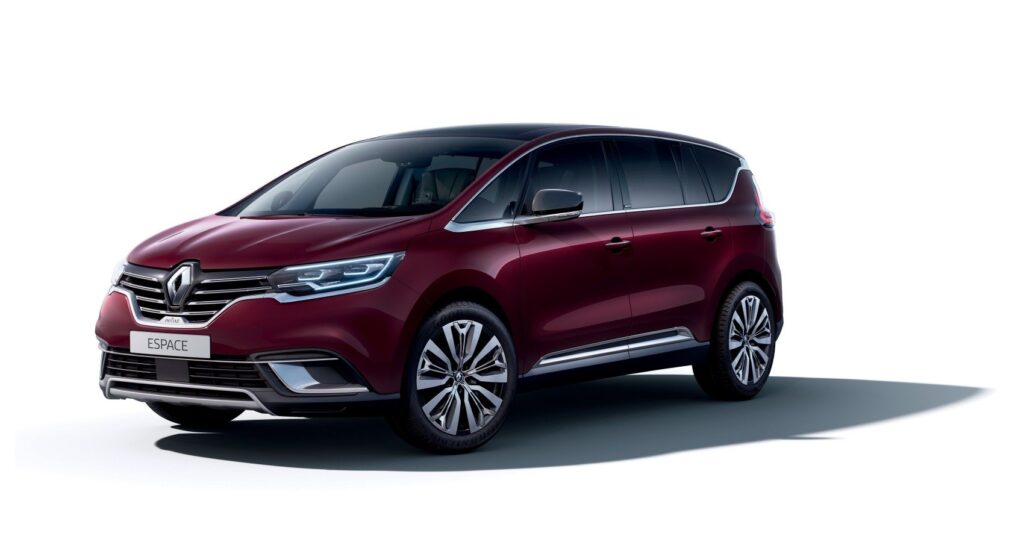
The design of the Renault Espace V (Phase II, 2020) marked a distinct departure from its predecessors, moving away from the traditional boxy minivan silhouette to embrace a more dynamic, crossover-inspired aesthetic. This particular model, available as a 7-seater, skillfully combines the spaciousness and practicality expected of a family hauler with the sleek lines and elevated ground clearance (6.3 inches or 160 mm) of a modern SUV. Its five-door body type facilitates easy access to all three rows of seating, making it highly functional for larger families.
Measuring 191.3 inches (4859 mm) in length, 74.33 inches (1888 mm) in width (83.78 inches or 2128 mm including mirrors), and between 65.98 to 67.36 inches (1676-1711 mm) in height, the Espace commands a significant road presence. The generous 113.54-inch (2884 mm) wheelbase contributes to a stable ride and ample interior volume. Inside, the 7-seat configuration offers remarkable versatility, with a minimum trunk space of 25.39 cu. ft. (719 liters) that expands to a cavernous 71.87 cu. ft. (2035 liters) with the rear seats folded, catering to various cargo and passenger needs.
Key features for the Phase II refresh included updated exterior styling, typically involving revised front and rear bumpers, new LED lighting signatures, and fresh wheel designs (this model sports 18-inch wheels with 235/60 R18 tires). The interior received enhancements in terms of material quality, infotainment technology, and advanced driver-assistance systems, aligning with the expectations of a premium European family vehicle. Safety features like ABS (Anti-lock Braking System) were standard, complemented by modern electronic power steering and a refined suspension setup featuring independent McPherson struts at the front, ensuring a comfortable and controlled ride. The braking system utilized 320 mm ventilated discs at the front and 290 mm discs at the rear, providing strong stopping power.
Technical Specifications
| Category | Specification |
|---|---|
| General Information | |
| Brand | Renault |
| Model | Espace V (Phase II, 2020) |
| Type (Engine) | 1.8 TCe (225 Hp) EDC FAP 7 Seat |
| Production Start | February 2020 |
| Production End | November 2020 |
| Powertrain Architecture | Internal Combustion Engine |
| Body Type | Minivan, Crossover |
| Seats | 7 |
| Doors | 5 |
| Performance Specs | |
| Fuel Consumption (Urban) | 9.9 l/100 km (23.8 US mpg) |
| Fuel Consumption (Extra Urban) | 6.3 l/100 km (37.3 US mpg) |
| Fuel Consumption (Combined) | 7.6 l/100 km (30.9 US mpg) |
| CO2 Emissions | 174 g/km |
| Fuel Type | Petrol (Gasoline) |
| Acceleration 0 – 60 mph | 7.5 sec |
| Acceleration 0 – 62 mph (0-100 km/h) | 7.9 sec |
| Maximum Speed | 139.19 mph (224 km/h) |
| Emission Standard | Euro 6 d-TEMP |
| Weight-to-Power Ratio | 7.5 kg/Hp (134 Hp/tonne) |
| Weight-to-Torque Ratio | 5.6 kg/Nm (178.7 Nm/tonne) |
| Engine Specs | |
| Power | 225 Hp @ 5600 rpm |
| Power per liter | 125.1 Hp/l |
| Torque | 221.27 lb.-ft. (300 Nm) @ 2000 rpm |
| Engine Layout | Front, Transverse |
| Engine Model/Code | M5P 403 |
| Engine Displacement | 1.8 l (1798 cm³, 109.72 cu. in.) |
| Number of Cylinders | 4 |
| Engine Configuration | Inline |
| Cylinder Bore | 3.14 in. (79.7 mm) |
| Piston Stroke | 3.55 in. (90.1 mm) |
| Valves per Cylinder | 4 |
| Fuel Injection System | Direct injection |
| Engine Aspiration | Turbocharger, Intercooler |
| Engine Systems | Particulate filter |
| Space, Volume and Weights | |
| Kerb Weight | 3701.56 lbs. (1679 kg) |
| Max. Weight | 5313.14 lbs. (2410 kg) |
| Max Load | 1611.58 lbs. (731 kg) |
| Trunk (Boot) Space – Minimum | 25.39 cu. ft. (719 l) |
| Trunk (Boot) Space – Maximum | 71.87 cu. ft. (2035 l) |
| Fuel Tank Capacity | 14.79 US gal (56 l) |
| Permitted Trailer Load with Brakes (12%) | 4409.25 lbs. (2000 kg) |
| Permitted Trailer Load without Brakes | 1653.47 lbs. (750 kg) |
| Dimensions | |
| Length | 191.3 in. (4859 mm) |
| Width | 74.33 in. (1888 mm) |
| Width with Mirrors Folded | 75.35 in. (1914 mm) |
| Width Including Mirrors | 83.78 in. (2128 mm) |
| Height | 65.98 – 67.36 in. (1676-1711 mm) |
| Wheelbase | 113.54 in. (2884 mm) |
| Front Track | 64.17 in. (1630 mm) |
| Rear (Back) Track | 63.82 in. (1621 mm) |
| Front Overhang | 40.55 in. (1030 mm) |
| Rear Overhang | 37.17 in. (944 mm) |
| Ride Height (Ground Clearance) | 6.3 in. (160 mm) |
| Minimum Turning Circle (Diameter) | 39.04 ft. (11.9 m) |
| Drivetrain, Brakes and Suspension Specs | |
| Drivetrain Architecture | Internal combustion engine drives the front wheels |
| Drive Wheel | Front-wheel drive |
| Number of Gears and Type of Gearbox | 7 gears, automatic transmission EDC |
| Front Suspension | Independent type McPherson |
| Front Brakes | Ventilated discs, 320 mm |
| Rear Brakes | Disc, 290 mm |
| Assisting Systems | ABS (Anti-lock braking system) |
| Steering Type | Steering rack and pinion |
| Power Steering | Electric Steering |
| Tires Size | 235/60 R18 |
| Wheel Rims Size | 18 inches |
Legacy and Market Impact
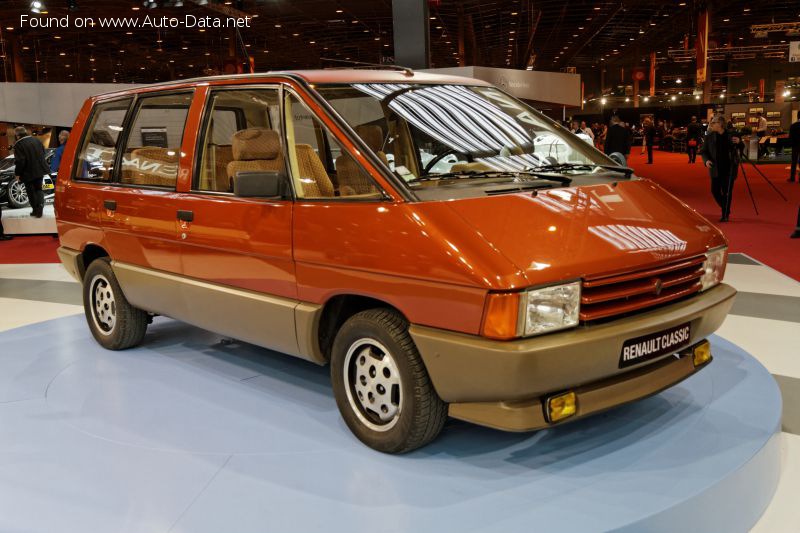
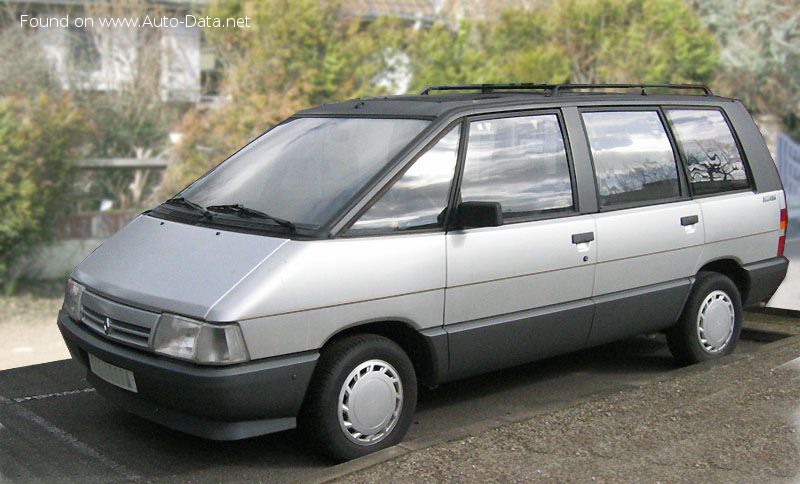
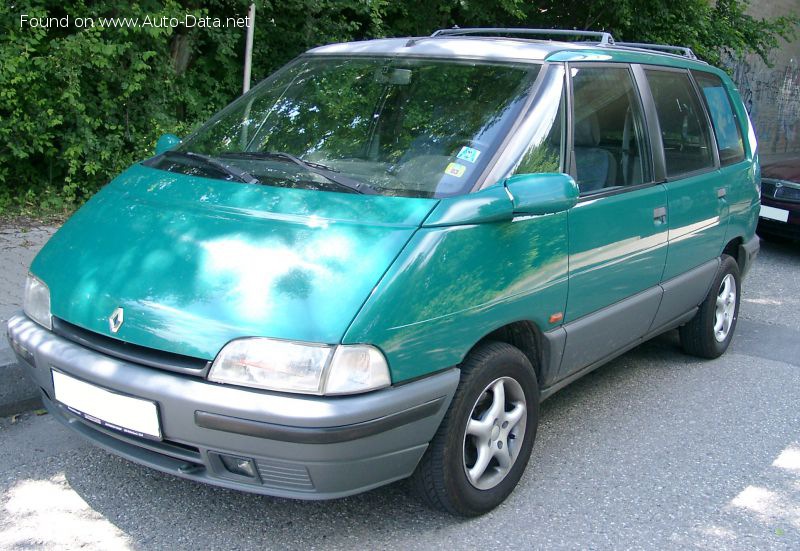
The Renault Espace holds a significant place in automotive history, having pioneered the European MPV segment with its first generation in 1984. It was revolutionary, offering unprecedented interior space and modularity, effectively creating a new vehicle category. By the time the fifth generation arrived in 2015, and subsequently the Phase II refresh in 2020, the market had shifted dramatically. Traditional minivans were losing ground to the surging popularity of crossovers and SUVs. Renault’s strategic decision to transform the Espace into a more crossover-like vehicle was a bold move to keep it relevant in an evolving automotive landscape.
The Renault Espace V (Phase II, 2020), with its 1.8 TCe (225 Hp) EDC FAP 7 Seat configuration, aimed to compete with a diverse range of vehicles in the European market. Its primary competitors included other large family crossovers and SUVs, such as the Peugeot 5008, Skoda Kodiaq, Volkswagen Tiguan Allspace, and even certain premium offerings like the Mercedes-Benz GLB or BMW X1/X3, though the Espace typically offered more space for its price point. It appealed to buyers who valued the practicality of a 7-seater without wanting the utilitarian image of a traditional minivan, preferring a more stylish and dynamic appearance.
Despite its innovative approach and strong powertrain, the Espace V (Phase II) faced stiff competition and the broader trend of consumers moving towards conventional SUVs. Its production run for this specific phase was relatively short, from February to November 2020, indicating the rapid pace of market changes and Renault’s ongoing strategy adjustments. Nonetheless, this iteration of the Espace cemented its legacy as a versatile, comfortable, and technologically advanced family vehicle that successfully adapted to changing consumer tastes. It showcased Renault’s capability to blend sophisticated design, efficient performance, and practical utility in a single package, maintaining the Espace’s reputation as a thoughtful and distinctive choice in the competitive European family vehicle segment. The Espace continues to evolve, with future iterations further embracing electrification and new market segments, but the Phase II of the Espace V stands as a testament to its crossover era.