Introduction to the Volvo V60 II Cross Country 2.0 T5 (254 Hp) AWD Automatic
The Volvo V60 II Cross Country represents the second generation of Volvo’s popular mid-size premium off-road capable wagon, blending the practicality of a station wagon with the rugged aesthetics and enhanced capability of a crossover. Launched in 2018, this particular variant, the Volvo V60 II Cross Country 2.0 T5 (254 Hp) AWD Automatic, was produced until 2020. It carved out a niche in the premium market by offering a compelling alternative to traditional SUVs, appealing to buyers seeking versatility, Scandinavian design, and Volvo’s renowned safety credentials, all wrapped in a more dynamic and car-like driving experience than its SUV counterparts.
Building upon Volvo’s Scalable Product Architecture (SPA) platform, shared with larger models like the S90, V90, and XC60, the V60 Cross Country brought a sophisticated foundation to the segment. Its design ethos combined elegance with a ready-for-adventure stance, characterized by increased ground clearance and protective body cladding. The 2.0 T5 powertrain, a hallmark of Volvo’s modern engine strategy, delivered a robust balance of performance and efficiency, ensuring the vehicle was equally at home on paved highways as it was on unpaved trails. This generation continued Volvo’s long-standing tradition of offering capable and luxurious wagons, adapting them for contemporary demands for all-weather and light off-road capability.
Engine and Performance of the Volvo V60 II Cross Country 2.0 T5 (254 Hp) AWD Automatic
At the heart of the Volvo V60 II Cross Country 2.0 T5 (254 Hp) AWD Automatic lies a sophisticated 2.0-liter inline four-cylinder engine, designated by Volvo as the B4204T23. This powerplant is a prime example of Volvo’s Drive-E engine family, engineered for impressive output from a compact displacement. Utilizing direct fuel injection and a turbocharger with an intercooler, the engine produces a substantial 254 horsepower at 5500 revolutions per minute (rpm). Its power-per-liter ratio stands at an impressive 129 horsepower per liter, underscoring its advanced design.
Torque delivery is equally compelling, with 350 Newton-meters (258.15 lb-ft) available across a broad rev range, from a low 1500 rpm up to 4800 rpm. This wide torque band ensures robust acceleration and responsive power delivery in various driving conditions, from city commuting to highway passing maneuvers. The engine’s layout is front, transverse, contributing to efficient packaging and optimal weight distribution. With a bore of 82 mm (3.23 inches) and a stroke of 93.2 mm (3.67 inches), and a compression ratio of 10.8:1, the engine is optimized for both performance and fuel efficiency, running on gasoline.
Power is channeled through an advanced 8-speed automatic transmission, providing smooth and precise gear changes that optimize both performance and fuel economy. The standard All-Wheel Drive (AWD) system ensures superior traction and stability, particularly beneficial in adverse weather conditions or when venturing off paved roads. This drivetrain configuration allows the V60 Cross Country 2.0 T5 to accelerate from 0 to 60 mph in a brisk 6.5 seconds (calculated by Auto-Data.net), and from 0 to 100 km/h in 6.8 seconds, demonstrating its dynamic capabilities. The top speed is electronically limited to 210 km/h (130.49 mph), a common practice among premium European manufacturers.
Despite its performance, the V60 Cross Country 2.0 T5 maintains respectable fuel economy for its class and capability. The combined fuel consumption is rated at 11.3 liters per 100 km, which translates to approximately 20.8 US miles per gallon. Urban consumption stands at 12.8 l/100 km (18.4 US mpg), while extra-urban driving yields 9.1 l/100 km (25.8 US mpg). This balance of spirited performance and reasonable fuel consumption makes the T5 engine a versatile choice for a wide range of drivers.
Design and Features
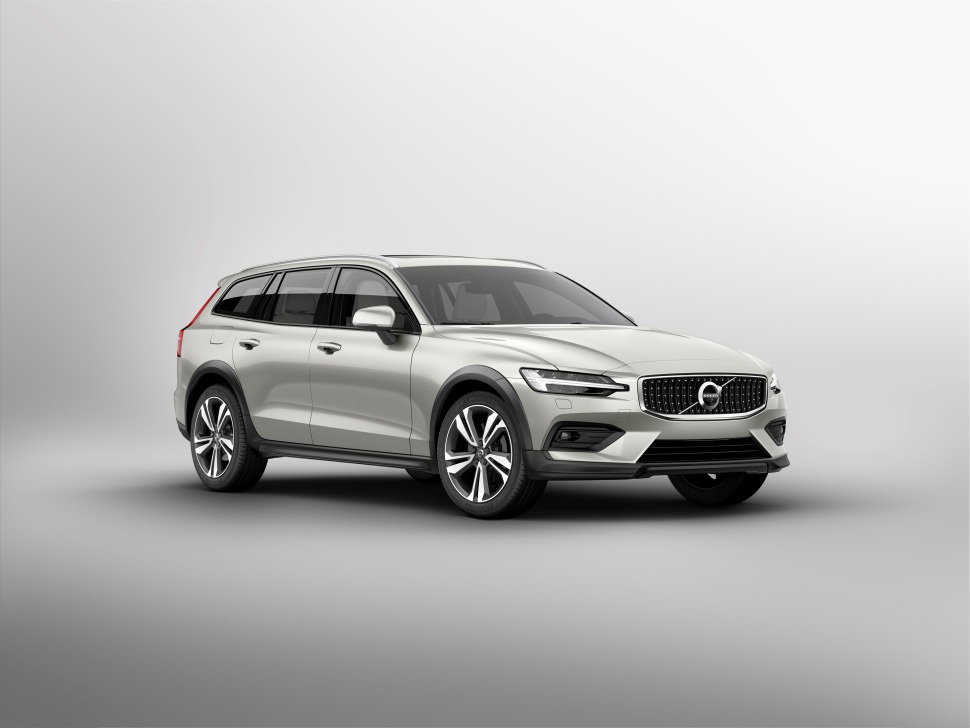
The design of the Volvo V60 II Cross Country is a testament to modern Scandinavian aesthetics, characterized by clean lines, elegant proportions, and a purposeful stance. As a station wagon (estate) with crossover characteristics, it successfully merges the sleek profile of a premium wagon with the adventurous spirit suggested by its elevated ride height and rugged exterior elements. The body features five doors and comfortable seating for five occupants, making it a practical choice for families and adventurers alike.
Key design differentiators for the Cross Country model include its significant ground clearance, measuring 210 mm (8.27 inches). This increased height not only enhances its off-road capability but also provides a commanding view of the road. Protective black body cladding around the wheel arches, sills, and lower bumpers adds to its robust appearance, shielding the paintwork from minor scrapes and stone chips on rougher terrain. The V60 Cross Country also incorporates distinctive “Thor’s Hammer” LED daytime running lights, a signature design cue across Volvo’s contemporary lineup, lending it an unmistakable presence.
In terms of dimensions, the vehicle measures 4784 mm (188.35 inches) in length, 1850 mm (72.83 inches) in width (2040 mm / 80.31 inches including mirrors), and 1499 mm (59.02 inches) in height. The substantial wheelbase of 2874 mm (113.15 inches) contributes to a stable ride and generous interior space. The drag coefficient (Cd) of 0.33 indicates a relatively aerodynamic profile for a vehicle of its type, contributing to both fuel efficiency and reduced wind noise.
Inside, the V60 Cross Country prioritizes comfort, ergonomics, and advanced technology. While specific interior features like infotainment systems (e.g., Volvo’s Sensus Connect) or advanced driver-assistance systems (ADAS) are not detailed in the raw data, it is a given for a modern Volvo of this era that it would be equipped with a comprehensive suite of safety and convenience technologies. These typically include features like City Safety (autonomous emergency braking), lane-keeping assist, adaptive cruise control, and blind-spot monitoring, underscoring Volvo’s unwavering commitment to safety.
Practicality is a strong suit, with a minimum trunk (boot) space of 898 liters (31.71 cu. ft.), expanding to an impressive 1441 liters (50.89 cu. ft.) with the rear seats folded down. This generous cargo capacity makes it highly suitable for hauling luggage, sports equipment, or everyday necessities. The vehicle also boasts a permitted trailer load with brakes of 2000 kg (4409.25 lbs), highlighting its utility.
The suspension system features a double wishbone setup at the front, renowned for its ability to provide precise handling and a comfortable ride. The rear suspension employs a leaf spring design, which, in modern Volvo applications, typically refers to a composite transverse leaf spring. This innovative solution saves space, reduces weight, and contributes to the car’s overall dynamic performance and cargo capacity. Steering is managed by an electric power-assisted rack and pinion system, offering responsive and accurate control. The vehicle is equipped with an Anti-lock Braking System (ABS) as standard, ensuring effective stopping power.
Technical Specifications
| Category | Specification | US Equivalent / Notes |
|---|---|---|
| Brand | Volvo | |
| Model | V60 | |
| Generation | V60 II Cross Country | |
| Type (Engine) | 2.0 T5 (254 Hp) AWD Automatic | |
| Production Start | 2018 | |
| Production End | 2020 | |
| Powertrain Architecture | Internal Combustion Engine | |
| Body Type | Station Wagon (Estate), Crossover | |
| Seats | 5 | |
| Doors | 5 | |
| Performance Specifications | ||
| Fuel Consumption (Urban) | 12.8 l/100 km | 18.4 US mpg |
| Fuel Consumption (Extra Urban) | 9.1 l/100 km | 25.8 US mpg |
| Fuel Consumption (Combined) | 11.3 l/100 km | 20.8 US mpg |
| Fuel Type | Petrol (Gasoline) | |
| Acceleration 0 – 60 mph | 6.5 sec | |
| Acceleration 0 – 100 km/h | 6.8 sec | |
| Maximum Speed | 210 km/h | 130.49 mph |
| Braking 100 km/h – 0 | 35 m | 114.83 ft |
| Engine Specifications | ||
| Power | 254 Hp @ 5500 rpm | |
| Power per Liter | 129 Hp/l | |
| Torque | 350 Nm @ 1500-4800 rpm | 258.15 lb-ft @ 1500-4800 rpm |
| Engine Layout | Front, Transverse | |
| Engine Model/Code | B4204T23 | |
| Engine Displacement | 1969 cm3 | 120.16 cu. in. |
| Number of Cylinders | 4 | |
| Engine Configuration | Inline | |
| Cylinder Bore | 82 mm | 3.23 in. |
| Piston Stroke | 93.2 mm | 3.67 in. |
| Compression Ratio | 10.8:1 | |
| Valves per Cylinder | 4 | |
| Fuel Injection System | Direct Injection | |
| Engine Aspiration | Turbocharger, Intercooler | |
| Engine Oil Capacity | 5.6 l | 5.92 US qt |
| Space, Volume, and Weights | ||
| Trunk Space (Minimum) | 898 l | 31.71 cu. ft. |
| Trunk Space (Maximum) | 1441 l | 50.89 cu. ft. |
| Fuel Tank Capacity | 60 l | 15.85 US gal |
| Max. Roof Load | 75 kg | 165.35 lbs. |
| Permitted Trailer Load (with brakes) | 2000 kg | 4409.25 lbs. |
| Dimensions | ||
| Length | 4784 mm | 188.35 in. |
| Width | 1850 mm | 72.83 in. |
| Width (with mirrors folded) | 1916 mm | 75.43 in. |
| Width (including mirrors) | 2040 mm | 80.31 in. |
| Height | 1499 mm | 59.02 in. |
| Wheelbase | 2874 mm | 113.15 in. |
| Front Track | 1636-1649 mm | 64.41 – 64.92 in. |
| Rear Track | 1621-1633 mm | 63.82 – 64.29 in. |
| Ride Height (Ground Clearance) | 210 mm | 8.27 in. |
| Drag Coefficient (Cd) | 0.33 | |
| Minimum Turning Circle | 11.3 m | 37.07 ft. |
| Drivetrain, Brakes, and Suspension | ||
| Drive Wheel | All Wheel Drive (4×4) | |
| Gearbox Type | 8 gears, Automatic Transmission | |
| Front Suspension | Double Wishbone | |
| Rear Suspension | Leaf Spring | (Typically Composite Transverse Leaf Spring) |
| Assisting Systems | ABS (Anti-lock Braking System) | |
| Steering Type | Steering Rack and Pinion | |
| Power Steering | Electric Steering | |
| Wheel Rims Size | 16; 17; 18 | (Available options) |
Legacy and Market Impact of the Volvo V60 II Cross Country
The Volvo V60 II Cross Country 2.0 T5 (254 Hp) AWD Automatic continued Volvo’s enduring legacy of producing versatile and safe station wagons, a segment where the Swedish automaker has historically excelled. For decades, Volvo has been synonymous with the wagon body style, and the Cross Country variant extended this reputation by adding a layer of ruggedness and all-weather capability that resonated with a specific buyer demographic. In the North American market, where SUV sales largely dominate, the V60 Cross Country offered a refreshing and sophisticated alternative, combining the lower center of gravity and driving dynamics of a car with the practicality and elevated stance often sought in crossovers.
Its primary competitors in the premium off-road wagon segment included the Audi A4 Allroad and, to some extent, the Subaru Outback, though the Volvo operated at a more luxurious and premium price point. The V60 Cross Country distinguished itself with a unique blend of elegant Scandinavian design, advanced safety technologies (a Volvo hallmark), and a powerful yet efficient powertrain. It appealed to consumers who appreciated understated luxury, environmental consciousness, and a vehicle that could handle diverse driving conditions, from snowy commutes to gravel roads, without the bulk or fuel penalty of a larger SUV.
The impact of the V60 II Cross Country was significant in reinforcing Volvo’s brand identity. It demonstrated Volvo’s ability to innovate within its traditional strengths, proving that wagons could evolve to meet modern demands for versatility and adventure. The model’s success contributed to Volvo’s resurgence in the premium market, showcasing the effectiveness of their SPA platform and Drive-E powertrain strategy. It helped to redefine what a “wagon” could be, moving beyond its utilitarian image to embody a lifestyle choice for those who valued design, performance, and responsible luxury.
While its production run for this specific powertrain variant concluded in 2020, the V60 Cross Country continues to be a cornerstone of Volvo’s lineup, evolving with new powertrains and technologies. Its introduction marked a pivotal moment in the premium wagon segment, demonstrating that there was still a strong demand for vehicles that offered a refined driving experience, ample cargo space, and a touch of adventurous spirit, all without fully committing to the SUV form factor. The 2.0 T5 AWD Automatic variant, in particular, stood out as a well-balanced offering, providing ample power and capability for a wide range of uses, solidifying its place as a respected and desirable model within Volvo’s modern history.