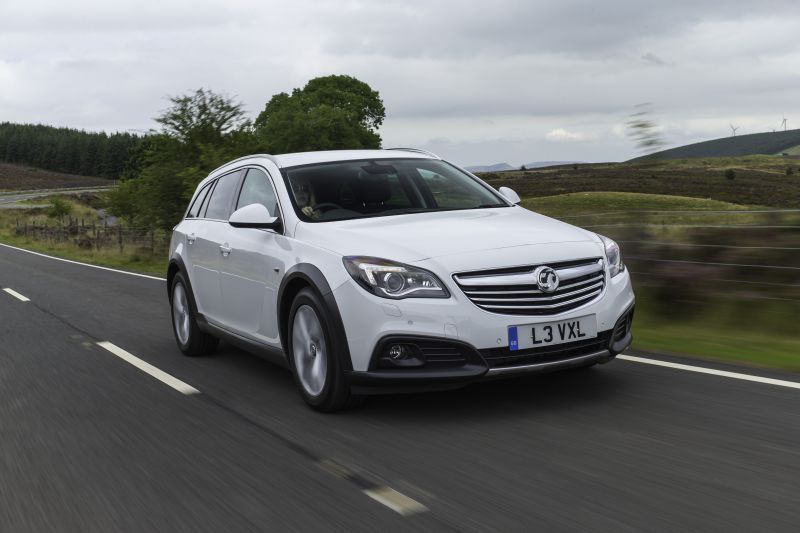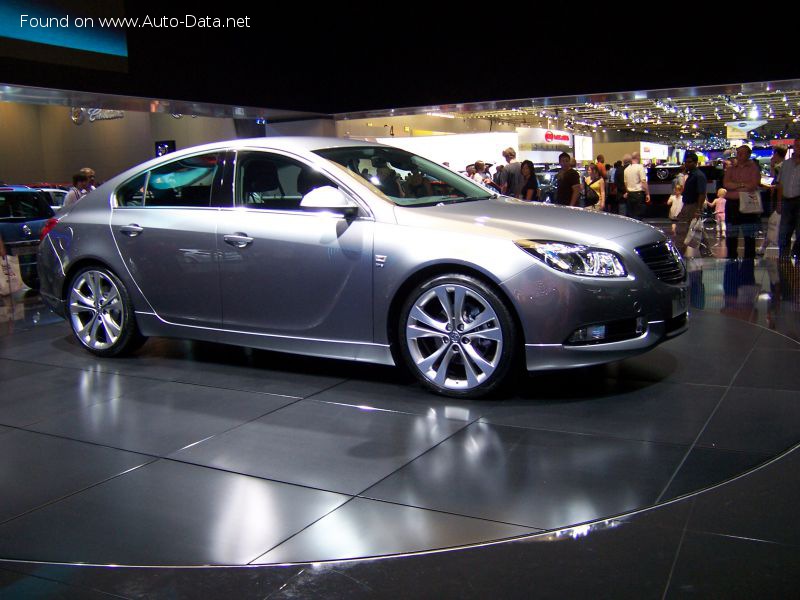
The Vauxhall Insignia I Sports Tourer (facelift 2013) 2.0 CDTi BiTurbo ecoTEC (195 Hp) Automatic
The Vauxhall Insignia, a cornerstone of the British automotive landscape, represented General Motors’ D-segment contender in Europe and the United Kingdom. The specific model under review, the Vauxhall Insignia I Sports Tourer (facelift 2013) 2.0 CDTi BiTurbo ecoTEC (195 Hp) Automatic, belongs to the first generation of the Insignia, which debuted in 2008 as a replacement for the long-running Vectra. This particular variant, produced from 2013 to 2017, represents the mid-cycle refresh of the Insignia I, bringing updated styling, enhanced technology, and refined powertrains to maintain its competitive edge in a demanding market segment dominated by family cars and fleet vehicles. The “Sports Tourer” designation indicates its station wagon body style, offering increased practicality and cargo volume compared to its sedan or hatchback counterparts. While the Vauxhall brand itself is specific to the UK, the Insignia was sold as the Opel Insignia across continental Europe and formed the basis for the Buick Regal in North America and the Holden Commodore in Australia, highlighting its global engineering roots and significance.
Engineering and Performance of the Vauxhall Insignia I Sports Tourer
At the heart of this particular Insignia Sports Tourer lies a sophisticated 2.0-liter CDTi BiTurbo ecoTEC diesel engine, a testament to GM’s commitment to combining robust performance with impressive fuel efficiency. Codenamed A20DTR, this inline four-cylinder engine features a DOHC valvetrain with four valves per cylinder, ensuring optimal airflow and combustion. The “BiTurbo” moniker signifies a sequential twin-turbocharging system, designed to provide strong low-end torque and sustained power delivery across the rev range. This setup effectively mitigates turbo lag, a common characteristic of single-turbo diesel engines, by utilizing a smaller turbocharger for quick spool-up at lower RPMs and a larger one that takes over at higher engine speeds, or both operating in tandem.
The engine generates a formidable 195 horsepower at 4000 rpm, translating to a power-per-liter output of nearly 100 horsepower per liter, which is highly competitive for a diesel powerplant of its era. More importantly for real-world driving, it delivers a substantial 295.02 lb.-ft. of torque, available across a broad plateau from 1750 to 2500 rpm. This ample torque ensures strong acceleration and effortless cruising, particularly when the vehicle is loaded or towing. Paired with a smooth-shifting 6-speed automatic transmission, power is efficiently channeled to the front wheels. This drivetrain configuration allows the Insignia Sports Tourer to accelerate from 0 to 60 mph in a respectable 8.6 seconds and achieve a top speed of 139.19 mph, making it a capable performer on both urban roads and highways.
The “ecoTEC” designation underscores its focus on environmental performance and fuel economy. Despite its robust output, the vehicle boasts impressive fuel efficiency figures: an urban consumption of 30.2 US mpg, an extra-urban (highway) figure of 50 US mpg, and a combined rating of 40.6 US mpg. These figures, coupled with CO2 emissions of 154 g/km, allowed the vehicle to meet the Euro 5 emission standard, making it an attractive option for buyers seeking a powerful yet economical family or fleet vehicle in its primary markets.
Design and Features of the Vauxhall Insignia I Sports Tourer (facelift 2013)
The 2013 facelift of the Insignia brought a refreshed aesthetic to the first-generation model, particularly noticeable in the front and rear fascias. While maintaining its original sleek and flowing lines, the updated model featured a wider, lower grille, revised headlamps (often incorporating LED daytime running lights on higher trims), and a more sculpted hood. At the rear, new LED taillights and a restyled bumper contributed to a more modern and cohesive appearance. The “Sports Tourer” body type, a five-door station wagon, offered a blend of dynamic styling and exceptional practicality, making it a popular choice among families and business users.
Measuring 193.43 inches in length, 73.07 inches in width (82.05 inches including mirrors), and 59.57 inches in height, the Insignia Sports Tourer presented a substantial road presence. Its generous 107.76-inch wheelbase contributed to a stable ride and a spacious cabin for five occupants. Inside, the facelift introduced a redesigned center console with fewer buttons, aiming for a more intuitive and uncluttered user experience. Higher-quality materials and improved infotainment systems, often featuring larger touchscreens, were also part of the refresh, elevating the perceived premium feel of the cabin.
Practicality was a key selling point for the Sports Tourer. It offered a minimum trunk space of 19.07 cubic feet, which could expand significantly to 54.03 cubic feet with the rear seats folded down, making it highly versatile for carrying luggage, sports equipment, or larger items. The kerb weight of 3820.61 lbs. underscored its solid build, and with a maximum payload capacity of 1294.11 lbs., it was well-equipped for family adventures or professional duties. Safety features of the era included standard ABS (Anti-lock Braking System), and depending on the trim, could extend to a suite of advanced driver-assistance systems. The vehicle rode on 225/55 R17 tires, mounted on 17-inch wheel rims, providing a balance of comfort and grip. Its independent McPherson front suspension and multi-link rear suspension ensured a composed and comfortable ride, characteristic of a European D-segment vehicle.
Technical Specifications: Vauxhall Insignia I Sports Tourer (facelift 2013) 2.0 CDTi BiTurbo ecoTEC (195 Hp) Automatic
| Category | Specification |
|---|---|
| Brand | Vauxhall |
| Model | Insignia |
| Generation | Insignia I Sports Tourer (facelift 2013) |
| Type (Engine) | 2.0 CDTi BiTurbo ecoTEC (195 Hp) Automatic |
| Production Start | 2013 |
| Production End | 2017 |
| Powertrain Architecture | Internal Combustion Engine |
| Body Type | Station wagon (estate) |
| Seats | 5 |
| Doors | 5 |
| Performance Specifications | |
| Fuel Consumption (Urban) | 30.2 US mpg (7.8 l/100 km) |
| Fuel Consumption (Extra Urban) | 50 US mpg (4.7 l/100 km) |
| Fuel Consumption (Combined) | 40.6 US mpg (5.8 l/100 km) |
| CO2 Emissions | 154 g/km |
| Fuel Type | Diesel |
| Acceleration 0-60 mph | 8.6 seconds |
| Maximum Speed | 139.19 mph (224 km/h) |
| Emission Standard | Euro 5 |
| Weight-to-Power Ratio | 8.9 kg/Hp (112.5 Hp/tonne) |
| Weight-to-Torque Ratio | 4.3 kg/Nm (230.8 Nm/tonne) |
| Engine Specifications | |
| Power | 195 Hp @ 4000 rpm |
| Power per Liter | 99.7 Hp/l |
| Torque | 295.02 lb.-ft. @ 1750-2500 rpm (400 Nm) |
| Engine Layout | Front, Transverse |
| Engine Model/Code | A20DTR |
| Engine Displacement | 119.36 cu. in. (1956 cm3) |
| Number of Cylinders | 4 |
| Engine Configuration | Inline |
| Cylinder Bore | 3.27 in. (83 mm) |
| Piston Stroke | 3.56 in. (90.4 mm) |
| Valves per Cylinder | 4 |
| Fuel Injection System | Diesel Commonrail |
| Engine Aspiration | Turbocharger, Intercooler (BiTurbo) |
| Valvetrain | DOHC |
| Engine Oil Capacity | 4.76 US qt (4.5 l) |
| Coolant Capacity | 9.51 US qt (9 l) |
| Engine Systems | Particulate filter |
| Dimensions, Volume, and Weights | |
| Kerb Weight | 3820.61 lbs. (1733 kg) |
| Max. Weight | 5114.72 lbs. (2320 kg) |
| Max Load | 1294.11 lbs. (587 kg) |
| Trunk Space (Minimum) | 19.07 cu. ft. (540 l) |
| Trunk Space (Maximum) | 54.03 cu. ft. (1530 l) |
| Fuel Tank Capacity | 18.49 US gal (70 l) |
| Permitted Trailer Load with Brakes (12%) | 3747.86 lbs. (1700 kg) |
| Permitted Trailer Load without Brakes | 1653.47 lbs. (750 kg) |
| Length | 193.43 in. (4913 mm) |
| Width | 73.07 in. (1856 mm) |
| Width including Mirrors | 82.05 in. (2084 mm) |
| Height | 59.57 in. (1513 mm) |
| Wheelbase | 107.76 in. (2737 mm) |
| Front Overhang | 40.16 in. (1020 mm) |
| Rear Overhang | 45.51 in. (1156 mm) |
| Minimum Turning Circle | 37.4 ft. (11.4 m) |
| Drivetrain, Brakes, and Suspension | |
| Drivetrain Architecture | Front-wheel drive, Internal Combustion Engine |
| Drive Wheel | Front-wheel drive |
| Number of Gears | 6 |
| Type of Gearbox | Automatic transmission |
| Front Suspension | Independent, McPherson with coil spring and anti-roll bar |
| Rear Suspension | Independent multi-link suspension |
| Front Brakes | Ventilated discs |
| Rear Brakes | Disc |
| Assisting Systems | ABS (Anti-lock braking system) |
| Tires Size | 225/55 R17 |
| Wheel Rims Size | 17 inches |
Legacy and Market Impact of the Vauxhall Insignia I Sports Tourer
The Vauxhall Insignia I Sports Tourer, especially after its 2013 facelift, carved out a significant niche in the highly competitive European D-segment. While not directly sold in the United States as a Vauxhall, its underpinnings were familiar to American consumers through the Buick Regal, which shared the same Epsilon II platform. In its primary UK market, the Insignia was a perennial favorite, particularly among company car fleets and families requiring a spacious and economical vehicle.
Its reputation was built on a foundation of solid build quality, comfortable ride characteristics, and a compelling balance of performance and efficiency, particularly with the BiTurbo diesel engine. The Sports Tourer variant was especially lauded for its cavernous cargo space and family-friendly attributes, making it a practical alternative to SUVs for many European buyers. It competed fiercely with established rivals such as the Ford Mondeo Estate, Volkswagen Passat Estate, and Skoda Superb Combi, often offering a more accessible price point with a strong feature set.
The Insignia’s impact extended beyond just sales figures; it helped redefine Vauxhall’s image from purely utilitarian to one that offered more refined design and advanced technology. The facelifted model, with its improved interior and sharper exterior styling, kept the Insignia relevant against newer competitors for several years. Its efficient diesel powertrains, like the 2.0 CDTi BiTurbo, were particularly instrumental in appealing to the fleet market, where running costs and emissions were critical considerations. The first-generation Insignia laid the groundwork for its successor, the Insignia B (or Insignia Grand Sport/Sports Tourer), which continued to build on its predecessor’s strengths, further cementing its place as a robust and reliable choice in the mid-size segment.