The Nissan Sylphy EV: A Pioneer in China’s Electric Vehicle Landscape
The Nissan Sylphy EV represents a significant chapter in Nissan’s global electrification strategy, particularly tailored for the burgeoning electric vehicle market in China. Launched in 2018, this battery-electric sedan marked Nissan’s first locally produced electric vehicle in China, building upon the well-established and popular Sylphy (known as Sentra in some markets, including the US) sedan platform. Positioned as a practical, efficient, and accessible electric car for the mass market, the Nissan Sylphy EV aimed to capture a substantial share of the rapidly expanding new energy vehicle segment in the world’s largest automotive market. It combined Nissan’s proven electric powertrain technology, derived from the globally successful Leaf, with the familiar and spacious packaging of the conventional Sylphy, offering a compelling blend of reliability, comfort, and zero-emission mobility.
As a four-door, five-seat sedan, the Sylphy EV was designed to meet the daily commuting needs of urban Chinese consumers, providing a viable alternative to gasoline-powered vehicles. Its introduction underscored Nissan’s commitment to localized production and innovation, adapting global EV expertise to specific regional demands. The vehicle’s architecture, a pure Battery Electric Vehicle (BEV), eschewed hybrid complexities in favor of a straightforward, all-electric driving experience. While not sold in the United States, the Sylphy EV’s technological underpinnings and market strategy offer valuable insights into Nissan’s broader approach to electric mobility and its efforts to cater to diverse international markets with region-specific solutions.
Powertrain and Performance of the Nissan Sylphy EV
At the heart of the Nissan Sylphy EV lies an efficient and responsive all-electric powertrain. The vehicle is equipped with a single electric motor that delivers a respectable 109 horsepower (Hp) across a broad operational range, from 3008 to 10000 revolutions per minute (rpm). More critically for an electric vehicle, it produces an impressive 187.34 lb.-ft. (254 Nm) of instantaneous torque, available from a standstill up to 3008 rpm. This characteristic torque delivery provides brisk acceleration and a smooth, effortless driving experience, particularly well-suited for urban environments with frequent stops and starts.
Powering this electric motor is a gross battery capacity of 38 kWh. This energy storage unit enables the Sylphy EV to achieve an all-electric range of 210.02 miles (338 km) on a single charge, making it a practical option for daily commutes and intermediate journeys. The vehicle’s energy efficiency is noteworthy, with an average consumption rate of 22.21 kWh per 100 miles (13.8 kWh per 100 km), translating to an impressive 152 MPGe (Miles Per Gallon equivalent). This efficiency is a testament to Nissan’s optimization of the electric drivetrain and the vehicle’s aerodynamic design.
The power from the electric motor is delivered to the front wheels through what Nissan refers to as a CVT XTRONIC automatic transmission. In the context of an electric vehicle, this is not a traditional continuously variable transmission with belts and pulleys, but rather a single-speed reduction gear optimized for electric motor output. The “XTRONIC” designation, borrowed from Nissan’s conventional CVT branding, signifies the smooth, linear, and continuous power delivery characteristic of the system, providing a seamless and quiet driving experience without the conventional shifts of a multi-gear transmission. This front-wheel-drive configuration, combined with the electric power steering, contributes to predictable handling and ease of maneuverability, especially in congested city conditions.
Design and Features
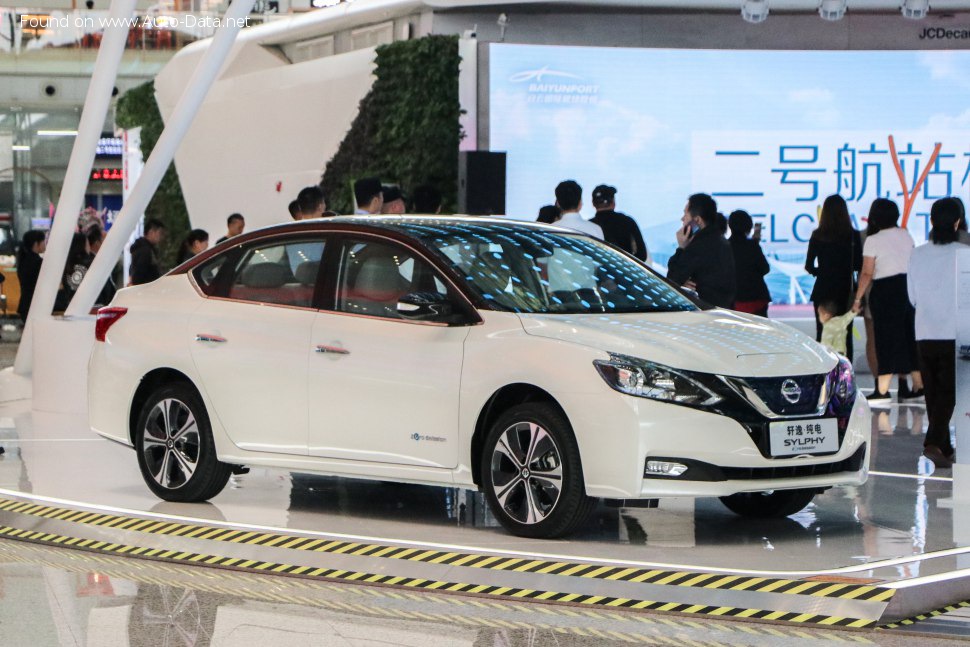
The Nissan Sylphy EV retains much of the familiar and appealing design language of its gasoline-powered sibling, ensuring a sense of continuity and broad appeal. It presents as a classic four-door, five-seat sedan, a body type highly favored in the Chinese market for its practicality and comfortable passenger capacity. With a length of 184.13 inches (4677 mm), a width of 69.29 inches (1760 mm), and a height of 59.84 inches (1520 mm), the Sylphy EV offers a substantial presence while remaining agile enough for urban driving. The generous 106.3-inch (2700 mm) wheelbase is a key factor in providing ample interior space for five occupants, ensuring a comfortable ride for both front and rear passengers.
Visually, the Sylphy EV subtly distinguishes itself from its internal combustion engine counterpart with EV-specific styling cues. While retaining the Sylphy’s aerodynamic profile, it often features a unique front fascia, typically with a more closed-off grille design to improve aerodynamics and signify its electric propulsion. The vehicle’s stance is supported by 17-inch wheels, shod with 205/50 R17 tires, which offer a balance of comfort and grip.
Inside, the emphasis is on practicality, comfort, and user-friendliness. The cabin design is ergonomic, with controls intuitively placed for easy access. Material choices reflect a focus on durability and a pleasant aesthetic, suitable for a family sedan. A significant advantage of the Sylphy EV’s design is its trunk space, offering a generous 18.01 cubic feet (510 liters). This ample cargo capacity makes it highly versatile for daily errands, grocery runs, or weekend trips, a crucial factor for family-oriented buyers.
For driver and passenger comfort, the Sylphy EV is equipped with an independent MacPherson strut front suspension with coil springs and an anti-roll bar, paired with a semi-independent rear suspension also featuring coil springs. This setup is tuned to provide a smooth and compliant ride, absorbing road imperfections effectively. Braking performance is handled by ventilated discs at the front and solid discs at the rear, augmented by an Anti-lock Braking System (ABS) for enhanced safety during emergency stops. The electric power steering system, coupled with a rack and pinion steering type, ensures light effort at low speeds for easy parking and more weighted feedback at higher speeds for confident highway driving. The vehicle’s ground clearance of 5.35 inches (136 mm) is adequate for navigating typical urban obstacles, and its minimum turning circle of 34.12 feet (10.4 m) contributes to excellent maneuverability in tight spaces.
Technical Specifications: Nissan Sylphy EV 38 kWh (109 Hp) CVT (2018)
| Category | Specification |
|---|---|
| Brand | Nissan |
| Model | Sylphy EV |
| Generation | Sylphy EV |
| Type (Engine) | 38 kWh (109 Hp) CVT |
| Start of Production | 2018 |
| Powertrain Architecture | BEV (Battery Electric Vehicle) |
| Body Type | Sedan |
| Seats | 5 |
| Doors | 4 |
| Performance Specs | |
| Fuel Type | Electricity |
| Weight-to-Power Ratio | 13.9 kg/Hp, 71.7 Hp/tonne |
| Electric Car Specs | |
| Gross Battery Capacity | 38 kWh |
| All-Electric Range | 210.02 miles (338 km) |
| Average Energy Consumption | 22.21 kWh/100 miles (13.8 kWh/100 km), 152 MPGe |
| Electric Motor Power | 109 Hp @ 3008-10000 rpm |
| Electric Motor Torque | 187.34 lb.-ft. (254 Nm) @ 0-3008 rpm |
| System Power | 109 Hp |
| Space, Volume, and Weights | |
| Kerb Weight | 3351.03 lbs (1520 kg) |
| Trunk (Boot) Space – Minimum | 18.01 cu. ft. (510 L) |
| Dimensions | |
| Length | 184.13 in (4677 mm) |
| Width | 69.29 in (1760 mm) |
| Height | 59.84 in (1520 mm) |
| Wheelbase | 106.3 in (2700 mm) |
| Front Track | 60.24 in (1530 mm) |
| Rear (Back) Track | 60.04 in (1525 mm) |
| Ride Height (Ground Clearance) | 5.35 in (136 mm) |
| Minimum Turning Circle | 34.12 ft (10.4 m) |
| Drivetrain, Brakes, and Suspension Specs | |
| Drive Wheel | Front-wheel drive |
| Number of Gears and Type of Gearbox | Automatic transmission CVT XTRONIC (single-speed reduction gear) |
| Front Suspension | Independent, MacPherson type with coil spring and anti-roll bar |
| Rear Suspension | Semi-independent, coil spring |
| Front Brakes | Ventilated discs |
| Rear Brakes | Disc |
| Assisting Systems | ABS (Anti-lock Braking System) |
| Steering Type | Steering rack and pinion |
| Power Steering | Electric Steering |
| Tires Size | 205/50 R17 |
| Wheel Rims Size | 17 inches |
Legacy and Market Impact of the Nissan Sylphy EV
The Nissan Sylphy EV holds a notable place in the history of electric vehicles, particularly within the dynamic Chinese automotive market. Its launch in 2018 was more than just the introduction of another electric car; it represented a strategic move by Nissan to deepen its roots in China’s rapidly accelerating New Energy Vehicle (NEV) sector. Unlike the globally available Nissan Leaf, the Sylphy EV was specifically developed and localized for the Chinese market, demonstrating Nissan’s commitment to tailoring products to regional tastes and regulatory environments. This localized approach allowed Nissan to leverage the immense popularity and established infrastructure of the conventional Sylphy sedan, providing a familiar and trusted platform for consumers transitioning to electric mobility.
In a market teeming with domestic and international EV competitors, the Sylphy EV carved out its niche by offering a compelling blend of Nissan’s renowned reliability, practical sedan packaging, and accessible electric technology. Its main rivals in the segment included other localized electric sedans such as the BYD Qin EV, Geely Emgrand EV, and various offerings from emerging Chinese EV startups. The Sylphy EV stood out for its comfortable ride, generous interior and trunk space, and the peace of mind associated with a major international brand. Its 210-mile range and efficient powertrain made it a strong contender for urban commuters and small families seeking a dependable, zero-emission vehicle for daily use.
The reputation of the Nissan Sylphy EV was built on its practicality and reliability. Consumers appreciated its straightforward electric driving experience, low running costs, and the smooth, quiet operation inherent to electric vehicles. It played a crucial role in expanding Nissan’s electrification footprint beyond the Leaf, proving that its EV technology could be successfully adapted to different body styles and market segments. The Sylphy EV contributed significantly to the broader acceptance and adoption of electric vehicles in China, paving the way for future electric models and solidifying Nissan’s position as a key player in the global shift towards sustainable transportation. Its legacy is one of a pragmatic and influential electric sedan that met specific market demands and helped accelerate the electric revolution in a critical global region.