The Renault Espace V (Phase II, 2020): Evolution of a Segment Pioneer
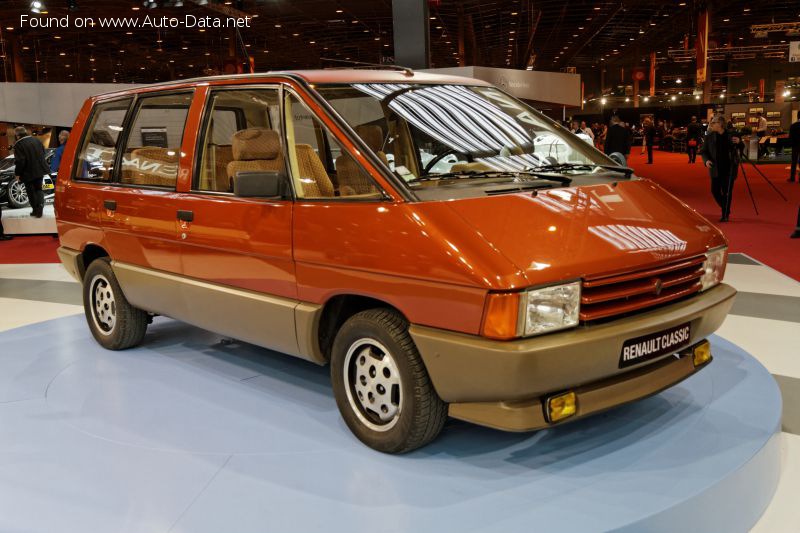
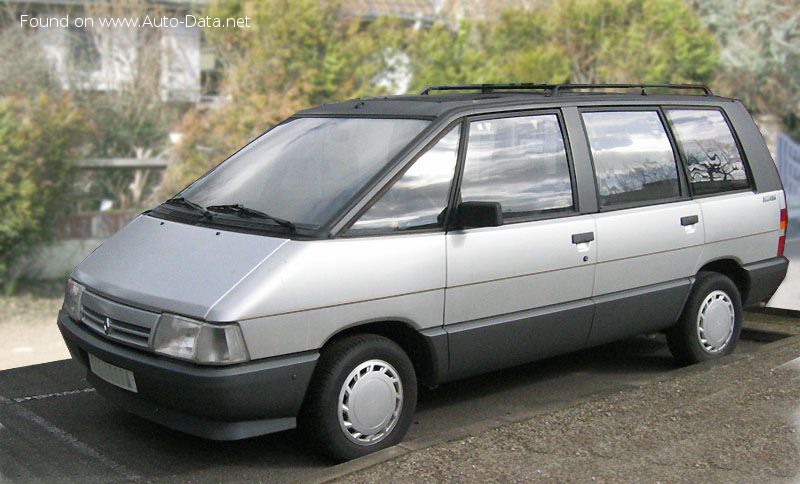
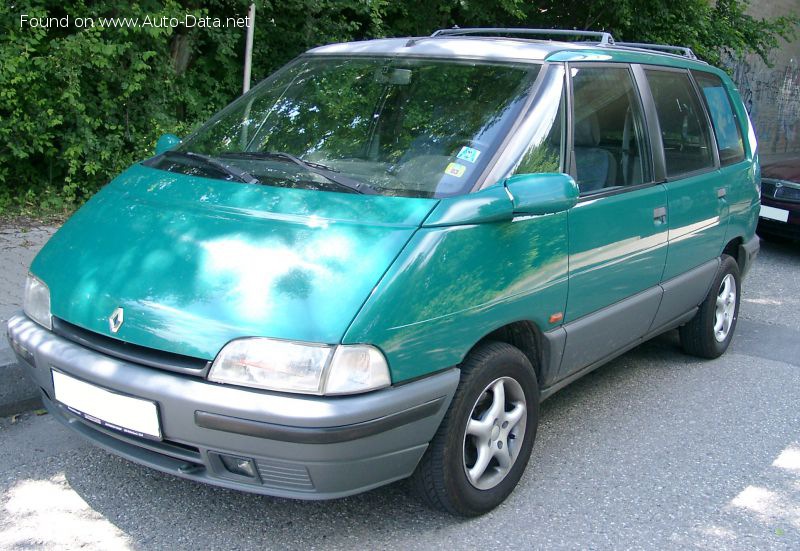
The Renault Espace V (Phase II, 2020) represents a significant iteration of a vehicle that fundamentally reshaped the European automotive landscape. Introduced in 1984, the original Renault Espace is widely credited with inventing the European minivan (Multi-Purpose Vehicle or MPV) segment. By its fifth generation, launched in 2015, the Espace had undergone a radical transformation, evolving from a traditional minivan into a more crossover-styled vehicle, reflecting changing consumer preferences for SUV aesthetics and higher driving positions. The Phase II facelift, which debuted in October 2020, brought a series of refinements to its design, technology, and powertrain, aiming to keep it competitive in a rapidly shifting market.
This particular variant, the 2.0 Blue dCi (160 Hp) 4CONTROL EDC, highlights Renault’s commitment to efficient diesel powertrains and advanced chassis technology for its flagship family vehicle. While never officially sold in the United States, the Espace holds immense cultural and historical significance in Europe, symbolizing family mobility and innovative design. The Phase II model, produced until January 2022, continued to offer a compelling blend of practicality, comfort, and sophisticated driving dynamics, making it a distinctive choice in its primary European market.
Powertrain and Driving Dynamics
At the heart of the Renault Espace V (Phase II, 2020) 2.0 Blue dCi (160 Hp) 4CONTROL EDC lies a robust and efficient 2.0-liter (1997 cm3 or 121.86 cu. in.) Blue dCi inline-four diesel engine. This powerplant, designated M9R 650, is transversely mounted at the front and features a common rail direct fuel injection system, augmented by a turbocharger and intercooler. It delivers a respectable 160 horsepower at 3750 rpm, providing ample thrust for daily driving and long-distance cruising. More significantly for a family hauler, the engine generates a substantial 360 Nm (265.52 lb.-ft.) of torque from a low 1500 rpm. This low-end torque is crucial for effortless acceleration, especially when the vehicle is fully loaded with passengers and cargo, and contributes to its strong towing capabilities (up to 4409.25 lbs with brakes).
Power is channeled to the front wheels through a sophisticated 6-speed EDC (Efficient Dual Clutch) automatic transmission. This gearbox offers smooth and rapid gear changes, enhancing both performance and fuel efficiency. The Espace’s performance figures include an acceleration from 0 to 60 mph in a calculated 10 seconds (0-100 km/h in 10.5 seconds) and a top speed of 124.27 mph (200 km/h).
A standout feature of this particular Espace variant is the 4CONTROL all-wheel steering system. This advanced technology significantly improves the vehicle’s maneuverability at low speeds and enhances stability at higher speeds. By subtly turning the rear wheels in the opposite direction to the front wheels at low speeds, it effectively reduces the turning circle to a mere 36.42 feet (11.1 meters), making the large Espace surprisingly agile in urban environments and tight parking situations. At higher speeds, the rear wheels turn in the same direction as the front wheels, improving stability during lane changes and cornering, providing a more confident and engaging driving experience.
Fuel economy for the 2.0 Blue dCi engine is impressive for a vehicle of this size and capability. It achieves an estimated 41.3 US mpg in urban driving, 49 US mpg on the extra-urban cycle, and a combined average of 46.1 US mpg (5.1 l/100 km). With CO2 emissions of 135 g/km, it meets the stringent Euro 6 d-TEMP emission standard, further aided by a particulate filter and a 5.81 US gallon (22 liter) AdBlue tank, underscoring its environmental consciousness for the European market.
Design Philosophy and Interior Refinement
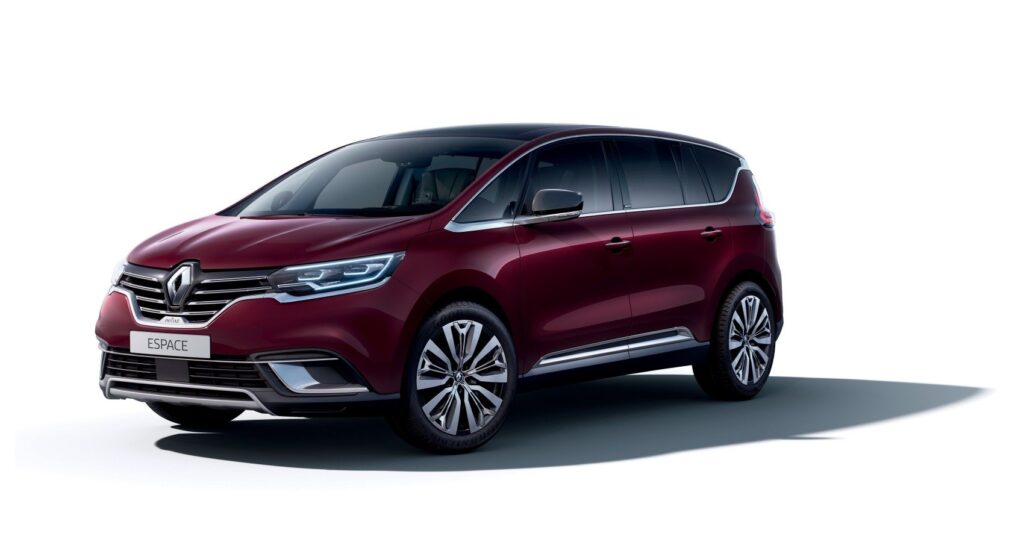
The fifth-generation Renault Espace, and especially its Phase II iteration, embodies a significant departure from its minivan predecessors. It redefined itself as a “crossover” – a fusion of a large family car and an SUV. This design philosophy is evident in its elevated ride height of 6.3 inches (160 mm), prominent grille, muscular wheel arches, and sleek, dynamic lines that convey a sense of robustness and elegance. The length of 191.3 inches (4859 mm) and width of 74.33 inches (1888 mm) give it a substantial road presence, while the 18-inch wheels and 235/60 R18 tires complete its assertive stance.
Inside, the Espace V (Phase II, 2020) offers a spacious and versatile cabin designed for five occupants. Renault prioritized comfort, ergonomics, and perceived quality. The minivan heritage is still evident in the generous interior volume, with a minimum trunk space of 27.72 cubic feet (785 liters) that expands to a cavernous 74.2 cubic feet (2101 liters) with the rear seats folded. This flexibility makes it ideal for families requiring significant cargo capacity for vacations or large purchases. The cabin design is modern and uncluttered, focusing on intuitive controls and premium materials appropriate for its segment in Europe. While the specific infotainment system details are not provided in the technical data, a vehicle of this era and market position would typically feature a large touchscreen display, navigation, and connectivity options.
Safety and driver assistance systems are also integral. Beyond the fundamental Anti-lock Braking System (ABS) and ventilated front disc brakes (320 mm) with solid rear discs (290 mm), the Espace V (Phase II) would have incorporated a suite of active and passive safety features to achieve high Euro NCAP ratings, although these specific features are not detailed in the provided data. The electric power steering system contributes to ease of driving and efficiency.
Technical Specifications of the Renault Espace V (Phase II, 2020) 2.0 Blue dCi (160 Hp) 4CONTROL EDC
| Category | Specification | Value |
|---|---|---|
| General Information | ||
| Brand | Renault | |
| Model | Espace | |
| Generation | Espace V (Phase II, 2020) | |
| Type (Engine) | 2.0 Blue dCi (160 Hp) 4CONTROL EDC | |
| Start of Production | October, 2020 | |
| End of Production | January, 2022 | |
| Powertrain Architecture | Internal Combustion engine | |
| Body type | Minivan, Crossover | |
| Seats | 5 | |
| Doors | 5 | |
| Performance Specs | ||
| Fuel consumption (economy) – urban | 41.3 US mpg (5.7 l/100 km) | |
| Fuel consumption (economy) – extra urban | 49 US mpg (4.8 l/100 km) | |
| Fuel consumption (economy) – combined | 46.1 US mpg (5.1 l/100 km) | |
| CO2 emissions | 135 g/km | |
| Fuel Type | Diesel | |
| Acceleration 0 – 60 mph (Calculated) | 10 sec | |
| Acceleration 0 – 100 km/h | 10.5 sec | |
| Maximum speed | 124.27 mph (200 km/h) | |
| Emission standard | Euro 6 d-TEMP | |
| Weight-to-power ratio | 11.1 kg/Hp, 90.4 Hp/tonne | |
| Weight-to-torque ratio | 4.9 kg/Nm, 203.4 Nm/tonne | |
| Engine Specs | ||
| Power | 160 Hp @ 3750 rpm | |
| Power per liter | 80.1 Hp/l | |
| Torque | 265.52 lb.-ft. @ 1500 rpm (360 Nm @ 1500 rpm) | |
| Engine layout | Front, Transverse | |
| Engine Model/Code | M9R 650 | |
| Engine displacement | 121.86 cu. in. (1997 cm3) | |
| Number of cylinders | 4 | |
| Engine configuration | Inline | |
| Cylinder Bore | 3.35 in. (85 mm) | |
| Piston Stroke | 3.46 in. (88 mm) | |
| Number of valves per cylinder | 4 | |
| Fuel injection system | Diesel Commonrail | |
| Engine aspiration | Turbocharger, Intercooler | |
| Engine oil specification | Not specified | |
| Engine systems | Particulate filter | |
| Space, Volume and Weights | ||
| Kerb Weight | 3902.18 lbs (1770 kg) | |
| Max. weight | 5630.61 lbs (2554 kg) | |
| Max load | 1728.42 lbs (784 kg) | |
| Trunk (boot) space – minimum | 27.72 cu. ft. (785 l) | |
| Trunk (boot) space – maximum | 74.2 cu. ft. (2101 l) | |
| Fuel tank capacity | 16.38 US gal (62 l) | |
| AdBlue tank | 5.81 US gal (22 l) | |
| Permitted trailer load with brakes (12%) | 4409.25 lbs (2000 kg) | |
| Permitted trailer load without brakes | 1653.47 lbs (750 kg) | |
| Dimensions | ||
| Length | 191.3 in. (4859 mm) | |
| Width | 74.33 in. (1888 mm) | |
| Width with mirrors folded | 75.35 in. (1914 mm) | |