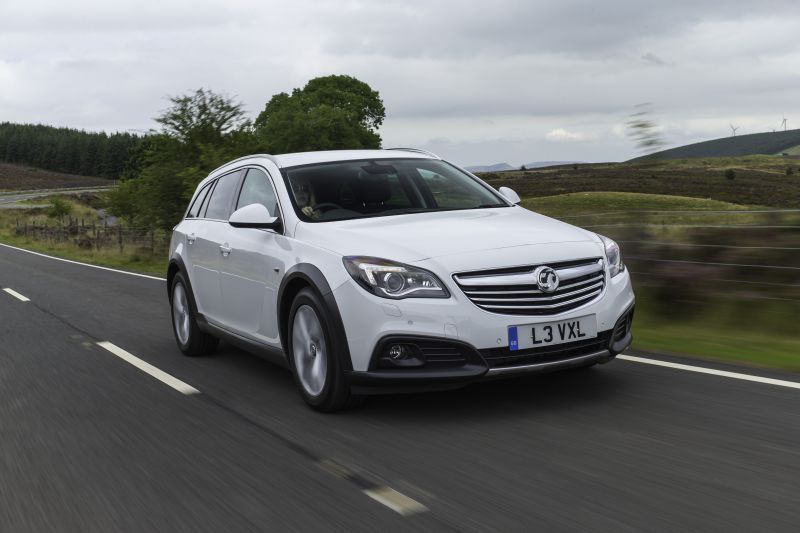
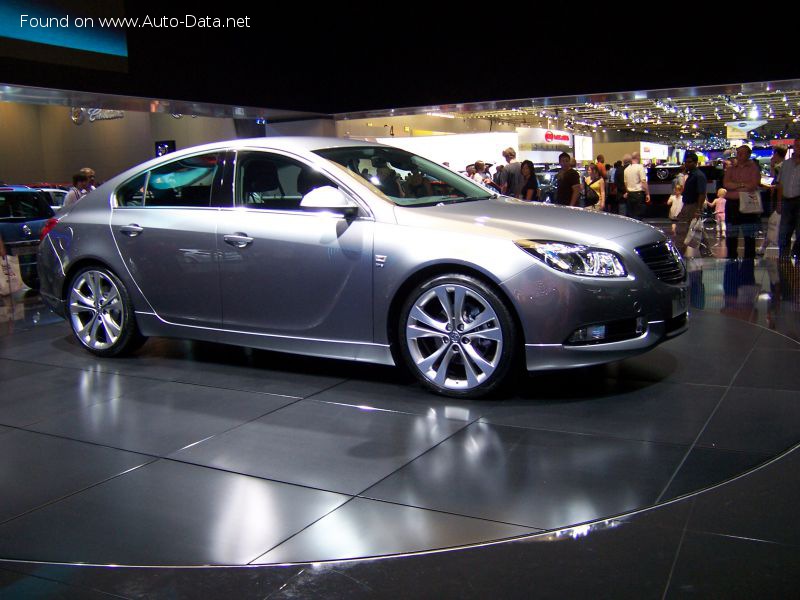
Vauxhall Insignia I Sports Tourer (facelift 2013) 2.0 CDTi BiTurbo ecoTEC (195 Hp) Start/Stop
The Vauxhall Insignia I Sports Tourer (facelift 2013) 2.0 CDTi BiTurbo ecoTEC (195 Hp) Start/Stop represents a significant offering in the European D-segment for mid-size family cars. As the first-generation Insignia’s refreshed iteration, this model, produced between 2013 and 2017, was a cornerstone of Vauxhall’s lineup in the United Kingdom, mirroring its Opel twin across mainland Europe. The Sports Tourer, or station wagon body style, emphasized practicality and versatility, catering to families and business users who required ample cargo space without compromising on driving dynamics or executive aesthetics. While the Insignia sedan (or hatchback) was sold in the United States as the Buick Regal, this specific Sports Tourer variant was not offered to American consumers, making its primary impact felt across the Atlantic. This particular configuration, featuring the potent 2.0-liter BiTurbo diesel engine with 195 horsepower and an ecoTEC Start/Stop system, positioned it as a compelling choice for those seeking a blend of performance, fuel efficiency, and low emissions in a highly competitive market.
Engine and Performance of the Vauxhall Insignia I Sports Tourer
At the heart of this specific Insignia Sports Tourer lies a sophisticated powertrain designed for both robust performance and impressive efficiency. The 2.0 CDTi BiTurbo ecoTEC engine is an inline four-cylinder diesel unit with a displacement of 1956 cubic centimeters (approximately 2.0 liters). Utilizing a DOHC (Dual Overhead Camshaft) valvetrain with four valves per cylinder and a common rail fuel injection system, it is engineered for precise fuel delivery and optimal combustion.
The “BiTurbo” designation is key, indicating a twin-turbocharger setup that works to minimize turbo lag and deliver a broad, flat torque curve. This configuration allows the engine to produce a substantial 195 horsepower at 4000 rpm, complemented by a formidable 295.02 lb.-ft. of torque, available across a wide band from 1750 to 2500 rpm. This ample torque at low engine speeds is characteristic of modern diesel engines and contributes significantly to the vehicle’s strong acceleration and flexible in-gear performance.
Paired with a 6-speed manual transmission driving the front wheels, the Insignia Sports Tourer 2.0 CDTi BiTurbo is capable of accelerating from 0 to 60 mph in a brisk 8.5 seconds, with a top speed reaching 139.19 mph. These figures underscore its ability to comfortably handle long highway cruises and provide confident overtaking capabilities.
Efficiency is further enhanced by the “ecoTEC” branding and the inclusion of a Start/Stop system, which automatically shuts off the engine when the vehicle is stationary and restarts it when the driver intends to move. This technology, combined with a particulate filter, helps the vehicle achieve remarkable fuel economy figures for its class: an estimated 48 US mpg combined, 38.6 US mpg in urban driving, and an impressive 56 US mpg on the extra-urban cycle. Correspondingly, CO2 emissions are kept to a respectable 129 g/km, meeting Euro 5 emission standards, which was crucial for its market positioning in Europe. The vehicle’s weight-to-power ratio stands at 8.9 kg/Hp (112.5 Hp/tonne), and its weight-to-torque ratio is 4.3 kg/Nm (230.8 Nm/tonne), indicating a well-balanced power delivery for its size and mass.
Design and Features
The Vauxhall Insignia I Sports Tourer received a significant facelift in 2013, bringing updated styling cues and interior enhancements that modernized its appeal. The exterior design maintained its sleek, executive appearance, characterized by flowing lines and a dynamic stance that belied its practical station wagon body. The facelift introduced a revised front fascia with a wider, lower grille and updated headlights, giving the Insignia a more contemporary and assertive look. The rear also saw changes, including redesigned taillights and a more integrated appearance.
As a station wagon, the Sports Tourer prioritizes cargo capacity and passenger comfort. It offers seating for five occupants across five doors, providing easy access to both front and rear cabins. The interior was also refined during the facelift, with improvements in material quality and ergonomics. Key features included an updated infotainment system, often with a larger touchscreen, and a more streamlined center console.
Practicality is a hallmark of the Sports Tourer, boasting a minimum trunk space of 540 liters (19.07 cu. ft.), which expands to a generous 1530 liters (54.03 cu. ft.) with the rear seats folded down. This cavernous cargo area makes it highly suitable for families, outdoor enthusiasts, or professionals needing to transport larger items. With a length of 193.43 inches and a width of 73.07 inches (82.05 inches including mirrors), the Insignia has a substantial road presence. Its wheelbase of 107.76 inches contributes to a comfortable ride and stable handling.
Underneath, the Insignia employs a sophisticated chassis setup. The front suspension features an independent McPherson strut design with coil springs and an anti-roll bar, while the rear utilizes an independent multi-link system. This combination provides a compliant ride quality while maintaining responsive handling. Braking is handled by ventilated discs at both the front and rear, complemented by an Anti-lock Braking System (ABS) for enhanced safety and control. The vehicle rides on 17-inch wheel rims, fitted with 225/55 R17 tires, offering a good balance of grip and ride comfort.
Technical Specifications for the Vauxhall Insignia I Sports Tourer (facelift 2013) 2.0 CDTi BiTurbo ecoTEC (195 Hp) Start/Stop
| Category | Specification | Metric Value | US/Imperial Value |
|---|---|---|---|
General Information |
|||
| Brand | Vauxhall | ||
| Model | Insignia | ||
| Generation | Insignia I Sports Tourer (facelift 2013) | ||
| Type (Engine) | 2.0 CDTi BiTurbo ecoTEC (195 Hp) Start/Stop | ||
| Start of Production | 2013 year | ||
| End of Production | 2017 year | ||
| Powertrain Architecture | Internal Combustion engine | ||
| Body Type | Station wagon (estate) | ||
| Seats | 5 | ||
| Doors | 5 | ||
Performance Specifications |
|||
| Fuel Consumption (urban) | 6.1 l/100 km | 38.6 US mpg / 46.3 UK mpg | |
| Fuel Consumption (extra urban) | 4.2 l/100 km | 56 US mpg / 67.3 UK mpg | |
| Fuel Consumption (combined) | 4.9 l/100 km | 48 US mpg / 57.6 UK mpg | |
| CO2 Emissions | 129 g/km | ||
| Fuel Type | Diesel | ||
| Acceleration 0 – 60 mph | 8.5 sec | ||
| Acceleration 0 – 100 km/h | 8.9 sec | ||
| Maximum Speed | 224 km/h | 139.19 mph | |
| Emission Standard | Euro 5 | ||
| Weight-to-Power Ratio | 8.9 kg/Hp | 112.5 Hp/tonne | |
| Weight-to-Torque Ratio | 4.3 kg/Nm | 230.8 Nm/tonne | |
Engine Specifications |
|||
| Power | 195 Hp @ 4000 rpm | ||
| Power per liter | 99.7 Hp/l | ||
| Torque | 400 Nm @ 1750-2500 rpm | 295.02 lb.-ft. @ 1750-2500 rpm | |
| Engine Layout | Front, Transverse | ||
| Engine Model/Code | A20DTR | ||
| Engine Displacement | 1956 cm³ | 119.36 cu. in. | |
| Number of Cylinders | 4 | ||
| Engine Configuration | Inline | ||
| Cylinder Bore | 83 mm | 3.27 in. | |
| Piston Stroke | 90.4 mm | 3.56 in. | |
| Number of Valves per Cylinder | 4 | ||
| Fuel Injection System | Diesel Commonrail | ||
| Engine Aspiration | Turbocharger, Intercooler | ||
| Valvetrain | DOHC | ||
| Engine Oil Capacity | 4.5 l | 4.76 US qt / 3.96 UK qt | |
| Engine Oil Specification | Not specified in data. | ||
| Coolant Capacity | 9 l | 9.51 US qt / 7.92 UK qt | |
Engine Systems |
|||
| Start & Stop System | Yes | ||
| Particulate Filter | Yes | ||
Space, Volume and Weights |
|||
| Kerb Weight | 1733 kg | 3820.61 lbs. | |
| Max. Weight | 2330 kg | 5136.77 lbs. | |
| Max Load | 597 kg | 1316.16 lbs. | |
| Trunk (boot) Space – minimum | 540 l | 19.07 cu. ft. | |
| Trunk (boot) Space – maximum | 1530 l | 54.03 cu. ft. | |
| Fuel Tank Capacity | 70 l | 18.49 US gal / 15.4 UK gal | |
| Permitted Trailer Load with Brakes (12%) | 1700 kg | 3747.86 lbs. | |
| Permitted Trailer Load without Brakes | 750 kg | 1653.47 lbs. | |
Dimensions |
|||
| Length | 4913 mm | 193.43 in. | |
| Width | 1856 mm | 73.07 in. | |
| Width Including Mirrors | 2084 mm | 82.05 in. | |
| Height | 1513 mm | 59.57 in. | |
| Wheelbase | 2737 mm | 107.76 in. | |
| Front Overhang | 1020 mm | 40.16 in. | |
| Rear Overhang | 1156 mm | 45.51 in. | |
| Minimum Turning Circle (turning diameter) | 11.4 m | 37.4 ft. | |
Drivetrain, Brakes and Suspension Specifications |
|||
| Drivetrain Architecture | The Internal combustion engine (ICE) drives the front wheels of the vehicle. | ||
| Drive Wheel | Front wheel drive | ||
| Number of Gears and Type of Gearbox | 6 gears, manual transmission | ||
| Front Suspension | Independent, type McPherson with coil spring and anti-roll bar | ||
| Rear Suspension | Independent multi-link suspension | ||
| Front Brakes | Ventilated discs | ||
| Rear Brakes | Ventilated discs | ||
| Assisting Systems | ABS (Anti-lock braking system) | ||
| Tires Size | 225/55 R17 | ||
| Wheel Rims Size | 17 | ||
Legacy and Market Impact
The Vauxhall Insignia I, particularly in its post-facelift Sports Tourer guise with the 2.0 CDTi BiTurbo ecoTEC engine, carved out a significant niche in the European automotive landscape. As a key player in the D-segment, it directly competed with established rivals such as the Ford Mondeo Estate, Volkswagen Passat Variant, Skoda Superb Combi, and Peugeot 508 SW. Its reputation was built on a foundation of robust build quality, comfortable long-distance cruising, and a generous equipment list, often offering strong value for money compared to more premium German marques.
The Insignia replaced the long-running Vectra, signaling a shift towards a more upmarket and stylish design language for Vauxhall and Opel. The Sports Tourer variant was particularly important, capturing a substantial share of the fleet and family market due to its immense practicality and cargo capacity. The 2.0 CDTi BiTurbo engine was a standout option, delivering executive-level performance and refinement with the economy and low running costs associated with diesel power. Its combination of 195 horsepower and substantial torque made it one of the most powerful and engaging diesel options in its class, appealing to drivers who desired both efficiency and a dynamic driving experience.
The inclusion of ecoTEC technologies and the Start/Stop system further cemented its appeal in an era of increasing environmental consciousness and stricter emission regulations. Meeting Euro 5 standards was essential for market access and tax