Introduction to the Toyota RAV4 V 2.0 (175 Hp) CVT
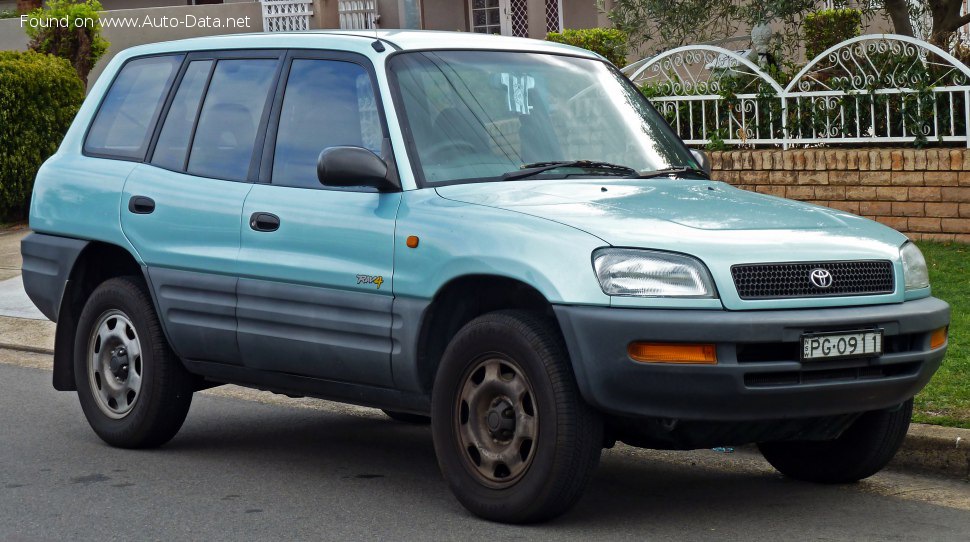
The Toyota RAV4, an acronym for “Recreational Activity Vehicle: 4-wheel drive,” has long been a trailblazer in the compact SUV segment, effectively creating the category upon its initial launch in the mid-1990s. The fifth generation, designated as the RAV4 V, debuted in 2018 and commenced production for this specific variant in January 2019, running through September 2021. This iteration marked a significant evolution for the model, embracing a more rugged, truck-like aesthetic while retaining its core values of reliability, practicality, and efficiency. The Toyota RAV4 V 2.0 (175 Hp) CVT, specifically, represents a crucial powertrain option within the global lineup, offering a compelling blend of performance and fuel economy for markets where a naturally aspirated gasoline engine remains a popular choice.
Built on Toyota’s New Global Architecture (TNGA-K platform), the RAV4 V brought forth enhanced driving dynamics, improved safety features, and a more spacious and refined interior. This particular 2.0-liter, 175 horsepower variant, paired with a Continuously Variable Transmission (CVT), positions itself as a versatile option for urban commuting and longer journeys alike, emphasizing smooth power delivery and admirable fuel efficiency. While the U.S. market predominantly features hybrid and more powerful gasoline engine options for the RAV4, this 2.0-liter model is a cornerstone in many international markets, including parts of Europe and Asia, where its balance of power and economy is highly valued.
Engineering and Performance of the Toyota RAV4 V 2.0 (175 Hp) CVT
Powertrain and Dynamics
At the heart of the Toyota RAV4 V 2.0 (175 Hp) CVT lies Toyota’s M20A-FKS engine, a naturally aspirated 2.0-liter inline-four cylinder unit. This engine is a testament to Toyota’s commitment to efficiency and reliability, featuring a sophisticated direct and multi-port manifold injection system, along with a DOHC (Double Overhead Camshaft) valvetrain. It produces a healthy 175 horsepower at 6600 rpm and a peak torque of 153.41 lb.-ft. (208 Nm) available between 4300 and 5200 rpm. This robust output for a naturally aspirated 2.0-liter engine contributes to a lively driving experience within the compact SUV segment.
Power is transmitted to the front wheels via an automatic Continuously Variable Transmission (CVT). Toyota’s CVTs are renowned for their smooth operation, providing seamless acceleration without the traditional gear shifts found in conventional automatic transmissions. This design philosophy prioritizes fuel efficiency and passenger comfort, making for a refined driving experience, particularly in stop-and-go traffic. The RAV4 V 2.0 (175 Hp) CVT accelerates from 0 to 60 mph in a respectable 10.2 seconds, with a top speed of 118.06 mph (190 km/h), demonstrating its capability for both city and highway driving.
Fuel Economy and Emissions
Fuel efficiency is a significant highlight for this RAV4 variant. It achieves a combined fuel consumption of 42 US mpg (5.6 l/100 km), with urban figures ranging from 36.2 to 36.8 US mpg (6.4-6.5 l/100 km) and an impressive extra-urban economy of 46.1 US mpg (5.1 l/100 km). These figures underscore the effectiveness of the M20A-FKS engine and CVT combination in optimizing fuel usage. Furthermore, with CO2 emissions rated at 127-128 g/km, the vehicle meets the stringent Euro 6 d-TEMP emission standard, reflecting its environmental consciousness. The engine also features a particulate filter, showcasing modern emission control technologies.
Design and Features of the Toyota RAV4 V
Exterior and Interior Design
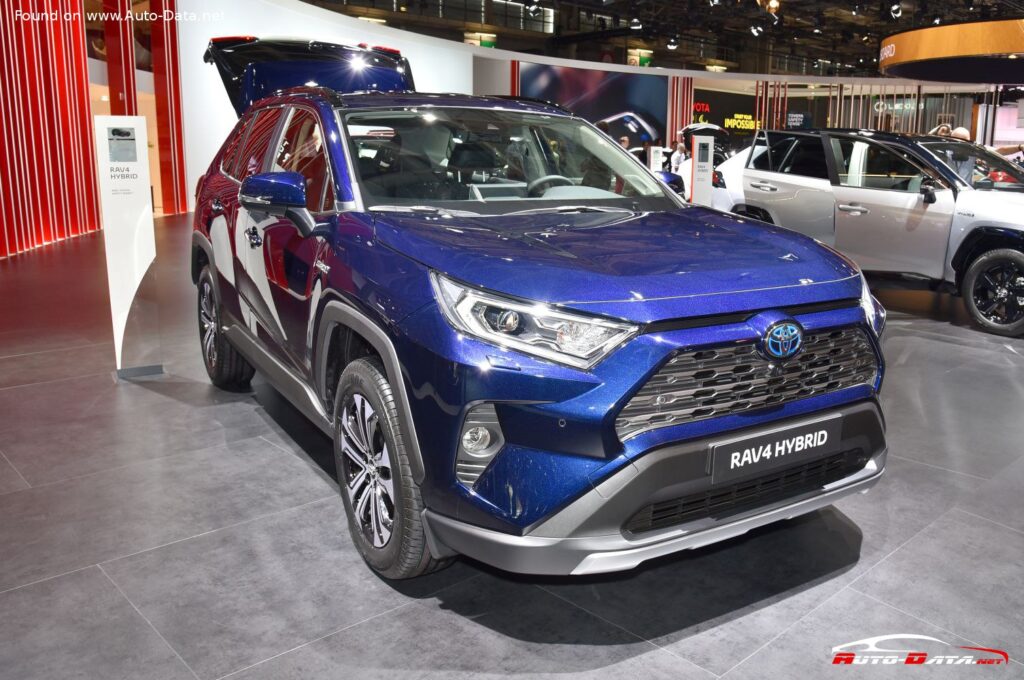
The fifth-generation Toyota RAV4 V ushered in a dramatic design shift, moving away from the softer lines of its predecessor towards a more chiseled and assertive aesthetic. Its SUV body type, characterized by sharp creases, prominent wheel arches, and a bold front grille, gives it a commanding presence on the road. With a length of 181.1 inches (4600 mm), a width of 73.03 inches (1855 mm), and a height of 66.34 inches (1685 mm), the RAV4 V strikes an excellent balance between a compact footprint and substantial interior space. The 105.91-inch (2690 mm) wheelbase contributes to both a comfortable ride and stable handling.
Inside, the RAV4 V is designed with practicality and comfort in mind. It offers seating for five occupants across two rows, with ample head and legroom for all passengers. The cabin features a contemporary layout, prioritizing ease of use and connectivity, although specific infotainment features are not detailed in the provided data. The focus on robust materials and intuitive controls aligns with the RAV4’s reputation for durability.
Practicality and Safety
As a versatile SUV, the RAV4 V excels in cargo capacity. It provides a generous minimum trunk space of 20.48 cu. ft. (580 liters), which expands significantly to 59.68 cu. ft. (1690 liters) with the rear seats folded down, making it highly adaptable for various hauling needs, from groceries to adventure gear. The vehicle’s ground clearance of 7.68 inches (195 mm), coupled with approach and departure angles of 17.5° and 20° respectively, grants it respectable capability for light off-road excursions and navigating challenging urban terrain.
Safety is paramount in modern vehicle design, and the RAV4 V is equipped with fundamental systems such as ABS (Anti-lock Braking System) as standard. The braking system itself comprises ventilated discs measuring 328 mm at the front and solid discs measuring 317 mm at the rear, ensuring strong stopping power. The independent McPherson front suspension with coil springs and an anti-roll bar, combined with a double wishbone rear suspension, contributes to stable handling and a comfortable ride. Electric power steering further enhances maneuverability, especially in tight parking situations.
Technical Specifications
| Toyota RAV4 V 2.0 (175 Hp) CVT – Full Specifications | |
|---|---|
| General Information | |
| Brand | Toyota |
| Model | RAV4 |
| Generation | RAV4 V |
| Type (Engine) | 2.0 (175 Hp) CVT |
| Start of Production | January, 2019 year |
| End of Production | September, 2021 year |
| Powertrain Architecture | Internal Combustion engine |
| Body type | SUV |
| Seats | 5 |
| Doors | 5 |
| Performance Specs | |
| Fuel Consumption (Urban) | 6.4-6.5 l/100 km (36.8 – 36.2 US mpg) |
| Fuel Consumption (Extra Urban) | 5.1 l/100 km (46.1 US mpg) |
| Fuel Consumption (Combined) | 5.6 l/100 km (42 US mpg) |
| CO2 Emissions | 127-128 g/km |
| Fuel Type | Petrol (Gasoline) |
| Acceleration 0 – 60 mph | 10.2 sec |
| Acceleration 0 – 100 km/h | 10.7 sec |
| Maximum Speed | 190 km/h (118.06 mph) |
| Emission Standard | Euro 6 d-TEMP |
| Weight-to-Power Ratio | 8.5 kg/Hp (118.2 Hp/tonne) |
| Weight-to-Torque Ratio | 7.1 kg/Nm (140.5 Nm/tonne) |
| Engine Specs | |
| Power | 175 Hp @ 6600 rpm |
| Power per liter | 88.1 Hp/l |
| Torque | 208 Nm @ 4300-5200 rpm (153.41 lb.-ft.) |
| Engine Layout | Front, Transverse |
| Engine Model/Code | M20A-FKS |
| Engine Displacement | 1987 cm3 (121.25 cu. in.) |
| Number of Cylinders | 4 |
| Engine Configuration | Inline |
| Cylinder Bore | 80.5 mm (3.17 in.) |
| Piston Stroke | 97.6 mm (3.84 in.) |
| Compression Ratio | 13:1 |
| Number of Valves per Cylinder | 4 |
| Fuel Injection System | Direct injection and Multi-port manifold injection |
| Engine Aspiration | Naturally aspirated engine |
| Valvetrain | DOHC |
| Engine Oil Capacity | 4.3 l (4.54 US qt) |
| Coolant Capacity | 6.9 l (7.29 US qt) |
| Engine Systems | Particulate filter |
| Space, Volume and Weights | |
| Kerb Weight | 1480-1600 kg (3262.84 – 3527.4 lbs.) |
| Max. Weight | 2065 kg (4552.55 lbs.) |
| Max Load | 465-585 kg (1025.15 – 1289.7 lbs.) |
| Trunk (boot) Space – Minimum | 580 l (20.48 cu. ft.) |
| Trunk (boot) Space – Maximum | 1690 l (59.68 cu. ft.) |
| Fuel Tank Capacity | 55 l (14.53 US gal) |
| Permitted Trailer Load with Brakes (12%) | 1500 kg (3306.93 lbs.) |
| Permitted Trailer Load without Brakes | 750 kg (1653.47 lbs.) |
| Dimensions | |
| Length | 4600 mm (181.1 in.) |
| Width | 1855 mm (73.03 in.) |
| Height | 1685 mm (66.34 in.) |
| Wheelbase | 2690 mm (105.91 in.) |
| Front Track | 1610 mm (63.39 in.) |
| Rear (Back) Track | 1640 mm (64.57 in.) |
| Front Overhang | 925 mm (36.42 in.) |
| Rear Overhang | 985 mm (38.78 in.) |
| Ride Height (Ground Clearance) | 195 mm (7.68 in.) |
| Drag Coefficient (Cd) | 0.32 |
| Minimum Turning Circle (Turning Diameter) | 11.8 m (38.71 ft.) |
| Approach Angle | 17.5° |
| Departure Angle | 20° |
| Drivetrain, Brakes and Suspension Specs | |
| Drivetrain Architecture | Internal combustion engine drives the front wheels |
| Drive Wheel | Front wheel drive |
| Number of Gears and Type of Gearbox | Automatic transmission CVT |
| Front Suspension | Independent, type McPherson with coil spring and anti-roll bar |
| Rear Suspension | Double wishbone |
| Front Brakes | Ventilated discs, 328 mm |
| Rear Brakes | Disc, 317 mm |
| Assisting Systems | ABS (Anti-lock braking system) |
| Steering Type | Steering rack and pinion |
| Power Steering | Electric Steering |
Legacy and Market Impact
A Global Compact SUV Pioneer
The Toyota RAV4 has consistently been one of the best-selling SUVs globally, a testament to its enduring appeal and Toyota’s reputation for quality, durability, and reliability. The fifth-generation RAV4 V, including the 2.0 (175 Hp) CVT variant, continued this legacy by refining the formula that made its predecessors so successful. While specific powertrain options vary by region, the overall RAV4 V package resonates with a wide audience seeking a practical, efficient, and capable compact SUV.
In its primary markets where this 2.0-liter engine is offered, such as various countries in Europe and Asia, the RAV4 V 2.0 (175 Hp) CVT faces stiff competition from rivals like the Honda CR-V, Nissan Qashqai (Rogue Sport in the US), Volkswagen Tiguan, and Mazda CX-5. However, the RAV4 consistently holds its own, often outselling competitors due to its strong brand recognition, resale value, and the perception of lower running costs. This particular variant’s emphasis on fuel economy and its compliant Euro 6 d-TEMP emissions rating makes it an attractive proposition for regions with strict environmental regulations and high fuel prices.
Historical Significance and Future Outlook
The RAV4’s historical significance cannot be overstated; it essentially created the market for compact, car-based SUVs, demonstrating that consumers desired the utility and elevated driving position of an SUV without the cumbersome size and fuel inefficiency of traditional, truck-based models. The fifth generation further solidified this position, offering a bolder design that appealed to those wanting a more adventurous aesthetic, while still delivering on the practical aspects that define the segment. The combination of a reliable naturally aspirated engine and a smooth CVT in this variant ensures a broad market appeal, particularly for drivers who prioritize long-term dependability and efficiency over outright performance.
The production run of the RAV4 V 2.0 (175 Hp) CVT from 2019 to 2021 highlights its role as a key offering during a period of significant transition in the automotive industry, as manufacturers increasingly shifted towards electrification. While newer RAV4 models and other Toyota vehicles continue to push hybrid and electric powertrains, this 2.0-liter gasoline variant remains a critical part of Toyota’s global strategy, catering to diverse market demands and reaffirming the model’s status as a versatile and globally relevant compact SUV. Its continued success underscores the enduring demand for well-engineered, conventional gasoline powertrains alongside the burgeoning electric vehicle market.