The Volkswagen Transporter (T6) Kombi: A European Workhorse and Icon
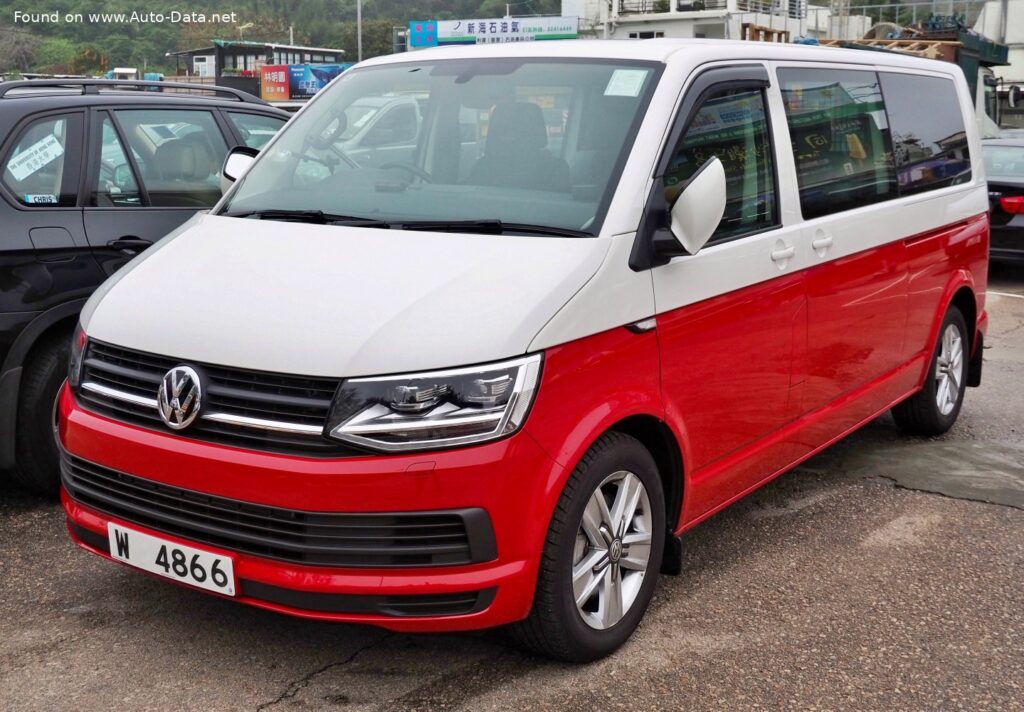
The Volkswagen Transporter (T6) Kombi represents the sixth generation of Volkswagen’s venerable light commercial vehicle (LCV) and passenger van series, a lineage that traces its roots back to the legendary Type 2 “Bus” of the 1950s. Produced from 2015 to 2019, the T6 generation continued the tradition of versatility, reliability, and robust engineering that has made the Transporter an enduring success, particularly in European markets. This specific variant, the 2.0 TDI (150 Hp) 4MOTION DSG L2H1, exemplifies the modern capabilities of the Transporter, combining a potent diesel powertrain with an advanced all-wheel-drive system and an automatic transmission, all within a long-wheelbase, standard-height configuration designed for maximum utility and passenger comfort.
While the Transporter series has had a complex and often limited presence in the North American market, primarily due to differing market demands and regulatory frameworks, its impact on global automotive design and commercial transport is undeniable. In Europe, the T6 Kombi served as a multifaceted solution, equally adept at hauling cargo for businesses, transporting multiple passengers as a shuttle, or providing a flexible platform for campervan conversions. Its sophisticated powertrain and chassis, coupled with Volkswagen’s reputation for quality, positioned it as a premium offering in its segment.
Engine and Performance of the Volkswagen Transporter (T6) Kombi
At the heart of this particular Volkswagen Transporter (T6) Kombi is a refined 2.0-liter TDI (Turbocharged Direct Injection) inline-four diesel engine, internally designated as EA288 / CXFA, CXHA. This powerplant delivers a respectable 150 horsepower at a usable rev range of 3250-3750 rpm, providing ample thrust for both urban commuting and highway cruising. More importantly for a vehicle of its class, the engine generates a substantial 250.77 lb.-ft. of torque, available from a low 1500 rpm all the way up to 3000 rpm. This broad torque band ensures strong pulling power, crucial for carrying heavy loads or navigating challenging terrain.
The engine’s architecture features a DOHC (Double Overhead Camshaft) valvetrain and a common rail fuel injection system, optimized for efficiency and reduced emissions. A turbocharger and intercooler are integral to its design, boosting power output while maintaining fuel economy. Adhering to the stringent Euro 6 emission standard, the 2.0 TDI engine also incorporates a Start & Stop System and a Particulate filter, further enhancing its environmental credentials by minimizing CO2 output and other harmful pollutants.
Power is channeled through a sophisticated 7-speed DSG (Direct Shift Gearbox) automatic transmission, known for its rapid and smooth gear changes. This dual-clutch system contributes significantly to both driving comfort and fuel efficiency. Complementing this is Volkswagen’s renowned 4MOTION all-wheel-drive system. This intelligent drivetrain primarily powers the front wheels, engaging the rear wheels via an electrically or mechanically operated clutch only when additional traction is required, such as on slippery surfaces or during heavy acceleration. This on-demand system optimizes fuel consumption while providing enhanced grip and stability.
Performance figures for this variant include an acceleration from 0 to 60 mph in a brisk 11.9 seconds, impressive for a vehicle of its size and utility. The top speed is rated at 110.6 mph. Fuel economy is a strong suit for the diesel Transporter, with combined figures ranging from 28.3 to 37.9 US mpg, making it an economical choice for long-distance travel and daily operations, especially given its cargo and passenger capacity.
Design, Features, and Versatility
The design of the Volkswagen Transporter (T6) Kombi is an evolution of its predecessors, maintaining a familiar, purposeful silhouette while incorporating modern Volkswagen design cues. As a van, its primary design objective is functionality and space optimization. The L2H1 designation signifies a long wheelbase (3400 mm or 133.86 inches) and a standard roof height (1990 mm or 78.35 inches), providing an excellent balance between interior volume and maneuverability. With an overall length of 5304 mm (208.82 inches) and a width of 1904 mm (74.96 inches), the T6 Kombi commands a significant road presence.
The Kombi configuration specifically caters to both cargo and passenger transport, offering seating for anywhere from 4 to 9 occupants, accessed via 4 to 5 doors, typically including sliding side doors for easy entry and exit. When configured for maximum cargo, the Transporter (T6) Kombi boasts an impressive trunk (boot) space of up to 6700 liters (236.61 cu. ft.), making it an invaluable asset for businesses requiring substantial hauling capacity. The robust construction allows for a maximum payload of 801-1012 kg (1765.9 – 2231.08 lbs.) and a significant permitted trailer load with brakes of 2500 kg (5511.56 lbs.), underscoring its capabilities as a true workhorse.
Underneath its practical exterior, the T6 Kombi features an independent suspension setup, with MacPherson struts and an anti-roll bar at the front, and independent coil springs with wishbones and a transverse stabilizer at the rear. This sophisticated arrangement, along with hydraulic power steering, ensures a comfortable ride and composed handling, even when fully loaded. Safety is addressed with ventilated disc brakes on both front and rear axles, complemented by an Anti-lock Braking System (ABS).
For its production era (2015-2019), the T6 Kombi offered a range of modern features and technologies. While not explicitly detailed in the raw data, typical amenities for a vehicle of this segment would include comprehensive infotainment systems, climate control, power windows, and a suite of driver-assistance features, varying by trim level. The focus on practicality extends to elements like a 70-liter (18.49 US gallon) fuel tank for extended range and a 13-liter (3.43 US gallon) AdBlue tank to support its diesel emission control system.
Technical Specifications
| Category | Specification |
|---|---|
| Brand | Volkswagen |
| Model | Transporter |
| Generation | Transporter (T6) Kombi |
| Type (Engine) | 2.0 TDI (150 Hp) 4MOTION DSG L2H1 |
| Start of Production | 2015 year |
| End of Production | 2019 year |
| Powertrain Architecture | Internal Combustion engine |
| Body type | Van |
| Seats | 4-9 |
| Doors | 4-5 |
| Fuel consumption (economy) – urban (NEDC) | 34.1 – 24.8 US mpg |
| Fuel consumption (economy) – extra urban (NEDC) | 40.6 – 30.2 US mpg |
| Fuel consumption (economy) – combined (NEDC) | 37.9 – 28.3 US mpg |
| CO2 emissions (NEDC) | 161-217 g/km |
| Fuel Type | Diesel |
| Acceleration 0 – 60 mph (Calculated) | 11.9 sec |
| Maximum speed | 110.6 mph |
| Emission standard | Euro 6 |
| Weight-to-power ratio | 13.3 kg/Hp, 75.5 Hp/tonne |
| Weight-to-torque ratio | 5.8 kg/Nm, 171 Nm/tonne |
| Power | 150 Hp @ 3250-3750 rpm |
| Power per liter | 76.2 Hp/l |
| Torque | 250.77 lb.-ft. @ 1500-3000 rpm |
| Engine layout | Front, Transverse |
| Engine Model/Code | EA288 / CXFA, CXHA |
| Engine displacement | 2.0 liters (120.09 cu. in.) |
| Number of cylinders | 4 |
| Engine configuration | Inline |
| Cylinder Bore | 3.19 in. |
| Piston Stroke | 3.76 in. |
| Compression ratio | 15.5:1 |
| Number of valves per cylinder | 4 |
| Fuel injection system | Diesel Commonrail |
| Engine aspiration | Turbocharger, Intercooler |
| Valvetrain | DOHC |
| Engine oil capacity | 7.82 US qt |
| Engine systems | Start & Stop System, Particulate filter |
| Kerb Weight | 4382.79 – 5288.89 lbs. |
| Max. weight | 6613.87 – 7054.79 lbs. |
| Max load | 1765.9 – 2231.08 lbs. |
| Trunk (boot) space – maximum | 236.61 cu. ft. |
| Fuel tank capacity | 18.49 US gal |
| AdBlue tank | 3.43 US gal |
| Max. roof load | 220.46 lbs. |
| Permitted trailer load with brakes (12%) | 5511.56 lbs. |
| Permitted trailer load without brakes | 1653.47 lbs. |
| Permitted towbar download | 220.46 lbs. |
| Length | 208.82 in. |
| Width | 74.96 in. |
| Width including mirrors | 90.43 in. |
| Height | 78.35 in. |
| Wheelbase | 133.86 in. |
| Front overhang | 35.75 in. |
| Rear overhang | 39.09 in. |
| Ride height (ground clearance) | 7.95 in. |
| Minimum turning circle (turning diameter) | 43.31 ft. |
| Approach angle | 21.2° |
| Departure angle | 16.2° |
| Ramp-over (brakeover) angle | 12.2° |
| Drivetrain Architecture | The Internal combustion engine (ICE) drives the front wheels permanently, and the rear wheels are driven through an electrically or mechanically operated clutch if necessary. |
| Drive wheel | All wheel drive (4×4) |
| Number of gears and type of gearbox | 7 gears, automatic transmission DSG |
| Front suspension | Independent, type McPherson with coil spring and anti-roll bar |
| Rear suspension | Independent coil spring, Wishbone, Transverse stabilizer |
| Front brakes | Ventilated discs, 308×29.5 mm |
| Rear brakes | Ventilated discs, 294×22 mm |
| Assisting systems | ABS (Anti-lock braking system) |
| Steering type | Steering rack and pinion |
| Power steering | Hydraulic Steering |
| Tires size | 205/65 R16; 215/65 R16 |
| Wheel rims size | 6.5J x 16 |
Legacy and Market Impact of the Volkswagen Transporter (T6) Kombi
The Volkswagen Transporter series holds an almost mythical status in the automotive world, particularly in Europe, where it has been an omnipresent fixture on roads for over seven decades. The T6 generation, including the Kombi variant, successfully carried forward this formidable legacy, proving to be a worthy successor to the iconic “Bulli” and its subsequent iterations. Its market impact in its primary European and other international markets was substantial, continuing Volkswagen’s dominance in the LCV and passenger van segments.
The T6 Kombi earned a reputation for its exceptional durability, robust build quality, and impressive versatility. These attributes made it an indispensable tool for countless businesses, from small trade operations to large logistics companies. Its ability to be easily configured for various uses—from a basic panel van to a multi-seat shuttle or a comfortable family cruiser—contributed to its widespread appeal. The strong resale value of Transporters, often holding their value better than many competitors, further solidified its position as a sound investment for both commercial and private owners.
In the highly competitive European van market, the Volkswagen Transporter (T6) Kombi faced stiff competition from rivals such as the Mercedes-Benz Vito and V-Class, the Ford Transit Custom, the Renault Trafic, the Opel Vivaro, and the Fiat Talento. Despite this crowded field, the T6 managed to distinguish itself through its premium feel, advanced engineering, and the enduring strength of the Volkswagen brand. The availability of sophisticated powertrains like the 2.0 TDI with 4MOTION all-wheel drive and the DSG transmission provided a level of refinement and capability that many competitors struggled to match, especially in the higher-end commercial and passenger configurations.
Historically, the Transporter’s significance lies in its continuous evolution to meet changing demands while retaining its core identity. The T6 generation specifically adapted to modern challenges by prioritizing fuel efficiency, reducing emissions to meet Euro 6 standards, and integrating contemporary safety features and driver aids. While its presence in the United States remained limited—Volkswagen had previously offered the Eurovan, a T4 generation Transporter, but subsequent generations largely bypassed the US passenger van market due to factors like the “chicken tax” on imported light trucks and a preference for larger, often domestic, full-size vans—its global influence as a benchmark for commercial and multi-purpose vehicles is undeniable. The T6 Kombi, therefore, stands as a testament to Volkswagen’s engineering prowess and its ability to blend utility with comfort and efficiency, ensuring the Transporter’s iconic status for years to come.