
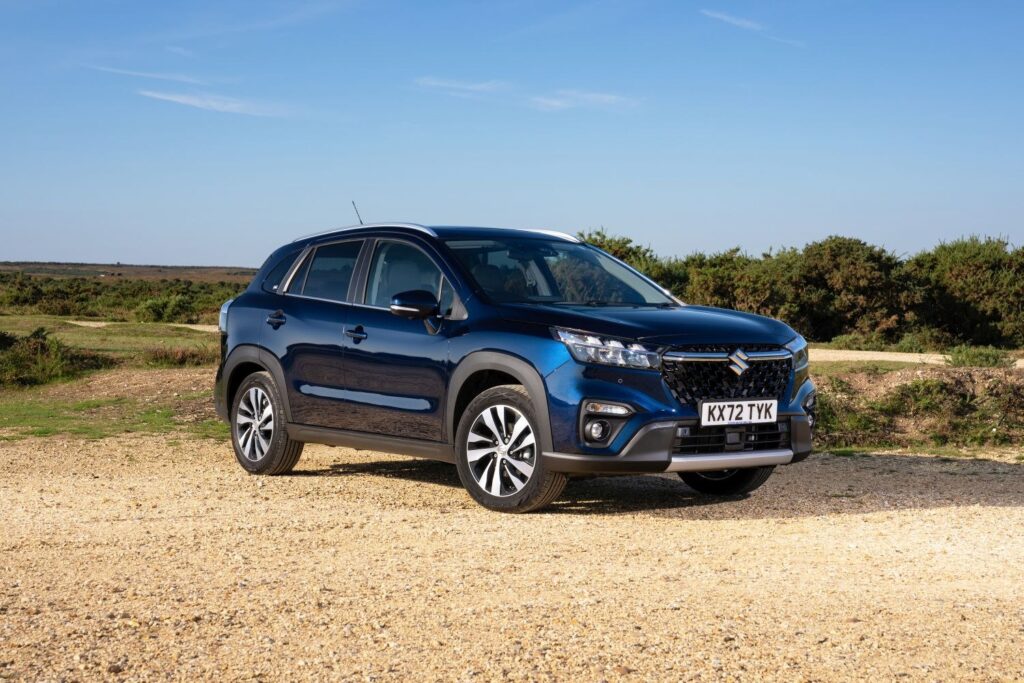
Introduction to the 2025 Suzuki S-Cross III
The Suzuki S-Cross, known globally for its blend of compact SUV practicality and efficient powertrain options, enters its third generation with the 2025 Suzuki S-Cross III. This latest iteration continues Suzuki’s commitment to delivering reliable, fuel-efficient, and versatile vehicles, particularly for the European and Asian markets where it serves as a strong competitor in the burgeoning C-segment crossover category. While Suzuki has a more limited presence in the United States automotive market compared to its global footprint, the S-Cross III exemplifies the brand’s engineering philosophy centered on lightweight construction, advanced hybrid technology, and smart packaging.
The 2025 Suzuki S-Cross III, specifically in its 1.4 BOOSTERJET Mild Hybrid Automatic configuration, represents a significant step forward in efficiency and urban usability. Positioned as a family-friendly SUV, it offers a compelling package for consumers seeking a balance between everyday drivability, ample cargo space, and reduced environmental impact. With its start of production slated for August 2025, this model brings refreshed design, enhanced features, and a sophisticated mild-hybrid powertrain architecture to the forefront, solidifying its role as a practical and economical choice in its segment.
Engine and Performance: The 1.4 BOOSTERJET Mild Hybrid Powertrain
At the heart of the 2025 Suzuki S-Cross III is a refined 1.4-liter BOOSTERJET mild-hybrid (MHEV) powertrain, engineered for optimal balance between performance and fuel efficiency. This system, designated as a power-assist or battery-assisted hybrid vehicle (BAHV), combines a turbocharged gasoline engine with an integrated electric motor, delivering a seamless driving experience.
The internal combustion engine is a 1.4-liter (1373 cm3 or 83.79 cubic inches) inline four-cylinder unit, featuring direct injection and a turbocharger with an intercooler. It produces a respectable 110 horsepower at 4500 rpm, which, for its displacement, offers a power-per-liter ratio of 80.1 Hp/l. Torque output is particularly impressive for a mild-hybrid, peaking at 235 Nm (173.33 lb.-ft.) across a broad range from 2000 to 2500 rpm. This low-end torque is crucial for responsive acceleration and relaxed cruising.
Complementing the gasoline engine is a 48-volt lithium-ion battery-powered electric motor, which contributes an additional 17 horsepower and a substantial 50 Nm (36.88 lb.-ft.) of torque. This electric motor is cleverly integrated into the transmission, operating as a synchronous unit to provide torque assist during acceleration, enable extended engine-off coasting, and facilitate a smoother engine restart via its advanced Start & Stop System. The battery itself is efficiently packaged below the floor, between the front and rear seats, optimizing weight distribution and interior space.
Power is sent to the front wheels via a 6-speed automatic transmission, ensuring smooth gear changes and an effortless driving experience. Performance figures for the Suzuki S-Cross III are competitive within its class: the vehicle accelerates from 0 to 60 mph in an estimated 9.6 seconds (0-100 km/h in 10.1 seconds) and reaches a top speed of 111.85 mph (180 km/h).
Fuel economy is a standout feature, reflecting the efficiency gains from the mild-hybrid system. According to WLTP standards, the combined fuel consumption is an impressive 5.8-5.9 l/100 km, translating to approximately 39.9 to 40.6 US mpg. CO2 emissions are rated at 132 g/km, adhering to the stringent Euro 6e-bis emission standard, making it an environmentally conscious choice.
Design and Features: Practicality Meets Modern Aesthetics
The 2025 Suzuki S-Cross III retains its identity as a versatile SUV/Crossover with a modern and robust aesthetic. Its five-door, five-seat configuration prioritizes passenger comfort and practicality, making it an ideal choice for families and individuals alike. The exterior design features contemporary lines, a bold front fascia, and a confident stance, reflecting its SUV aspirations while maintaining a compact footprint suitable for urban environments.
Dimensions of the S-Cross III are well-proportioned for its segment: it measures 169.29 inches (4300 mm) in length, 70.28 inches (1785 mm) in width, and 62.4 inches (1585 mm) in height. A wheelbase of 102.36 inches (2600 mm) contributes to a stable ride and generous interior space. With a ground clearance of 6.89 inches (175 mm), it offers sufficient capability for light off-road excursions or navigating challenging urban terrain. The turning circle of 35.43 feet (10.8 meters) ensures excellent maneuverability in tight spaces.
Inside, the S-Cross III is designed for comfort and utility. The trunk space is highly flexible, offering a minimum of 15.19 cubic feet (430 liters) with all seats in place, expanding to a cavernous 43.44 cubic feet (1230 liters) when the rear seats are folded down. This adaptability makes it suitable for anything from weekly grocery runs to weekend adventures.
The vehicle’s chassis features an independent McPherson strut front suspension and a torsion beam rear suspension, both utilizing coil springs, which provide a comfortable and controlled ride. Braking performance is handled by ventilated discs at the front and solid discs at the rear, complemented by an Anti-lock Braking System (ABS) for enhanced safety. Electric power steering ensures light and precise control. The S-Cross III comes equipped with 215/55 R17 tires mounted on 17-inch wheel rims, providing a good balance of grip and ride comfort.
Technical Specifications
| Category | Specification | US Equivalent |
|---|---|---|
| General Information | ||
| Brand | Suzuki | – |
| Model | SX4 S-Cross | – |
| Generation | S-Cross III | – |
| Type (Engine) | 1.4 BOOSTERJET (110 Hp) Mild Hybrid Automatic | – |
| Start of Production | August, 2025 | – |
| Powertrain Architecture | MHEV (Mild Hybrid Electric Vehicle, power-assist hybrid) | – |
| Body Type | SUV, Crossover | – |
| Seats | 5 | – |
| Doors | 5 | – |
| Performance Specs | ||
| Combined Fuel Consumption (WLTP) | 5.8-5.9 l/100 km | 40.6 – 39.9 US mpg |
| CO2 Emissions (WLTP) | 132 g/km | – |
| Fuel Type | Petrol (Gasoline) | – |
| Acceleration 0 – 60 mph | 9.6 sec | – |
| Maximum Speed | 180 km/h | 111.85 mph |
| Emission Standard | Euro 6e-bis | – |
| Weight-to-power ratio | 11.3 kg/Hp | – |
| Electric Cars and Hybrids Specs | ||
| Battery Voltage | 48 V | – |
| Battery Technology | Lithium-ion (Li-Ion) | – |
| Electric Motor Power | 17 Hp | – |
| Electric Motor Torque | 50 Nm | 36.88 lb.-ft. |
| Electric Motor Location | Integrated into the transmission | – |
| Internal Combustion Engine Specs | ||
| Power | 110 Hp @ 4500 rpm | – |
| Torque | 235 Nm @ 2000-2500 rpm | 173.33 lb.-ft. @ 2000-2500 rpm |
| Engine Layout | Front, Transverse | – |
| Engine Model/Code | K14D | – |
| Engine Displacement | 1373 cm3 | 83.79 cu. in. |
| Number of Cylinders | 4 | – |
| Engine Configuration | Inline | – |
| Cylinder Bore | 73 mm | 2.87 in. |
| Piston Stroke | 82 mm | 3.23 in. |
| Compression Ratio | 10.9:1 | – |
| Valves per Cylinder | 4 | – |
| Fuel Injection System | Direct injection | – |
| Engine Aspiration | Turbocharger, Intercooler | – |
| Engine Oil Capacity | 3.6 l | 3.8 US qt |
| Coolant Capacity | 6.7 l | 7.08 US qt |
| Engine Systems | Start & Stop System, Particulate filter | – |
| Space, Volume and Weights | ||
| Kerb Weight | 1240-1258 kg | 2733.73 – 2773.42 lbs. |
| Max. Weight | 1710 kg | 3769.9 lbs. |
| Max Load | 452-470 kg | 996.49 – 1036.17 lbs. |
| Trunk (boot) Space – Minimum | 430 l | 15.19 cu. ft. |
| Trunk (boot) Space – Maximum | 1230 l | 43.44 cu. ft. |
| Fuel Tank Capacity | 47 l | 12.42 US gal |
| Dimensions | ||
| Length | 4300 mm | 169.29 in. |
| Width | 1785 mm | 70.28 in. |
| Height | 1585 mm | 62.4 in. |
| Wheelbase | 2600 mm | 102.36 in. |
| Front Track | 1535 mm | 60.43 in. |
| Rear Track | 1505 mm | 59.25 in. |
| Front Overhang | 895 mm | 35.24 in. |
| Rear Overhang | 805 mm | 31.69 in. |
| Ride Height (Ground Clearance) | 175 mm | 6.89 in. |
| Minimum Turning Circle | 10.8 m | 35.43 ft. |
| Drivetrain, Brakes and Suspension Specs | ||
| Drivetrain Architecture | ICE and electric motor drive front wheels (mixed mode) | – |
| Drive Wheel | Front wheel drive | – |
| Number of Gears and Type of Gearbox | 6 gears, automatic transmission | – |
| Front Suspension | Coil spring, Independent type McPherson | – |
| Rear Suspension | Coil spring, Torsion beam | – |
| Front Brakes | Ventilated discs | – |
| Rear Brakes | Disc | – |
| Assisting Systems | ABS (Anti-lock braking system) | – |
| Steering Type | Steering rack and pinion | – |
| Power Steering | Electric Steering | – |
| Tires Size | 215/55 R17 | – |
| Wheel Rims Size | 17 inches | – |
Legacy and Market Impact of the Suzuki S-Cross III
The Suzuki S-Cross, throughout its generations, has carved out a distinct niche in the highly competitive global compact SUV and crossover market. The 2025 Suzuki S-Cross III, with its advanced mild-hybrid technology and refined design, is poised to continue this legacy, particularly in its primary markets of Europe and Asia. In these regions, the S-Cross is known for its value proposition, offering robust build quality, excellent fuel economy, and practical utility at an accessible price point.
In Europe, the S-Cross competes against a formidable array of rivals, including popular models like the Nissan Qashqai, Kia Sportage, Hyundai Tucson, and Honda HR-V (known as Vezel in some markets). What sets the S-Cross apart is its emphasis on lightweight engineering and compact dimensions, which contribute to its impressive fuel efficiency and nimble handling, especially appreciated in congested urban environments. Its mild-hybrid system, in particular, allows it to meet increasingly strict emission regulations while providing a tangible benefit in reduced running costs for consumers.
Suzuki’s reputation for reliability and durability is a significant asset for the S-Cross. Owners often praise its low maintenance requirements and long-term dependability, factors that contribute to strong resale values in many markets. The third generation aims to build on this foundation by integrating more modern technology and a more contemporary aesthetic, ensuring it remains relevant and appealing to a new generation of buyers.
The S-Cross III’s commitment to efficiency, demonstrated by its 1.4 BOOSTERJET Mild Hybrid powertrain, positions it as a responsible choice for environmentally conscious consumers. Its compliance with the Euro 6e-bis emission standard is a testament to Suzuki’s efforts in sustainable mobility. Furthermore, the spacious interior and flexible cargo area underscore its appeal as a practical family vehicle, capable of handling diverse needs from daily commuting to weekend getaways.
While the Suzuki brand’s passenger vehicle presence is limited in the North American market, the S-Cross III serves as an excellent example of the global automotive industry’s direction: a focus on compact, efficient, and versatile SUVs that prioritize fuel economy and lower emissions without compromising on utility. Its impact will be felt most strongly in markets where consumers demand a smart, economical, and capable crossover that delivers on everyday performance and practicality. The 2025 Suzuki S-Cross III is more than just a new model; it’s a statement about Suzuki’s ongoing commitment to innovation and meeting the evolving demands of the global automotive landscape.
