The Mitsubishi Mirage G4 (A10): A Global Contender in the Subcompact Segment
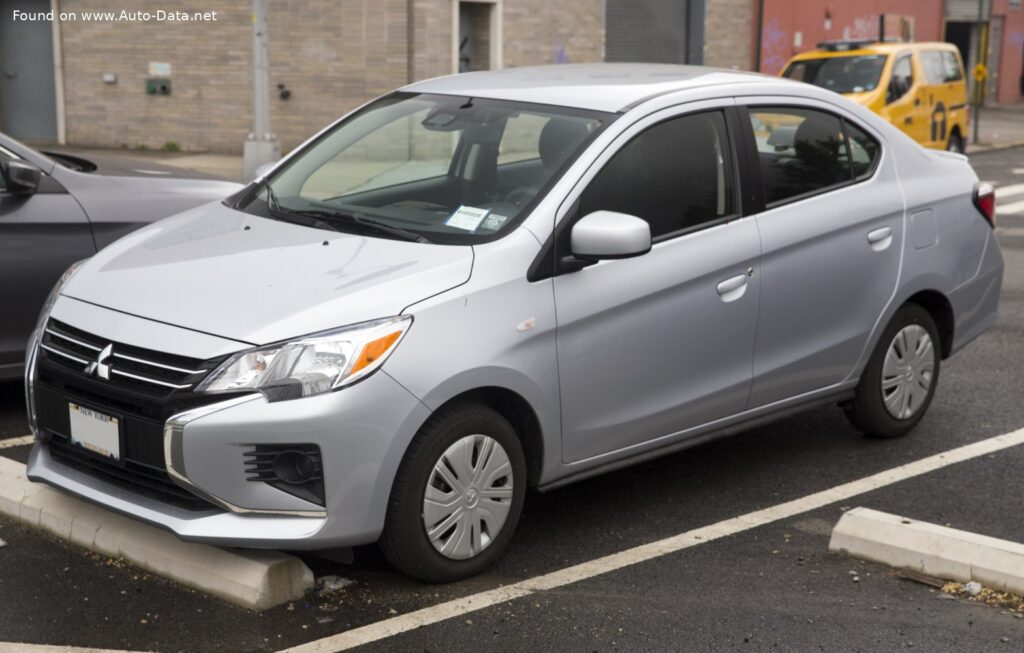
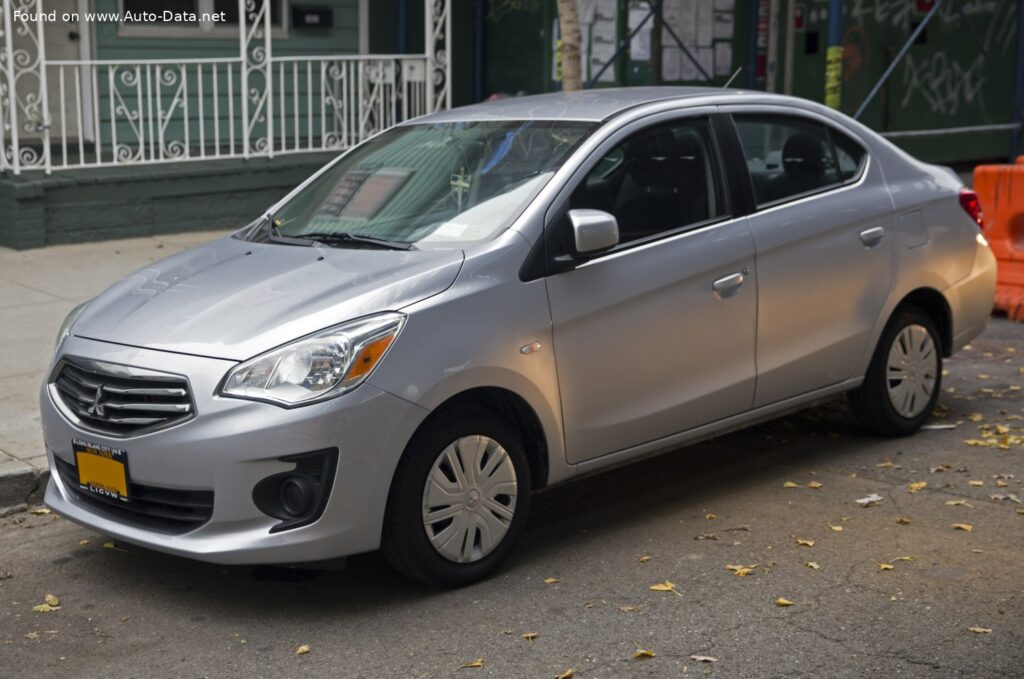
The Mitsubishi Mirage G4 (A10) represents a significant entry in the global subcompact sedan market,
distinguished by its focus on affordability, fuel efficiency, and practicality. Launched in March 2013 and
continuing production until November 2019, this particular generation, often referred to as the A10 series,
was designed to cater to a broad international audience, particularly excelling in emerging markets
where value and running costs are paramount. The “G4” designation specifically refers to the four-door
sedan variant, differentiating it from its hatchback sibling, the standard Mirage. In the North American
market, where it was also sold, the Mirage G4 positioned itself as one of the most budget-friendly new
car options available, appealing to buyers prioritizing economical transportation above all else.
Its compact dimensions, combined with a highly efficient powertrain, made it a popular choice for urban
commuters and first-time car buyers around the world.
Engine and Performance of the Mitsubishi Mirage G4 (A10)
Underpinning the Mitsubishi Mirage G4 (A10)‘s economical ethos is its 1.2-liter MIVEC engine.
This naturally aspirated, three-cylinder gasoline engine, designated with the code 3A92, is a prime example
of Mitsubishi’s engineering focus on efficiency. MIVEC, or Mitsubishi Innovative Valve timing Electronic
Control system, is a variable valve timing technology designed to optimize valve lift and timing across
the engine’s RPM range, thereby improving fuel economy and reducing emissions without significantly
compromising power output.
The 1.2 MIVEC engine delivers a modest but adequate 78 horsepower at 6000 rpm, with a peak torque of
73.76 lb-ft (100 Nm) arriving at 4000 rpm. While these figures do not suggest a performance-oriented vehicle,
they are entirely sufficient for the Mirage G4’s intended purpose of urban commuting and light highway
travel. The engine’s power-to-weight ratio stands at 79.2 Hp per tonne, or 12.6 kg/Hp, which, coupled
with its relatively low curb weight of 2171.55 to 2193.6 lbs (985-995 kg), contributes to its agile feel
in city traffic.
Power is exclusively sent to the front wheels via a Continuously Variable Transmission (CVT). This automatic
transmission is a key component in the Mirage G4’s fuel efficiency strategy, as it allows the engine
to operate at its most efficient RPM for a given driving condition, eliminating the distinct shift points
found in traditional automatic transmissions. This seamless power delivery is crucial for achieving its
impressive fuel economy figures: a combined rating of 37.3 US mpg (6.3 l/100 km), with urban consumption
at 35.1 US mpg (6.7 l/100 km) and extra-urban at 41.3 US mpg (5.7 l/100 km). The engine features a DOHC
(Double Overhead Camshaft) valvetrain and multi-port manifold injection, further enhancing its efficiency
and reliability. Its small displacement of 1193 cm³ (72.8 cu. in.) and a compression ratio of 10.5:1
underscore its design as a highly optimized, economical powertrain.
Design and Features
The Mitsubishi Mirage G4 (A10) sedan adopts a straightforward, functional design that prioritizes
interior space and aerodynamic efficiency within a compact footprint. With a length of 169.49 inches
(4305 mm), a width of 65.71 inches (1669 mm), and a height of 59.21 inches (1504 mm), the G4 is adept
at navigating congested city streets and fitting into tight parking spaces. The wheelbase measures
100.39 inches (2550 mm), providing a stable ride for its class and contributing to a surprisingly
spacious cabin for five occupants.
Despite its compact exterior, the G4 offers practical interior dimensions and utility. The trunk space
is a respectable 12.32 cu. ft. (349 liters), ample for daily errands or weekend luggage. The fuel tank
capacity of 9.25 US gallons (35 liters) works in conjunction with its excellent fuel economy to provide
a decent cruising range, reducing the frequency of fuel stops.
In terms of chassis and suspension, the Mirage G4 employs a conventional setup designed for comfort and
durability. The front features an independent McPherson strut suspension, a common and effective choice
for subcompact vehicles, offering a good balance of ride comfort and handling. The rear utilizes a
torsion beam axle, a cost-effective and space-efficient solution for the rear suspension, which also
contributes to the generous trunk volume. Braking duties are handled by ventilated discs at the front
and drum brakes at the rear, complemented by an Anti-lock Braking System (ABS) for enhanced safety
during emergency stops. The electric power steering system provides light and effortless maneuverability,
making parking and low-speed driving particularly easy, with a tight turning circle of 31.5 feet (9.6 m).
Standard tire sizes typically ranged from 165/65 R14 to 175/55 R15, fitted on 14 or 15-inch wheel rims,
further emphasizing its economical and practical orientation.
Technical Specifications: Mitsubishi Mirage G4 (A10) 1.2 MIVEC (78 Hp) CVT (2013-2019)
| Category | Specification |
|---|---|
| General Information | |
| Brand | Mitsubishi |
| Model | Mirage G4 (A10) |
| Type (Engine) | 1.2 MIVEC (78 Hp) CVT |
| Production Start | March, 2013 |
| Production End | November, 2019 |
| Powertrain Architecture | Internal Combustion Engine |
| Body Type | Sedan |
| Seats | 5 |
| Doors | 4 |
| Performance Specifications | |
| Fuel Consumption (Urban) | 6.7 l/100 km (35.1 US mpg) |
| Fuel Consumption (Extra Urban) | 5.7 l/100 km (41.3 US mpg) |
| Fuel Consumption (Combined) | 6.3 l/100 km (37.3 US mpg) |
| Fuel Type | Petrol (Gasoline) |
| Weight-to-Power Ratio | 12.6 kg/Hp (79.2 Hp/tonne) |
| Weight-to-Torque Ratio | 9.9 kg/Nm (101.5 Nm/tonne) |
| Engine Specifications | |
| Power | 78 Hp @ 6000 rpm |
| Power per Liter | 65.4 Hp/l |
| Torque | 100 Nm @ 4000 rpm (73.76 lb-ft @ 4000 rpm) |
| Engine Layout | Front, Transverse |
| Engine Model/Code | 3A92 |
| Engine Displacement | 1193 cm³ (1.2 liters / 72.8 cu. in.) |
| Number of Cylinders | 3 |
| Engine Configuration | Inline |
| Cylinder Bore | 75 mm (2.95 in.) |
| Piston Stroke | 90 mm (3.54 in.) |
| Compression Ratio | 10.5:1 |
| Valves per Cylinder | 4 |
| Fuel Injection System | Multi-port manifold injection |
| Engine Aspiration | Naturally aspirated |
| Valvetrain | DOHC |
| Engine Oil Capacity | 3 l (3.17 US qt) |
| Coolant Capacity | 4.6 l (4.86 US qt) |
| Space, Volume, and Weights | |
| Kerb Weight | 985-995 kg (2171.55 – 2193.6 lbs) |
| Max. Weight | 1410 kg (3108.52 lbs) |
| Max Load | 415-425 kg (914.92 – 936.96 lbs) |
| Trunk (Boot) Space – Minimum | 349 l (12.32 cu. ft.) |
| Fuel Tank Capacity | 35 l (9.25 US gal) |
| Dimensions | |
| Length | 4305 mm (169.49 in.) |
| Width | 1669 mm (65.71 in.) |
| Height | 1504 mm (59.21 in.) |
| Wheelbase | 2550 mm (100.39 in.) |
| Front Track | 1445 mm (56.89 in.) |
| Rear Track | 1430 mm (56.3 in.) |
| Ride Height (Ground Clearance) | 160 mm (6.3 in.) |
| Minimum Turning Circle | 9.6 m (31.5 ft.) |
| Drivetrain, Brakes, and Suspension | |
| Drivetrain Architecture | Front-wheel drive, Internal Combustion Engine |
| Drive Wheel | Front wheel drive |
| Gearbox Type | Automatic transmission CVT |
| Front Suspension | Independent type McPherson |
| Rear Suspension | Torsion beam |
| Front Brakes | Ventilated discs |
| Rear Brakes | Drum |
| Assisting Systems | ABS (Anti-lock braking system) |
| Steering Type | Steering rack and pinion |
| Power Steering | Electric Steering |
| Tires Size | 165/65 R14; 175/55 R15 |
| Wheel Rims Size | 14; 15 |
Legacy and Market Impact
The Mitsubishi Mirage G4 (A10), particularly with the 1.2 MIVEC CVT powertrain, carved out a distinct
niche in the automotive landscape from 2013 to 2019. Its primary legacy is rooted in its unwavering
commitment to being an accessible and highly economical new vehicle. In an automotive market increasingly
dominated by larger, more feature-rich, and expensive vehicles, the Mirage G4 stood as a testament to
Mitsubishi’s ability to deliver fundamental transportation at a compelling price point.
Globally, the Mirage G4 played a crucial role for Mitsubishi, especially in markets such as Southeast Asia,
Latin America, and parts of North America, where it was often the brand’s entry-level offering. Its
low purchase price, excellent fuel efficiency, and reputation for straightforward reliability made it
an attractive proposition for first-time buyers, fleet operators, and those on a strict budget. While
it often faced criticism in more developed markets for its basic interior, modest performance, and
lack of refinement compared to some rivals, these aspects were often viewed as acceptable trade-offs for
its undeniable affordability and low running costs.
Competitors in its segment included vehicles like the Chevrolet Sonic, Hyundai Accent, Kia Rio, and Nissan
Versa. While many of these rivals offered more horsepower, a more upscale interior, or a more engaging
driving experience, the Mirage G4 consistently undercut them on price and often on fuel economy, making
it a formidable competitor strictly on a value proposition. Its lightweight construction and efficient
powertrain, coupled with a standard CVT, ensured that it remained one of the most fuel-efficient non-hybrid
vehicles available during its production run.
The historical significance of the Mirage G4 (A10) lies in its embodiment of essential mobility. It was
not designed to excite with blistering acceleration or luxurious amenities, but rather to reliably and
economically transport occupants from point A to point B. This philosophy resonated deeply in various
markets, solidifying its reputation as a no-frills, dependable workhorse. Even after its production
ended in 2019 for this specific generation, the Mirage nameplate, including the G4 sedan, continued
to be an important part of Mitsubishi’s global lineup, demonstrating the enduring demand for
practical, affordable, and fuel-efficient transportation solutions. The A10 generation thus serves
as a key chapter in the Mirage’s long-standing history, highlighting Mitsubishi’s commitment to
delivering accessible automotive solutions worldwide.