The Enduring Icon: Rover Mini MK I 1.3i (50 Hp)
The Rover Mini MK I 1.3i (50 Hp) represents a fascinating late-stage evolution of one of the most iconic and influential automobiles in history. Produced by Rover Group from 1992 to 2000, this particular variant belongs to the final generation of the original Mini, known broadly as the “Mark VII” by enthusiasts, but officially designated as the Mini MK I within Rover’s internal nomenclature for this specific series. While the Mini’s roots stretch back to 1959, this iteration showcases the classic car’s remarkable longevity, incorporating modern refinements like single-point fuel injection and an automatic transmission into its timeless, compact hatchback form. Primarily targeted at the European and Japanese markets, the Rover Mini MK I was never officially sold in the United States, yet its global cultural impact and distinctive character have made it recognizable and beloved worldwide. It served as a premium retro offering in its later years, appealing to those who cherished its heritage and unique driving experience.
Engine & Performance: The 1.3i (50 Hp) Powertrain
At the heart of the Rover Mini MK I 1.3i (50 Hp) lies a transversely mounted, naturally aspirated 1.3-liter (1274 cm3 or 77.74 cu. in.) inline-four engine. Codenamed 12A2EK71, this A-series derived powerplant, a descendant of the original Mini’s engine, was updated with modern single-point fuel injection for improved emissions compliance and drivability compared to its carbureted predecessors. This configuration allowed the compact engine to produce a modest but characterful 50 horsepower at 5000 revolutions per minute (rpm) and 65.64 lb.-ft. of torque at a low 2600 rpm. With a compression ratio of 10.5:1 and two valves per cylinder, the engine, while not a powerhouse, delivered adequate performance for urban environments and spirited country road driving, a hallmark of the Mini experience.
What truly set this particular variant apart was its four-speed automatic transmission. While many Mini purists preferred the traditional manual gearbox for maximum engagement, the automatic option broadened the Mini’s appeal, offering greater convenience in congested city traffic. Despite the automatic, the Mini’s lightweight nature — a mere 1421.98 lbs. (645 kg) curb weight — allowed it to achieve a 0-60 mph acceleration time of approximately 12.7 seconds. Its top speed was rated at 86.99 mph (140 km/h), perfectly respectable for a car of its size and intended purpose. Fuel economy figures, while not groundbreaking by modern standards, were commendable for its era, with a combined rating of 28 US mpg (8.4 l/100 km) on gasoline. The Mini’s inherent agility and direct steering, rather than outright speed, were its primary performance attributes, making even modest power feel engaging.
Design & Features: Iconic Form, Enduring Function
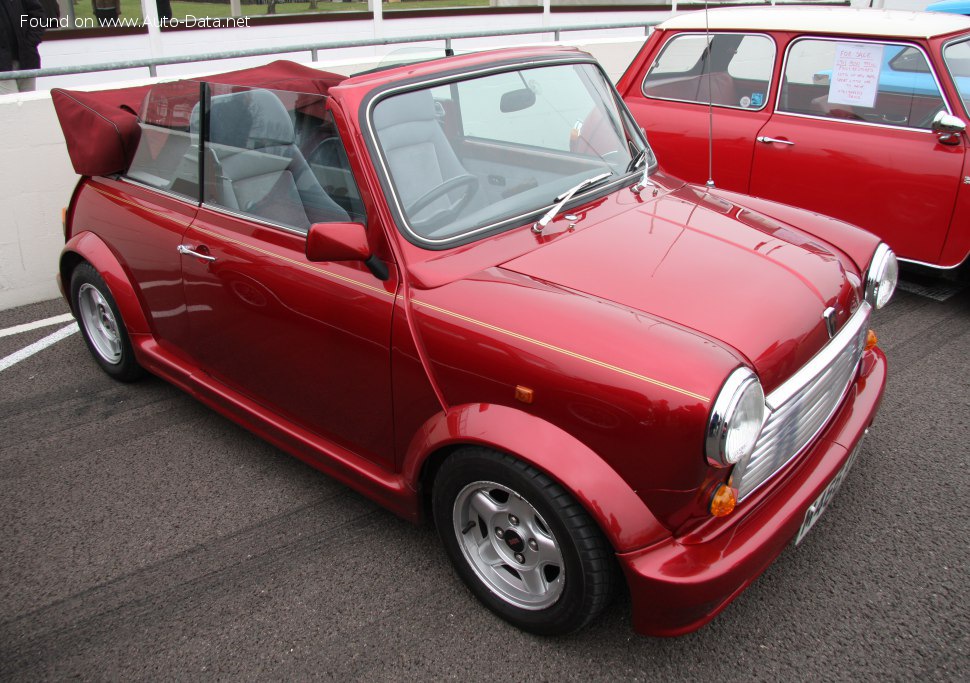
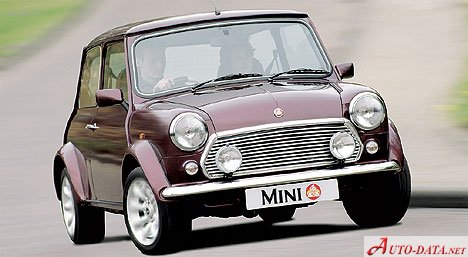
The Rover Mini MK I 1.3i (50 Hp) retained the quintessential design that had captivated generations since 1959. Its instantly recognizable two-box hatchback silhouette, with minimal overhangs and wheels pushed to the corners, was a masterpiece of packaging efficiency. Measuring just 120.08 inches (3050 mm) in length, 55.51 inches (1410 mm) in width, and 53.15 inches (1350 mm) in height, the Mini was incredibly compact, allowing for unparalleled maneuverability and ease of parking in crowded European cities. Despite its diminutive exterior, the car offered a surprisingly spacious cabin for four adults, though the claim of five seats was ambitious for anything beyond short trips with children. The 3-door layout was standard for the hatchback body type.
Key design elements included the distinctive round headlights, chrome trim, and a relatively upright windshield. Internally, the Mini MK I 1.3i featured a minimalist dashboard, often with a central instrument cluster, though later models sometimes relocated it behind the steering wheel. For its time, this particular Mini incorporated some modern safety and convenience features, such as front disc brakes and rear drum brakes complemented by an Anti-lock Braking System (ABS), a significant addition for a car of its fundamental design age. The steering system was a rack and pinion setup, contributing to the Mini’s renowned direct and communicative handling. The suspension system, with wishbones at the front and trailing arms at the rear, was a sophisticated design for its day, contributing to its “go-kart” like driving dynamics and surprising ride comfort for such a small vehicle. Its 145/70 R12 tires were small by contemporary standards, but perfectly suited to its lightweight chassis and nimble character.
Technical Specifications: Rover Mini MK I 1.3i (50 Hp)
| Category | Specification |
|---|---|
| Brand | Rover |
| Model | Mini MK I |
| Generation | Mini MK I |
| Type (Engine) | 1.3i (50 Hp) |
| Production Start | 1992 year |
| Production End | 2000 year |
| Powertrain Architecture | Internal Combustion Engine (Front Wheel Drive) |
| Body Type | Hatchback |
| Doors | 3 |
| Seats | 5 |
| Performance Specs | |
| Fuel Consumption (Urban) | 7.6 l/100 km (30.9 US mpg) |
| Fuel Consumption (Extra Urban) | 5.2 l/100 km (45.2 US mpg) |
| Fuel Consumption (Combined) | 8.4 l/100 km (28 US mpg) |
| Fuel Type | Petrol (Gasoline) |
| Acceleration 0-60 mph | 12.7 sec |
| Maximum Speed | 140 km/h (86.99 mph) |
| Weight-to-Power Ratio | 12.9 kg/Hp (77.5 Hp/tonne) |
| Weight-to-Torque Ratio | 7.2 kg/Nm (138 Nm/tonne) |
| Engine Specs | |
| Power | 50 Hp @ 5000 rpm |
| Power per Liter | 39.2 Hp/l |
| Torque | 89 Nm (65.64 lb.-ft.) @ 2600 rpm |
| Engine Layout | Front, Transverse |
| Engine Model/Code | 12A2EK71 |
| Engine Displacement | 1274 cm3 (77.74 cu. in.) |
| Number of Cylinders | 4 |
| Engine Configuration | Inline |
| Cylinder Bore | 70.6 mm (2.78 in.) |
| Piston Stroke | 81.33 mm (3.2 in.) |
| Compression Ratio | 10.5:1 |
| Number of Valves per Cylinder | 2 |
| Fuel Injection System | Single-point injection |
| Engine Aspiration | Naturally aspirated engine |
| Engine Oil Capacity | 4.8 l (5.07 US qt) |
| Coolant Capacity | 4 l (4.23 US qt) |
| Space, Volume and Weights | |
| Kerb Weight | 645 kg (1421.98 lbs.) |
| Maximum Weight | 1000 kg (2204.62 lbs.) |
| Max Load | 355 kg (782.64 lbs.) |
| Trunk (Boot) Space – Minimum | 120 l (4.24 cu. ft.) |
| Fuel Tank Capacity | 34 l (8.98 US gal) |
| Dimensions | |
| Length | 3050 mm (120.08 in.) |
| Width | 1410 mm (55.51 in.) |
| Height | 1350 mm (53.15 in.) |
| Wheelbase | 2035 mm (80.12 in.) |
| Front Track | 1240 mm (48.82 in.) |
| Rear Track | 1210 mm (47.64 in.) |
| Minimum Turning Circle (Diameter) | 8.6 m (28.22 ft.) |
| Drivetrain, Brakes and Suspension Specs | |
| Drivetrain Architecture | Front-wheel drive |
| Drive Wheel | Front wheel drive |
| Number of Gears and Type of Gearbox | 4 gears, automatic transmission |
| Front Suspension | Wishbone |
| Rear Suspension | Trailing arm |
| Front Brakes | Disc |
| Rear Brakes | Drum |
| Assisting Systems | ABS (Anti-lock braking system) |
| Steering Type | Steering rack and pinion |
| Tires Size | 145/70 R12 |
Legacy & Market Impact of the Rover Mini MK I
The Rover Mini MK I 1.3i (50 Hp), despite being a late-production model, inherited and continued the monumental legacy of the original Mini. Launched in 1959, the Mini revolutionized small car design with its transverse engine, front-wheel drive layout, and independent suspension, maximizing interior space within a minimal footprint. This engineering marvel became a blueprint for countless compact cars that followed. By the time the Rover Mini MK I 1.3i was produced from 1992 to 2000, it was no longer a budget-friendly mass-market car but a cherished icon, often positioned as a premium retro product. It appealed to buyers who valued its history, unique driving dynamics, and distinctive British charm.
In its primary markets, particularly Europe and Japan, the Mini faced competition from more modern and often more practical compact cars like the Ford Fiesta, Volkswagen Polo, and various Japanese superminis. However, the Mini didn’t compete on practicality or advanced technology; it sold on nostalgia, character, and its legendary “go-kart” handling. Its compact dimensions and nimble character made it perfectly suited for congested European cities and narrow country lanes. The inclusion of an automatic transmission further enhanced its appeal to urban dwellers seeking convenience without sacrificing style.
The Mini’s cultural impact extends far beyond its sales figures. It became a symbol of British cool, featured prominently in film, fashion, and music. Its racing pedigree, especially the Cooper variants, cemented its reputation for spirited performance and agility. The Rover Mini MK I, with its subtle modernizations, served as a bridge between the original Alec Issigonis design and the BMW-era “New MINI” that debuted in 2001. It allowed a new generation of enthusiasts to experience the authentic Mini character before its reinvention. Today, these late-model classic Minis are highly sought after by collectors and enthusiasts worldwide, admired for their blend of vintage charm and slightly improved reliability and features, ensuring that the legacy of the Rover Mini MK I 1.3i (50 Hp) continues to thrive as a beloved automotive icon.