The Volvo V60 II Recharge 2.0 T8: A New Era of Scandinavian Performance and Sustainability
The Volvo V60 II Recharge 2.0 T8 (455 Hp) Plug-in Hybrid AWD Geartronic represents the pinnacle of Volvo’s second-generation V60 station wagon lineup, launched in September 2021. This specific iteration, with its potent plug-in hybrid powertrain, firmly establishes the V60 as a formidable contender in the premium compact executive segment, particularly within its primary European markets. Combining Volvo’s renowned commitment to safety and luxury with cutting-edge electrification, the Volvo V60 II Recharge 2.0 T8 offers a compelling blend of exhilarating performance, exceptional fuel efficiency, and versatile practicality, all wrapped in a distinctly Scandinavian design aesthetic. It serves as a testament to Volvo’s strategic shift towards a more sustainable and electrified future, delivering a sophisticated driving experience without compromising on utility or dynamic capability.
Engine and Performance: Power Meets Efficiency in the Volvo V60 II Recharge 2.0 T8
At the heart of the Volvo V60 II Recharge 2.0 T8 lies an advanced Plug-in Hybrid Electric Vehicle (PHEV) powertrain architecture, meticulously engineered to deliver both robust power and remarkable environmental consciousness. The internal combustion engine (ICE) is a 2.0-liter (1969 cm3 or 120.16 cu. in.) inline four-cylinder unit, featuring both turbocharging and supercharging, along with direct injection and DOHC valvetrain. This sophisticated setup allows the gasoline engine to produce an impressive 310 horsepower at 6000 rpm and 295.02 lb.-ft. of torque between 3000 and 4800 rpm. This dual-boosted engine, known by its internal code B4204T56, ensures strong, linear acceleration across the rev range.
Complementing the powerful gasoline engine is a high-output electric motor, strategically positioned on the rear axle. This electric motor contributes an additional 145 horsepower at 15900 rpm and a substantial 227.91 lb.-ft. of instant torque from 0 to 3280 rpm. The combined output of this sophisticated powertrain reaches a potent 455 horsepower, enabling the V60 Recharge to achieve truly impressive performance figures for a family station wagon. The sprint from 0 to 60 mph is dispatched in a mere 4.4 seconds (0-100 km/h in 4.6 seconds), highlighting its sports sedan-rivaling acceleration. Top speed is electronically limited to 111.85 mph (180 km/h), a common practice for modern electrified vehicles to optimize efficiency and component longevity.
Power is managed through an 8-speed Geartronic automatic transmission, providing smooth and precise shifts. The intelligent all-wheel-drive (AWD) system is unique: the internal combustion engine permanently drives the front wheels, while the electric motor exclusively powers the rear wheels. This innovative drivetrain architecture allows for seamless transitions between pure electric, gasoline-only, or mixed-mode driving, optimizing traction and efficiency.
Fuel economy is a standout feature, with a combined WLTP rating of 213.8 to 294 US mpg (0.8-1.1 l/100 km), thanks to its plug-in hybrid capabilities. CO2 emissions are remarkably low, ranging from 17-25 g/km, meeting stringent Euro 6d emission standards. The vehicle’s gross battery capacity is 18.8 kWh, with a usable net capacity of 14.9 kWh, utilizing Lithium-ion technology. This battery, cleverly located in the central tunnel, provides an impressive all-electric range of 46.6 to 56.54 miles (75-91 km) on the WLTP cycle, making daily commutes emission-free for many drivers. The average energy consumption is rated at 28-32.19 kWh/100 miles (17.4-20 kWh/100 km), and it can reach an electric-only speed of up to 77.67 mph (125 km/h).
Design and Features: Scandinavian Practicality and Modern Luxury
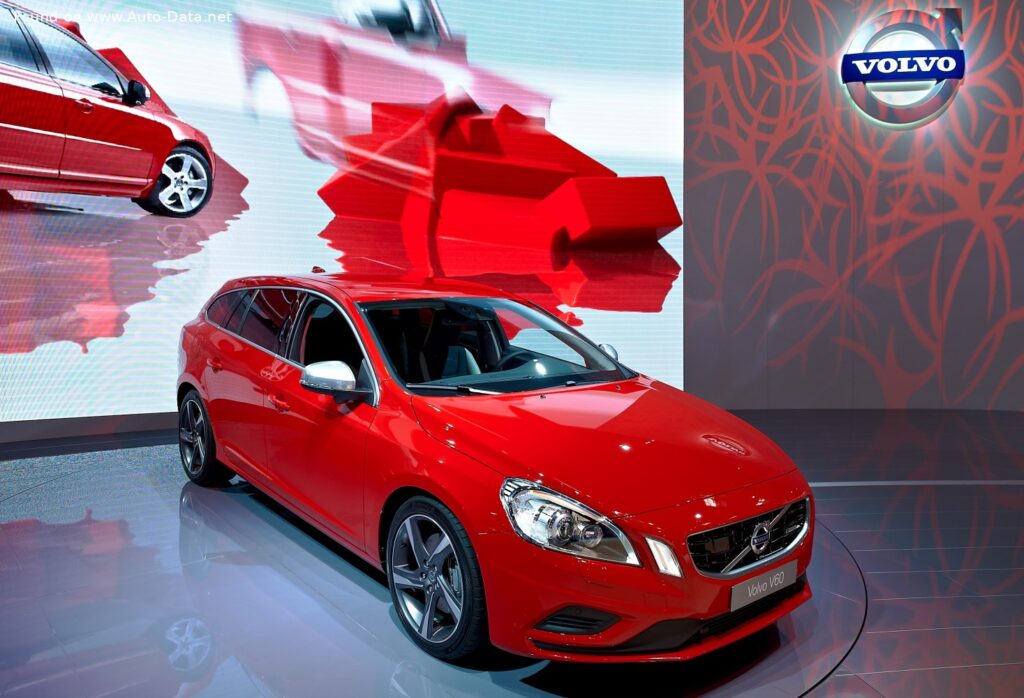
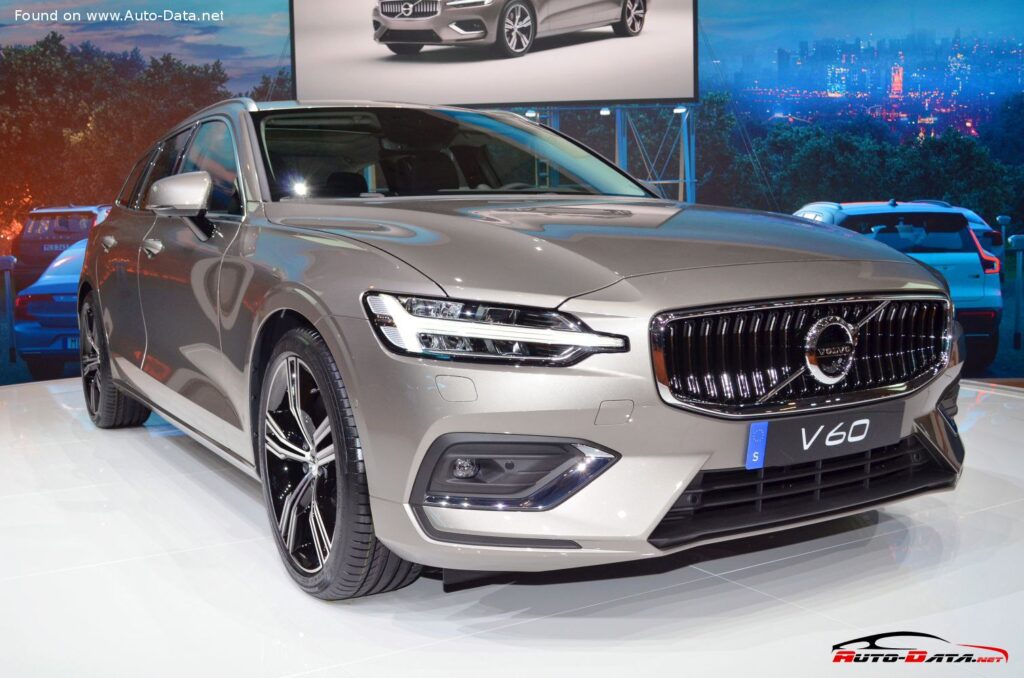
The Volvo V60 II Recharge maintains the elegant and functional design language characteristic of modern Volvo vehicles, presented in a versatile station wagon (estate) body type. Its exterior is defined by clean lines, a long roofline, and distinctive “Thor’s Hammer” LED headlights, projecting an air of understated sophistication. With a length of 187.44 inches, a width of 72.83 inches (80.31 inches including mirrors), and a height of 56.38 inches, the V60 strikes a balanced and assertive stance on the road. The wheelbase measures 113.07 inches, contributing to a spacious cabin and stable ride.
Inside, the V60 Recharge offers a sanctuary of Scandinavian luxury and ergonomic design. The cabin is configured for five occupants, with supportive seating and high-quality materials throughout. Volvo’s minimalist design philosophy is evident, featuring a large, vertically oriented infotainment touchscreen that serves as the central control hub for navigation, media, and vehicle settings. While specific features like advanced driver-assistance systems (ADAS) are not explicitly detailed in the provided data, Volvo’s unwavering commitment to safety suggests a comprehensive suite of technologies, likely including features like City Safety, Pilot Assist, and various collision avoidance systems, which are standard for the brand’s premium offerings.
Practicality is a cornerstone of the station wagon body style, and the V60 Recharge excels in this regard. It offers a generous trunk space of 16.99 cubic feet (481 liters) with the rear seats in place, expanding to a substantial 49.19 cubic feet (1393 liters) when the rear seats are folded down. This ample cargo capacity, combined with a maximum roof load of 165.35 lbs (75 kg) and a permitted trailer load with brakes of 4409.25 lbs (2000 kg), underscores its versatility for families and active lifestyles. The vehicle’s curb weight stands at 4384.99 lbs (1989 kg), with a maximum permissible weight of 5577.7 lbs (2530 kg).
The V60 Recharge also boasts a sophisticated chassis setup. The front suspension features a double wishbone design with a transverse stabilizer, while the rear utilizes a transverse stabilizer and a leaf spring arrangement, optimized for both comfort and dynamic handling. Braking is handled by ventilated discs at both front (345×30 mm) and rear (320×20 mm), complemented by ABS (Anti-lock braking system). Electric power steering, a steering rack and pinion type, provides precise control, while the turning circle of 37.07 feet (11.3 meters) ensures good maneuverability. Standard tire sizes include 235/45 R18 on 8J x 18 wheels, with an option for 235/40 R19 on 8J x 19 wheels.
Technical Specifications
| Category | Specification | Value |
|---|---|---|
General Information |
||
| Brand | Volvo | |
| Model | V60 | |
| Generation | V60 II | |
| Type (Engine) | Recharge 2.0 T8 (455 Hp) Plug-in Hybrid AWD Geartronic | |
| Start of production | September, 2021 | |
| Powertrain Architecture | PHEV (Plug-in Hybrid Electric Vehicle) | |
| Body type | Station wagon (estate) | |
| Seats | 5 | |
| Doors | 5 | |
Performance Specifications |
||
| Combined Fuel Consumption (WLTP) | 0.8-1.1 l/100 km (213.8 – 294 US mpg) | |
| CO2 emissions (WLTP) | 17-25 g/km | |
| Fuel Type | Petrol / electricity | |
| Acceleration 0 – 60 mph | 4.4 sec | |
| Acceleration 0 – 100 km/h | 4.6 sec | |
| Maximum speed | Electronically limited | 111.85 mph (180 km/h) |
| Braking 100 km/h – 0 | 35 m | |
| Emission standard | Euro 6d | |
| Weight-to-power ratio | 6.4 kg/Hp (155.9 Hp/tonne) | |
| Weight-to-torque ratio | 5 kg/Nm (201.1 Nm/tonne) | |
Electric Cars and Hybrids Specs |
||
| Gross battery capacity | 18.8 kWh | |
| Net (usable) battery capacity | 14.9 kWh | |
| Battery voltage | 400 V | |
| Battery technology | Lithium-ion (Li-Ion) | |
| Battery location | In the central tunnel | |
| All-electric range (WLTP) | 46.6 – 56.54 mi (75-91 km) | |
| Average Energy consumption (WLTP) | 28 – 32.19 kWh/100 mi (17.4-20 kWh/100 km, 105-120 MPGe) | |
| Max speed (electric) | 77.67 mph (125 km/h) | |
| Electric motor power | 145 Hp @ 15900 rpm | |
| Electric motor Torque | 227.91 lb.-ft. @ 0-3280 rpm (309 Nm) | |
| Electric motor location | Rear axle, Transverse | |
Internal Combustion Engine Specs |
||
| Power | 310 Hp @ 6000 rpm | |
| Power per liter | 157.4 Hp/l | |
| Torque | 295.02 lb.-ft. @ 3000-4800 rpm (400 Nm) | |
| Maximum engine speed | 6000 rpm | |
| Engine layout | Front, Transverse | |
| Engine Model/Code | B4204T56 | |
| Engine displacement | 120.16 cu. in. (1969 cm3) | |
| Number of cylinders | 4 | |
| Engine configuration | Inline | |
| Cylinder Bore | 3.23 in. (82 mm) | |
| Piston Stroke | 3.67 in. (93.2 mm) | |
| Compression ratio | 10.3:1 | |
| Number of valves per cylinder | 4 | |
| Fuel injection system | Direct injection | |
| Engine aspiration | Turbocharging and Supercharger, Intercooler | |
| Valvetrain | DOHC | |
| Engine oil capacity | 5.92 US qt (5.6 l) | |
| Engine systems | Start & Stop System, Particulate filter | |
Space, Volume and Weights |
||
| Kerb Weight | 4384.99 lbs. (1989 kg) | |
| Max. weight | 5577.7 lbs. (2530 kg) | |
| Max load | 1192.7 lbs. (541 kg) | |
| Trunk (boot) space – minimum | 16.99 cu. ft. (481 l) | |
| Trunk (boot) space – maximum | 49.19 cu. ft. (1393 l) | |
| Fuel tank capacity | 15.85 US gal (60 l) | |
| Max. roof load | 165.35 lbs. (75 kg) | |
| Permitted trailer load with brakes (12%) | 4409.25 lbs. (2000 kg) | |
| Permitted trailer load without brakes | 1653.47 lbs. (750 kg) | |
| Permitted towbar download | 220.46 lbs. (100 kg) | |
Dimensions |
||
| Length | 187.44 in. (4761 mm) | |
| Width | 72.83 in. (1850 mm) | |
| Width with mirrors folded | 75.43 in. (1916 mm) | |
| Width including mirrors | 80.31 in. (2040 mm) | |
| Height | 56.38 in. (1432 mm) | |
| Wheelbase | 113.07 in. (2872 mm) | |
| Front track | 63.39 in. (1610 mm) | |
| Rear (Back) track | 63.39 in. (1610 mm) | |
| Front overhang | 33.39 in. (848 mm) | |
| Rear overhang | 40.98 in. (1041 mm) | |
| Ride height (ground clearance) | 5.59 in. (142 mm) | |
| Drag coefficient (Cd) | 0.29 | |
| Minimum turning circle (turning diameter) | 37.07 ft. (11.3 m) | |
Drivetrain, Brakes and Suspension Specs |
||
| Drivetrain Architecture | The Internal combustion engine (ICE) permanently drives the front wheels of the vehicle, the electric motor drives the rear wheels of the vehicle, capable of running in full electric mode, only

| |