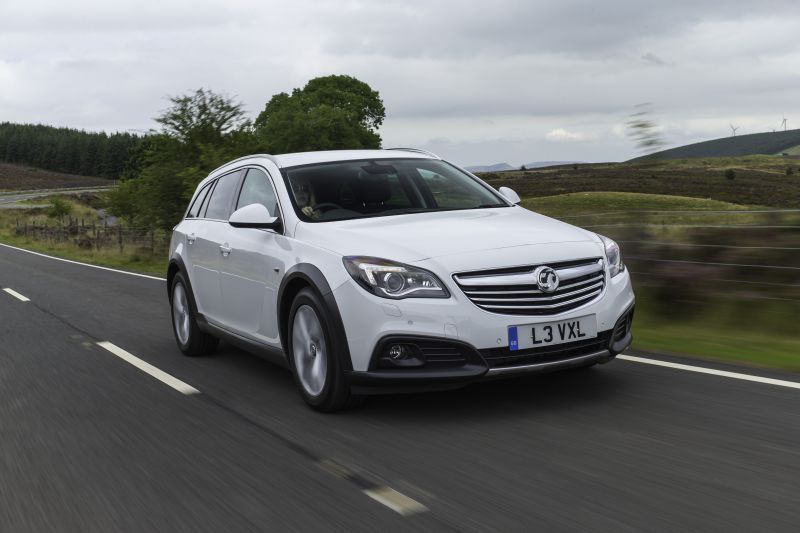
The Vauxhall Insignia I Sports Tourer (facelift 2013) 2.0 CDTi ecoFlex (140 Hp) Start/Stop: A European Mid-Size Workhorse
The Vauxhall Insignia I Sports Tourer, specifically the facelifted model introduced in 2013, represents a significant player in the European D-segment, also known as the mid-size family car market. While the Vauxhall brand is primarily recognized in the United Kingdom, this vehicle is essentially a rebadged Opel Insignia sold across mainland Europe. This particular variant, the 2.0 CDTi ecoFlex with 140 horsepower and a Start/Stop system, highlights the focus on fuel efficiency and practicality that characterized the segment during its production run from 2013 to 2015. As a station wagon (referred to as an “estate” in Europe), it offered a compelling blend of spaciousness, comfort, and economical diesel performance tailored to the demands of European families and fleet buyers.
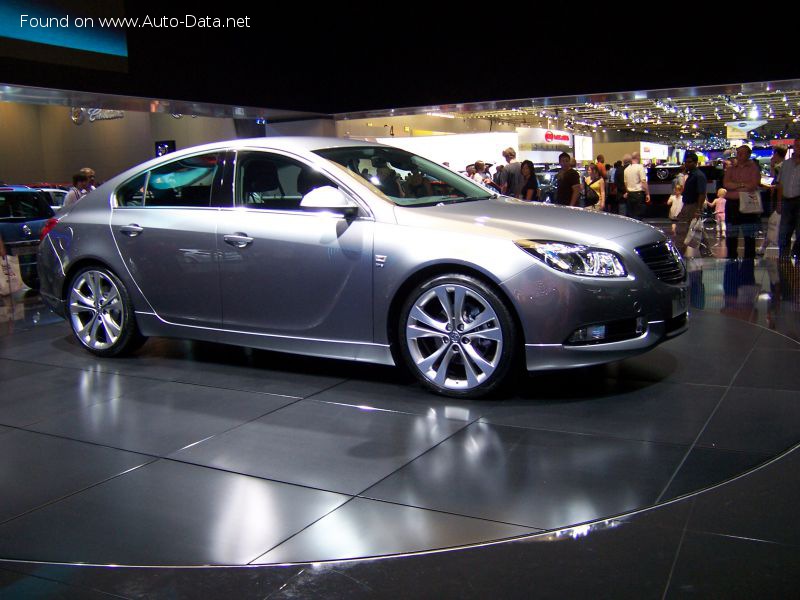
The Insignia I generation, originally launched in 2008, marked a departure from its Vectra predecessor with a more upscale design and improved driving dynamics. The 2013 facelift brought a host of refinements, including updated styling cues, enhanced interior materials, and crucially, a range of more efficient powertrains like the 2.0 CDTi ecoFlex. This model was designed to compete fiercely against established rivals such as the Ford Mondeo, Volkswagen Passat, and Skoda Superb, offering a distinctly British flavor under the Vauxhall badge within the larger General Motors (GM) global portfolio at the time.
Engine & Performance: The 2.0 CDTi ecoFlex Powertrain
At the heart of this particular Vauxhall Insignia I Sports Tourer lies the 2.0-liter (1,956 cubic inches) CDTi ecoFlex diesel engine, designated with the A20DTE code. This inline four-cylinder unit, featuring a DOHC valvetrain with four valves per cylinder, was engineered for a balance of usable power and exceptional fuel economy. Equipped with a turbocharger and intercooler, it produced a respectable 140 horsepower at 4,000 rpm. More significantly for daily driving and load-hauling, the engine delivered a robust 258.15 lb-ft of torque across a broad and accessible rev range, from 1,750 to 2,500 rpm. This ample torque ensured strong acceleration and effortless cruising, even when fully loaded.
Power was sent to the front wheels via a smooth-shifting 6-speed manual transmission, a common and preferred setup for efficiency and driver engagement in the European market. The ecoFlex designation, coupled with the standard Start/Stop system, underscored Vauxhall’s commitment to reducing fuel consumption and emissions. This technology automatically shuts off the engine when the vehicle is stationary and restarts it seamlessly when the clutch is engaged, significantly improving urban fuel economy. The Insignia 2.0 CDTi ecoFlex achieved impressive combined fuel consumption figures of 60.3 US mpg (3.9 l/100 km), with extra-urban figures soaring to 67.2 US mpg (3.5 l/100 km). With CO2 emissions of just 104 g/km, it met the Euro 5 emission standard, making it an environmentally conscious choice for its era.
In terms of performance, the Insignia Sports Tourer 2.0 CDTi ecoFlex was no slouch, despite its focus on efficiency. It could accelerate from 0 to 60 mph in a respectable 10.4 seconds and reach a top speed of 124.27 mph (200 km/h). These figures positioned it well within its class, offering sufficient performance for highway travel and overtaking maneuvers, while still maintaining its economical credentials.
Design & Features: Practicality Meets Refinement
The Vauxhall Insignia I Sports Tourer (facelift 2013) presented a sleek and aerodynamic exterior design for a station wagon, challenging the traditionally boxy perception of the body type. Measuring 193.43 inches in length, 73.07 inches in width (82.05 inches including mirrors), and 59.57 inches in height, it offered a substantial road presence. The 107.76-inch wheelbase contributed to a stable ride and generous interior space. The facelift introduced subtle but effective changes, including revised front and rear fascias, updated lighting signatures, and new wheel designs, lending it a more contemporary look.
Inside, the Insignia Sports Tourer was designed with practicality and comfort in mind for five occupants. The cabin received a significant refresh with the facelift, featuring higher-quality materials, a redesigned center console, and an improved infotainment system, though specific details of the latter are not provided in the technical data. The primary appeal of the Sports Tourer body style was its cargo versatility. It offered a substantial 19.07 cubic feet (540 liters) of trunk space with all seats in place, expanding to a cavernous 54.03 cubic feet (1,530 liters) when the rear seats were folded down. This made it an ideal vehicle for families requiring ample luggage capacity or for those who frequently transported larger items.
Safety features for the 2013 model year included standard Anti-lock Braking System (ABS), and given its segment and era, it would have been equipped with a comprehensive suite of airbags and electronic stability control, though these specific items are not detailed in the provided data. The suspension setup, with an independent MacPherson strut design at the front and an independent multi-link system at the rear, provided a comfortable ride and competent handling, further enhanced by the large 225/55 R17 tires. Braking was handled by ventilated discs at the front and disc brakes at the rear, ensuring confident stopping power.
Technical Specifications: Vauxhall Insignia I Sports Tourer (facelift 2013) 2.0 CDTi ecoFlex (140 Hp) Start/Stop
| Category | Specification | US Equivalent / Notes |
|---|---|---|
| General Information | ||
| Brand | Vauxhall | (Opel in mainland Europe) |
| Model | Insignia I Sports Tourer (facelift 2013) | |
| Type (Engine) | 2.0 CDTi ecoFlex (140 Hp) Start/Stop | |
| Production Years | 2013 – 2015 | |
| Powertrain Architecture | Internal Combustion Engine | |
| Body Type | Station wagon (estate) | 5 Doors, 5 Seats |
| Performance Specifications | ||
| Fuel Consumption (Urban) | 4.7 l/100 km | 50 US mpg |
| Fuel Consumption (Extra Urban) | 3.5 l/100 km | 67.2 US mpg |
| Fuel Consumption (Combined) | 3.9 l/100 km | 60.3 US mpg |
| CO2 Emissions | 104 g/km | |
| Fuel Type | Diesel | |
| Acceleration 0-60 mph | 10.4 sec | (Calculated by Auto-Data.net) |
| Maximum Speed | 200 km/h | 124.27 mph |
| Emission Standard | Euro 5 | |
| Weight-to-Power Ratio | 12.4 kg/Hp | 27.34 lbs/Hp |
| Weight-to-Torque Ratio | 5 kg/Nm | 11.02 lbs/lb-ft |
| Engine Specifications | ||
| Power | 140 Hp @ 4000 rpm | |
| Power per liter | 71.6 Hp/l | |
| Torque | 350 Nm @ 1750-2500 rpm | 258.15 lb-ft @ 1750-2500 rpm |
| Engine Layout | Front, Transverse | |
| Engine Model/Code | A20DTE | |
| Engine Displacement | 1956 cm3 | 119.36 cu. in. (2.0 Liters) |
| Number of Cylinders | 4 | Inline configuration |
| Cylinder Bore | 83 mm | 3.27 in. |
| Piston Stroke | 90.4 mm | 3.56 in. |
| Valves per Cylinder | 4 | |
| Fuel Injection System | Diesel Commonrail | |
| Engine Aspiration | Turbocharger, Intercooler | |
| Valvetrain | DOHC | |
| Engine Oil Capacity | 4.5 l | 4.76 US qt |
| Coolant Capacity | 9 l | 9.51 US qt |
| Engine Systems | Start & Stop System, Particulate Filter | |
| Space, Volume and Weights | ||
| Kerb Weight | 1733 kg | 3820.61 lbs. |
| Max. Weight (GVWR) | 2300 kg | 5070.63 lbs. |
| Max Load | 567 kg | 1250.02 lbs. |
| Trunk Space (Min) | 540 l | 19.07 cu. ft. |
| Trunk Space (Max) | 1530 l | 54.03 cu. ft. |
| Fuel Tank Capacity | 70 l | 18.49 US gal |
| Permitted Trailer Load (with brakes) | 1600 kg | 3527.4 lbs. |
| Permitted Trailer Load (without brakes) | 750 kg | 1653.47 lbs. |
| Dimensions | ||
| Length | 4913 mm | 193.43 in. |
| Width | 1856 mm | 73.07 in. |
| Width (incl. mirrors) | 2084 mm | 82.05 in. |
| Height | 1513 mm | 59.57 in. |
| Wheelbase | 2737 mm | 107.76 in. |
| Front Overhang | 1020 mm | 40.16 in. |
| Rear Overhang | 1156 mm | 45.51 in. |
| Minimum Turning Circle | 11.4 m | 37.4 ft. |
| Drivetrain, Brakes and Suspension | ||
| Drivetrain Architecture | Front-wheel drive (ICE drives front wheels) | |
| Drive Wheel | Front-wheel drive | |
| Gearbox Type | 6-speed manual transmission | |
| Front Suspension | Independent, McPherson with coil spring and anti-roll bar | |
| Rear Suspension | Independent multi-link suspension | |
| Front Brakes | Ventilated discs | |
| Rear Brakes | Disc | |
| Assisting Systems | ABS (Anti-lock braking system) | |
| Tire Size | 225/55 R17 | |
| Wheel Rims Size | 17 inches | |
Legacy & Market Impact of the Vauxhall Insignia I Sports Tourer
The Vauxhall Insignia I Sports Tourer (facelift 2013) with the 2.0 CDTi ecoFlex engine carved out a significant niche in the highly competitive European mid-size segment. Its primary market was the UK, where Vauxhall has a strong brand presence, but its identical counterpart, the Opel Insignia, was a ubiquitous sight across the continent. This model was particularly popular with fleet buyers and families due to its compelling combination of low running costs, substantial cargo capacity, and a comfortable, refined driving experience.
In its competitive landscape, the Insignia Sports Tourer faced formidable rivals. The Ford Mondeo Estate (Fusion Sport in the US) offered sharp driving dynamics, while the Volkswagen Passat Variant was known for its build quality and understated sophistication. Other key competitors included the Skoda Superb Combi, which excelled in sheer interior space, and premium offerings like the BMW 3 Series Touring and Audi A4 Avant, against which the Insignia aimed to provide a more value-oriented, yet still stylish and capable, alternative. The Insignia’s design, which moved away from the more conservative lines of its predecessor, the Vectra, helped it stand out aesthetically.
The “ecoFlex” variant, with its emphasis on efficiency and lower CO2 emissions, was particularly well-suited to European tax structures and environmental regulations, making it an attractive proposition for both private and corporate buyers. The Start/Stop system, while common today, was a key differentiator for fuel economy in 2013, solidifying its reputation as a modern, responsible choice. Its robust 2.0-liter diesel engine provided a practical balance of power and economy, crucial for long-distance European travel and daily commuting.
Ultimately, the Vauxhall Insignia I Sports Tourer (facelift 2013) cemented Vauxhall’s position in the D-segment, demonstrating the brand’s ability to offer a sophisticated, practical, and efficient family vehicle. It contributed to the brand’s image as a provider of sensible, well-engineered cars that met the specific needs and preferences of the European market, particularly valuing low running costs and versatility. While it may not have been a high-performance icon, its enduring legacy lies in its role as a reliable, economical, and spacious workhorse that served countless families and businesses across the UK and Europe.