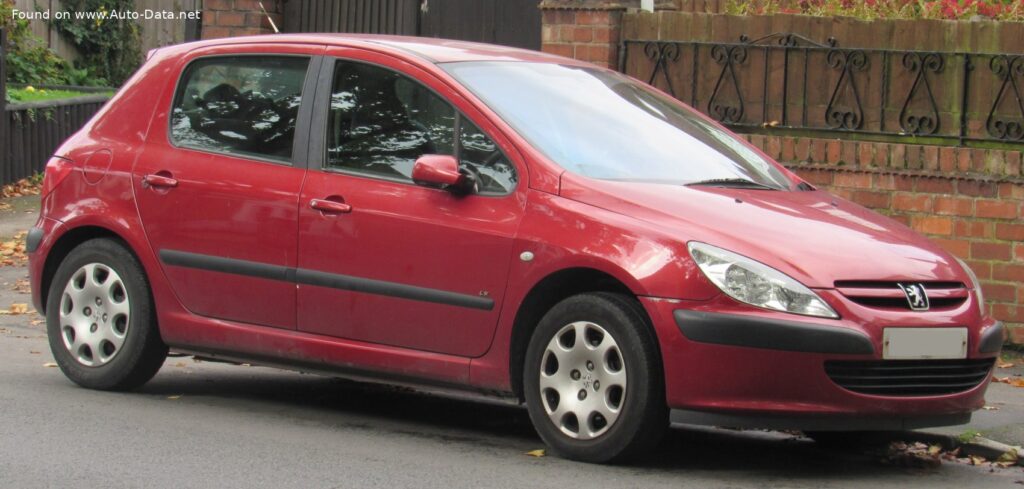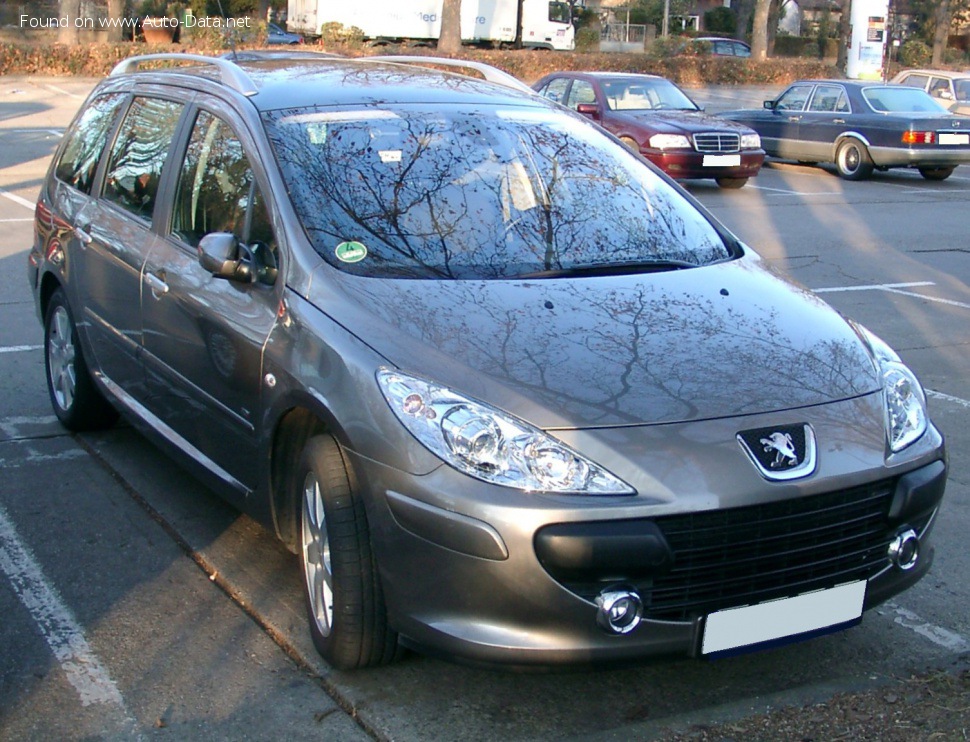
The Peugeot 307 Station Wagon (facelift 2005): A European Workhorse with Modern Diesel Power
The Peugeot 307, a prominent C-segment offering from the French automaker Peugeot, represented a significant evolution in the company’s compact car lineup. Launched in 2001, the 307 succeeded the popular 306, bringing a more spacious interior, a taller stance, and a renewed focus on safety and technology. In 2005, the 307 underwent a significant facelift, which introduced revised styling, updated interiors, and a host of mechanical enhancements. Among the most practical and widely appreciated variants was the Peugeot 307 Station Wagon (facelift 2005), particularly when equipped with the efficient and potent 2.0 HDi (136 Hp) diesel engine. This model carved out a strong niche in the competitive European and international markets, where demand for versatile, fuel-efficient family vehicles was consistently high. While never officially sold in the United States, the 307 Station Wagon exemplifies the robust engineering and design philosophies prevalent in European compact cars of its era, emphasizing practicality, economy, and driving refinement.
Engine and Performance: The 2.0 HDi (136 Hp) Powertrain
At the heart of the Peugeot 307 Station Wagon (facelift 2005)‘s appeal was its advanced 2.0 HDi engine, a direct-injection common rail diesel unit developed in collaboration with Ford. This particular iteration, producing a robust 136 horsepower at 4000 rpm, was a standout performer in its class. With an engine displacement of 1997 cubic centimeters (121.86 cubic inches), this inline four-cylinder engine, designated RHR DW10BTED4, featured a sophisticated 16-valve cylinder head (four valves per cylinder), optimizing airflow and combustion efficiency. The inclusion of a turbocharger and intercooler was crucial, providing a significant boost in power and, more importantly, a substantial torque output of 320 Nm (236.02 lb.-ft.) available at a low 2000 rpm. This ample torque at low engine speeds made the station wagon particularly well-suited for hauling families and cargo, offering effortless acceleration and strong pulling power, even when fully loaded or towing a trailer.
The powertrain architecture for this model was a front, transverse engine layout, driving the front wheels through a slick-shifting 6-speed manual transmission. This combination was lauded for its balance of performance and fuel economy. The 2.0 HDi engine was compliant with Euro 4 emission standards, reflecting Peugeot’s commitment to environmental responsibility at the time. Fuel consumption figures were highly competitive: an urban economy of 7.3 liters per 100 km (32.2 US mpg), an extra-urban figure of 4.7 liters per 100 km (50 US mpg), and a combined rating of 5.6 liters per 100 km (42 US mpg). These numbers, coupled with CO2 emissions of 148 g/km, highlighted the vehicle’s efficiency credentials, making it an economical choice for long-distance travel and daily commuting across Europe. The weight-to-power ratio stood at 11.6 kg/Hp (86.3 Hp/tonne), demonstrating a healthy power output for its curb weight of 3472.28 lbs. (1575 kg).
Design and Features: Practicality and Refinement
The Peugeot 307 Station Wagon (facelift 2005) embodied the quintessential European compact estate car. Its body type, a traditional station wagon (often referred to as an “estate” in Europe), featured five doors and comfortably seated five occupants. The facelift introduced a more aggressive front fascia, characterized by a larger grille and restyled headlights, aligning its aesthetics with newer Peugeot models like the 407. The overall design language was one of practicality blended with a touch of French elegance.
Dimensions-wise, the 307 Station Wagon was a substantial vehicle for its class, measuring 174.33 inches (4428 mm) in length, 69.37 inches (1762 mm) in width, and a height ranging from 61.42 to 62.2 inches (1560-1580 mm). A generous wheelbase of 106.61 inches (2708 mm) contributed significantly to interior space and ride comfort. The long wheelbase, combined with a relatively short front (34.96 inches) and rear (32.76 inches) overhang, maximized cabin volume and cargo capacity. The vehicle offered an impressive minimum trunk space of 18.36 cubic feet (520 liters), which could expand to a cavernous 78.08 cubic feet (2211 liters) with the rear seats folded down, making it exceptionally versatile for family trips, sports equipment, or professional use.
Standard features for a car of its vintage and market segment included power steering (rack and pinion type), and critical safety systems such as ABS (Anti-lock Braking System). Braking performance was handled by ventilated discs at the front and solid discs at the rear, providing confident stopping power. The robust construction allowed for a maximum permitted trailer load with brakes of 3306.93 lbs. (1500 kg), further emphasizing its utility.
Technical Specifications: Peugeot 307 Station Wagon (facelift 2005) 2.0 HDi (136 Hp)
| Category | Specification |
|---|---|
| Brand | Peugeot |
| Model | 307 |
| Generation | 307 Station Wagon (facelift 2005) |
| Type (Engine) | 2.0 HDi (136 Hp) |
| Production Start | 2005 |
| Production End | 2008 |
| Powertrain Architecture | Internal Combustion engine |
| Body type | Station wagon (estate) |
| Seats | 5 |
| Doors | 5 |
| Performance Specs | |
| Fuel consumption (urban) | 7.3 l/100 km (32.2 US mpg) |
| Fuel consumption (extra urban) | 4.7 l/100 km (50 US mpg) |
| Fuel consumption (combined) | 5.6 l/100 km (42 US mpg) |
| CO2 emissions | 148 g/km |
| Fuel Type | Diesel |
| Emission standard | Euro 4 |
| Weight-to-power ratio | 11.6 kg/Hp (86.3 Hp/tonne) |
| Weight-to-torque ratio | 4.9 kg/Nm (203.2 Nm/tonne) |
| Engine Specs | |
| Power | 136 Hp @ 4000 rpm |
| Power per liter | 68.1 Hp/l |
| Torque | 320 Nm (236.02 lb.-ft.) @ 2000 rpm |
| Engine layout | Front, Transverse |
| Engine Model/Code | RHR DW10BTED4 |
| Engine displacement | 1997 cm3 (121.86 cu. in.) |
| Number of cylinders | 4 |
| Engine configuration | Inline |
| Cylinder Bore | 85 mm (3.35 in.) |
| Piston Stroke | 88 mm (3.46 in.) |
| Number of valves per cylinder | 4 |
| Fuel injection system | Diesel Commonrail |
| Engine aspiration | Turbocharger, Intercooler |
| Engine oil capacity | 5.25 l (5.55 US qt) |
| Coolant capacity | 8.1 l (8.56 US qt) |
| Space, Volume and Weights | |
| Kerb Weight | 1575 kg (3472.28 lbs.) |
| Max. weight | 2080 kg (4585.62 lbs.) |
| Max load | 505 kg (1113.33 lbs.) |
| Trunk (boot) space – minimum | 520 l (18.36 cu. ft.) |
| Trunk (boot) space – maximum | 2211 l (78.08 cu. ft.) |
| Fuel tank capacity | 60 l (15.85 US gal) |
| Permitted trailer load with brakes (12%) | 1500 kg (3306.93 lbs.) |
| Permitted trailer load without brakes | 750 kg (1653.47 lbs.) |
| Dimensions | |
| Length | 4428 mm (174.33 in.) |
| Width | 1762 mm (69.37 in.) |
| Height | 1560-1580 mm (61.42 – 62.2 in.) |
| Wheelbase | 2708 mm (106.61 in.) |
| Front track | 1505 mm (59.25 in.) |
| Rear (Back) track | 1510 mm (59.45 in.) |
| Front overhang | 888 mm (34.96 in.) |
| Rear overhang | 832 mm (32.76 in.) |
| Drivetrain, Brakes and Suspension Specs | |
| Drivetrain Architecture | Front-wheel drive, Internal Combustion Engine (ICE) |
| Drive wheel | Front wheel drive |
| Number of gears and type of gearbox | 6 gears, manual transmission |
| Front brakes | Ventilated discs |
| Rear brakes | Disc |
| Assisting systems | ABS (Anti-lock braking system) |
| Steering type | Steering rack and pinion |
Legacy and Market Impact in the European Segment
The Peugeot 307 series, including the Station Wagon variant, played a crucial role in Peugeot’s strategy for the competitive European C-segment during the early to mid-2000s. While never making its way to North American showrooms, the Peugeot 307 Station Wagon (facelift 2005), particularly with its potent 2.0 HDi engine, was a formidable contender against rivals such as the Ford Focus Estate, Volkswagen Golf Variant, Opel Astra Caravan, and Renault Mégane Estate. Peugeot had a long-standing reputation for producing comfortable, practical, and stylish family cars, and the 307 Station Wagon continued this tradition.
Its market impact stemmed from several key factors. Firstly, its design, especially after the 2005 facelift, offered a contemporary aesthetic that appealed to a broad base of European consumers looking for a modern, yet functional, vehicle. Secondly, the spacious and adaptable interior, particularly the generous trunk space, made it a highly practical choice for families and those requiring significant cargo capacity. The ability to expand the trunk volume from 18.36 cubic feet to an impressive 78.08 cubic feet was a major selling point, rivaling vehicles from a segment above.
Perhaps most significantly, the 2.0 HDi (136 Hp) engine was a testament to Peugeot’s expertise in diesel technology. At a time when diesel engines were gaining immense popularity in Europe for their fuel efficiency and high torque output, this powertrain offered a compelling blend of performance and economy. It made the 307 Station Wagon not just a practical family car but also an enjoyable and economical long-distance cruiser. The Euro 4 compliance further cemented its position as a responsible choice in an increasingly environmentally conscious market.
The 307’s legacy is also tied to its contribution to the evolution of compact cars. It pushed boundaries in terms of interior volume, safety features (for its time), and the integration of advanced diesel powertrains into mainstream family vehicles. Although it faced stiff competition, the Peugeot 307 Station Wagon, particularly in its post-facelift 2.0 HDi guise, remains a respected example of European automotive engineering, valued for its practicality, efficiency, and comfortable driving experience. Its success paved the way for future Peugeot models in the compact segment, leaving a lasting impression on the landscape of European family transportation.