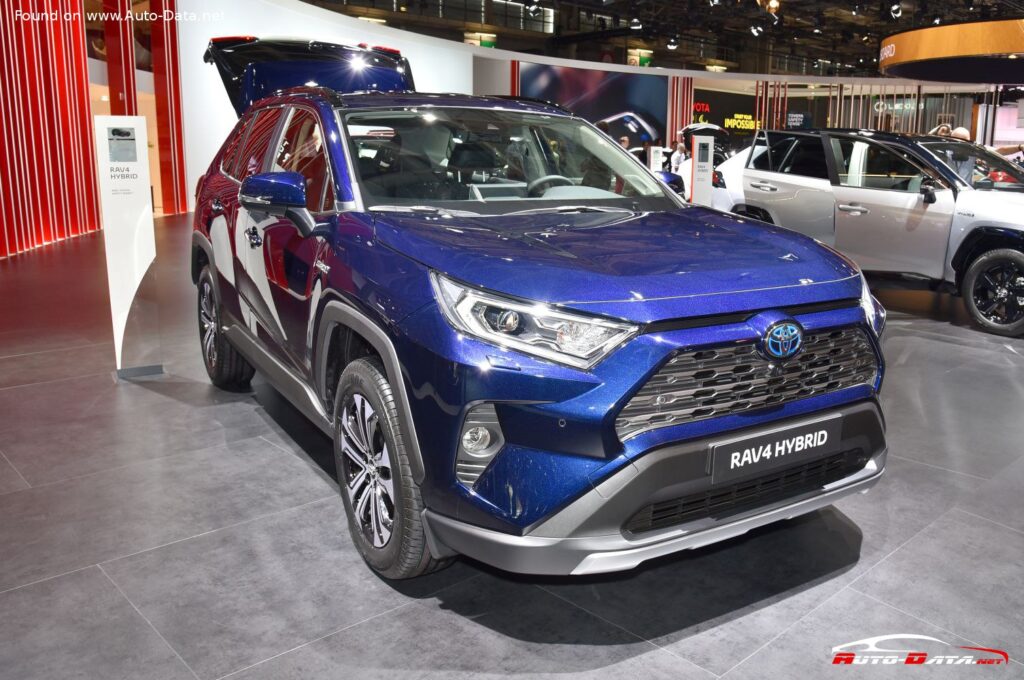
Introduction: The Toyota RAV4 V 2.5 (218 Hp) Hybrid e-CVT
The fifth-generation Toyota RAV4, specifically the 2.5 (218 Hp) Hybrid e-CVT variant, represents a significant evolution in the compact SUV segment, building on a legacy of pioneering the crossover utility vehicle. Introduced in November 2018 and produced until September 2021, this iteration of the RAV4 cemented Toyota’s commitment to hybrid technology, offering an appealing blend of efficiency, practicality, and performance. As a Full Hybrid Electric Vehicle (FHEV), it leverages Toyota’s extensive experience in hybrid powertrains to deliver a compelling package for a global audience, particularly in markets prioritizing fuel economy and lower emissions. The Toyota RAV4 V 2.5 (218 Hp) Hybrid e-CVT variant quickly became a benchmark for hybrid SUVs, challenging competitors with its refined driving dynamics and impressive fuel efficiency.
The RAV4 V, built on the Toyota New Global Architecture (TNGA-K) platform, brought a more robust and angular design compared to its predecessors, signaling a departure towards a more adventurous and capable aesthetic. This generation was designed to appeal to a broad spectrum of buyers, from urban commuters to those seeking weekend adventures. Its five-door, five-seat SUV body type offered ample space and versatility, making it a popular choice for families and individuals alike. The integration of advanced hybrid technology, coupled with Toyota’s renowned reliability, positioned the RAV4 V 2.5 (218 Hp) Hybrid e-CVT as a formidable contender in a fiercely competitive market.
Engine & Performance: Powering the Toyota RAV4 V 2.5 (218 Hp) Hybrid e-CVT
Hybrid Powertrain Excellence
At the heart of the Toyota RAV4 V 2.5 (218 Hp) Hybrid e-CVT lies a sophisticated Full Hybrid Electric Vehicle (FHEV) powertrain. This system combines a potent 2.5-liter naturally aspirated inline-four gasoline engine with an electric motor, delivering a robust total system output of 218 horsepower. The internal combustion engine, designated A25A-FXS, produces 177 horsepower at 6000 rpm and 163 lb-ft of torque at 4400 rpm. This engine features both direct and multi-port manifold injection, along with a DOHC valvetrain, optimized for efficiency and smooth power delivery. With a high compression ratio of 14:1, it exemplifies modern engine design focused on thermal efficiency.
The electric motor, a synchronous type, contributes an additional 120 horsepower and a substantial 148.99 lb-ft of torque. Integrated directly into the transmission, this motor works seamlessly with the gasoline engine, driving the front wheels. Power is managed through an electronically controlled continuously variable transmission (e-CVT), which provides smooth and linear acceleration without traditional gear shifts. The hybrid system is powered by a 244.8V Nickel-metal hydride (NiMH) battery, strategically located under the rear seats to optimize weight distribution and interior space.
This intelligent powertrain architecture allows the RAV4 Hybrid to operate in various modes: pure electric at low speeds, gasoline-only for higher demands, or a combination of both for optimal performance and efficiency. The result is an impressive acceleration from 0 to 60 mph in a swift 8 seconds, with a top speed electronically limited to 111.85 mph (180 km/h). More importantly for a hybrid, the fuel economy figures are outstanding. The combined fuel consumption is rated at 51.1-52.3 US mpg (4.5-4.6 l/100 km), with urban consumption ranging from 50-53.5 US mpg. These figures, coupled with low CO2 emissions of 102-105 g/km, highlight the RAV4 Hybrid’s environmental consciousness and cost-saving potential. It meets the stringent Euro 6d-temp emission standard, demonstrating its commitment to cleaner motoring.
Design & Features: The Modern SUV Aesthetic
Exterior and Interior Design
The fifth-generation Toyota RAV4, including the 2.5 (218 Hp) Hybrid e-CVT model, presented a bold and rugged exterior design that departed from the softer lines of its predecessors. Its muscular stance, characterized by sharp creases, prominent wheel arches, and an assertive front grille, gave it a more commanding road presence. Measuring 181.1 inches (4600 mm) in length, 73.03 inches (1855 mm) in width, and 66.34 inches (1685 mm) in height, with a wheelbase of 105.91 inches (2690 mm), the RAV4 V strikes a balance between compact maneuverability and substantial interior volume. A ground clearance of 7.48 inches (190 mm) further enhances its utility, allowing for confident navigation over varied terrain, while its drag coefficient of 0.32 indicates a well-tuned aerodynamic profile.
Inside, the RAV4 V offers a modern and well-appointed cabin designed for comfort and practicality. With seating for five occupants across two rows, the interior provides ample headroom and legroom, even for adult passengers. The emphasis on high-quality materials and intuitive controls creates a pleasant driving environment. Cargo versatility is a strong suit, with a minimum trunk space of 20.48 cubic feet (580 liters) that expands to an impressive 59.68 cubic feet (1690 liters) with the rear seats folded down, making it highly adaptable for various hauling needs. The fuel tank capacity of 14.53 US gallons (55 liters) complements its excellent fuel economy, allowing for extended driving ranges between fill-ups.
Chassis and Safety
The RAV4 V’s robust construction and sophisticated chassis contribute to its stable and comfortable ride. It features an independent McPherson type front suspension and a double wishbone rear suspension, providing a refined balance of handling and ride quality. Braking performance is handled by ventilated discs at the front (328 mm) and solid discs at the rear (317 mm), ensuring confident stopping power, augmented by an Anti-lock Braking System (ABS). The electric power steering system, with a rack and pinion setup, offers precise control and ease of maneuverability, particularly in urban settings, aided by a minimum turning circle of 36.09 feet (11 meters).
Safety was a paramount concern for the fifth-generation RAV4. While specific safety features like advanced driver-assistance systems (ADAS) are not detailed in the provided data, it’s characteristic of modern Toyota vehicles, especially those from this era, to come equipped with a comprehensive suite of safety technologies. These typically include pre-collision systems, lane departure alerts, adaptive cruise control, and multiple airbags, all contributing to high safety ratings and peace of mind for occupants. The vehicle’s kerb weight ranging from 3505.35 to 3703.77 lbs (1590-1680 kg) and a maximum permissible weight of 4706.87 lbs (2135 kg) underscore its solid build quality.
Technical Specifications: Toyota RAV4 V 2.5 (218 Hp) Hybrid e-CVT
| Category | Specification |
|---|---|
| General Information | |
| Brand | Toyota |
| Model | RAV4 |
| Generation | RAV4 V |
| Type (Engine) | 2.5 (218 Hp) Hybrid e-CVT |
| Start of Production | November, 2018 |
| End of Production | September, 2021 |
| Powertrain Architecture | FHEV (Full Hybrid Electric Vehicle) |
| Body Type | SUV |
| Seats | 5 |
| Doors | 5 |
| Performance Specs | |
| System Power | 218 Hp |
| Acceleration 0 – 60 mph | 8.0 sec |
| Acceleration 0 – 100 km/h | 8.4 sec |
| Maximum Speed | 111.85 mph (180 km/h) |
| Fuel Type | Petrol (Gasoline) |
| Fuel Consumption (Urban) | 53.5 – 50 US mpg (4.4-4.7 l/100 km) |
| Fuel Consumption (Extra Urban) | 50 US mpg (4.7 l/100 km) |
| Fuel Consumption (Combined) | 52.3 – 51.1 US mpg (4.5-4.6 l/100 km) |
| CO2 Emissions | 102-105 g/km |
| Emission Standard | Euro 6d-temp |
| Weight-to-Power Ratio | 7.3 kg/Hp, 137.1 Hp/tonne |
| Weight-to-Torque Ratio | 7.2 kg/Nm, 139 Nm/tonne |
| Internal Combustion Engine Specs | |
| Power | 177 Hp @ 6000 rpm |
| Torque | 163 lb.-ft. @ 4400 rpm (221 Nm @ 4400 rpm) |
| Engine Layout | Front, Transverse |
| Engine Model/Code | A25A-FXS |
| Engine Displacement | 2487 cm3 (151.77 cu. in.) |
| Number of Cylinders | 4 |
| Engine Configuration | Inline |
| Cylinder Bore | 3.44 in. (87.5 mm) |
| Piston Stroke | 4.07 in. (103.48 mm) |
| Compression Ratio | 14:1 |
| Number of Valves per Cylinder | 4 |
| Fuel Injection System | Direct injection and Multi-port manifold injection |
| Engine Aspiration | Naturally aspirated engine |
| Valvetrain | DOHC |
| Engine Oil Capacity | 4.76 US qt (4.5 l) |
| Coolant Capacity | 7.08 US qt (6.7 l) |
| Engine Systems | Particulate filter |
| Electric Cars and Hybrids Specs | |
| Battery Voltage | 244.8 V |
| Battery Technology | Nickel-metal hydride (NiMH) |
| Battery Location | Under the rear seats |
| Electric Motor Power | 120 Hp |
| Electric Motor Torque | 148.99 lb.-ft. (202 Nm) |
| Electric Motor Location | Integrated into the transmission |
| Electric Motor Type | Synchronous |
| Space, Volume and Weights | |
| Kerb Weight | 3505.35 – 3703.77 lbs. (1590-1680 kg) |
| Max. Weight (GVWR) | 4706.87 lbs. (2135 kg) |
| Max Load | 1003.1 – 1201.52 lbs. (455-545 kg) |
| Trunk (Boot) Space – Minimum | 20.48 cu. ft. (580 l) |
| Trunk (Boot) Space – Maximum | 59.68 cu. ft. (1690 l) |
| Fuel Tank Capacity | 14.53 US gal (55 l) |
| Permitted Trailer Load with Brakes (12%) | 1763.7 lbs. (800 kg) |
| Permitted Trailer Load without Brakes | 1653.47 lbs. (750 kg) |
| Dimensions | |
| Length | 181.1 in. (4600 mm) |
| Width | 73.03 in. (1855 mm) |
| Height | 66.34 in. (1685 mm) |
| Wheelbase | 105.91 in. (2690 mm) |
| Front Track | 63.39 in. (1610 mm) |
| Rear Track | 64.57 in. (1640 mm) |
| Front Overhang | 36.42 in. (925 mm) |
| Rear Overhang | 38.78 in. (985 mm) |
| Ride Height (Ground Clearance) | 7.48 in. (190 mm) |
| Drag Coefficient (Cd) | 0.32 |
| Minimum Turning Circle (Turning Diameter) | 36.09 ft. (11 m) |
| Approach Angle | 17.5° |
| Departure Angle | 20° |
| Drivetrain, Brakes and Suspension Specs | |
| Drivetrain Architecture | The Internal combustion engine (ICE) and electric motor drive the front wheels of the car with the ability to work in full electric or mixed mode. |
| Drive Wheel | Front wheel drive |
| Number of Gears and Type of Gearbox | Automatic transmission e-CVT |
| Front Suspension | Independent type McPherson |
| Rear Suspension | Double wishbone |
| Front Brakes | Ventilated discs, 328 mm |
| Rear Brakes | Disc, 317 mm |
| Assisting Systems | ABS (Anti-lock braking system) |
| Steering Type | Steering rack and pinion |
| Power Steering | Electric Steering |
| Tires Size | 225/65 R17; 225/60 R18 |
| Wheel Rims Size | 7J x 17; 7J x 18 |
Legacy & Market Impact: The Enduring Influence of the Toyota RAV4 V 2.5 (218 Hp) Hybrid e-CVT
The Toyota RAV4 V 2.5 (218 Hp) Hybrid e-CVT played a pivotal role in solidifying Toyota’s dominance in the compact SUV segment, particularly in the burgeoning hybrid market. From its inception in 1994, the RAV4 has consistently been a trailblazer, effectively creating and then defining the crossover SUV category. The fifth generation, with its strong emphasis on hybrid powertrains, further cemented this legacy, proving that efficiency and practicality could coexist with appealing design and capable performance. Its production run from late 2018 to late 2021 saw it become one of the best-selling SUVs globally, often topping sales charts in North America and Europe.
In its primary markets, the RAV4 Hybrid competed fiercely against a growing number of hybrid and traditional compact SUVs. Key rivals included the Honda CR-V Hybrid, Ford Escape Hybrid, Hyundai Tucson Hybrid, Kia Sportage Hybrid, and Nissan Rogue. What set the RAV4 Hybrid apart was its proven track record of reliability, exceptional fuel economy, and the refinement of Toyota’s FHEV system. While other manufacturers were catching up, Toyota’s decades of experience in hybrid technology gave the RAV4 a distinct advantage in public perception and real-world performance. Its ability to deliver over 50 US mpg in combined driving conditions was a significant draw for consumers looking to reduce their fuel costs and environmental footprint.
Beyond its sales success, the RAV4 V 2.5 (218 Hp) Hybrid e-CVT had a substantial historical significance. It demonstrated that a full hybrid system could be integrated into a mainstream, high-volume SUV without compromising on space, utility, or affordability. It helped normalize hybrid technology, making it a desirable and accessible option for a wider demographic. The robust design and advanced safety features also contributed to its reputation as a safe and dependable family vehicle. The NiMH battery technology, while not as energy-dense as newer lithium-ion units, was chosen for its proven durability and cost-effectiveness, aligning with Toyota’s philosophy of long-term reliability.
The market impact of this generation of RAV4 Hybrid extended beyond direct competition. It pushed other automakers to accelerate their own hybrid and electrified SUV programs, contributing to the broader shift towards more sustainable transportation. Its balance of power, efficiency, and SUV utility made it a benchmark against which new entrants were often measured. Even after its production ended in 2021, replaced by updated models within the same generation, its influence continued, solidifying the RAV4’s position as an icon in the automotive landscape and a testament to Toyota’s forward-thinking approach to electrification. The RAV4 V Hybrid wasn’t just another SUV; it was a statement of intent, proving that green technology could be both practical and immensely popular.