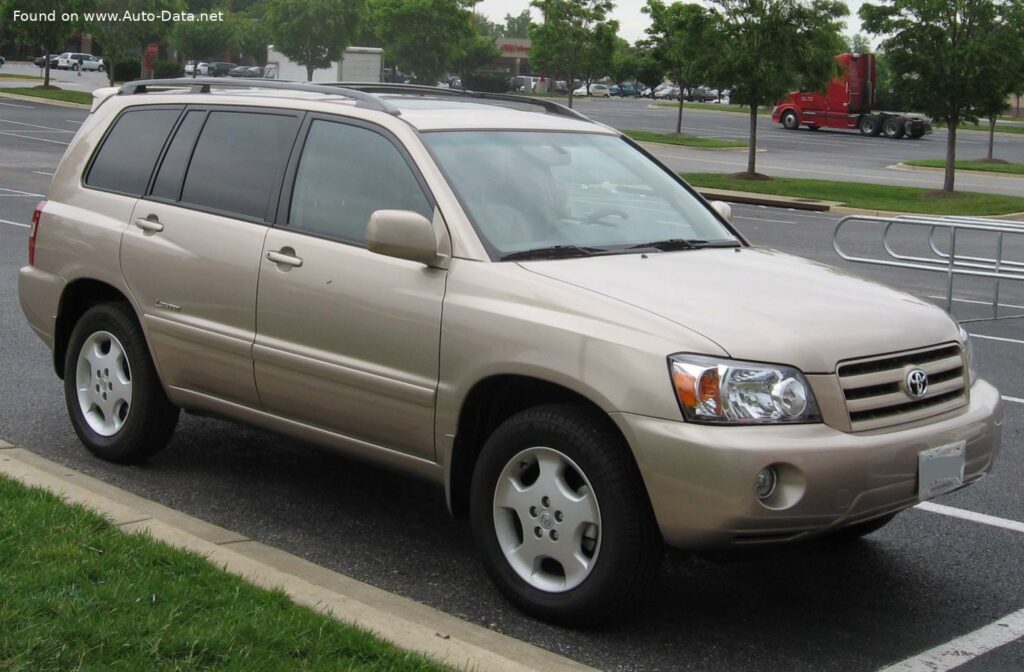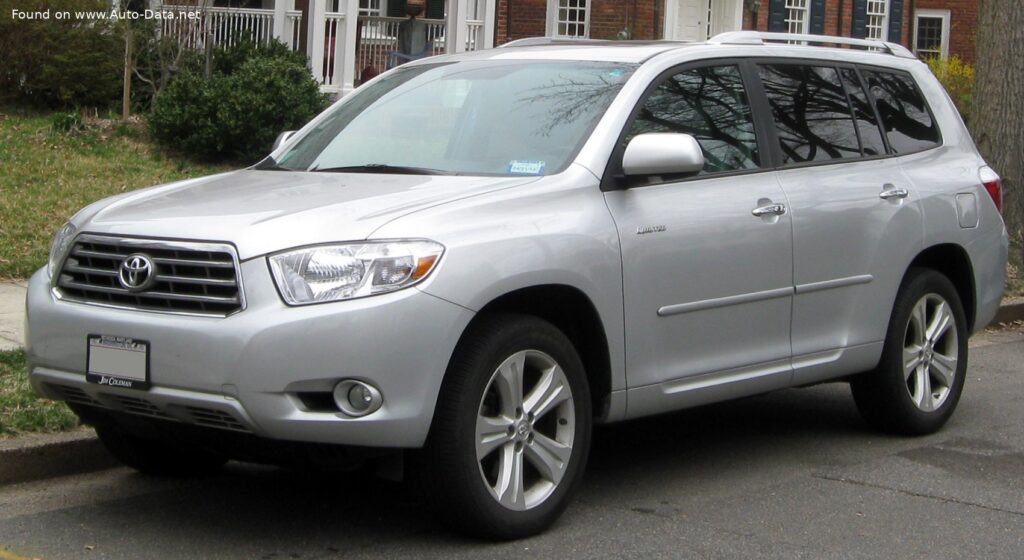
Toyota Highlander II 3.5 V6 (273 Hp) Automatic: A Pillar of the Mid-Size SUV Segment
The Toyota Highlander, introduced in 2000, quickly established itself as a formidable contender in the burgeoning mid-size SUV segment, particularly within the North American market. The second generation, known as the Highlander II, built upon this success, offering a refined blend of family-friendly practicality, comfortable ride quality, and robust performance. Produced from 2007 to 2013, the Toyota Highlander II 3.5 V6 (273 Hp) Automatic variant represented the pinnacle of its powertrain offerings, providing a compelling package for buyers seeking a versatile and reliable three-row crossover SUV.
Positioned as a car-based SUV (crossover) rather than a traditional body-on-frame truck, the Highlander II aimed to deliver a smoother, more car-like driving experience while retaining much of the utility and elevated driving position that SUV buyers desired. This particular configuration, with its powerful V6 engine and automatic transmission, was designed to cater to families needing ample space, towing capability, and confident acceleration for highway cruising and daily errands, cementing its reputation as a go-to choice for suburbanites across the United States.
Engine & Performance: The Heart of the Toyota Highlander II 3.5 V6 (273 Hp) Automatic
At the core of the Highlander II’s appeal, especially in its higher trim levels, was the potent 3.5-liter V6 engine, designated by Toyota as the 2GR-FE. This naturally aspirated, all-aluminum powerplant was a hallmark of Toyota’s engineering prowess, known for its smooth operation, impressive power delivery, and legendary reliability. Featuring a DOHC (Dual Overhead Camshaft) valvetrain with four valves per cylinder and multi-port manifold injection, the engine was designed for optimal efficiency and responsiveness across the rev range.
The 3.5-liter V6 produced a robust 273 horsepower at 6200 rpm, providing ample thrust for any driving situation, from merging onto busy freeways to hauling a full complement of passengers and cargo. Torque output was equally impressive, peaking at 248.56 lb.-ft. at 4700 rpm, ensuring strong low-end and mid-range pulling power. This combination allowed the Highlander II to accelerate from 0 to 60 mph in a swift 7.8 seconds, a respectable figure for a vehicle of its size and class. Its maximum speed was electronically limited to 111.85 mph, typical for family-oriented SUVs.
Power was delivered to the front wheels via a smooth and responsive 5-speed automatic transmission. While some competitors were moving towards 6-speed or continuously variable transmissions, Toyota’s proven 5-speed unit offered a good balance of durability and efficiency for the era. The front-wheel-drive (FWD) architecture contributed to better fuel economy and lighter weight compared to all-wheel-drive variants, making it an attractive option for those primarily driving in milder climates. Fuel economy figures for the FWD model were competitive: 18 US mpg in urban driving, 24 US mpg on the highway, and a combined rating of 19.6 US mpg. The vehicle ran on standard gasoline and met the Euro 4 emission standard, reflecting its environmental considerations for its time.
Design & Features of the Toyota Highlander II
The second-generation Toyota Highlander underwent a significant redesign, moving away from the somewhat boxy aesthetic of its predecessor towards a more modern, rounded, and substantial presence. As a 5-door SUV with seating for up to seven occupants, it prioritized interior space and versatility. Its exterior dimensions – 188.39 inches in length, 75.2 inches in width, and 69.29 inches in height, with a wheelbase of 109.84 inches – placed it squarely in the mid-size crossover category, offering a compelling alternative to both larger SUVs and minivans.
The design language of the Highlander II was characterized by smooth lines, a prominent grille, and well-integrated headlights, giving it a sophisticated yet rugged appearance. The elevated ground clearance of 8.11 inches hinted at its capability for light off-road excursions or navigating challenging weather conditions, though its primary focus remained on paved roads.
Inside, the Highlander II was engineered for family comfort and practicality. The standard seven-seat configuration, featuring a removable second-row center seat (allowing for captain’s chairs or a bench), was a highly praised feature, offering flexibility for passenger and cargo needs. When the third row was in use, trunk space was a modest 10.31 cubic feet, but with the second and third rows folded flat, cargo capacity expanded dramatically to an impressive 80.59 cubic feet, making it capable of hauling large items. Storage solutions were plentiful throughout the cabin, catering to the demands of family travel.
Suspension components were designed for a comfortable and composed ride. The front featured an independent McPherson strut setup with coil springs and an anti-roll bar, while the rear utilized an independent coil spring suspension. This configuration contributed to its car-like handling characteristics and mitigated body roll. Braking was handled by disc brakes on all four wheels, ensuring confident stopping power. The vehicle came equipped with 245/55 R19 tires on 19-inch wheel rims, providing a good balance of grip and ride comfort.
Technical Specifications
| Category | Specification |
|---|---|
| General Information | |
| Brand | Toyota |
| Model | Highlander II |
| Type (Engine) | 3.5 V6 (273 Hp) Automatic |
| Production Start | 2007 |
| Production End | 2013 |
| Powertrain Architecture | Internal Combustion engine |
| Body Type | SUV |
| Seats | 7 |
| Doors | 5 |
| Performance Specs | |
| Fuel Consumption (Urban) | 13.1 l/100 km (18 US mpg) |
| Fuel Consumption (Extra Urban) | 9.8 l/100 km (24 US mpg) |
| Fuel Consumption (Combined) | 12 l/100 km (19.6 US mpg) |
| Fuel Type | Petrol (Gasoline) |
| Acceleration 0 – 60 mph | 7.8 sec |
| Maximum Speed | 111.85 mph (180 km/h) |
| Emission Standard | Euro 4 |
| Weight-to-Power Ratio | 6.6 kg/Hp |
| Weight-to-Torque Ratio | 5.4 kg/Nm |
| Engine Specs | |
| Power | 273 Hp @ 6200 rpm |
| Power per Liter | 79 Hp/l |
| Torque | 248.56 lb.-ft. @ 4700 rpm (337 Nm) |
| Engine Layout | Front, Transverse |
| Engine Model/Code | 2GR-FE |
| Engine Displacement | 3.5 l (210.9 cu. in. / 3456 cm3) |
| Number of Cylinders | 6 |
| Engine Configuration | V-engine |
| Cylinder Bore | 3.7 in. (94 mm) |
| Piston Stroke | 3.27 in. (83 mm) |
| Compression Ratio | 10.8:1 |
| Valves per Cylinder | 4 |
| Fuel Injection System | Multi-port manifold injection |
| Engine Aspiration | Naturally aspirated |
| Valvetrain | DOHC |
| Engine Oil Capacity | 6.45 US qt (6.1 l) |
| Coolant Capacity | 9.3 US qt (8.8 l) |
| Space, Volume and Weights | |
| Kerb Weight | 3979.34 lbs. (1805 kg) |
| Max. Weight | 5800.36 lbs. (2631 kg) |
| Max Load | 1821.02 lbs. (826 kg) |
| Trunk Space (Minimum) | 10.31 cu. ft. (292 l) |
| Trunk Space (Maximum) | 80.59 cu. ft. (2282 l) |
| Fuel Tank Capacity | 19.28 US gal (73 l) |
| Dimensions | |
| Length | 188.39 in. (4785 mm) |
| Width | 75.2 in. (1910 mm) |
| Height | 69.29 in. (1760 mm) |
| Wheelbase | 109.84 in. (2790 mm) |
| Front Track | 63.98 in. (1625 mm) |
| Rear Track | 63.98 in. (1625 mm) |
| Ride Height (Ground Clearance) | 8.11 in. (206 mm) |
| Drivetrain, Brakes and Suspension Specs | |
| Drivetrain Architecture | Internal combustion engine drives the front wheels |
| Drive Wheel | Front-wheel drive |
| Number of Gears & Type | 5 gears, automatic transmission |
| Front Suspension | Independent, McPherson with coil spring and anti-roll bar |
| Rear Suspension | Independent coil spring |
| Front Brakes | Disc |
| Rear Brakes | Disc |
| Tires Size | 245/55 R19 |
| Wheel Rims Size | 19 inches |
Legacy & Market Impact of the Toyota Highlander II
The Toyota Highlander II, particularly the 3.5 V6 (273 Hp) Automatic variant, carved out a significant niche in the highly competitive mid-size SUV market during its production run. Its primary market was undoubtedly North America, where it went head-to-head with formidable rivals such as the Honda Pilot, Chevrolet Traverse, Ford Explorer, Hyundai Santa Fe, and Nissan Murano. What set the Highlander apart was Toyota’s unwavering reputation for reliability, durability, and strong resale value, qualities highly prized by American consumers.
The Highlander II successfully bridged the gap between traditional, truck-based SUVs and the emerging minivan segment. Its unibody construction provided a more refined ride and better fuel efficiency than most traditional SUVs, while its available third-row seating offered much of the passenger-carrying capacity of a minivan, without the associated stigma for some buyers. This “just right” positioning made it incredibly appealing to families seeking a practical, safe, and comfortable daily driver that could handle school runs, grocery trips, and long road trips with equal aplomb.
The powerful 3.5-liter V6 engine played a crucial role in its market success, offering performance that felt confident and effortless, even when fully loaded. This responsiveness, combined with its comfortable and quiet interior, contributed to a premium feel that often exceeded its price point. Its independent suspension, front-wheel-drive architecture (with available all-wheel-drive options), and disc brakes all around ensured a predictable and safe driving experience.
Even after its replacement by the third-generation Highlander, the second-gen model maintained strong demand in the used car market, a testament to its enduring quality and Toyota’s brand cachet. Its legacy is one of a highly competent and trustworthy family vehicle that consistently delivered on its promises of reliability, versatility, and comfort. The Toyota Highlander II 3.5 V6 (273 Hp) Automatic remains a benchmark for what a well-executed mid-size crossover SUV should be, demonstrating Toyota’s keen understanding of the North American family vehicle market.