
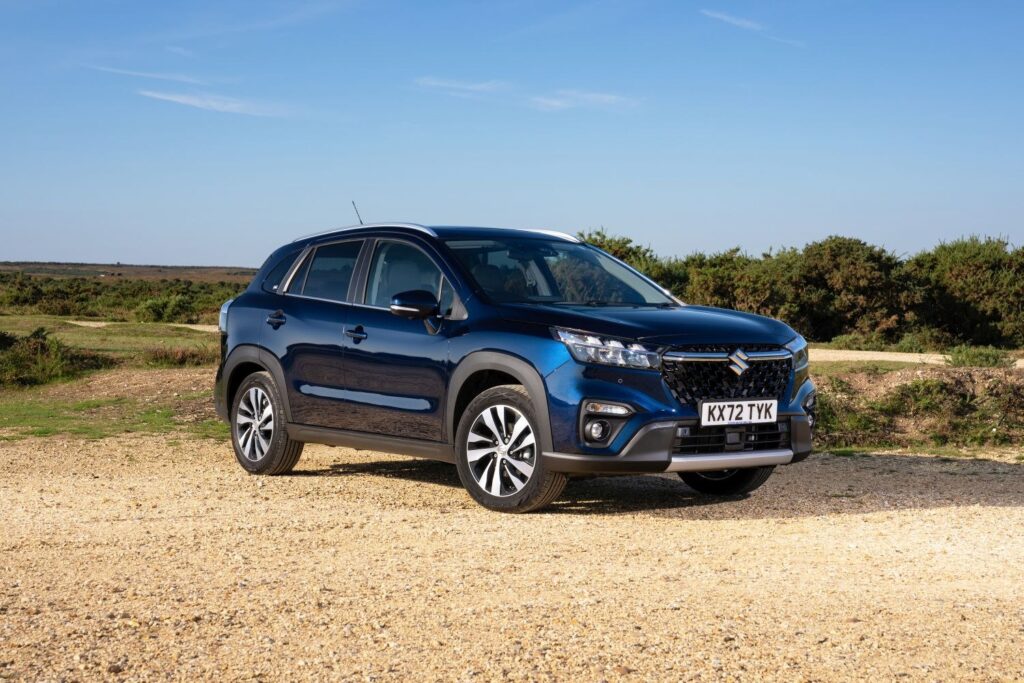
Suzuki S-Cross III: A Modern Compact Crossover with Mild-Hybrid Efficiency
The Suzuki S-Cross III 1.4 Boosterjet (129 Hp) Mild Hybrid represents the third generation of Suzuki’s popular compact crossover, a vehicle primarily designed for the discerning markets of Europe and Asia. Unveiled in November 2021, this iteration of the S-Cross builds upon a legacy of practicality, reliability, and increasingly, environmental consciousness. Positioned squarely in the highly competitive C-segment SUV market, the S-Cross III distinguishes itself with a sophisticated mild-hybrid electric vehicle (MHEV) powertrain, aiming to deliver an optimal balance of performance, fuel efficiency, and reduced emissions.
While not a staple in the North American automotive landscape, the S-Cross plays a crucial role for Suzuki globally, offering a compelling package for families and individuals seeking a versatile, five-door, five-seat SUV that navigates urban environments with ease and offers capable performance for longer journeys. Its design language evolves to reflect modern trends, while its underlying engineering emphasizes the brand’s commitment to robust construction and innovative, eco-friendly technologies.
Engine and Performance: The Suzuki S-Cross III‘s Mild-Hybrid Heart
At the core of the Suzuki S-Cross III’s appeal is its advanced 1.4 Boosterjet Mild Hybrid powertrain. This system combines a potent turbocharged gasoline (petrol) engine with an integrated starter generator (ISG) and a compact lithium-ion battery, forming a power-assist hybrid architecture. The internal combustion engine (ICE), codenamed K14D, is a 1.4-liter (1373 cm3 or 83.79 cu. in.) inline four-cylinder unit. Equipped with a turbocharger and intercooler, along with direct injection, this engine delivers a robust 129 horsepower at 5500 rpm. Its torque output is equally impressive for its displacement, generating 173.33 lb.-ft. across a broad and usable range of 2000-3000 rpm, ensuring responsive acceleration and effortless cruising.
The mild-hybrid component significantly enhances both efficiency and low-end torque. An electric motor, designated WA06B, contributes an additional 14 horsepower at 3000 rpm and a notable 39.09 lb.-ft. of torque from as low as 500 rpm. This immediate electric assist, particularly beneficial during acceleration from a standstill or when passing, minimizes turbo lag and improves overall drivability. The system power remains at 129 horsepower, indicating the electric motor primarily assists the gasoline engine rather than providing sustained independent propulsion.
Power is channeled to the front wheels via a precise 6-speed manual transmission, offering an engaging driving experience for those who prefer more control. The drivetrain architecture ensures that both the ICE and electric motor work in tandem, driving the front wheels in a mixed-mode operation. This setup allows the S-Cross III to achieve commendable performance figures: it accelerates from 0 to 60 mph in approximately 9 seconds and reaches a maximum speed of 121.17 mph (195 km/h). Crucially, the mild-hybrid system, coupled with features like a Start & Stop System and a particulate filter, helps the S-Cross III meet stringent Euro 6d emission standards, with combined CO2 emissions rated at 120 g/km.
Fuel economy is a strong suit for the S-Cross III, reflecting the benefits of its mild-hybrid technology. According to WLTP testing, the combined fuel consumption is an impressive 44.4 US mpg (5.3 l/100 km). This efficiency is consistent across various driving conditions, making the S-Cross III an economical choice for daily commuting and longer trips alike.
Design and Features: Practicality Meets Modernity
The Suzuki S-Cross III adopts a contemporary SUV/Crossover body style, characterized by its sturdy stance, five-door configuration, and comfortable seating for five occupants. Its exterior design features a more assertive front grille and updated lighting elements, giving it a fresh and modern appearance that aligns with current automotive trends. The overall dimensions are compact yet spacious, with a length of 169.29 inches (4300 mm), a width of 70.28 inches (1785 mm), and a height of 62.4 inches (1585 mm). A wheelbase of 102.36 inches (2600 mm) contributes to a stable ride and a surprisingly roomy cabin for its class.
The vehicle’s ground clearance of 6.89 inches (175 mm) provides adequate capability for navigating uneven roads or light off-road conditions, enhancing its versatility as a true crossover. Maneuverability in urban settings is aided by a minimum turning circle of 35.43 feet (10.8 m), making parking and tight turns less challenging.
Inside, the S-Cross III focuses on practicality and user-friendly features. While specific interior amenities are not detailed in the provided data, modern Suzuki vehicles in this segment typically offer a range of infotainment options, connectivity features, and comfort-oriented details. The cargo capacity is generous for a compact SUV, offering a minimum trunk space of 15.19 cubic feet (430 liters), which expands to a substantial 23.48 cubic feet (665 liters) with the rear seats folded, catering to varying cargo needs.
In terms of driver assistance and safety, the S-Cross III comes equipped with essential systems such as ABS (Anti-lock braking system) for enhanced braking control. The steering system is a rack and pinion type with electric power steering, providing light and responsive handling. Braking is handled by ventilated discs at the front and solid discs at the rear, ensuring reliable stopping power. The vehicle rides on 215/55 R17 tires mounted on 17-inch wheel rims, striking a balance between ride comfort and handling dynamics.
Additional practical features include a 12.42 US gallon (47 liter) fuel tank, offering a decent range between fill-ups given its fuel efficiency. The S-Cross III also boasts a permitted trailer load of 3306.93 lbs (1500 kg) with brakes, highlighting its utility for light towing duties.
Technical Specifications
| Category | Specification | US Equivalent |
|---|---|---|
| General Information | ||
| Brand | Suzuki | |
| Model | SX4 S-Cross | |
| Generation | S-Cross III | |
| Type (Engine) | 1.4 Boosterjet (129 Hp) Mild Hybrid | |
| Start of Production | November, 2021 | |
| Powertrain Architecture | MHEV (Mild Hybrid Electric Vehicle) | |
| Body Type | SUV, Crossover | |
| Seats | 5 | |
| Doors | 5 | |
| Performance Specs | ||
| Combined Fuel Consumption (WLTP) | 5.3 l/100 km | 44.4 US mpg |
| CO2 Emissions (WLTP) | 120 g/km | |
| Fuel Type | Petrol (Gasoline) | |
| Acceleration 0 – 60 mph | 9 sec | |
| Maximum Speed | 195 km/h | 121.17 mph |
| Emission Standard | Euro 6d | |
| Weight-to-power ratio | 9 kg/Hp | 111.2 Hp/tonne |
| Electric Cars and Hybrids Specs | ||
| Battery Technology | Lithium-ion (Li-Ion) | |
| Electric Motor Power | 14 Hp @ 3000 rpm | |
| Electric Motor Torque | 53 Nm @ 500 rpm | 39.09 lb.-ft. @ 500 rpm |
| System Power | 129 Hp @ 5500 rpm | |
| Internal Combustion Engine Specs | ||
| Power | 129 Hp @ 5500 rpm | |
| Torque | 235 Nm @ 2000-3000 rpm | 173.33 lb.-ft. @ 2000-3000 rpm |
| Engine Layout | Front, Transverse | |
| Engine Model/Code | K14D | |
| Engine Displacement | 1373 cm3 | 1.4 liters (83.79 cu. in.) |
| Number of Cylinders | 4 | Inline |
| Number of Valves per Cylinder | 4 | |
| Fuel Injection System | Direct injection | |
| Engine Aspiration | Turbocharger, Intercooler | |
| Engine Oil Capacity | 3.6 l | 3.8 US qt |
| Coolant Capacity | 6.7 l | 7.08 US qt |
| Space, Volume and Weights | ||
| Kerb Weight | 1160 kg | 2557.36 lbs. |
| Max. Weight (GVWR) | 1685 kg | 3714.79 lbs. |
| Max Load | 525 kg | 1157.43 lbs. |
| Trunk (boot) Space – Minimum | 430 l | 15.19 cu. ft. |
| Trunk (boot) Space – Maximum | 665 l | 23.48 cu. ft. |
| Fuel Tank Capacity | 47 l | 12.42 US gal |
| Permitted Trailer Load with Brakes (12%) | 1500 kg | 3306.93 lbs. |
| Permitted Trailer Load without Brakes | 600 kg | 1322.77 lbs. |
| Dimensions | ||
| Length | 4300 mm | 169.29 in. |
| Width | 1785 mm | 70.28 in. |
| Height | 1585 mm | 62.4 in. |
| Wheelbase | 2600 mm | 102.36 in. |
| Ride Height (Ground Clearance) | 175 mm | 6.89 in. |
| Minimum Turning Circle | 10.8 m | 35.43 ft. |
| Drivetrain, Brakes and Suspension Specs | ||
| Drivetrain Architecture | ICE and electric motor drive front wheels in mixed mode. | |
| Drive Wheel | Front wheel drive | |
| Number of Gears and Type of Gearbox | 6 gears, manual transmission | |
| Front Brakes | Ventilated discs | |
| Rear Brakes | Disc | |
| Assisting Systems | ABS (Anti-lock braking system) | |
| Steering Type | Steering rack and pinion | |
| Power Steering | Electric Steering | |
| Tires Size | 215/55 R17 | |
| Wheel Rims Size | 17 inches |
Legacy and Market Impact
The Suzuki S-Cross III, particularly in its 1.4 Boosterjet Mild Hybrid configuration, continues Suzuki’s long-standing tradition of offering practical, robust, and value-oriented vehicles in its primary markets. In regions like Europe and Asia, where Suzuki has a well-established presence and a reputation for reliability, the S-Cross serves as a vital contender in the fiercely competitive compact SUV segment. It appeals to a broad demographic, from young families to urban commuters, who prioritize fuel efficiency, low running costs, and a versatile interior over outright luxury or aggressive performance.
Its market impact stems from its ability to offer a compelling alternative to more mainstream and often more expensive competitors. In Europe, it faces rivals such as the Nissan Qashqai (known as Rogue Sport in some markets), Kia Seltos, Hyundai Kona, Honda HR-V, and the Skoda Kamiq. Against these formidable opponents, the S-Cross III differentiates itself with its proven Boosterjet engine technology, now augmented with mild-hybrid assistance, which aligns with the increasing demand for eco-friendly vehicles without the premium price tag of a full hybrid or plug-in hybrid.
The third generation S-Cross represents a significant evolution, showcasing Suzuki’s commitment to modernizing its lineup and integrating advanced powertrain technologies. The mild-hybrid system is key to its relevance, allowing the vehicle to meet stringent emissions regulations while offering tangible benefits in terms of fuel economy and a smoother driving experience. This strategic move ensures the S-Cross remains competitive and attractive in markets that are increasingly focused on environmental performance.
Historically, the S-Cross (and its predecessor, the SX4 S-Cross) has been lauded for its straightforward engineering, dependable mechanics, and a reputation for being a smart, no-nonsense choice. The S-Cross III carries this torch forward, enhancing its appeal with contemporary styling and the crucial addition of electrification. It solidifies Suzuki’s position as a brand that delivers sensible, capable, and efficient vehicles, reinforcing its legacy as a specialist in compact and affordable SUVs and 4x4s.
Ultimately, the Suzuki S-Cross III 1.4 Boosterjet Mild Hybrid is more than just another compact SUV; it is a testament to Suzuki’s enduring philosophy of providing practical, efficient, and reliable transportation solutions tailored to the specific needs and regulatory landscapes of its global markets. Its continued success in these regions underscores its importance within Suzuki’s international product portfolio.
