Volkswagen Transporter (T6) Kombi: A European Workhorse with Global Appeal
The Volkswagen Transporter (T6) Kombi represents the sixth generation of Volkswagen Commercial Vehicles’ iconic Transporter series, a lineage tracing its roots back to the original Type 2 “Bus” of the 1950s. Produced from 2015 to 2019, the T6 generation built upon the robust foundation of its predecessors, offering enhanced refinement, efficiency, and technology while retaining its legendary versatility and reliability. This particular variant, the 2.0 TDI (150 Hp) 4MOTION DSG L2H3, highlights a highly capable and sophisticated configuration designed for a wide range of commercial and private uses across Europe and other international markets where the Transporter is a staple.
While not widely sold in the United States in its commercial van guise, the Volkswagen Transporter (T6) Kombi is a cornerstone of the European light commercial vehicle segment. It serves as a vital tool for businesses, a flexible family hauler, and a popular base for camper conversions. The “Kombi” designation itself signifies a blend of passenger and cargo capabilities, typically featuring windows and removable seating, making it more adaptable than a dedicated panel van. The L2H3 specification denotes a long wheelbase (L2) and a high roof (H3), maximizing interior volume for both occupants and freight. Its advanced powertrain, featuring a potent TDI diesel engine, 4MOTION all-wheel drive, and a DSG automatic transmission, positions it as a premium offering in its class, capable of tackling diverse terrains and demanding workloads with efficiency and comfort.
Engine & Performance: The Robust 2.0 TDI in the Volkswagen Transporter (T6) Kombi
At the heart of this specific Volkswagen Transporter (T6) Kombi lies a sophisticated 2.0-liter TDI (Turbocharged Direct Injection) diesel engine, known by the internal codes EA288 / CXFA, CXHA. This inline four-cylinder unit is mounted transversely at the front, a common layout for optimizing interior space. It delivers a healthy 150 horsepower at 3250-3750 rpm, providing ample power for hauling heavy loads or cruising at highway speeds. More significantly for a utility vehicle, the engine produces a substantial 250.77 lb.-ft. of torque, available across a broad rev range from 1500 to 3000 rpm. This low-end torque is crucial for strong acceleration from a standstill, effortless overtaking, and maintaining momentum when fully loaded.
The engine’s architecture includes a DOHC (Double Overhead Camshaft) valvetrain with four valves per cylinder and a common rail fuel injection system, all contributing to its efficiency and smooth power delivery. A turbocharger with an intercooler ensures optimal air intake, boosting performance while maintaining fuel economy. With a compression ratio of 15.5:1, the engine is optimized for diesel combustion. The inclusion of a Start & Stop System and a Particulate Filter underscores Volkswagen’s commitment to meeting stringent Euro 6 emission standards, minimizing its environmental footprint.
Power is transmitted through a 7-speed DSG (Direct Shift Gearbox) automatic transmission, a dual-clutch unit renowned for its rapid and seamless gear changes. This transmission enhances both driving comfort and fuel efficiency. The 4MOTION all-wheel-drive system provides exceptional traction and stability, particularly beneficial in adverse weather conditions, on slippery surfaces, or when venturing off paved roads. The system primarily drives the front wheels but can engage the rear wheels via an electrically or mechanically operated clutch when slip is detected, ensuring optimal grip.
Performance figures for this robust van include an acceleration from 0 to 60 mph in a respectable 12.4 seconds, and a top speed of 103.15 mph. Given its substantial size and weight, these figures highlight the engine’s capability. Fuel economy, a critical factor for commercial operators, ranges from 37.9 to 28.3 US mpg combined, depending on configuration and driving conditions. This efficiency, combined with a 18.49 US gallon fuel tank, allows for extended operating ranges between refueling stops.
Design & Features: Versatility and Practicality
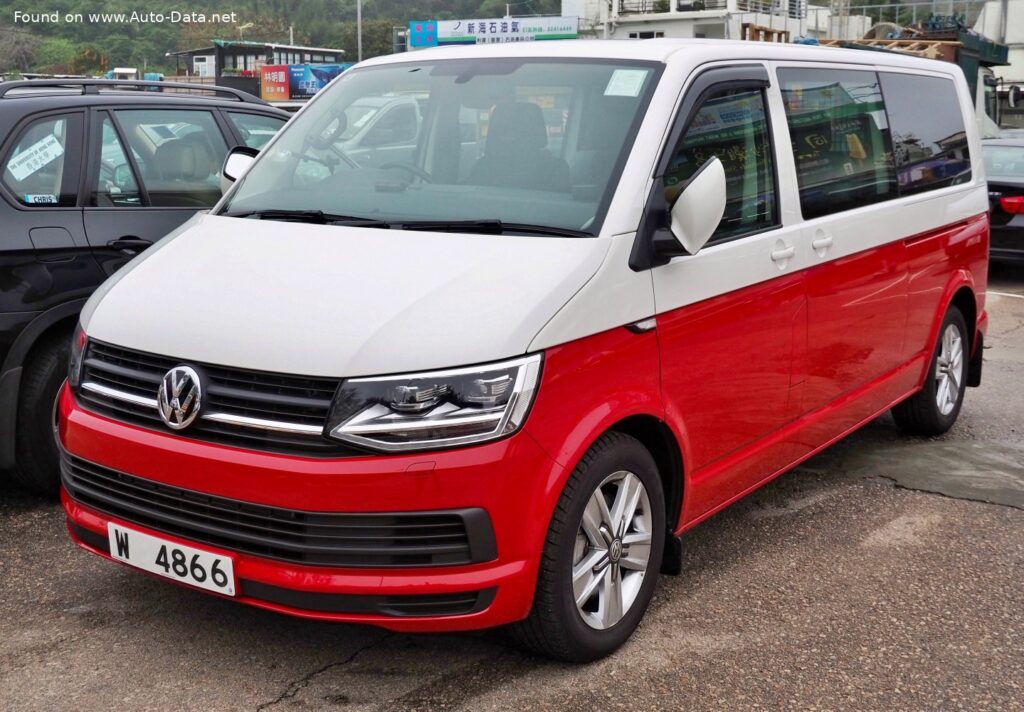
The Volkswagen Transporter (T6) Kombi maintains the instantly recognizable, clean, and functional design language characteristic of the Transporter series. As a van body type with 4-5 doors and seating for 4 to 9 occupants, its design prioritizes utility and interior flexibility. The L2H3 designation signifies its long wheelbase (133.86 inches) and high roof (97.52 inches), which translates into an impressive maximum trunk (boot) space of 328.43 cubic feet. This cavernous interior allows for the transport of significant cargo volumes, tall items, or numerous passengers with ample headroom.
The exterior dimensions of 208.82 inches in length and 74.96 inches in width (90.43 inches including mirrors) make it a substantial vehicle, yet its design ensures maneuverability, aided by a minimum turning circle of 43.31 feet. The robust construction and practical features are evident throughout. The suspension system, featuring independent McPherson struts with coil springs and an anti-roll bar at the front, and an independent coil spring wishbone setup with a transverse stabilizer at the rear, is engineered to provide a comfortable ride even when loaded, while maintaining stable handling.
Safety features for the T6 Kombi include ventilated disc brakes on both the front (308×29.5 mm) and rear (294×22 mm) axles, complemented by an Anti-lock Braking System (ABS) for controlled stopping power. The hydraulic power steering system, a rack and pinion setup, ensures precise control and feedback to the driver. Depending on the specific trim and options, the T6 could be equipped with a range of modern conveniences, though the core focus remains on functionality and durability. The design accommodates practical considerations such as a maximum roof load of 220.46 lbs and impressive towing capabilities, with a permitted trailer load of 5511.56 lbs with brakes. The AdBlue tank, with a capacity of 3.43 US gallons, is integrated to reduce nitrogen oxide emissions, aligning with modern environmental regulations.
Technical Specifications
| Category | Specification |
|---|---|
| Brand | Volkswagen |
| Model | Transporter |
| Generation | Transporter (T6) Kombi |
| Type (Engine) | 2.0 TDI (150 Hp) 4MOTION DSG L2H3 |
| Start of Production | 2015 year |
| End of Production | 2019 year |
| Powertrain Architecture | Internal Combustion engine |
| Body type | Van |
| Seats | 4-9 |
| Doors | 4-5 |
| Performance Specs | |
| Fuel consumption (economy) – urban (NEDC) | 34.1 – 24.8 US mpg |
| Fuel consumption (economy) – extra urban (NEDC) | 40.6 – 30.2 US mpg |
| Fuel consumption (economy) – combined (NEDC) | 37.9 – 28.3 US mpg |
| CO2 emissions (NEDC) | 161-217 g/km |
| Fuel Type | Diesel |
| Acceleration 0 – 60 mph | 12.4 sec |
| Maximum speed | 103.15 mph |
| Emission standard | Euro 6 |
| Weight-to-power ratio | 13.3 kg/Hp, 75.5 Hp/tonne |
| Weight-to-torque ratio | 5.8 kg/Nm, 171 Nm/tonne |
| Engine Specs | |
| Power | 150 Hp @ 3250-3750 rpm |
| Power per liter | 76.2 Hp/l |
| Torque | 250.77 lb.-ft. @ 1500-3000 rpm |
| Engine layout | Front, Transverse |
| Engine Model/Code | EA288 / CXFA, CXHA |
| Engine displacement | 2.0 liters (120.09 cu. in.) |
| Number of cylinders | 4 |
| Engine configuration | Inline |
| Cylinder Bore | 3.19 in. |
| Piston Stroke | 3.76 in. |
| Compression ratio | 15.5:1 |
| Number of valves per cylinder | 4 |
| Fuel injection system | Diesel Commonrail |
| Engine aspiration | Turbocharger, Intercooler |
| Valvetrain | DOHC |
| Engine oil capacity | 7.82 US qt |
| Engine systems | Start & Stop System, Particulate filter |
| Space, Volume and Weights | |
| Kerb Weight | 4382.79 – 5288.89 lbs. |
| Max. weight | 6613.87 – 7054.79 lbs. |
| Max load | 1765.9 – 2231.08 lbs. |
| Trunk (boot) space – maximum | 328.43 cu. ft. |
| Fuel tank capacity | 18.49 US gal |
| AdBlue tank | 3.43 US gal |
| Max. roof load | 220.46 lbs. |
| Permitted trailer load with brakes (12%) | 5511.56 lbs. |
| Permitted trailer load without brakes | 1653.47 lbs. |
| Permitted towbar download | 220.46 lbs. |
| Dimensions | |
| Length | 208.82 in. |
| Width | 74.96 in. |
| Width including mirrors | 90.43 in. |
| Height | 97.52 in. |
| Wheelbase | 133.86 in. |
| Front overhang | 35.75 in. |
| Rear overhang | 39.09 in. |
| Ride height (ground clearance) | 7.95 in. |
| Minimum turning circle (turning diameter) | 43.31 ft. |
| Approach angle | 21.2° |
| Departure angle | 16.2° |
| Ramp-over (brakeover) angle | 12.2° |
| Drivetrain, Brakes and Suspension Specs | |
| Drivetrain Architecture | The Internal combustion engine (ICE) drives the front wheels permanently, and the rear wheels are driven through an electrically or mechanically operated clutch if necessary. |
| Drive wheel | All wheel drive (4×4) |
| Number of gears and type of gearbox | 7 gears, automatic transmission DSG |
| Front suspension | Independent, type McPherson with coil spring and anti-roll bar |
| Rear suspension | Independent coil spring, Wishbone, Transverse stabilizer |
| Front brakes | Ventilated discs, 308×29.5 mm |
| Rear brakes | Ventilated discs, 294×22 mm |
| Assisting systems | ABS (Anti-lock braking system) |
| Steering type | Steering rack and pinion |
| Power steering | Hydraulic Steering |
| Tires size | 205/65 R16; 215/65 R16 |
| Wheel rims size | 6.5J x 16 |
Legacy & Market Impact of the Volkswagen Transporter (T6) Kombi
The Volkswagen Transporter series holds a unique and revered position in automotive history, and the T6 generation, including the Kombi variant, continued this formidable legacy. In its primary markets, particularly Europe, the Transporter is more than just a commercial vehicle; it’s a cultural icon, celebrated for its versatility, durability, and robust engineering. The T6 generation specifically reinforced Volkswagen’s commitment to modernizing this workhorse, integrating advanced driver assistance systems, more efficient powertrains, and improved interior ergonomics compared to its T5 predecessor.
The Volkswagen Transporter (T6) Kombi, with its blend of passenger comfort and cargo capacity, served a diverse clientele. Small businesses relied on it for transporting goods and personnel, while larger fleets appreciated its reliability and low running costs. For families, especially those with active lifestyles or a need for significant carrying capacity, the Kombi offered a practical alternative to traditional minivans or SUVs, often serving as a base for weekend adventures or even full-fledged camper conversions. Its 4MOTION all-wheel-drive capability further broadened its appeal, making it a favorite in regions with challenging climates or for those who needed to access remote locations.
In the highly competitive European light commercial vehicle segment, the Transporter T6 faced strong rivals such as the Mercedes-Benz Vito, Ford Transit Custom, and Renault Trafic. However, the Transporter consistently stood out due to its premium feel, strong resale values, and the Volkswagen brand’s reputation for quality and engineering. The 2.0 TDI engine, with its balance of power and fuel efficiency, combined with the smooth DSG transmission, offered a refined driving experience not always found in commercial vans. The T6’s ability to be configured in myriad ways—from a basic panel van to a luxurious Multivan or a versatile Kombi—ensured its broad market penetration.
The T6 generation’s emphasis on Euro 6 emission standards and features like the Start & Stop system also highlighted Volkswagen’s efforts to align with increasing environmental consciousness. Its robust chassis, impressive payload, and towing capabilities cemented its reputation as a true workhorse, capable of enduring the rigors of daily commercial use. The enduring popularity of the Transporter, from its vintage predecessors to modern iterations like the T6, speaks volumes about its fundamental design and its ability to adapt to evolving market demands while retaining its core identity of practicality and reliability. The Volkswagen Transporter (T6) Kombi remains a highly respected and sought-after vehicle, continuing to serve its owners faithfully years after its production run.