Peugeot 307 Station Wagon (facelift 2005) 2.0 HDi (136 Hp) Automatic: A European Family Workhorse
The Peugeot 307, a prominent player in the highly competitive European C-segment, represented Peugeot’s commitment to offering practical and stylish family vehicles. While never officially imported for sale in the United States, the 307 carved out a significant niche in its home market, particularly the versatile station wagon variant. This article focuses on the specific iteration of the Peugeot 307 Station Wagon (facelift 2005) equipped with the robust 2.0 HDi (136 Hp) diesel engine and an automatic transmission. This model, produced from 2005 to 2008, showcases the mid-cycle refresh that brought updated styling, improved features, and refined powertrain options to the already popular 307 lineup, emphasizing efficiency and practicality for European families and businesses.
The 307 Station Wagon, often referred to as an “estate” in European markets, was designed to blend the driving dynamics of a compact car with the cargo capacity and versatility typically associated with larger vehicles. The 2005 facelift aimed to keep the 307 competitive against rivals like the Ford Focus Wagon and Volkswagen Golf Variant, introducing subtle but effective changes to its exterior and interior aesthetics, alongside mechanical enhancements. The 2.0 HDi powertrain, a staple of Peugeot’s diesel offerings, provided a compelling combination of power, torque, and remarkable fuel economy, making it a popular choice for long-distance travel and daily commuting across Europe.
Engine and Performance: The Efficient Diesel Powertrain
At the heart of the Peugeot 307 Station Wagon (facelift 2005) 2.0 HDi (136 Hp) Automatic lies a sophisticated 2.0-liter (121.86 cu. in.) inline four-cylinder diesel engine, internally designated as the RHR DW10BTED4. This powerplant was a testament to Peugeot’s expertise in diesel technology, featuring a common rail direct injection system coupled with a turbocharger and intercooler. This setup allowed the engine to produce a respectable 136 horsepower at 4000 rpm, delivering ample power for highway cruising and city driving alike. More significantly, it generated a substantial 236.02 lb.-ft. of torque at a low 2000 rpm, providing excellent low-end grunt crucial for hauling cargo, navigating urban traffic, and smooth acceleration, especially when paired with an automatic transmission.
Power was delivered to the front wheels through a smooth-shifting 6-speed automatic transmission, a desirable feature for many European buyers seeking comfort and ease of driving. This combination contributed to the vehicle’s impressive fuel economy figures for its class and era: an estimated 24.8 US mpg in urban settings, an outstanding 43.6 US mpg on extra-urban cycles, and a combined average of 34.1 US mpg. These figures were highly competitive and a major selling point in markets where diesel fuel was prevalent and efficiency was paramount. The engine met the Euro 4 emission standard, indicating a relatively clean burn for a diesel of its time, with CO2 emissions rated at 183 g/km.
The engine’s design, with a bore of 3.35 inches and a stroke of 3.46 inches, along with four valves per cylinder, optimized combustion efficiency and power delivery. With an engine oil capacity of 5.55 US quarts and a coolant capacity of 8.56 US quarts, the 2.0 HDi unit was engineered for durability and consistent performance. The weight-to-power ratio stood at 11.8 kg/Hp (84.7 Hp/tonne), and the weight-to-torque ratio at 5 kg/Nm (199.3 Nm/tonne), indicating a well-balanced power-to-weight profile for a compact station wagon.
Design and Features: Practicality Meets Refinement
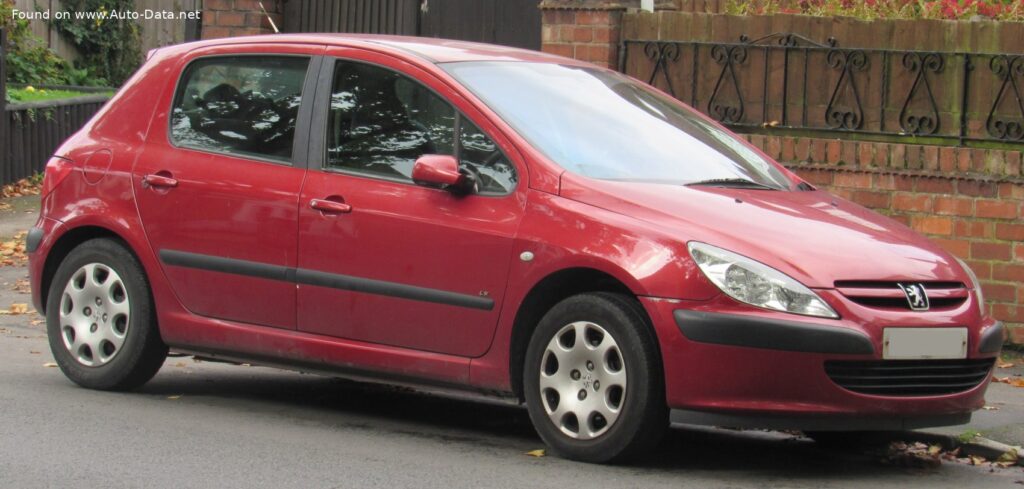
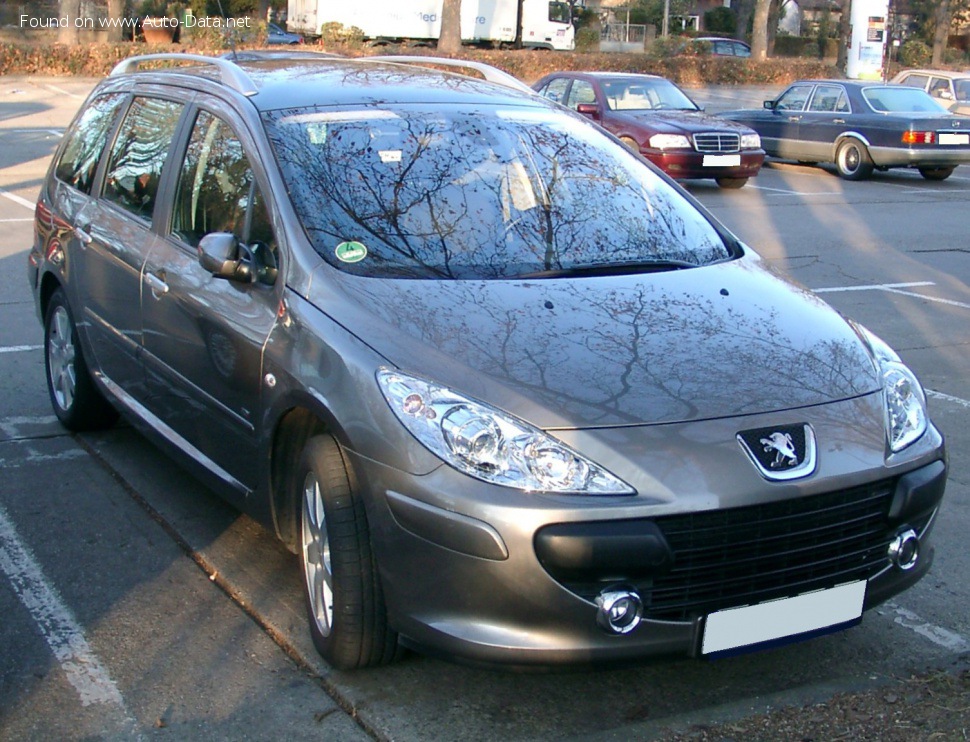
The Peugeot 307 Station Wagon (facelift 2005) retained the original 307’s distinctive “tall” body design, which contributed to a spacious cabin and excellent outward visibility. The facelift brought subtle but effective aesthetic updates, including a redesigned front bumper, a larger grille, and new headlamps, aligning its appearance with Peugeot’s contemporary design language. The station wagon body type, with its five doors and five seats, was inherently practical, designed to cater to the needs of families and those requiring substantial cargo space.
Measuring 174.33 inches in length, 69.37 inches in width, and between 61.42 and 62.2 inches in height, the 307 Station Wagon offered a commanding presence without being overly cumbersome for urban environments. Its generous 106.61-inch wheelbase was a key factor in providing a comfortable ride and a spacious interior, particularly for rear-seat passengers. The vehicle’s curb weight of 3540.62 lbs. underscored its solid build, contributing to a stable and secure driving feel.
One of the 307 Station Wagon’s most compelling features was its cavernous and flexible cargo area. With the rear seats in place, it offered a substantial 18.36 cu. ft. of trunk space. When the rear seats were folded down, this expanded dramatically to an impressive 78.08 cu. ft., transforming the family car into a highly capable load-hauler. This versatility made it ideal for everything from grocery runs to family vacations, accommodating luggage, sports equipment, or even small furniture. The 15.85 US gallon fuel tank capacity, combined with the diesel engine’s efficiency, also translated to an excellent cruising range, a valuable attribute for European drivers.
In terms of safety and driving dynamics, the 307 Station Wagon was equipped with ventilated disc brakes at the front and disc brakes at the rear, complemented by an Anti-lock Braking System (ABS) for enhanced stopping power and control. The steering utilized a rack and pinion system, providing responsive and predictable handling. These features, combined with its robust structure, aimed to provide a secure and reassuring driving experience for occupants.
Technical Specifications
| Category | Specification |
|---|---|
| Brand | Peugeot |
| Model | 307 |
| Generation | 307 Station Wagon (facelift 2005) |
| Type (Engine) | 2.0 HDi (136 Hp) Automatic |
| Start of Production | 2005 year |
| End of Production | 2008 year |
| Powertrain Architecture | Internal Combustion engine |
| Body type | Station wagon (estate) |
| Seats | 5 |
| Doors | 5 |
| Fuel Consumption (Urban) | 24.8 US mpg (9.5 l/100 km) |
| Fuel Consumption (Extra Urban) | 43.6 US mpg (5.4 l/100 km) |
| Fuel Consumption (Combined) | 34.1 US mpg (6.9 l/100 km) |
| CO2 Emissions | 183 g/km |
| Fuel Type | Diesel |
| Emission Standard | Euro 4 |
| Weight-to-Power Ratio | 11.8 kg/Hp (84.7 Hp/tonne) |
| Weight-to-Torque Ratio | 5 kg/Nm (199.3 Nm/tonne) |
| Power | 136 Hp @ 4000 rpm |
| Power per liter | 68.1 Hp/l |
| Torque | 236.02 lb.-ft. @ 2000 rpm (320 Nm @ 2000 rpm) |
| Engine Layout | Front, Transverse |
| Engine Model/Code | RHR DW10BTED4 |
| Engine Displacement | 2.0 Liters (121.86 cu. in.) |
| Number of Cylinders | 4 |
| Engine Configuration | Inline |
| Cylinder Bore | 3.35 in. (85 mm) |
| Piston Stroke | 3.46 in. (88 mm) |
| Number of Valves per Cylinder | 4 |
| Fuel Injection System | Diesel Commonrail |
| Engine Aspiration | Turbocharger, Intercooler |
| Engine Oil Capacity | 5.55 US qt (5.25 l) |
| Coolant Capacity | 8.56 US qt (8.1 l) |
| Kerb Weight | 3540.62 lbs. (1606 kg) |
| Max. Weight | 4662.78 lbs. (2115 kg) |
| Max Load | 1122.15 lbs. (509 kg) |
| Trunk (boot) Space – Minimum | 18.36 cu. ft. (520 l) |
| Trunk (boot) Space – Maximum | 78.08 cu. ft. (2211 l) |
| Fuel Tank Capacity | 15.85 US gal (60 l) |
| Permitted Trailer Load with Brakes (12%) | 3306.93 lbs. (1500 kg) |
| Permitted Trailer Load without Brakes | 1653.47 lbs. (750 kg) |
| Length | 174.33 in. (4428 mm) |
| Width | 69.37 in. (1762 mm) |
| Height | 61.42 – 62.2 in. (1560-1580 mm) |
| Wheelbase | 106.61 in. (2708 mm) |
| Front Track | 59.25 in. (1505 mm) |
| Rear (Back) Track | 59.45 in. (1510 mm) |
| Front Overhang | 34.96 in. (888 mm) |
| Rear Overhang | 32.76 in. (832 mm) |
| Drivetrain Architecture | The Internal combustion engine (ICE) drives the front wheels of the vehicle. |
| Drive Wheel | Front wheel drive |
| Number of Gears and Type of Gearbox | 6 gears, automatic transmission |
| Front Brakes | Ventilated discs |
| Rear Brakes | Disc |
| Assisting Systems | ABS (Anti-lock braking system) |
| Steering Type | Steering rack and pinion |
Legacy and Market Impact in Europe
The Peugeot 307 Station Wagon, particularly the facelifted 2005 model with the 2.0 HDi (136 Hp) Automatic powertrain, was a significant vehicle in the European automotive landscape. It built upon the success of the original 307, which had already garnered awards like the European Car of the Year in 2002. The station wagon variant was crucial for Peugeot’s market share, appealing directly to families, small businesses, and fleet operators who prioritized space, versatility, and fuel economy.
In its primary European markets, the 307 Station Wagon competed fiercely with other established players in the compact estate segment. Key rivals included the Ford Focus Wagon, renowned for its driving dynamics; the Opel Astra Caravan, known for its practicality; the Renault Mégane Estate, offering French comfort; and the Volkswagen Golf Variant, a benchmark for quality and resale value. The 307 differentiated itself with its distinctive “tall body” design, which provided a more upright seating position and improved interior headroom, contributing to its comfortable and airy cabin feel.
The 2.0 HDi engine was a cornerstone of its appeal. During the mid-2000s, diesel engines dominated the European market due to their superior fuel efficiency and lower running costs compared to gasoline equivalents. The 136 HP output combined with the robust 236 lb.-ft. of torque, delivered through a smooth automatic transmission, made the 307 SW an effortless long-distance cruiser and a capable urban vehicle. Its Euro 4 emission compliance also demonstrated a commitment to environmental standards of the time, making it an attractive option in increasingly regulated markets.
Ultimately, the Peugeot 307 Station Wagon (facelift 2005) 2.0 HDi (136 Hp) Automatic cemented its reputation as a reliable, practical, and economical family car. Its blend of modern design, generous cargo capacity, comfortable ride, and efficient diesel powertrain ensured its continued relevance until its eventual replacement by the Peugeot 308 SW. While largely unknown in the American market, this specific model stands as a prime example of European automotive engineering tailored to the specific demands and preferences of its region, showcasing how a compact car could deliver on the promises of space, efficiency, and driving refinement.