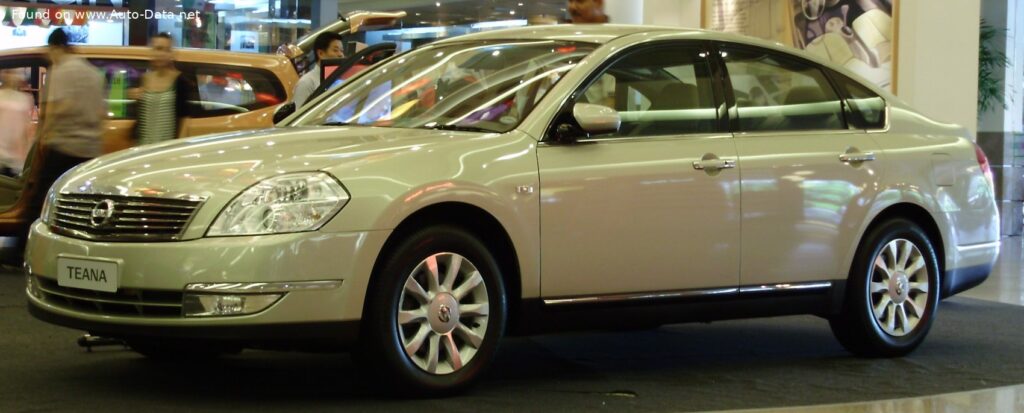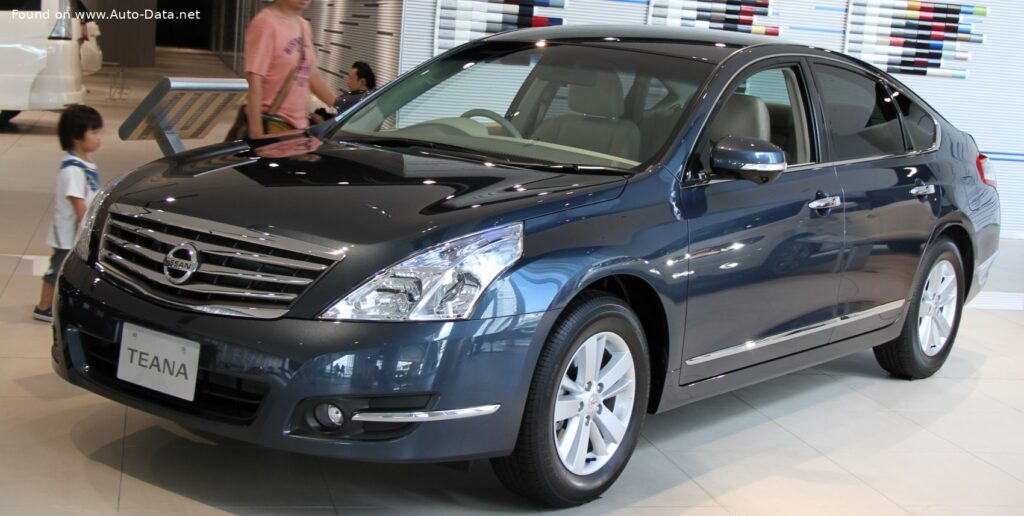
Introduction to the Nissan Teana II 2.5i V6 24V (182 Hp)
The Nissan Teana II 2.5i V6 24V (182 Hp) represents the second generation of Nissan’s executive mid-size sedan, a vehicle primarily designed for markets outside of North America, particularly excelling in Asia, Russia, and parts of Europe. Launched in 2008 and produced until 2013, this iteration, often referred to by its chassis code J32, built upon the success of its predecessor by offering an enhanced blend of luxury, comfort, and reliable performance. In regions where it was sold, the Teana positioned itself as a sophisticated alternative to mainstream sedans, catering to consumers seeking a refined driving experience coupled with ample interior space and a premium feel. Unlike its North American counterparts such as the Altima or Maxima, which focused more on sportiness or a slightly different market segment, the Teana emphasized serene comfort and understated elegance, making it a popular choice for families and business professionals alike.
This particular variant, the 2.5i V6 24V, featured Nissan’s highly regarded VQ-series V6 engine, delivering a smooth and responsive power output of 182 horsepower. This powertrain, combined with a front-wheel-drive architecture and a focus on ride quality, solidified the Teana’s reputation as a strong contender in its competitive class. Its design ethos and engineering choices were meticulously calibrated to meet the demands of its target demographics, prioritizing passenger comfort, quiet operation, and a sense of refinement that was often associated with more expensive luxury vehicles.
Engineering and Performance of the Nissan Teana II 2.5i V6 24V (182 Hp)
Engine and Powertrain
At the heart of the Nissan Teana II 2.5i V6 24V (182 Hp) lies the venerable VQ25DE engine, a 2.5-liter (2496 cm³ or 152.32 cu. in.) V6 unit, part of Nissan’s award-winning VQ engine family. This naturally aspirated, multi-port manifold injection engine featured a Double Overhead Camshaft (DOHC) valvetrain with 24 valves (four per cylinder), optimized for smooth power delivery and efficiency. It produced a respectable 182 horsepower at 6000 rpm, providing ample power for both city commuting and highway cruising. The engine’s torque output stood at 168.16 lb.-ft. (228 Nm) at 4400 rpm, ensuring robust acceleration and confident overtaking maneuvers.
The VQ series engine is renowned for its refinement, reliability, and characteristic smooth operation, making it an ideal choice for a comfort-oriented sedan like the Teana. Power was routed to the front wheels, a common configuration for this segment, contributing to predictable handling and efficient packaging. The car achieved a 0-60 mph acceleration in a respectable 9.1 seconds and could reach a maximum speed of 124.27 mph (200 km/h), demonstrating a balanced approach between performance and everyday usability.
Fuel efficiency for the Teana II 2.5i V6 24V was competitive for its class and era, with a combined fuel consumption rating of 24.8 US mpg (9.5 l/100 km). Urban driving yielded approximately 19.4 US mpg (12.1 l/100 km), while extra-urban conditions saw consumption improve to 29.4 US mpg (8 l/100 km). This powertrain was designed to meet Euro 3 emission standards, reflecting its commitment to environmental considerations prevalent at the time of its production. The engine oil capacity was 4.6 liters (4.86 US quarts), and its robust design contributed to a favorable weight-to-power ratio of 8.3 kg/Hp.
Chassis and Dynamics
The Teana II was engineered for a comfortable and composed ride, a critical attribute for its target audience. It featured an independent McPherson strut front suspension with coil springs and an anti-roll bar, a setup known for its balance of comfort and handling stability. The rear employed an independent multi-link spring suspension, also with a stabilizer, further enhancing ride quality and minimizing body roll. This sophisticated suspension tuning allowed the Teana to glide over various road surfaces, absorbing imperfections with ease.
Braking performance was handled by ventilated discs at the front and solid discs at the rear, complemented by an Anti-lock Braking System (ABS) for enhanced safety during emergency stops. Steering was managed by a rack and pinion system, offering precise control and feedback. The vehicle rode on 205/65 R16 tires mounted on 6.5J x 16-inch wheel rims, a combination that prioritized comfort and grip over outright sporty handling, aligning with the car’s overall character.
Design and Features
The Nissan Teana II’s design language was characterized by its elegant and sophisticated lines, presenting a refined aesthetic that appealed to a mature clientele. As a four-door sedan with seating for five, its exterior dimensions were substantial, measuring 190.94 inches (4850 mm) in length, 70.87 inches (1800 mm) in width, and 58.27 inches (1480 mm) in height. The generous 109.25-inch (2775 mm) wheelbase was instrumental in providing a spacious and comfortable cabin, particularly for rear-seat passengers, a key selling point in its primary markets. The minimum turning circle of 34.78 feet (10.6 meters) ensured adequate maneuverability despite its size.
Inside, the Teana II focused on creating a serene and well-appointed environment. While specific interior features are not detailed in the raw data, for a vehicle in this segment and era (2008-2013), one could expect a range of amenities aimed at enhancing comfort and convenience. These typically included automatic climate control, a comprehensive audio system, power-adjustable seats, and high-quality materials throughout the cabin. The emphasis was on soft-touch surfaces, ergonomic controls, and sound insulation to create a quiet sanctuary from the outside world.
Practicality was also a strong suit, with a trunk capacity of 17.23 cu. ft. (488 liters), offering ample space for luggage or groceries. The fuel tank capacity of 18.49 US gallons (70 liters) provided a substantial cruising range, reducing the frequency of fuel stops, which was beneficial for long-distance travel. Safety features, beyond the standard ABS, would have included multiple airbags and other passive safety structures common for vehicles of this class during its production years. The overall design philosophy aimed to deliver a premium experience without the premium price tag of European luxury brands.
Technical Specifications
| Feature | Specification |
|---|---|
| Brand | Nissan |
| Model | Teana |
| Generation | Teana II |
| Type (Engine) | 2.5i V6 24V (182 Hp) |
| Production Start | 2008 year |
| Production End | 2013 year |
| Powertrain Architecture | Internal Combustion Engine |
| Body Type | Sedan |
| Seats | 5 |
| Doors | 4 |
| Fuel Consumption (Urban) | 19.4 US mpg (12.1 l/100 km) |
| Fuel Consumption (Extra Urban) | 29.4 US mpg (8 l/100 km) |
| Fuel Consumption (Combined) | 24.8 US mpg (9.5 l/100 km) |
| Fuel Type | Petrol (Gasoline) |
| Acceleration 0 – 60 mph | 9.1 sec |
| Maximum Speed | 124.27 mph (200 km/h) |
| Emission Standard | Euro 3 |
| Power | 182 Hp @ 6000 rpm |
| Torque | 168.16 lb.-ft. (228 Nm) @ 4400 rpm |
| Engine Layout | Front, Transverse |
| Engine Model/Code | VQ25DE |
| Engine Displacement | 2.5 liters (2496 cm³ / 152.32 cu. in.) |
| Number of Cylinders | 6 |
| Engine Configuration | V-engine |
| Cylinder Bore | 3.35 in. (85 mm) |
| Piston Stroke | 2.89 in. (73.3 mm) |
| Compression Ratio | 10.3:1 |
| Valves per Cylinder | 4 |
| Fuel Injection System | Multi-port manifold injection |
| Engine Aspiration | Naturally aspirated engine |
| Valvetrain | DOHC |
| Engine Oil Capacity | 4.86 US qt (4.6 l) |
| Kerb Weight | 3335.59 lbs (1513 kg) |
| Max. Weight | 4541.52 lbs (2060 kg) |
| Max Load | 1205.93 lbs (547 kg) |
| Trunk Space (Minimum) | 17.23 cu. ft. (488 l) |
| Fuel Tank Capacity | 18.49 US gal (70 l) |
| Length | 190.94 in. (4850 mm) |
| Width | 70.87 in. (1800 mm) |
| Height | 58.27 in. (1480 mm) |
| Wheelbase | 109.25 in. (2775 mm) |
| Front Track | 61.42 in. (1560 mm) |
| Rear Track | 61.42 in. (1560 mm) |
| Minimum Turning Circle | 34.78 ft. (10.6 m) |
| Drive Wheel | Front wheel drive |
| Front Suspension | Independent, McPherson with coil spring and anti-roll bar |
| Rear Suspension | Independent multi-link spring suspension with stabilizer |
| Front Brakes | Ventilated discs |
| Rear Brakes | Disc |
| Assisting Systems | ABS (Anti-lock braking system) |
| Steering Type | Steering rack and pinion |
| Tires Size | 205/65 R16 |
| Wheel Rims Size | 6.5J x 16 |
Legacy and Market Impact
The Nissan Teana II, particularly the 2.5i V6 24V (182 Hp) variant, carved out a significant niche for Nissan in its target markets. It was widely regarded for its exceptional ride comfort, a hallmark of its design, and its refined powertrain. The smooth and quiet operation of the VQ25DE V6 engine, combined with its spacious and well-appointed interior, made it a strong contender against rivals such as the Toyota Camry, Honda Accord, Mazda 6, and Hyundai Sonata in regions like Japan, China, Southeast Asia, and Russia. In these markets, the Teana was often perceived as a more luxurious and comfort-focused alternative, appealing to buyers who prioritized a serene driving experience over outright sporty dynamics.
Its reputation for reliability, a characteristic often associated with Nissan vehicles, further cemented its position. The Teana II continued the legacy of the first generation by offering a compelling package of style, comfort, and performance at a competitive price point. While never officially sold in the United States, where Nissan’s larger sedan offerings were the Altima and Maxima, the Teana played a crucial role in Nissan’s global strategy, particularly in emerging and established Asian markets. It showcased Nissan’s capability to produce a sophisticated and comfortable executive sedan tailored to specific regional preferences.
The Teana’s impact extended beyond just sales figures; it helped reinforce Nissan’s image as a brand capable of delivering premium experiences in the mainstream segment. Its success paved the way for future generations and influenced Nissan’s approach to global product development, demonstrating the importance of adapting vehicle characteristics to local market demands. Even after its production ceased in 2013, the Teana II is remembered as a comfortable, reliable, and elegantly styled sedan that offered excellent value and a refined driving experience, solidifying its place in Nissan’s international automotive history.