Introduction to the Ford Shelby II Cabrio (facelift 2010) GT 500 5.4 V8 (558 Hp)
The Ford Shelby GT500 represents the pinnacle of performance within the iconic Mustang lineage, a nameplate synonymous with American muscle. The specific model in focus, the Ford Shelby II Cabrio (facelift 2010) GT 500 5.4 V8 (558 Hp), produced from 2011 to 2014, marked a significant evolution in the modern Shelby era. This generation, often referred to as the S197-II, benefited from a substantial facelift and numerous technical refinements that elevated its status as a formidable grand tourer and track machine, particularly in its convertible guise.
Developed jointly by Ford’s Special Vehicle Team (SVT) and Shelby American, the GT500 was engineered to deliver an uncompromising blend of raw power, aggressive styling, and improved handling dynamics. As a two-door, four-seat cabriolet, it offered the exhilarating experience of a supercharged V8 engine with the added thrill of open-air motoring. Positioned at the top of the Mustang range, the GT500 was a direct challenger to other high-performance coupes and convertibles, establishing itself as a true American supercar slayer with a rich heritage.
Engine and Performance: The Heart of the Ford Shelby II Cabrio (facelift 2010) GT 500 5.4 V8 (558 Hp)
At the core of the 2011-2014 Ford Shelby GT500 Cabriolet was its formidable 5.4-liter (330.02 cubic inch) supercharged V8 engine, a powerplant meticulously engineered for high output and durability. This all-aluminum, DOHC (Dual Overhead Camshaft) unit featured a multi-port manifold injection system and was force-fed by a robust supercharger, supplemented by an intercooler to manage intake air temperatures for optimal performance. With a compression ratio of 8.4:1, the engine was tuned to produce a staggering 558 horsepower at 6200 rpm and an immense 510.39 lb.-ft. of torque at 4500 rpm. This resulted in an impressive power-per-liter rating of 103.2 Hp/l, showcasing the efficiency of its design.
Power was channeled to the rear wheels via a robust 6-speed manual transmission, providing an engaging and visceral driving experience that purists craved. The front-longitudinal engine layout contributed to a balanced weight distribution, enhancing the car’s handling characteristics. Despite its substantial power, the GT500 was designed for more than just straight-line speed. Its drivetrain architecture, focused on rear-wheel drive, ensured dynamic performance, while ventilated disc brakes at both the front and rear, coupled with an Anti-lock Braking System (ABS), provided confident stopping power.
Fuel economy figures for such a high-performance machine, while not its primary selling point, were competitive for its class. The combined cycle showed approximately 17 US mpg (13.8 l/100 km), with highway cruising yielding around 23.1 US mpg (10.2 l/100 km). With a kerb weight of 3952.89 lbs. (1793 kg), the GT500 boasted an impressive weight-to-power ratio of 3.2 kg/Hp, or 311.2 Hp per tonne, underscoring its explosive acceleration capabilities.
Design and Features
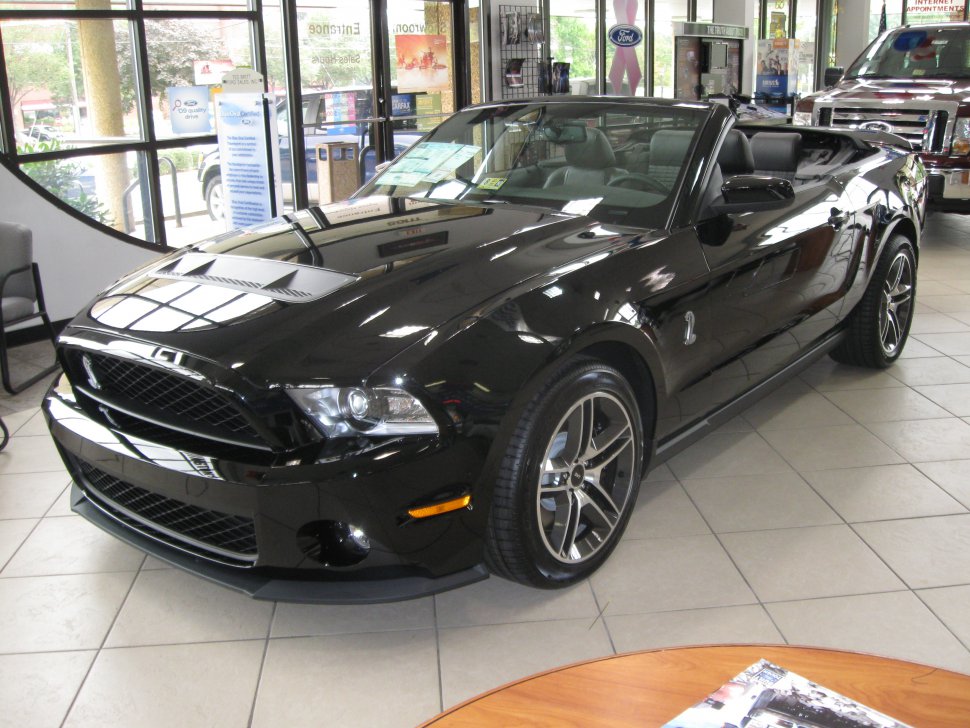
The 2011-2014 Ford Shelby GT500 Cabriolet, with its facelifted design, presented an even more aggressive and purposeful stance than its predecessors. The two-door cabriolet body style exuded a blend of classic muscle car aesthetics and modern aerodynamic principles. Measuring 188.19 inches (4780 mm) in length, 73.9 inches (1877 mm) in width, and 55.91 inches (1420 mm) in height, it commanded a significant road presence. The design was characterized by a prominent front grille, a functional hood with heat extractors, and distinctive Shelby badging, all contributing to its iconic visual identity. The low drag coefficient of 0.38 highlighted Ford’s efforts to balance performance with aerodynamic efficiency.
The interior of the GT500 Cabriolet was designed to be a driver-focused cockpit, while still offering seating for four. Premium materials and finishes, along with Shelby-specific instrumentation and detailing, differentiated it from standard Mustang models. The convertible top provided the flexibility of open-air driving, enhancing the sensory experience of the powerful V8 engine. Key features included a rack and pinion steering system for precise control, and a sophisticated suspension setup designed to handle the car’s substantial power output. The vehicle rode on staggered 19-inch wheels, fitted with high-performance tires (255/40 ZR19 in the front and 285/35 ZR19 in the rear), emphasizing its track-ready capabilities and ensuring optimal grip.
Beyond its performance credentials, the GT500 incorporated essential safety features for its era, including the aforementioned ABS, contributing to driver confidence. The thoughtful integration of design elements, from the deep front splitter to the rear diffuser, not only served an aesthetic purpose but also played a crucial role in the car’s high-speed stability and cooling efficiency.
Technical Specifications
| Category | Specification | Value |
|---|---|---|
| General Information | ||
| Brand | Ford | |
| Model | Shelby | |
| Generation | Shelby II Cabrio (facelift 2010) | |
| Type (Engine) | GT 500 5.4 V8 (558 Hp) | |
| Start of production | 2011 year | |
| End of production | 2014 year | |
| Powertrain Architecture | Internal Combustion engine | |
| Body type | Cabriolet | |
| Seats | 4 | |
| Doors | 2 | |
| Performance Specs | ||
| Fuel consumption (economy) – urban | 15.7 l/100 km | 15 US mpg |
| Fuel consumption (economy) – extra urban | 10.2 l/100 km | 23.1 US mpg |
| Fuel consumption (economy) – combined | 13.8 l/100 km | 17 US mpg |
| Fuel Type | Petrol (Gasoline) | |
| Weight-to-power ratio | 3.2 kg/Hp (311.2 Hp/tonne) | |
| Weight-to-torque ratio | 2.6 kg/Nm (385.9 Nm/tonne) | |
| Engine Specs | ||
| Power | 558 Hp @ 6200 rpm | |
| Power per liter | 103.2 Hp/l | |
| Torque | 692 Nm @ 4500 rpm | 510.39 lb.-ft. @ 4500 rpm |
| Engine layout | Front, Longitudinal | |
| Engine displacement | 5408 cm³ | 330.02 cu. in. |
| Number of cylinders | 8 | |
| Engine configuration | V-engine | |
| Cylinder Bore | 90.2 mm | 3.55 in. |
| Piston Stroke | 105.8 mm | 4.17 in. |
| Compression ratio | 8.4:1 | |
| Number of valves per cylinder | 4 | |
| Fuel injection system | Multi-port manifold injection | |
| Engine aspiration | Supercharger, Intercooler | |
| Valvetrain | DOHC | |
| Engine oil capacity | 6.1 l | 6.45 US qt |
| Coolant | 20 l | 21.13 US qt |
| Space, Volume and Weights | ||
| Kerb Weight | 1793 kg | 3952.89 lbs. |
| Fuel tank capacity | 60 l | 15.85 US gal |
| Dimensions | ||
| Length | 4780 mm | 188.19 in. |
| Width | 1877 mm | 73.9 in. |
| Height | 1420 mm | 55.91 in. |
| Wheelbase | 2720 mm | 107.09 in. |
| Front track | 1572 mm | 61.89 in. |
| Rear (Back) track | 1587 mm | 62.48 in. |
| Ride height (ground clearance) | 145 mm | 5.71 in. |
| Drag coefficient (Cd) | 0.38 | |
| Minimum turning circle (turning diameter) | 11.27 m | 36.98 ft. |
| Drivetrain, Brakes and Suspension Specs | ||
| Drivetrain Architecture | Internal combustion engine (ICE) drives the rear wheels of the vehicle. | |
| Drive wheel | Rear wheel drive | |
| Number of gears and type of gearbox | 6 gears, manual transmission | |
| Front brakes | Ventilated discs | |
| Rear brakes | Ventilated discs | |
| Assisting systems | ABS (Anti-lock braking system) | |
| Steering type | Steering rack and pinion | |
| Tires size | 255/40 ZR19 (front); 285/35 ZR19 (rear) | |
| Wheel rims size | 19 inch | |
Legacy and Market Impact
The Ford Shelby II Cabrio (facelift 2010) GT 500 5.4 V8 (558 Hp) holds a significant place in the pantheon of American performance cars. As a flagship model for Ford and a continuation of the legendary Shelby name, it not only honored its heritage but also pushed the boundaries of what a Mustang could be. Its powerful supercharged V8 engine, coupled with a driver-focused manual transmission, solidified its reputation as a true enthusiast’s car, capable of both exhilarating straight-line speed and respectable track performance for its size and weight.
In its market segment, the GT500 Cabriolet competed fiercely with other high-performance American offerings, such as the Chevrolet Camaro ZL1 and, in spirit, foreshadowed the extreme performance of later models like the Dodge Challenger SRT Hellcat. It stood out by offering a unique blend of classic muscle car appeal with modern engineering and refinement. The convertible option further broadened its appeal, allowing drivers to experience the intoxicating sound and feel of the supercharged V8 with the top down.
The 2011-2014 GT500 became highly regarded for its robust powertrain and its ability to deliver supercar-level performance at a more accessible price point than many European exotics. It represented a pivotal moment for the Mustang, demonstrating its capability to evolve beyond a simple pony car into a sophisticated, high-performance machine. Today, these models are sought after by collectors and enthusiasts who appreciate their unique blend of power, style, and the enduring legacy of Carroll Shelby’s vision. The GT500’s impact continues to resonate, influencing subsequent generations of performance Mustangs and cementing its status as a modern classic in automotive history.