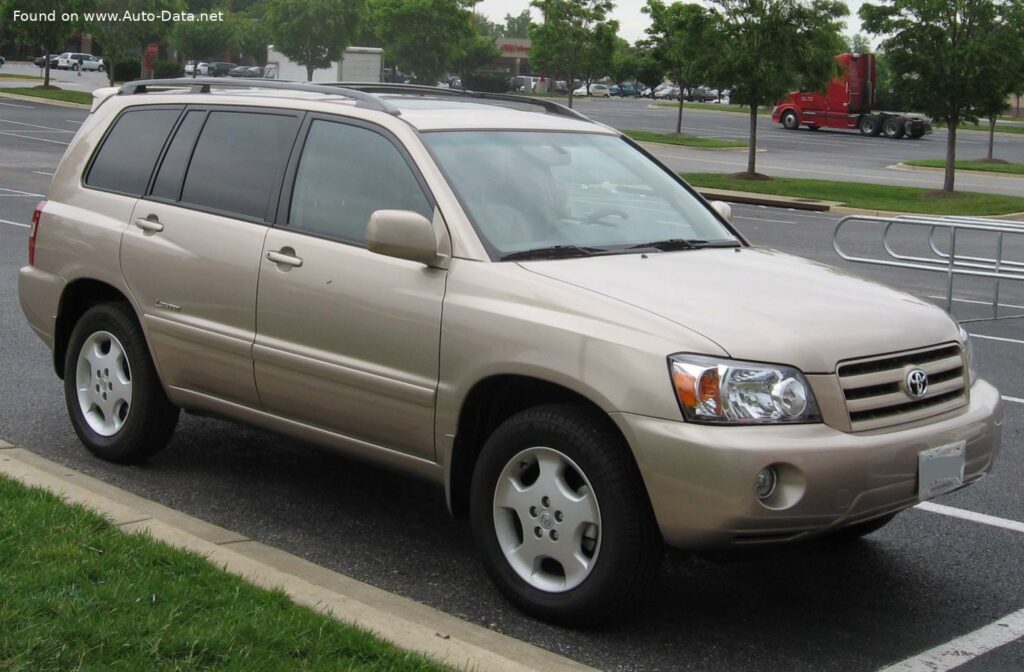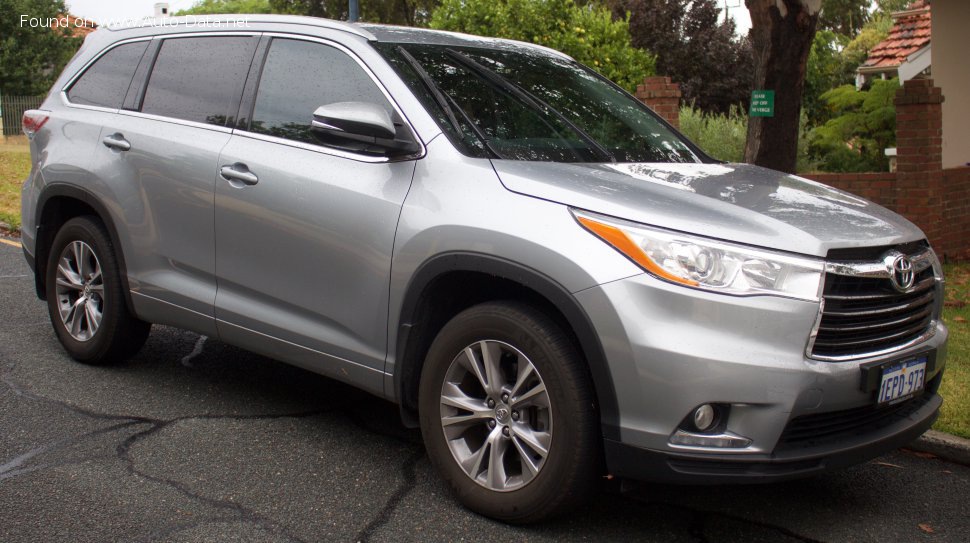
The Third Generation Toyota Highlander III 2.7 (188 Hp) Automatic: A Pillar of Family Utility
The Toyota Highlander, a stalwart in the mid-size crossover SUV segment, entered its third generation for the 2014 model year, building upon a reputation for reliability, practicality, and family-friendly design. The variant featuring the 2.7-liter (188 Hp) Automatic powertrain, produced from 2013 to 2016, represented a crucial entry-level offering for the Toyota Highlander III 2.7 (188 Hp) Automatic in its primary markets, including North America. This generation of Highlander aimed to combine the comfort and driving dynamics of a car with the versatility and commanding presence of an SUV, catering to growing families seeking a capable and efficient daily driver.
Positioned above the compact RAV4 and below the larger, more rugged 4Runner and Sequoia, the Highlander carved out its niche as a three-row family hauler. The third generation brought a more assertive design, enhanced interior refinement, and a suite of technological advancements, making it a highly competitive option. The 2.7-liter engine, while not the most potent in the lineup, provided a balanced blend of performance and fuel economy for consumers prioritizing efficiency and a lower entry price point.
Powertrain and Performance of the Toyota Highlander III 2.7 (188 Hp) Automatic
At the heart of this specific model of the Toyota Highlander III 2.7 (188 Hp) Automatic was Toyota’s venerable 1AR-FE engine. This naturally aspirated, 2.7-liter inline-four-cylinder unit was engineered for smooth operation and dependable performance, characteristic of Toyota’s powertrain philosophy. Featuring a DOHC (Dual Overhead Camshaft) valvetrain with VVTi (Variable Valve Timing with intelligence), the engine was optimized for both power delivery and fuel efficiency across its RPM range.
The 2.7-liter engine generated a respectable 188 horsepower at 5800 rpm and 185.87 lb.-ft. of torque at 4200 rpm. While these figures might not suggest blistering performance, they were entirely adequate for daily driving, including urban commuting and highway cruising with a family on board. Power was delivered to the front wheels via a smooth-shifting 6-speed automatic transmission, which was well-matched to the engine’s output, ensuring responsive acceleration and efficient gear changes. The front-wheel-drive (FWD) architecture was standard for this engine variant, contributing to its competitive fuel economy figures.
Performance metrics for the 2.7L Highlander indicated a 0-60 mph acceleration time of approximately 9.8 seconds, with a top speed electronically limited to 111.85 mph (180 km/h). These numbers placed it squarely within the expectations for a family-oriented mid-size SUV. Fuel economy was a strong suit, with EPA estimates reflecting 23.8 US mpg combined (9.9 liters/100 km), 17.7 US mpg in the city (13.3 liters/100 km), and an impressive 29.8 US mpg on the highway (7.9 liters/100 km). With CO2 emissions rated at 230 g/km and adhering to the Euro 5 emission standard, this Highlander offered a relatively efficient option for its size and capability, especially when considering its large 19.02 US gallon fuel tank capacity, providing a substantial driving range between fill-ups.
Design Evolution and Interior Comfort
The third-generation Toyota Highlander unveiled a significantly bolder and more refined exterior design compared to its predecessors. It adopted a more aggressive front fascia with a prominent trapezoidal grille, sleeker headlights, and a more sculpted body. The overall stance was wider and lower, giving it a more planted and premium appearance. Measuring 191.54 inches in length, 75.79 inches in width, and 68.11 inches in height, with a substantial 109.84-inch wheelbase, the Highlander commanded a significant road presence while maintaining maneuverability.
Inside, the Toyota Highlander III 2.7 (188 Hp) Automatic was designed with family comfort and versatility as paramount. It offered a standard seven-seat configuration across three rows, providing ample space for passengers. The interior materials were upgraded, featuring soft-touch surfaces and improved ergonomics. Key design elements included a large shelf integrated into the dashboard, offering convenient storage for small items, and an intuitive layout for controls and infotainment. The cargo capacity was impressive, starting at 13.81 cubic feet behind the third row, expanding to 83.7 cubic feet with both the second and third rows folded flat, making it highly adaptable for hauling groceries, luggage, or sports equipment.
Underneath its stylish exterior, the Highlander featured a robust chassis designed for a comfortable ride and stable handling. The independent front suspension utilized McPherson struts with coil springs and an anti-roll bar, while the rear suspension also featured an independent coil spring setup. This configuration provided a smooth ride quality, absorbing road imperfections effectively, and contributed to predictable handling. Safety features, beyond the mandated ABS (Anti-lock Braking System), included ventilated disc brakes at the front and disc brakes at the rear, ensuring strong stopping power. Electric power steering offered light and precise control, enhancing the driving experience, especially in urban environments. The vehicle rode on 19-inch wheels fitted with 245/55 R19 tires, providing a good balance of grip and ride comfort.
Technical Specifications
| Category | Specification |
|---|---|
| Brand | Toyota |
| Model | Highlander |
| Generation | Highlander III |
| Type (Engine) | 2.7 (188 Hp) Automatic |
| Production Years | 2013 – 2016 |
| Body Type | SUV |
| Seats | 7 |
| Doors | 5 |
| Powertrain Architecture | Internal Combustion engine |
| Performance Specs | |
| Fuel Consumption (Urban) | 13.3 l/100 km (17.7 US mpg) |
| Fuel Consumption (Extra Urban) | 7.9 l/100 km (29.8 US mpg) |
| Fuel Consumption (Combined) | 9.9 l/100 km (23.8 US mpg) |
| CO2 Emissions | 230 g/km |
| Fuel Type | Petrol (Gasoline) |
| Acceleration 0-60 mph | 9.8 sec |
| Acceleration 0-100 km/h | 10.3 sec |
| Maximum Speed | 111.85 mph (180 km/h) |
| Emission Standard | Euro 5 |
| Weight-to-Power Ratio | 10 kg/Hp (100 Hp/tonne) |
| Weight-to-Torque Ratio | 7.5 kg/Nm (134 Nm/tonne) |
| Engine Specs | |
| Power | 188 Hp @ 5800 rpm |
| Power per liter | 70.4 Hp/l |
| Torque | 252 Nm (185.87 lb.-ft.) @ 4200 rpm |
| Engine Layout | Front, Transverse |
| Engine Model/Code | 1AR-FE |
| Engine Displacement | 2672 cm³ (163.06 cu. in.) |
| Number of Cylinders | 4 |
| Engine Configuration | Inline |
| Cylinder Bore | 90 mm (3.54 in.) |
| Piston Stroke | 105 mm (4.13 in.) |
| Compression Ratio | 10:1 |
| Number of Valves per Cylinder | 4 |
| Fuel Injection System | Multi-port manifold injection |
| Engine Aspiration | Naturally aspirated engine |
| Valvetrain | DOHC-VVTi |
| Engine Oil Capacity | 4.4 l (4.65 US qt) |
| Coolant Capacity | 9.2 l (9.72 US qt) |
| Space, Volume and Weights | |
| Kerb Weight | 1880 kg (4144.69 lbs.) |
| Max. Weight | 2625 kg (5787.13 lbs.) |
| Max Load | 745 kg (1642.44 lbs.) |
| Trunk (boot) space – minimum | 391 l (13.81 cu. ft.) |
| Trunk (boot) space – maximum | 2370 l (83.7 cu. ft.) |
| Fuel Tank Capacity | 72 l (19.02 US gal) |
| Dimensions | |
| Length | 4865 mm (191.54 in.) |
| Width | 1925 mm (75.79 in.) |
| Height | 1730 mm (68.11 in.) |
| Wheelbase | 2790 mm (109.84 in.) |
| Front Track | 1635 mm (64.37 in.) |
| Rear (Back) Track | 1650 mm (64.96 in.) |
| Ride Height (Ground Clearance) | 197 mm (7.76 in.) |
| Drivetrain, Brakes and Suspension Specs | |
| Drivetrain Architecture | Front-wheel drive (ICE drives front wheels) |
| Drive Wheel | Front wheel drive |
| Number of Gears & Type | 6 gears, automatic transmission |
| Front Suspension | Independent, type McPherson with coil spring and anti-roll bar |
| Rear Suspension | Independent coil spring |
| Front Brakes | Ventilated discs |
| Rear Brakes | Disc |
| Assisting Systems | ABS (Anti-lock braking system) |
| Steering Type | Steering rack and pinion |
| Power Steering | Electric Steering |
| Tires Size | 245/55 R19 |
| Wheel Rims Size | 19 inches |
Legacy and Market Impact
The third-generation Toyota Highlander, particularly the 2.7-liter FWD model, played a significant role in solidifying the Highlander’s position as a top contender in the highly competitive mid-size SUV market. Its reputation for bulletproof reliability, low running costs, and strong resale value made it an attractive proposition for families across North America. The 2.7-liter engine variant specifically catered to buyers who valued fuel efficiency and a more accessible price point over the added power and all-wheel-drive capability of the V6 models.
Competitors in its segment included established rivals such as the Honda Pilot, Ford Explorer, Nissan Pathfinder, Chevrolet Traverse, and Hyundai Santa Fe. The Highlander consistently stood out due to Toyota’s renowned build quality and customer satisfaction. While some competitors offered more powerful base engines or more rugged off-road capabilities, the Highlander excelled in providing a balanced package of comfort, efficiency, and practicality for everyday family use.
The Toyota Highlander III 2.7 (188 Hp) Automatic contributed to the model’s enduring legacy as a benchmark for family-oriented crossovers. Its blend of a spacious and well-appointed interior, smooth and efficient powertrain, and a strong emphasis on safety and dependability ensured its continued popularity. The 2.7L engine option, though eventually phased out in later generations in favor of more powerful or hybrid options, served its purpose effectively as a practical and economical choice, allowing the Highlander to appeal to a wider demographic and maintain its status as a cornerstone of Toyota’s SUV lineup.