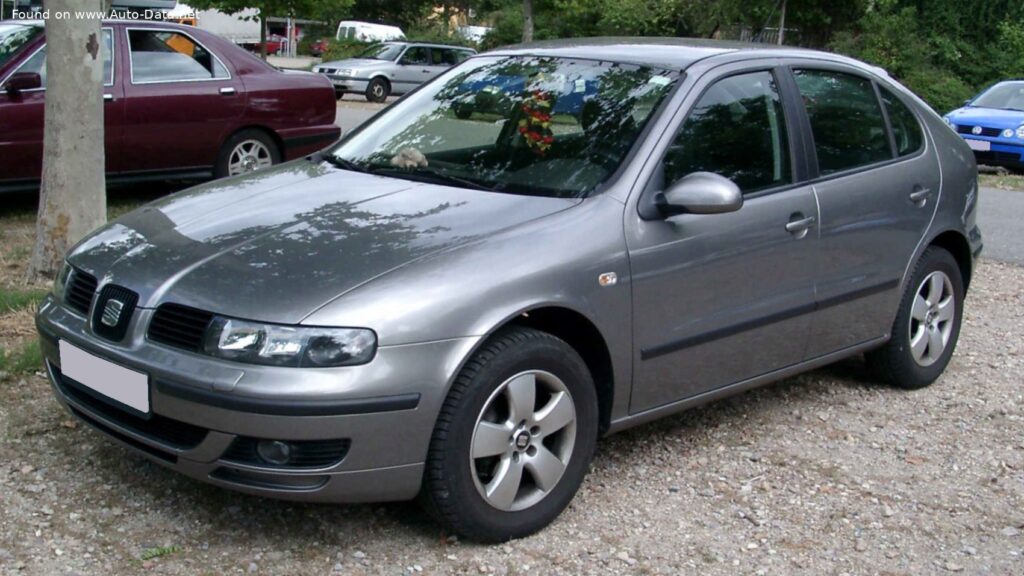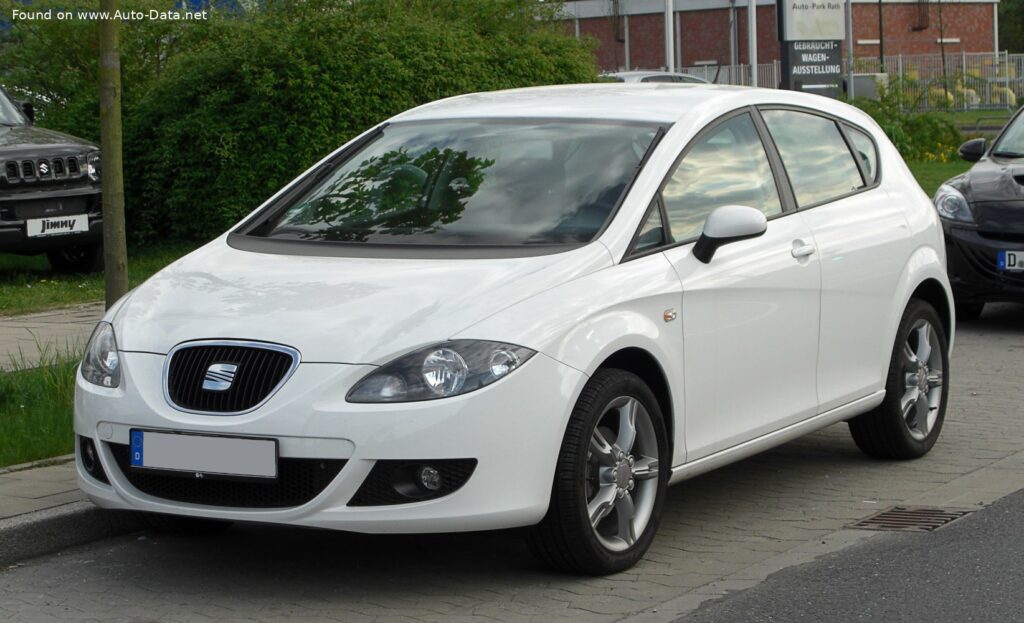
The Seat Leon II (1P) 1.9 TDI (90 Hp) represents a crucial period for the Spanish automaker, Seat, under the Volkswagen Group’s umbrella. Launched in July 2007 as part of the second generation of the popular Leon compact car, this particular variant was positioned as a practical, economical, and robust offering in the highly competitive European C-segment. While Seat vehicles are not widely available in the United States, the Leon has consistently been a cornerstone of the brand’s identity in its primary European and select international markets, known for blending Volkswagen Group engineering with a distinctly Spanish, sportier flair. The 1.9 TDI (90 Hp) model, produced until 2009, catered to buyers prioritizing fuel efficiency, reliability, and a solid driving experience without the higher costs associated with more powerful engines. Its role was to provide an accessible entry point into the Leon lineup, appealing to a broad demographic from urban commuters to small families seeking a versatile five-door hatchback.
Engine and Performance: The Seat Leon II (1P) 1.9 TDI (90 Hp) Powertrain
At the heart of the Seat Leon II (1P) 1.9 TDI (90 Hp) is a powertrain celebrated for its durability and impressive fuel economy: the venerable 1.9-liter (1896 cm3 or 115.7 cu. in.) inline-four turbocharged diesel engine, designated with the code BXF. This unit, a common sight across various Volkswagen Group models of its era, generated a respectable 90 horsepower at 4000 revolutions per minute. While 90 HP might seem modest by today’s standards, its true strength lay in its torque delivery. The engine produced a robust 154.89 lb.-ft. (210 Nm) of torque across a broad and usable band, peaking between 1800 and 2500 rpm. This characteristic torque curve made the Leon feel responsive in everyday driving, particularly in urban environments and for highway cruising, where its pulling power allowed for confident overtakes and minimized the need for frequent gear changes.
Power was delivered to the front wheels via a smooth and reliable five-speed manual transmission, a common configuration for efficiency-focused models of this segment. This setup contributed to the vehicle’s commendable fuel efficiency, a primary selling point for diesel engines in Europe. Performance figures for the 1.9 TDI (90 Hp) variant were pragmatic rather than exhilarating. It achieved a 0-60 mph acceleration in a calculated 12.6 seconds (0-100 km/h in 13.3 seconds), with a top speed of 108.12 mph (174 km/h). These figures placed it firmly within the realm of practical family hatchbacks, perfectly adequate for the demands of European roads and speed limits. The engine’s aspiration system featured a turbocharger coupled with an intercooler, optimizing air intake temperature and density for improved combustion efficiency and power output. A notable technical aspect was the Pump-nozzle (Unit Injector) fuel injection system, a hallmark of Volkswagen Group diesels during this period, known for its precise fuel delivery and efficiency.
The engine’s layout was front, transverse, which is typical for front-wheel-drive compact cars, allowing for efficient packaging and maximizing interior space. With a compression ratio of 18:1 and two valves per cylinder, the engine was designed for robust, long-term operation. Its 4.3 liters (4.54 US quarts) engine oil capacity and 5.6 liters (5.92 US quarts) coolant capacity were standard for a unit of its size, ensuring adequate lubrication and thermal management. The overall powertrain architecture, emphasizing an internal combustion engine driving the front wheels, provided a predictable and safe driving dynamic, making the Leon a reliable choice for countless drivers.
Design and Features: A Practical European Hatchback
The Seat Leon II (1P) inherited a distinctive design language, penned by automotive designer Walter de Silva. Its five-door hatchback body type was characterized by flowing lines, a somewhat aggressive front fascia, and concealed rear door handles that gave it a coupe-like appearance, a stylistic choice that set it apart from many of its more conservatively styled competitors. The Leon II (1P) measured 169.88 inches (4315 mm) in length, 69.61 inches (1768 mm) in width, and 57.4 inches (1458 mm) in height, with a wheelbase of 101.5 inches (2578 mm). These dimensions placed it squarely in the compact class, making it agile enough for city driving while offering sufficient interior space for five occupants.
Inside, the Leon II offered a practical and ergonomically designed cabin. The 341 liters (12.04 cu. ft.) of minimum trunk space was competitive for its segment, expandable with the rear seats folded, providing versatility for luggage or larger items. The design prioritized functionality, with clear instrumentation and intuitive controls. Standard features for safety included an Anti-lock Braking System (ABS), which was crucial for maintaining steering control during hard braking. The braking system itself comprised ventilated discs at the front and solid discs at the rear, providing reliable stopping power for a vehicle of its weight and performance.
The suspension system contributed significantly to the Leon’s reputation for competent handling. It featured an independent McPherson strut setup with coil springs and an anti-roll bar at the front, paired with an independent multi-link spring suspension with a stabilizer bar at the rear. This sophisticated rear suspension, often found in more premium vehicles, provided a balance of ride comfort and dynamic handling, ensuring stability and grip. The steering system was a hydraulic rack and pinion setup, offering direct feedback to the driver, a characteristic appreciated by those who enjoyed a more engaging driving experience. The vehicle rode on 205/55 R16 tires mounted on 6.5J x 16 wheel rims, providing a good balance between comfort and road holding. Its 14.53 US gallon (55 liters) fuel tank capacity, combined with the diesel engine’s efficiency, offered an impressive driving range, a significant advantage for long-distance European travel.
Technical Specifications
| Category | Specification | US Equivalent / Notes |
|---|---|---|
| Brand | Seat | |
| Model | Leon | |
| Generation | Leon II (1P) | |
| Type (Engine) | 1.9 TDI (90 Hp) | |
| Production Start | July, 2007 | |
| Production End | 2009 | |
| Powertrain Architecture | Internal Combustion engine | |
| Body Type | Hatchback | |
| Seats | 5 | |
| Doors | 5 | |
| Performance Specs | ||
| Fuel Type | Diesel | |
| Acceleration 0 – 100 km/h | 13.3 sec | |
| Acceleration 0 – 62 mph | 13.3 sec | |
| Acceleration 0 – 60 mph (Calculated) | 12.6 sec | |
| Maximum speed | 174 km/h | 108.12 mph |
| Weight-to-power ratio | 14.3 kg/Hp | 69.8 Hp/tonne |
| Weight-to-torque ratio | 6.1 kg/Nm | 162.8 Nm/tonne |
| Engine Specs | ||
| Power | 90 Hp @ 4000 rpm. | |
| Power per liter | 47.5 Hp/l | |
| Torque | 210 Nm @ 1800-2500 rpm. | 154.89 lb.-ft. @ 1800-2500 rpm. |
| Engine layout | Front, Transverse | |
| Engine Model/Code | BXF | |
| Engine displacement | 1896 cm3 | 1.9 Liters / 115.7 cu. in. |
| Number of cylinders | 4 | |
| Engine configuration | Inline | |
| Cylinder Bore | 79.5 mm | 3.13 in. |
| Piston Stroke | 95.5 mm | 3.76 in. |
| Compression ratio | 18:1 | |
| Number of valves per cylinder | 2 | |
| Fuel injection system | Pump-nozzle (Unit Injector) | |
| Engine aspiration | Turbocharger, Intercooler | |
| Engine oil capacity | 4.3 l | 4.54 US qt | 3.78 UK qt |
| Coolant | 5.6 l | 5.92 US qt | 4.93 UK qt |
| Space, Volume and Weights | ||
| Kerb Weight | 1290 kg | 2843.96 lbs. |
| Max. weight | 1860 kg | 4100.6 lbs. |
| Max load | 570 kg | 1256.63 lbs. |
| Trunk (boot) space – minimum | 341 l | 12.04 cu. ft. |
| Fuel tank capacity | 55 l | 14.53 US gal | 12.1 UK gal |
| Max. roof load | 75 kg | 165.35 lbs. |
| Permitted trailer load with brakes (12%) | 1400 kg | 3086.47 lbs. |
| Permitted trailer load without brakes | 680 kg | 1499.14 lbs. |
| Dimensions | ||
| Length | 4315 mm | 169.88 in. |
| Width | 1768 mm | 69.61 in. |
| Height | 1458 mm | 57.4 in. |
| Wheelbase | 2578 mm | 101.5 in. |
| Front track | 1525-1533 mm | 60.04 – 60.35 in. |
| Rear (Back) track | 1509-1517 mm | 59.41 – 59.72 in. |
| Front overhang | 949 mm | 37.36 in. |
| Rear overhang | 788 mm | 31.02 in. |
| Minimum turning circle | 10.7 m | 35.1 ft. |
| Drivetrain, Brakes and Suspension Specs | ||
| Drivetrain Architecture | The Internal combustion engine (ICE) drives the front wheels of the vehicle. | Front-wheel drive |
| Drive wheel | Front wheel drive | |
| Number of gears and type of gearbox | 5 gears, manual transmission | |
| Front suspension | Independent, type McPherson with coil spring and anti-roll bar | |
| Rear suspension | Independent multi-link spring suspension with stabilizer | |
| Front brakes | Ventilated discs | |
| Rear brakes | Disc | |
| Assisting systems | ABS (Anti-lock braking system) | |
| Steering type | Steering rack and pinion | |
| Power steering | Hydraulic Steering | |
| Tires size | 205/55 R16 | |
| Wheel rims size | 6.5J x 16 | |
Legacy and Market Impact
The Seat Leon II (1P) 1.9 TDI (90 Hp) played a significant role in solidifying Seat’s presence in the European compact car market during its production run from 2007 to 2009. Positioned within the vast Volkswagen Group, the Leon aimed to offer a more emotional and sporty alternative to its platform siblings, such as the Volkswagen Golf V and the Audi A3. While the 90 Hp TDI variant wasn’t the performance flagship, its legacy is rooted in its exceptional blend of economy, practicality, and Volkswagen Group build quality.
In its primary markets, this particular Leon model was highly regarded as a reliable and cost-effective choice for individuals and families. Its robust 1.9-liter TDI engine was a known quantity, having proven its mettle in millions of vehicles across the VW Group. This reputation for mechanical longevity and impressive fuel economy made it a popular choice for fleet operators, company car drivers, and private buyers seeking low running costs. The relatively high torque output for its power level meant it was perfectly capable of handling varied European road conditions, from bustling city streets to sustained highway cruising, often with a full load of passengers or cargo.
Competitors in its segment were numerous and formidable, including the Ford Focus, Opel/Vauxhall Astra, Renault Megane, Peugeot 307/308, and the Fiat Bravo. The Leon differentiated itself with its distinctive styling, which was often seen as more dynamic than some rivals, and its “feel-good” factor derived from its direct steering and well-sorted suspension. While not as overtly luxurious as an Audi A3 or as universally mainstream as a VW Golf, the Leon carved out its niche by offering a compelling package of value, driving enjoyment, and the inherent quality of its German engineering base.
Historically, the Seat Leon II (1P) 1.9 TDI (90 Hp) contributed to Seat’s brand identity as a producer of stylish, youthful, and practical cars. It demonstrated that Seat could deliver a highly competitive product in the crucial compact segment, balancing performance, efficiency, and design. Its strong sales in markets like Spain, Germany, and the UK underscored its appeal, making it a common sight on European roads. Even after its production ceased, the Leon II, particularly its TDI variants, maintained a strong presence in the used car market, a testament to its enduring reliability and economical operation. It remains a significant chapter in Seat’s journey, showcasing the brand’s ability to infuse passion into practical motoring.