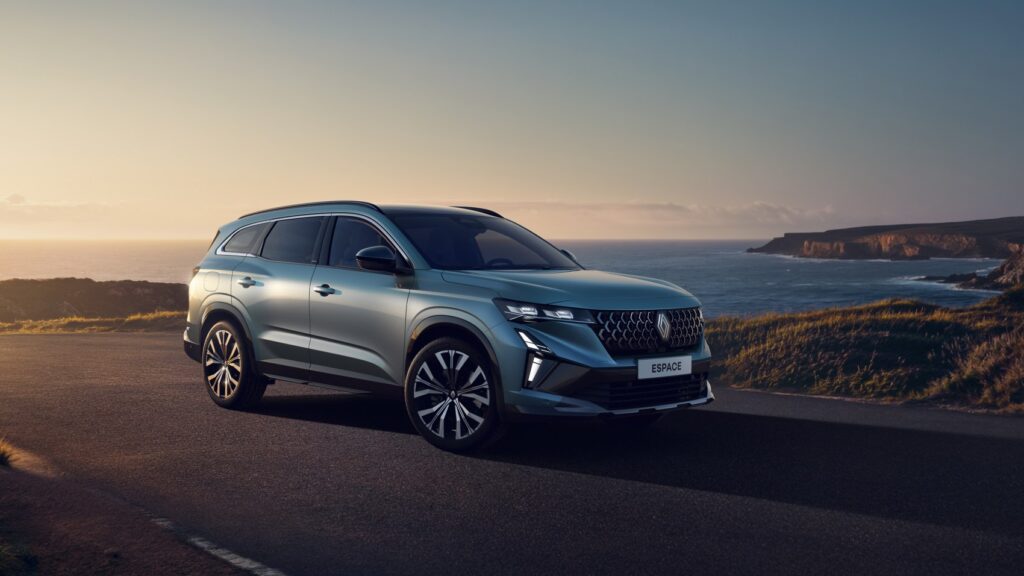
The 2025 Renault Espace VI (Phase II) marks a pivotal evolution for a nameplate synonymous with family transportation in Europe. Having transitioned from its pioneering role as a multi-purpose vehicle (MPV) to a contemporary sport utility vehicle (SUV) in its sixth generation, the Espace continues to adapt to evolving market demands. This Phase II refresh, set to commence production in March 2025, solidifies its position as a spacious, technology-driven 7-seater designed for the modern European family. As a full hybrid electric vehicle (FHEV), the Renault Espace VI (Phase II, 2025) emphasizes efficiency and reduced emissions, aligning with current environmental standards and consumer preferences. While the Espace has never been officially sold in the United States market, its design philosophies and technological advancements reflect broader trends in global automotive engineering, offering insights into European interpretations of family mobility.
The Evolution of the Renault Espace VI (Phase II, 2025)
Market Positioning and European Context
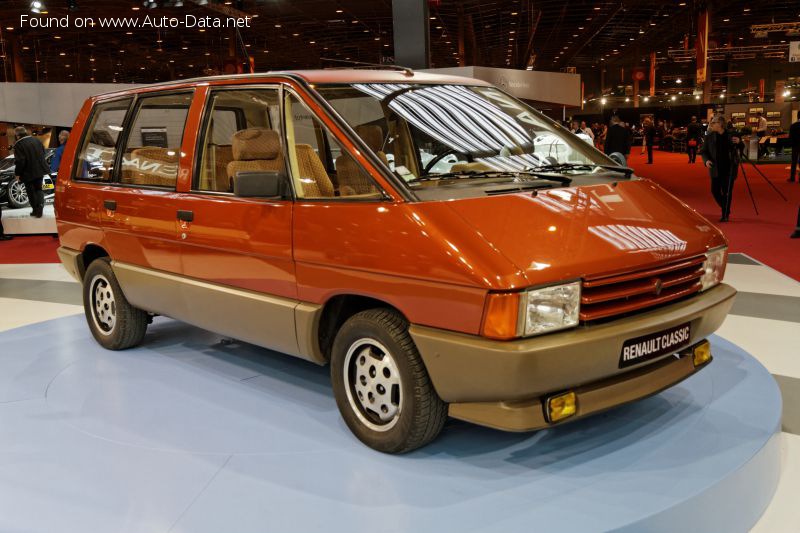
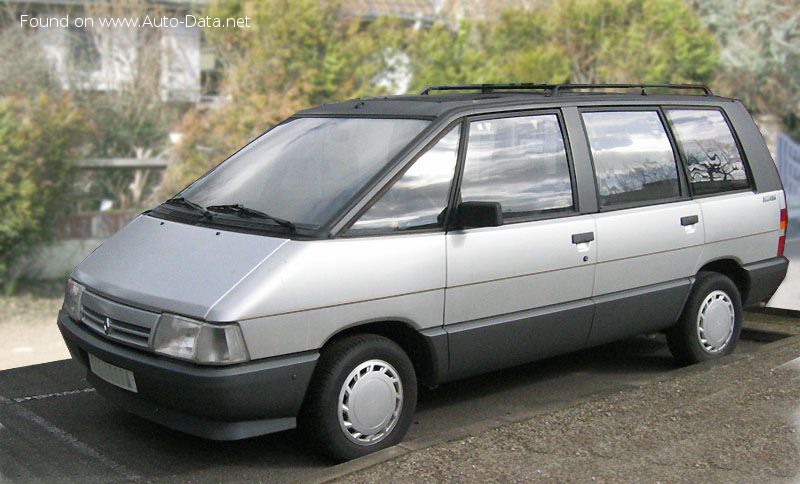
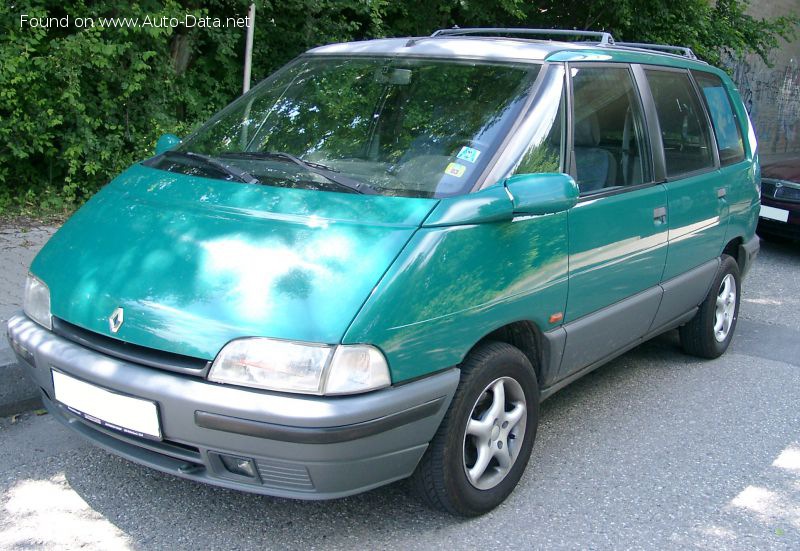
The Renault Espace has a storied history, first introduced in 1984 as one of Europe’s original MPVs, defining a segment with its innovative, roomy interior and modular seating. Its transformation into an SUV for its sixth generation reflects a significant strategic shift by Renault to meet the overwhelming market demand for utility vehicles. The 2025 Phase II iteration refines this new identity, offering a blend of SUV ruggedness with the practicality and comfort expected of the Espace name. Positioned in the competitive mid-size SUV segment, it caters to European families seeking a versatile vehicle capable of handling daily commutes, long-distance travel, and varied cargo needs. Its 7-seat configuration is a key selling point, providing ample space for larger families or those requiring occasional extra passenger capacity. The adoption of a full hybrid powertrain underscores Renault’s commitment to electrification, offering a compelling balance of performance and fuel economy crucial for the European market’s stringent emission regulations and high fuel costs.
Powertrain: The 1.2 E-TECH Full Hybrid Multi-Mode
Engine and Performance Characteristics
At the heart of the 2025 Renault Espace VI (Phase II, 2025) is an advanced 1.2 E-TECH Full Hybrid Multi-Mode powertrain, a sophisticated system engineered for both efficiency and responsive performance. The internal combustion engine (ICE) component is a compact 1.2-liter (1199 cm³, 73.17 cu. in.) inline 3-cylinder unit. Despite its small displacement, this engine is remarkably potent, featuring a turbocharger and intercooler, direct injection, and a DOHC valvetrain. It produces 130 Hp at 4500 rpm and a healthy 151.2 lb.-ft. of torque at a low 1750 rpm, making it highly tractable in various driving conditions. Complementing the gasoline engine is a robust electric motor, integrated into the transmission, which contributes an additional 70 Hp and 151.2 lb.-ft. of torque. The synergy between these two power sources results in a combined system output of 200 Hp, providing ample power for a family SUV.
The Espace VI’s FHEV architecture means it can operate in full electric mode, mixed mode, or solely on gasoline power, intelligently managed by its Multi-Mode automatic transmission. This system is powered by a 2 kWh Lithium-ion (Li-Ion) battery, strategically located below the floor and under the front seats to optimize weight distribution and interior space. The 400V battery system ensures efficient power delivery to the electric motor. This advanced powertrain enables the Espace to achieve a commendable 0-60 mph acceleration in an estimated 8.4 seconds and a top speed of 111.85 mph (180 km/h). More importantly for its target market, it delivers exceptional fuel economy, with a combined WLTP rating of 49 US mpg (4.8 l/100 km), and remarkably low CO2 emissions of 108 g/km, meeting the stringent Euro 6e emission standard. Features like a Start & Stop System and a particulate filter further enhance its environmental credentials.
Design and Features
Contemporary SUV Aesthetics and Practicality
The 2025 Renault Espace VI (Phase II) embodies a modern SUV design philosophy, characterized by its confident stance and practical utility. As a 5-door SUV, it measures 186.85 inches (4746 mm) in length, 72.05 inches (1830 mm) in width (82.01 inches or 2083 mm including mirrors), and 64.76 inches (1645 mm) in height. Its substantial 107.8-inch (2738 mm) wheelbase contributes significantly to interior roominess, a hallmark of the Espace lineage. The design language is sleek yet purposeful, with a ground clearance of 7.09 inches (180 mm) hinting at its SUV capabilities, though its primary domain remains paved roads.
Inside, the Espace VI prioritizes passenger comfort and versatility, particularly with its standard 7-seat configuration. The interior offers flexible seating arrangements to maximize cargo capacity when needed. Minimum trunk space starts at a modest 7.49 cu. ft. (212 l) with all three rows in place, expanding dramatically to an impressive 72.54 cu. ft. (2054 l) with the rear seats folded down, rivaling dedicated cargo vehicles. The vehicle’s architecture features a front, transverse engine layout and front-wheel drive, ensuring predictable handling and efficient packaging. Suspension consists of an independent McPherson type at the front and an elastic beam at the rear, tuned for a comfortable ride. Safety features include ABS (Anti-lock braking system), and the steering system is an electric power-assisted rack and pinion setup, providing light and precise control. The Espace is offered with a choice of tire sizes, including 205/55 R19, 235/40 R20, and 235/45 R20, mounted on 19 or 20-inch wheel rims, allowing for customization of both aesthetics and driving dynamics.
Technical Specifications
| Category | Specification |
|---|---|
| General Information | |
| Brand | Renault |
| Model | Espace |
| Generation | Espace VI (Phase II, 2025) |
| Type (Engine) | 1.2 E-TECH (200 Hp) Full Hybrid Multi-Mode 7 Seat |
| Start of Production | March, 2025 year |
| Powertrain Architecture | FHEV (Full Hybrid Electric Vehicle) |
| Body Type | SUV |
| Seats | 7 |
| Doors | 5 |
| Performance Specs | |
| Combined Fuel Consumption (WLTP) | 4.8 l/100 km (49 US mpg, 58.9 UK mpg) |
| CO2 Emissions (WLTP) | 108 g/km |
| Fuel Type | Petrol (Gasoline) |
| Acceleration 0 – 60 mph (Calculated) | 8.4 sec |
| Acceleration 0 – 100 km/h | 8.8 sec |
| Maximum Speed | 180 km/h (111.85 mph) |
| Emission Standard | Euro 6e |
| Weight-to-Power Ratio | 8.2 kg/Hp (122.5 Hp/tonne) |
| Weight-to-Torque Ratio | 8 kg/Nm (125.6 Nm/tonne) |
| Electric Cars and Hybrids Specs | |
| Gross Battery Capacity | 2 kWh |
| Battery Voltage | 400 V |
| Battery Technology | Lithium-ion (Li-Ion) |
| Battery Location | Below the floor, under the front seats |
| Electric Motor 1 Power | 70 Hp |
| Electric Motor Torque | 205 Nm (151.2 lb.-ft.) |
| Electric Motor Location | Integrated into the transmission |
| System Power | 200 Hp |
| Internal Combustion Engine Specs | |
| Power | 130 Hp @ 4500 rpm |
| Power per liter | 108.4 Hp/l |
| Torque | 205 Nm (151.2 lb.-ft.) @ 1750 rpm |
| Engine Layout | Front, Transverse |
| Engine Displacement | 1199 cm³ (73.17 cu. in.) |
| Number of Cylinders | 3 |
| Engine Configuration | Inline |
| Cylinder Bore | 75.5 mm (2.97 in.) |
| Piston Stroke | 89.3 mm (3.52 in.) |
| Number of Valves per Cylinder | 4 |
| Fuel Injection System | Direct injection |
| Engine Aspiration | Turbocharger, Intercooler |
| Valvetrain | DOHC |
| Engine Systems | Start & Stop System, Particulate filter |
| Space, Volume and Weights | |
| Curb Weight | 1632 kg (3597.94 lbs.) |
| Max. Weight | 2261 kg (4984.65 lbs.) |
| Max Load | 629 kg (1386.71 lbs.) |
| Trunk (boot) Space – Minimum | 212 l (7.49 cu. ft.) |
| Trunk (boot) Space – Maximum | 2054 l (72.54 cu. ft.) |
| Fuel Tank Capacity | 55 l (14.53 US gal, 12.1 UK gal) |
| Dimensions | |
| Length | 4746 mm (186.85 in.) |
| Width | 1830 mm (72.05 in.) |
| Width with Mirrors Folded | 1843 mm (72.56 in.) |
| Width Including Mirrors | 2083 mm (82.01 in.) |
| Height | 1645 mm (64.76 in.) |
| Wheelbase | 2738 mm (107.8 in.) |
| Front Track | 1590 mm (62.6 in.) |
| Rear (Back) Track | 1579-1585 mm (62.17 – 62.4 in.) |
| Front Overhang | 949 mm (37.36 in.) |
| Rear Overhang | 1059 mm (41.69 in.) |
| Ride Height (Ground Clearance) | 180 mm (7.09 in.) |
| Minimum Turning Circle (Diameter) | 11.6 m (38.06 ft.) |
| Drivetrain, Brakes and Suspension Specs | |
| Drivetrain Architecture | The Internal combustion engine (ICE) and electric motor drive the front wheels of the car with the ability to work in full electric or mixed mode. |
| Drive Wheel | Front wheel drive |
| Number of Gears and Type of Gearbox | Automatic transmission Multi-Mode |
| Front Suspension | Independent type McPherson |
| Rear Suspension | Elastic beam |
| Assisting Systems | |
| ABS (Anti-lock braking system) | Yes |
| Steering Type | Steering rack and pinion |
| Power Steering | Electric Steering |
| Tires Size | 205/55 R19; 235/40 R20; 235/45 R20 |
| Wheel Rims Size | 19; 20 |
Legacy and Market Impact
Reshaping the Espace Identity
The 2025 Renault Espace VI (Phase II) represents a crucial chapter in the ongoing narrative of a nameplate that has continually adapted to the automotive landscape. From its groundbreaking debut as Europe’s first true MPV, the Espace carved out a legacy of innovation, comfort, and family-centric design. Its transformation into an SUV in its sixth generation was a bold but necessary move, acknowledging the undeniable shift in consumer preference away from traditional minivans. This Phase II refresh further refines that SUV identity, ensuring the Espace remains competitive and relevant in a segment saturated with strong contenders.
In the fiercely contested European market, the Espace VI (Phase II) goes head-to-head with established rivals such as the Skoda Kodiaq, Peugeot 5008, Hyundai Santa Fe, Kia Sorento, and Nissan X-Trail, all of which offer similar 7-seat SUV configurations and a focus on practicality and technology. What distinguishes the Espace is its sophisticated 1.2 E-TECH full hybrid powertrain, which offers a compelling blend of strong performance, impressive fuel economy (49 US mpg), and low emissions. This emphasis on electrification and efficiency is a significant draw for European buyers facing increasingly stringent environmental regulations and rising fuel costs. The Multi-Mode automatic transmission, a unique Renault innovation, further enhances the driving experience by seamlessly transitioning between electric and gasoline power for optimal efficiency and smoothness.
The Espace’s long wheelbase and clever packaging ensure that its transition to an SUV doesn’t compromise the spaciousness and versatility that were hallmarks of its MPV predecessors. With generous trunk space that expands significantly when seats are folded, it retains its core appeal as a genuinely practical family vehicle. Its modern design, coupled with advanced features and a highly efficient powertrain, positions the 2025 Renault Espace VI (Phase II) as a strong contender in the European mid-size SUV market, carrying forward a legacy of innovation while embracing the demands of the future.