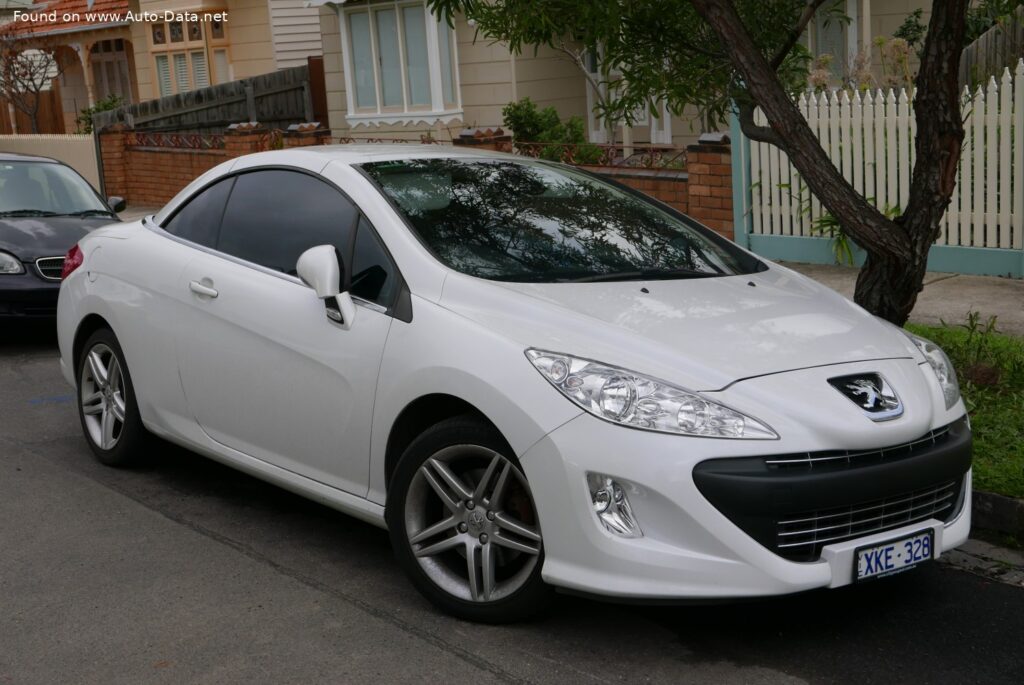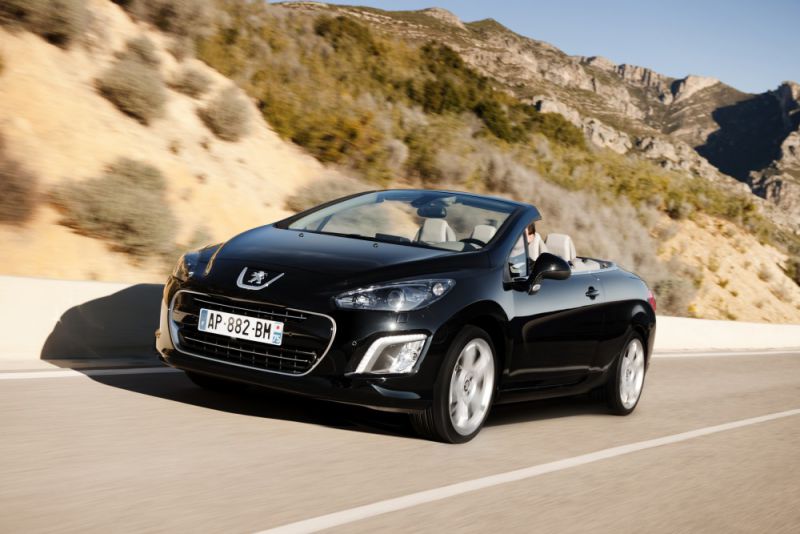
The Peugeot 308 CC I (Phase II, 2011) represents a distinctive offering from the French automaker, Peugeot, in the European compact car segment. As a stylish coupe-cabriolet, this vehicle catered to a market segment seeking the versatility of a hardtop coupe combined with the exhilarating experience of open-air driving. The first generation 308 CC, particularly in its Phase II iteration from 2011 to 2013, was a significant player in its class, embodying Peugeot’s design philosophy and engineering prowess for its primary European audience. This specific variant, equipped with the 1.6 16V VTi engine delivering 120 horsepower, aimed to strike a balance between performance, efficiency, and the undeniable appeal of its retractable hardtop roof.
The Peugeot 308 CC I (Phase II, 2011): A European Open-Top Experience
While the Peugeot brand is not widely distributed in the United States, its vehicles, like the 308 CC, hold a significant presence and appeal in European and other international markets. The Peugeot 308 CC I (Phase II, 2011) was a prime example of a car designed for European tastes, offering a blend of chic styling, practical four-seat accommodation (though rear seats were compact), and the aspirational allure of a convertible. The “CC” designation, standing for Coupe-Cabriolet, indicated its signature feature: a sophisticated, electrically operated retractable hardtop roof. This design offered superior security, noise insulation, and weather protection compared to traditional soft-top convertibles, effectively transforming the car from a sleek coupe to an open-top cruiser with the press of a button.
The Phase II designation signifies a mid-cycle refresh that brought subtle updates to the exterior styling, interior finishes, and potentially minor mechanical refinements, keeping the 308 CC competitive within its segment. Its role was to serve as a lifestyle vehicle, appealing to individuals or couples who desired a car that could offer both everyday usability and the joy of top-down motoring on weekends or holidays. Its compact dimensions made it well-suited for European city driving, while its comfortable ride was designed for longer journeys.
Engine and Performance
Under the hood of the Peugeot 308 CC I (Phase II, 2011) 1.6 16V VTi resided a naturally aspirated 1.6-liter (1598 cm³) inline four-cylinder engine, known by its internal code EP6. This powerplant was part of the Prince engine family, a collaborative development between PSA Peugeot Citroën and BMW, renowned for its efficiency and relatively refined operation. The engine featured a Double Overhead Camshaft (DOHC) valvetrain with 4 valves per cylinder, optimizing airflow and combustion. Fuel delivery was managed by a multi-port manifold injection system, a reliable and common technology for its time.
This 1.6L engine generated a respectable 120 horsepower at 6000 rpm, translating to a power output of 75.1 Hp per liter. Peak torque stood at 118.01 pound-feet (160 Nm), delivered at a moderate 4250 rpm, providing adequate pulling power for daily driving scenarios. The engine’s configuration was front-transverse, driving the front wheels through a 5-speed manual transmission. This setup was typical for a vehicle in this class, prioritizing ease of use and cost-effectiveness.
In terms of outright performance, the 308 CC 1.6 16V VTi was not designed as a sports car, but rather as a comfortable cruiser. It achieved a 0-60 mph acceleration time of 11.9 seconds (0-100 km/h in 12.5 seconds) and reached a maximum speed of 121.17 mph (195 km/h). These figures positioned it as a capable performer for its segment, suitable for both urban commuting and highway travel. Fuel economy was a strong point, with a combined rating of 33.1 US mpg (7.1 l/100 km), making it an economical choice for its class. Furthermore, the vehicle complied with Euro 5 emission standards, reflecting its commitment to environmental responsibility during its production years.
Design and Features
The defining characteristic of the Peugeot 308 CC I (Phase II, 2011) was its sophisticated Coupe-Cabriolet body type. This design allowed the vehicle to seamlessly transform from a sleek, two-door coupe into an elegant, open-top convertible. The retractable hardtop mechanism was a key selling point, offering enhanced security, better insulation against noise and temperature extremes, and a more robust appearance compared to fabric soft tops. The car was designed to accommodate four occupants, though the rear seats, as is common in compact convertibles, were best suited for shorter journeys or smaller passengers. The overall dimensions of the vehicle – a length of 174.8 inches (4440 mm), a width of 71.54 inches (1817 mm), and a height of 56.18 inches (1427 mm) – gave it a substantial yet agile road presence. Its wheelbase measured 102.56 inches (2605 mm), contributing to ride comfort and stability.
Beyond its transformative roof, the 308 CC Phase II featured a design language typical of Peugeot at the time, characterized by smooth lines, a prominent grille, and distinctive lighting elements. The refresh brought subtle updates to these features, keeping the car looking contemporary. Practicality was also considered, with a trunk space that varied significantly depending on the roof’s position. With the hardtop up, it offered a generous 14.23 cubic feet (403 liters) of cargo volume, comparable to many compact sedans. However, when the roof was stowed, trunk capacity reduced to 7.98 cubic feet (226 liters), still enough for smaller bags or essentials. Standard equipment included safety features such as ABS (Anti-lock Braking System) for enhanced braking control. The steering system utilized a hydraulic steering rack and pinion setup, providing a more traditional and often more communicative feel than electrically assisted systems. The car rode on 215/55 R16 V tires, offering a balance of comfort and grip, while ventilated disc brakes at the front and disc brakes at the rear ensured confident stopping power. The suspension system, featuring wishbones at both the front and rear, was tuned for a comfortable ride, typical of a leisure-oriented convertible.
Technical Specifications
| General Information | |
| Brand | Peugeot |
| Model | 308 |
| Generation | 308 CC I (Phase II, 2011) |
| Type (Engine) | 1.6 16V VTi (120 Hp) |
| Start of production | 2011 year |
| End of production | 2013 year |
| Powertrain Architecture | Internal Combustion engine |
| Body type | Coupe – Cabriolet |
| Seats | 4 |
| Doors | 2 |
| Performance Specs | |
| Fuel consumption (combined) | 7.1 l/100 km (33.1 US mpg) |
| Fuel Type | Petrol (Gasoline) |
| Acceleration 0 – 60 mph | 11.9 sec |
| Maximum speed | 121.17 mph (195 km/h) |
| Emission standard | Euro 5 |
| Weight-to-power ratio | 13 kg/Hp (77.2 Hp/tonne) |
| Weight-to-torque ratio | 9.7 kg/Nm (102.9 Nm/tonne) |
| Engine Specs | |
| Power | 120 Hp @ 6000 rpm |
| Power per liter | 75.1 Hp/l |
| Torque | 118.01 lb.-ft. (160 Nm) @ 4250 rpm |
| Engine layout | Front, Transverse |
| Engine Model/Code | EP6 |
| Engine displacement | 1.6 l (1598 cm³ / 97.52 cu. in.) |
| Number of cylinders | 4 |
| Engine configuration | Inline |
| Cylinder Bore | 3.03 in. (77 mm) |
| Piston Stroke | 3.38 in. (85.8 mm) |
| Compression ratio | 11:1 |
| Number of valves per cylinder | 4 |
| Fuel injection system | Multi-port manifold injection |
| Engine aspiration | Naturally aspirated engine |
| Valvetrain | DOHC |
| Engine oil capacity | 4.49 US qt (4.25 l) |
| Coolant | 6.34 US qt (6 l) |
| Space, Volume and Weights | |
| Kerb Weight | 3428.19 lbs. (1555 kg) |
| Max. weight | 4155.71 lbs. (1885 kg) |
| Max load | 727.53 lbs. (330 kg) |
| Trunk (boot) space – minimum | 7.98 cu. ft. (226 l) |
| Trunk (boot) space – maximum | 14.23 cu. ft. (403 l) |
| Fuel tank capacity | 15.85 US gal (60 l) |
| Dimensions | |
| Length | 174.8 in. (4440 mm) |
| Width | 71.54 in. (1817 mm) |
| Height | 56.18 in. (1427 mm) |
| Wheelbase | 102.56 in. (2605 mm) |
| Front track | 60.08 in. (1526 mm) |
| Rear (Back) track | 59.88 in. (1521 mm) |
| Drivetrain, Brakes and Suspension Specs | |
| Drivetrain Architecture | The Internal combustion engine (ICE) drives the front wheels of the vehicle. |
| Drive wheel | Front wheel drive |
| Number of gears and type of gearbox | 5 gears, manual transmission |
| Front suspension | Wishbone |
| Rear suspension | Wishbone |
| Front brakes | Ventilated discs |
| Rear brakes | Disc |
| Assisting systems | ABS (Anti-lock braking system) |
| Steering type | Steering rack and pinion |
| Power steering | Hydraulic Steering |
| Tires size | 215/55 R16 V |
Legacy and Market Impact
The Peugeot 308 CC I (Phase II, 2011) played a significant role in the European compact convertible market during its production run. It competed in a niche segment against rivals such as the Renault Mégane CC, Volkswagen Eos, and Ford Focus CC, all of which offered similar retractable hardtop configurations. Peugeot had a long-standing tradition of producing attractive convertibles, dating back to its “Eclipse” models of the 1930s, and the 308 CC continued this lineage with a modern interpretation.
The car’s reputation was built on its stylish aesthetics, the unique versatility of its hardtop roof, and a generally comfortable ride. It was particularly appealing to buyers who valued design and the open-air experience without sacrificing the security and refinement of a fixed-roof car. While not a performance leader, its 1.6 VTi engine provided sufficient power for its intended purpose and delivered commendable fuel efficiency, a crucial factor in the European market. The 308 CC was seen as a lifestyle vehicle, often chosen for its emotional appeal and the sense of freedom it offered.
Historically, the era of the retractable hardtop compact convertible peaked around the time the 308 CC was produced. Automakers invested heavily in the complex engineering required for these roofs, offering a premium alternative to traditional soft-top convertibles. However, the trend began to wane in the mid-2010s due to factors such as increased manufacturing costs, added weight and complexity, and a shift in consumer preference towards SUVs and crossovers. Despite this eventual decline in the segment, the Peugeot 308 CC I remains a testament to a specific period in automotive design, offering a blend of French flair, practical engineering, and the timeless joy of top-down motoring for its dedicated European audience.