
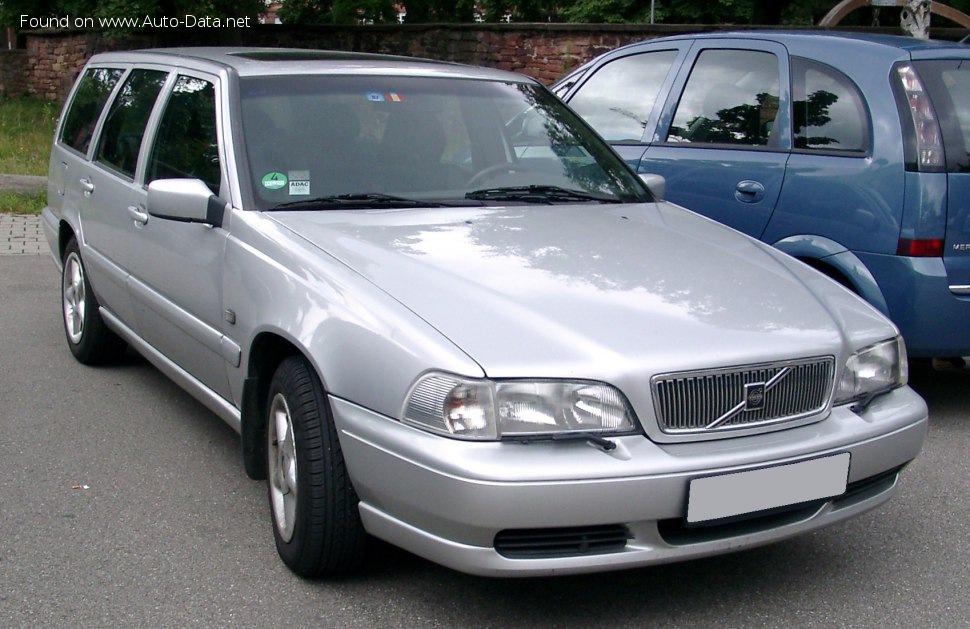
The Volvo V70 I 2.4 16V (140 Hp) represents a significant iteration in Volvo’s esteemed lineage of practical and safe station wagons. Produced for a brief but impactful period between 1999 and 2000, this particular variant of the first-generation V70 offered a compelling blend of utility, comfort, and the robust engineering synonymous with the Swedish brand. Positioned in the premium mid-size segment, the V70 I built upon the successful foundation of its predecessor, the 850, refining its design and enhancing its features to meet the evolving demands of the late 20th-century automotive market. It carved out a niche as a reliable family hauler and a versatile companion for those requiring substantial cargo capacity without compromising on driving dynamics or passenger safety.
The Volvo V70 I 2.4 16V (140 Hp): A Legacy of Practicality and Safety
The Volvo V70, an acronym for “Versatility 70,” was introduced in 1996 as a direct evolution of the Volvo 850 wagon. The first generation, V70 I, retained much of the 850’s acclaimed chassis and powertrain, but featured a more rounded, contemporary aesthetic and numerous interior refinements. The 1999-2000 model year, specifically the 2.4 16V (140 Hp) variant, was a testament to Volvo’s commitment to continuous improvement, offering a naturally aspirated five-cylinder engine that prioritized smooth power delivery and fuel efficiency for everyday driving. This generation was crucial in solidifying Volvo’s reputation in North America and Europe as a manufacturer of sophisticated, family-friendly vehicles that prioritized occupant protection above all else. Its robust construction and forward-thinking safety innovations, such as the Side Impact Protection System (SIPS) and Whiplash Protection System (WHIPS), set benchmarks for the era, making the Volvo V70 I 2.4 16V (140 Hp) a compelling choice for discerning buyers.
Engine and Performance
At the heart of the Volvo V70 I 2.4 16V (140 Hp) lies Volvo’s venerable B5244S2 engine, a 2.4-liter (2435 cm3 or 148.59 cu. in.) naturally aspirated inline five-cylinder powerplant. This engine configuration, a hallmark of Volvo’s engineering prowess during this period, was celebrated for its distinctive sound, inherent balance, and impressive durability. The engine is a DOHC (Double Overhead Camshaft) design with four valves per cylinder, totaling 16 valves, which contributes to its efficient breathing and power delivery. It employs a multi-port manifold injection system for precise fuel metering, ensuring optimal combustion and responsiveness.
The 2.4-liter engine produces a respectable 140 horsepower at 4500 rpm, providing ample power for daily commuting and highway cruising. Torque output stands at 162.26 lb.-ft. (220 Nm) at a relatively low 3750 rpm, which translates to strong mid-range acceleration and effortless merging into traffic. This powertrain is mated to a smooth-shifting 5-speed manual transmission, driving the front wheels, offering an engaging driving experience for those who prefer direct control over gear changes. The combination of engine output and transmission allows the V70 I 2.4 16V (140 Hp) to accelerate from 0 to 60 mph in a calculated 10 seconds, with a top speed of 127.38 mph (205 km/h). While not a performance wagon in the vein of its R-badged siblings, this variant was engineered for practical, reliable performance.
In terms of efficiency, the V70 I 2.4 16V (140 Hp) achieved an urban fuel consumption rate of 26.4 US mpg (8.9 l/100 km) according to NEDC standards, which was competitive for a vehicle of its size and capacity at the time. Its CO2 emissions were rated at 214 g/km, reflecting the environmental considerations of its era. The engine’s architecture, with a compression ratio of 10.3:1, bore of 3.27 inches (83 mm), and stroke of 3.54 inches (90 mm), was designed for longevity and consistent operation, requiring 6.13 US quarts of engine oil and 7.61 US quarts of coolant.
Design and Features
The Volvo V70 I is characterized by its timeless and functional station wagon body type, a design philosophy that prioritized utility and safety. With five doors and seating for five occupants, it offered exceptional versatility. Its exterior design was a refined evolution of the 850, featuring smoother, more aerodynamic lines, a drag coefficient (Cd) of 0.32, and a slightly softer aesthetic while retaining Volvo’s distinctive visual identity. The dimensions of the V70 I are substantial, with a length of 186.22 inches (4730 mm), a width of 69.29 inches (1760 mm), and a height of 56.3 inches (1430 mm), all contributing to a commanding road presence and a spacious interior.
Inside, the V70 I exemplified Volvo’s commitment to ergonomic design and passenger comfort. The cabin was thoughtfully laid out, with high-quality materials and intuitive controls. Safety remained paramount, with a robust body structure designed to absorb impact energy, alongside advanced features like standard ABS (Anti-lock Braking System) for enhanced stopping power. The steering system employed a hydraulic rack and pinion setup, providing precise and communicative feedback to the driver. The vehicle rode on 205/55 R15 tires mounted on 6.5J x 15 wheel rims, offering a comfortable and stable ride.
Perhaps the most compelling feature of the V70 I was its cavernous cargo capacity. With the rear seats in place, it offered a generous 14.83 cubic feet (420 liters) of trunk space. When the rear seats were folded down, this expanded to an impressive 55.8 cubic feet (1580 liters), transforming the V70 into a highly capable hauler for everything from luggage to furniture. This adaptability, combined with a maximum load capacity of 1102.31 lbs (500 kg) and a substantial 18.49 US gallon (70-liter) fuel tank, made the V70 I an ideal vehicle for long road trips and active lifestyles. Its kerb weight of 3240.8 lbs (1470 kg) and a maximum permissible weight of 4343.11 lbs (1970 kg) underscored its solid build and load-carrying capabilities.
Technical Specifications
| Category | Specification | Value |
|---|---|---|
| Brand | Volvo | |
| Model | V70 | |
| Generation | V70 I | |
| Type (Engine) | 2.4 16V (140 Hp) | |
| Start of Production | 1999 year | |
| End of Production | 2000 year | |
| Powertrain Architecture | Internal Combustion engine | |
| Body type | Station wagon (estate) | |
| Seats | 5 | |
| Doors | 5 | |
| Performance Specs | ||
| Fuel consumption (economy) – urban (NEDC) | 26.4 US mpg (8.9 l/100 km) | |
| CO2 emissions (NEDC) | 214 g/km | |
| Fuel Type | Petrol (Gasoline) | |
| Acceleration 0 – 60 mph | 10 sec | |
| Acceleration 0 – 100 km/h | 10.5 sec | |
| Maximum speed | 127.38 mph (205 km/h) | |
| Weight-to-power ratio | 10.5 kg/Hp, 95.2 Hp/tonne | |
| Weight-to-torque ratio | 6.7 kg/Nm, 149.7 Nm/tonne | |
| Engine Specs | ||
| Power | 140 Hp @ 4500 rpm | |
| Power per liter | 57.5 Hp/l | |
| Torque | 162.26 lb.-ft. @ 3750 rpm (220 Nm) | |
| Engine layout | Front, Transverse | |
| Engine Model/Code | B5244S2 | |
| Engine displacement | 148.59 cu. in. (2435 cm3) | |
| Number of cylinders | 5 | |
| Engine configuration | Inline | |
| Cylinder Bore | 3.27 in. (83 mm) | |
| Piston Stroke | 3.54 in. (90 mm) | |
| Compression ratio | 10.3:1 | |
| Number of valves per cylinder | 4 | |
| Fuel injection system | Multi-port manifold injection | |
| Engine aspiration | Naturally aspirated engine | |
| Valvetrain | DOHC | |
| Engine oil capacity | 6.13 US qt (5.8 l) | |
| Coolant capacity | 7.61 US qt (7.2 l) | |
| Space, Volume and Weights | ||
| Kerb Weight | 3240.8 lbs. (1470 kg) | |
| Max. weight | 4343.11 lbs. (1970 kg) | |
| Max load | 1102.31 lbs. (500 kg) | |
| Trunk (boot) space – minimum | 14.83 cu. ft. (420 l) | |
| Trunk (boot) space – maximum | 55.8 cu. ft. (1580 l) | |
| Fuel tank capacity | 18.49 US gal (70 l) | |
| Dimensions | ||
| Length | 186.22 in. (4730 mm) | |
| Width | 69.29 in. (1760 mm) | |
| Height | 56.3 in. (1430 mm) | |
| Wheelbase | 104.72 in. (2660 mm) | |
| Drag coefficient (Cd) | 0.32 | |
| Drivetrain, Brakes and Suspension Specs | ||
| Drivetrain Architecture | Front wheel drive, Internal Combustion engine | |
| Drive wheel | Front wheel drive | |
| Number of gears and type of gearbox | 5 gears, manual transmission | |
| Front brakes | Ventilated discs | |
| Rear brakes | Disc | |
| Assisting systems | ABS (Anti-lock braking system) | |
| Steering type | Steering rack and pinion | |
| Power steering | Hydraulic Steering | |
| Tires size | 205/55 R15 | |
| Wheel rims size | 6.5J x 15 | |
Legacy and Market Impact
The Volvo V70 I 2.4 16V (140 Hp) holds a significant place in automotive history, particularly within the context of family vehicles and the premium wagon segment. Its reputation was built on an unwavering commitment to safety, durability, and practicality, qualities that resonated deeply with consumers seeking a reliable and secure mode of transportation. Volvo’s wagons, including the V70, were often affectionately referred to as “bricks” due to their robust construction and perceived indestructibility, a testament to their enduring build quality.
In its primary markets, including North America and Europe, the V70 I competed against a formidable array of European luxury and near-luxury wagons. Its contemporaries included the BMW 3-series wagon (E46), Audi A4 Avant (B5), and the Mercedes-Benz C-Class wagon (W202). While these German rivals often emphasized sportiness and luxury, the V70 I distinguished itself with its unparalleled cargo capacity, family-centric design, and pioneering safety features. In the US market, it also faced competition from more rugged, all-wheel-drive alternatives like the Subaru Outback, but the V70 maintained its appeal through a blend of refined driving dynamics and a more upscale interior.
The V70 I served as a crucial bridge between the angular, boxy designs of earlier Volvos, like the 240 and 740 series, and the more organic, rounded aesthetics that would define the brand in the 21st century with models like the S60 and the second-generation V70 (P2 platform). This generation solidified Volvo’s identity as a leader in wagon design, proving that practicality did not have to come at the expense of style or comfort. It was a car that appealed to a diverse demographic, from young families needing space for children and gear to professionals seeking a versatile and understated vehicle. Its reliability and ease of maintenance have ensured that many V70 I models remain on the road today, a testament to their inherent quality and design integrity. The Volvo V70 I 2.4 16V (140 Hp) ultimately contributed to a lasting legacy of engineering excellence, making it a beloved classic in the pantheon of versatile and safe automobiles.
