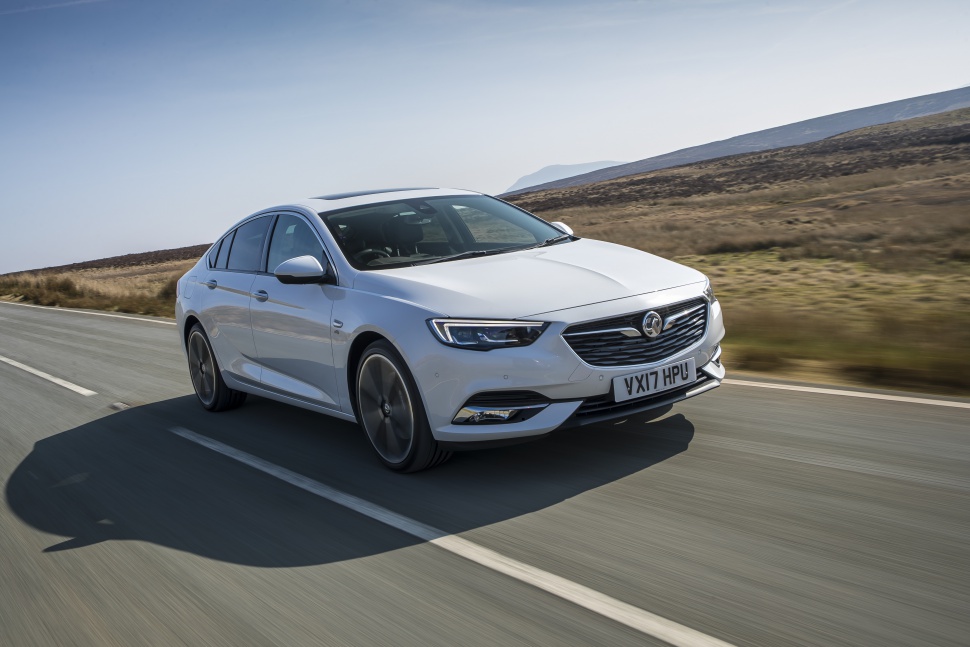
The Vauxhall Insignia II Grand Sport 1.6 Turbo D (110 Hp) represents a significant offering within the European D-segment, a class of mid-size family cars primarily known for blending practicality, comfort, and efficiency. Launched in July 2018 as part of the second generation of the Insignia, this particular variant, produced until 2020, was designed to appeal to a broad demographic, from private buyers seeking a versatile daily driver to fleet operators prioritizing fuel economy and low emissions. As a product of Vauxhall, the British arm of Opel (which itself was part of General Motors before being acquired by PSA Group, now Stellantis), the Insignia II Grand Sport shares its architecture and engineering with its Opel counterpart, making it a familiar sight across the United Kingdom and continental Europe.
The Vauxhall Insignia II Grand Sport: An Overview of European Market Dynamics
The second-generation Vauxhall Insignia, dubbed “Grand Sport” for its liftback body style and “Sports Tourer” for its wagon variant, marked a departure from its predecessor with a more dynamic design and a focus on advanced technology. Positioned as a direct competitor to established players like the Volkswagen Passat, Ford Mondeo, and Skoda Superb, the Insignia II Grand Sport aimed to deliver a premium feel without an exorbitant price tag. Its introduction in 2018 showcased Vauxhall’s commitment to modern powertrain solutions, exemplified by the efficient 1.6 Turbo D engine. This particular model, with its 110 horsepower diesel unit, was strategically placed to cater to the demand for economical long-distance travel, a common requirement in the European market.
Engine & Performance
At the heart of the Vauxhall Insignia II Grand Sport 1.6 Turbo D (110 Hp) lies a 1.6-liter (1598 cm3 or 97.52 cu. in.) inline-four diesel engine, designated with the model code D16DTI. This powertrain, a staple in Opel/Vauxhall’s mid-range offerings, is configured in a front, transverse layout, driving the front wheels. The “Turbo D” moniker highlights the presence of a turbocharger and intercooler, crucial components that allow this relatively small displacement engine to produce a respectable 110 horsepower at 4000 rpm. More impressively for a diesel, it delivers a robust 221.27 lb.-ft. (300 Nm) of torque from a low 2000 rpm, providing strong pulling power and effortless cruising capabilities.
Fuel delivery is managed by a sophisticated Diesel Commonrail injection system, ensuring precise fuel atomization for optimal combustion efficiency. The engine also features a Double Overhead Camshaft (DOHC) valvetrain with 4 valves per cylinder, contributing to its smooth operation and power delivery. Mated to a 6-speed manual transmission, this setup allows the Insignia to achieve a maximum speed of 126.14 mph (203 km/h). However, its true strength lies in its fuel economy and environmental performance. The combined fuel consumption is rated between 48 and 44.4 US mpg (4.9-5.3 liters per 100 km), an excellent figure for a vehicle of its size. Furthermore, with CO2 emissions of just 106 g/km and compliance with the Euro 6d-TEMP emission standard, it was designed to meet stringent European environmental regulations, making it an attractive option for eco-conscious buyers and those facing urban emission zones.
Beyond its core performance, the engine incorporates modern systems such as a Start & Stop System, which automatically shuts off the engine when the vehicle is stationary to save fuel and reduce emissions, and a Particulate Filter, essential for reducing harmful diesel particulate matter. The vehicle also includes an AdBlue tank with a capacity of 3.96 US gallons (15 liters) to help reduce nitrogen oxide emissions, a common feature in contemporary diesel vehicles in Europe.
Design & Features
The Vauxhall Insignia II Grand Sport boasts a sleek and athletic design, characterized by its liftback body type. Measuring 192.8 inches (4897 mm) in length, 73.35 inches (1863 mm) in width (82.4 inches or 2093 mm including mirrors), and 57.28 inches (1455 mm) in height, it presents a commanding road presence. The extended wheelbase of 111.38 inches (2829 mm) not only contributes to its stable handling but also provides ample interior space for five occupants. The “Grand Sport” designation highlights its coupe-like roofline, which gracefully tapers towards the rear, merging seamlessly with the integrated tailgate.
Despite its sporty profile, practicality remains a cornerstone of the Insignia Grand Sport. The liftback design offers an expansive trunk (boot) space, ranging from a generous 17.3 cu. ft. (490 liters) with all seats in place, expanding to an impressive 51.21 cu. ft. (1450 liters) when the rear seats are folded down. This flexibility makes it highly capable of accommodating varying cargo needs, from everyday groceries to larger luggage for family trips. The vehicle’s drag coefficient (Cd) of 0.26 is exceptionally low for its class, contributing significantly to its fuel efficiency and reduced wind noise at higher speeds.
Underneath its stylish exterior, the Insignia features a robust chassis with independent McPherson coil spring suspension and an anti-roll bar at the front, complemented by an independent multi-link suspension at the rear. This setup is designed to deliver a comfortable ride while maintaining agile handling characteristics. Braking is handled by ventilated discs measuring 300 mm at the front and solid discs measuring 288 mm at the rear, coupled with an Anti-lock Braking System (ABS) for enhanced safety. The electric power steering system, employing a rack and pinion setup, offers precise control and variable assistance, making parking and maneuvering in tight spaces easier with a minimum turning circle of 37.73 ft. (11.5 meters). Standard tire sizes ranged from 215/55 R17 to 245/45 R18, mounted on 17 or 18-inch wheel rims, providing a balance of grip and ride comfort.
Technical Specifications
| General Information | |
| Brand | Vauxhall |
| Model | Insignia |
| Generation | Insignia II Grand Sport |
| Type (Engine) | 1.6 Turbo D (110 Hp) |
| Start of Production | July, 2018 |
| End of Production | 2020 |
| Powertrain Architecture | Internal Combustion engine |
| Body type | Liftback |
| Seats | 5 |
| Doors | 5 |
| Performance Specs | |
| Fuel consumption (combined) | 4.9-5.3 l/100 km (48 – 44.4 US mpg) |
| CO2 emissions | 106 g/km |
| Fuel Type | Diesel |
| Maximum speed | 203 km/h (126.14 mph) |
| Emission standard | Euro 6d-TEMP |
| Engine Specs | |
| Power | 110 Hp @ 4000 rpm |
| Power per liter | 68.8 Hp/l |
| Torque | 300 Nm (221.27 lb.-ft.) @ 2000 rpm |
| Engine layout | Front, Transverse |
| Engine Model/Code | D16DTI |
| Engine displacement | 1598 cm3 (97.52 cu. in.) |
| Number of cylinders | 4 |
| Engine configuration | Inline |
| Number of valves per cylinder | 4 |
| Fuel injection system | Diesel Commonrail |
| Engine aspiration | Turbocharger, Intercooler |
| Valvetrain | DOHC |
| Engine oil capacity | 5 l (5.28 US qt) |
| Coolant | 6 l (6.34 US qt) |
| Engine systems | Start & Stop System, Particulate filter |
| Space, Volume and Weights | |
| Max. weight | 2035 kg (4486.41 lbs.) |
| Trunk (boot) space – minimum | 490 l (17.3 cu. ft.) |
| Trunk (boot) space – maximum | 1450 l (51.21 cu. ft.) |
| Fuel tank capacity | 62 l (16.38 US gal) |
| AdBlue tank | 15 l (3.96 US gal) |
| Max. roof load | 100 kg (220.46 lbs.) |
| Permitted trailer load with brakes (12%) | 1405 kg (3097.49 lbs.) |
| Permitted trailer load without brakes | 720 kg (1587.33 lbs.) |
| Dimensions | |
| Length | 4897 mm (192.8 in.) |
| Width | 1863 mm (73.35 in.) |
| Width including mirrors | 2093 mm (82.4 in.) |
| Height | 1455 mm (57.28 in.) |
| Wheelbase | 2829 mm (111.38 in.) |
| Front overhang | 990 mm (38.98 in.) |
| Rear overhang | 1078 mm (42.44 in.) |
| Drag coefficient (Cd) | 0.26 |
| Minimum turning circle (turning diameter) | 11.5 m (37.73 ft.) |
| Drivetrain, Brakes and Suspension Specs | |
| Drive wheel | Front wheel drive |
| Number of gears and type of gearbox | 6 gears, manual transmission |
| Front suspension | Independent, type McPherson with coil spring and anti-roll bar |
| Rear suspension | Independent multi-link suspension |
| Front brakes | Ventilated discs, 300 mm |
| Rear brakes | Disc, 288 mm |
| Assisting systems | ABS (Anti-lock braking system) |
| Steering type | Steering rack and pinion |
| Power steering | Electric Steering |
| Tires size | 215/55 R17; 225/55 R17; 245/45 R18 |
| Wheel rims size | 17; 18 |
Legacy & Market Impact
The Vauxhall Insignia II Grand Sport 1.6 Turbo D (110 Hp) played a crucial role in Vauxhall’s strategy to maintain competitiveness in the fiercely contested European D-segment. While not directly sold in the United States, its Opel Insignia twin was briefly offered as the Buick Regal Sportback, giving American consumers a glimpse of its platform and design language. In its primary markets, the Insignia Grand Sport was praised for its refined driving dynamics, spacious interior, impressive fuel efficiency, and comprehensive feature set, especially considering its price point.
Competitors in the European market included perennial best-sellers like the Volkswagen Passat, known for its robust build quality and extensive engine range, and the Ford Mondeo (known as the Fusion in North America), which often stood out for its engaging driving experience. Other rivals such as the Skoda Superb offered unparalleled interior and trunk space, while the Peugeot 508 brought a distinctive French design flair. Against these strong contenders, the Insignia Grand Sport carved out its niche by offering a compelling balance of style, practicality, and value. The 1.6 Turbo D (110 Hp) variant, in particular, was vital for its strong appeal to fleet buyers and cost-conscious private individuals due to its excellent fuel economy and low running costs, further bolstered by its adherence to strict Euro 6d-TEMP emission standards.
Despite its qualities, the European D-segment faced increasing pressure from the surging popularity of SUVs and crossovers. As a result, the Insignia, like many traditional sedans and liftbacks, saw its market share gradually erode. The production of this specific 1.6 Turbo D (110 Hp) model ended in 2020, reflecting the broader industry trend towards electrification and a refinement of powertrain offerings. Nevertheless, the Vauxhall Insignia II Grand Sport, and specifically this efficient diesel variant, left a legacy as a well-rounded and practical family car that ably served the needs of European drivers during its production run, showcasing Vauxhall/Opel’s engineering prowess in delivering efficient and comfortable long-distance cruisers.