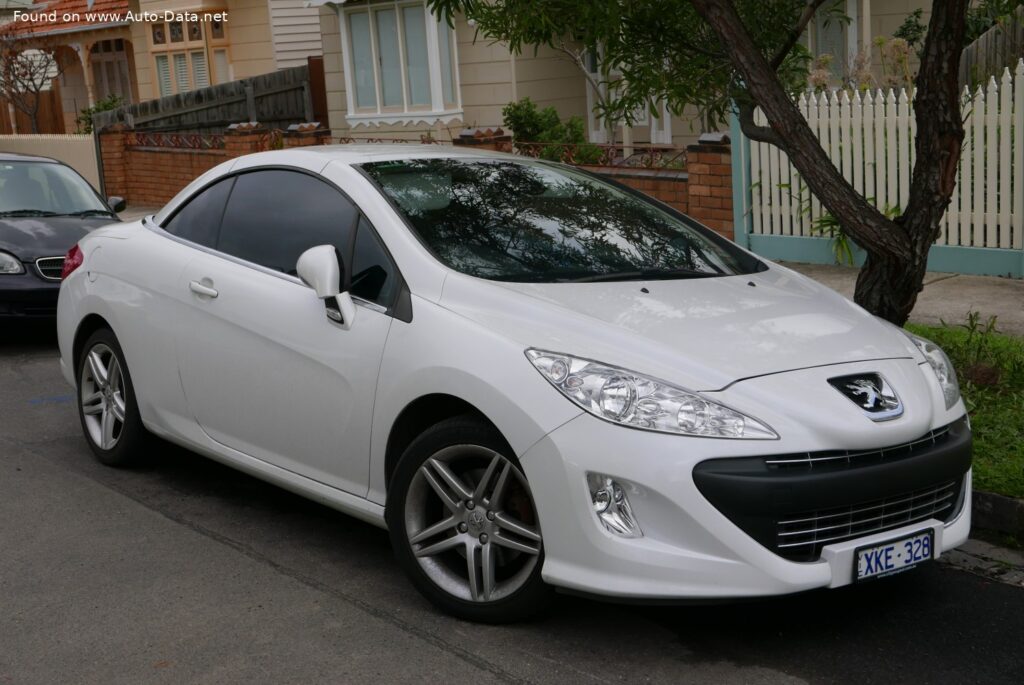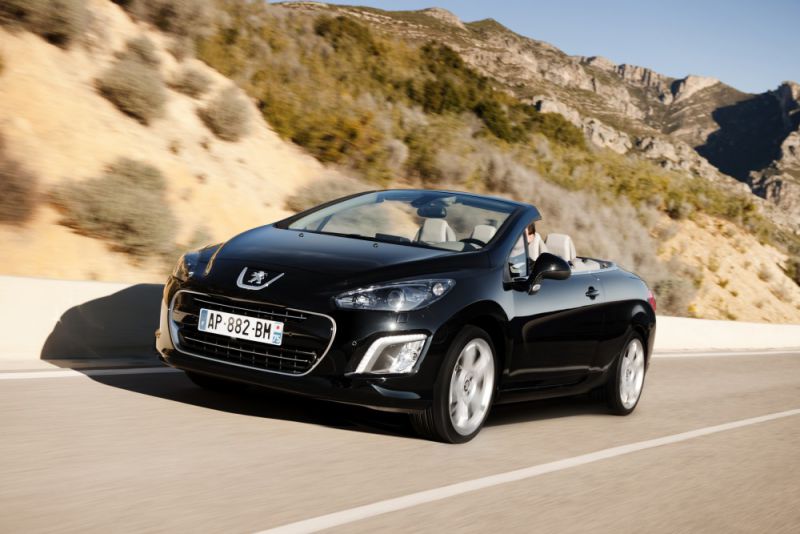
The Peugeot 308 CC I (Phase II, 2011) represents a significant offering in the European compact convertible market, blending the practicality of a coupe with the open-air exhilaration of a cabriolet. This particular iteration, part of the Phase II refresh, continued Peugeot’s long-standing tradition of producing stylish and accessible coupe-cabriolet vehicles. Launched in 2011 and produced until 2014, the 308 CC I (Phase II, 2011) was designed primarily for the European market, where its combination of a retractable hardtop, four-seat configuration, and efficient diesel powertrain made it a compelling choice for consumers seeking versatility and fuel economy. While not officially sold in the United States, its design philosophy and engineering reflect global automotive trends towards multi-functional vehicles, offering a unique blend of everyday usability and leisure-oriented driving.
Peugeot 308 CC I (Phase II, 2011): Engineering and Performance
Under the hood of the Peugeot 308 CC I (Phase II, 2011) lies a 1.6 e-HDI (110 Hp) FAP diesel engine, a testament to Peugeot’s expertise in efficient diesel powertrains. The “e-HDI” designation highlights its focus on enhanced efficiency, often incorporating features like a stop-start system (though not explicitly detailed in the provided data, it’s characteristic of Peugeot’s e-HDI line) and optimized engine management. This inline four-cylinder engine, with a displacement of 1560 cm3 (95.2 cu. in.), delivers 110 horsepower at 3600 rpm. Torque is a respectable 270 Nm (199.14 lb.-ft.) available at a low 1750 rpm, providing ample pulling power for everyday driving and highway cruising. This robust torque output is particularly beneficial for a vehicle like the 308 CC, which carries additional weight due to its retractable hardtop mechanism.
The powertrain architecture is front-wheel drive, with the engine mounted transversely at the front. Power is routed through a 6-speed manual transmission, offering engaging control for the driver. In terms of performance, the 308 CC I (Phase II, 2011) 1.6 e-HDI accelerates from 0 to 60 mph in a calculated 11.6 seconds, with a 0 to 100 km/h time of 12.2 seconds. Its top speed is 191 km/h (118.68 mph), which is more than adequate for European highway conditions. Fuel efficiency is a strong suit for this diesel model, with a combined fuel economy rating of 4.9 liters per 100 km, translating to an impressive 48 US mpg (57.6 UK mpg). This efficiency is further broken down into 6.3 l/100 km (37.3 US mpg) for urban driving and an excellent 4.1 l/100 km (57.4 US mpg) for extra-urban conditions. The engine also features a Particulate Filter (FAP) and meets the Euro 5 emission standard, underscoring its commitment to environmental responsibility, a critical factor in European markets.
Design and Features of the Peugeot 308 CC I (Phase II, 2011)
The Peugeot 308 CC I (Phase II, 2011) is defined by its elegant Coupe-Cabriolet body type, offering the best of both worlds. With its sophisticated electrically operated retractable hardtop, drivers can transform the car from a stylish coupe to an exhilarating open-top cabriolet in a matter of seconds. The car features two doors and a practical four-seat layout, allowing for comfortable transport of up to four occupants, a notable advantage over many two-seat roadsters. Its dimensions contribute to a balanced aesthetic: a length of 4440 mm (174.8 in.), a width of 1872 mm (73.7 in.), and a height of 1426 mm (56.14 in.). The wheelbase measures 2605 mm (102.56 in.), providing a stable ride and contributing to the car’s interior space.
While specific comfort and convenience features are not detailed in the raw data, as a Phase II model from 2011, the 308 CC would have included modern amenities for its time. Expect features such as automatic climate control, a comprehensive infotainment system, power windows, and various interior trim options. Safety features were also a priority, with the inclusion of ABS (Anti-lock Braking System) as standard, along with multiple airbags and electronic stability control systems, typical for a European vehicle of its class and era. The suspension system comprises an independent McPherson setup with coil springs and an anti-roll bar at the front, paired with a torsion beam rear suspension, designed to provide a comfortable yet composed ride. Braking duties are handled by ventilated discs at the front and disc brakes at the rear, ensuring reliable stopping power. The car offered tire size options of 215/55 R16 or 225/45 R17, allowing for varying levels of grip and ride comfort.
Technical Specifications: Peugeot 308 CC I (Phase II, 2011) 1.6 e-HDI (110 Hp) FAP
| Category | Specification | US Equivalent |
|---|---|---|
| General Information | ||
| Brand | Peugeot | |
| Model | 308 | |
| Generation | 308 CC I (Phase II, 2011) | |
| Engine Type | 1.6 e-HDI (110 Hp) FAP | |
| Production Start | 2011 year | |
| Production End | 2014 year | |
| Powertrain Architecture | Internal Combustion engine | |
| Body Type | Coupe – Cabriolet | |
| Seats | 4 | |
| Doors | 2 | |
| Performance Specifications | ||
| Fuel Consumption (Urban) | 6.3 l/100 km | 37.3 US mpg |
| Fuel Consumption (Extra Urban) | 4.1 l/100 km | 57.4 US mpg |
| Fuel Consumption (Combined) | 4.9 l/100 km | 48 US mpg |
| Fuel Type | Diesel | |
| Acceleration 0 – 60 mph | 11.6 sec (Calculated) | |
| Acceleration 0 – 100 km/h | 12.2 sec | |
| Maximum Speed | 191 km/h | 118.68 mph |
| Emission Standard | Euro 5 | |
| Weight-to-Power Ratio | 13.9 kg/Hp | 30.64 lbs/Hp |
| Weight-to-Torque Ratio | 5.6 kg/Nm | 12.35 lbs/Nm |
| Engine Specifications | ||
| Power | 110 Hp @ 3600 rpm | |
| Power per liter | 70.5 Hp/l | |
| Torque | 270 Nm @ 1750 rpm | 199.14 lb.-ft. @ 1750 rpm |
| Engine Layout | Front, Transverse | |
| Engine Model/Code | 9HZ DV6TED4 | |
| Engine Displacement | 1560 cm3 | 95.2 cu. in. |
| Number of Cylinders | 4 | |
| Engine Configuration | Inline | |
| Valves per Cylinder | 2 | |
| Fuel Injection System | Diesel Commonrail | |
| Engine Aspiration | Turbocharger, Intercooler | |
| Engine Oil Capacity | 3.75 l | 3.96 US qt |
| Coolant Capacity | 6 l | 6.34 US qt |
| Engine Systems | Particulate filter | |
| Space, Volume, and Weights | ||
| Kerb Weight | 1525 kg | 3362.05 lbs. |
| Max. Weight (GVWR) | 1950 kg | 4299.01 lbs. |
| Max Load | 425 kg | 936.96 lbs. |
| Trunk (Boot) Space – Minimum | 226 l | 7.98 cu. ft. |
| Trunk (Boot) Space – Maximum | 403 l | 14.23 cu. ft. |
| Fuel Tank Capacity | 60 l | 15.85 US gal |
| Dimensions | ||
| Length | 4440 mm | 174.8 in. |
| Width | 1872 mm | 73.7 in. |
| Height | 1426 mm | 56.14 in. |
| Wheelbase | 2605 mm | 102.56 in. |
| Drivetrain, Brakes, and Suspension | ||
| Drivetrain Architecture | Internal combustion engine drives the front wheels. | |
| Drive Wheel | Front-wheel drive | |
| Number of Gears / Gearbox Type | 6 gears, manual transmission | |
| Front Suspension | Independent, McPherson with coil spring and anti-roll bar | |
| Rear Suspension | Torsion | |
| Front Brakes | Ventilated discs | |
| Rear Brakes | Disc | |
| Assisting Systems | ABS (Anti-lock braking system) | |
| Steering Type | Steering rack and pinion | |
| Tire Sizes | 215/55 R16; 225/45 R17 | |
Legacy and Market Impact of the Peugeot 308 CC
The Peugeot 308 CC I (Phase II, 2011) carved out a niche for itself in the European automotive landscape as a stylish and practical convertible. During its production run, it competed primarily with other compact coupe-cabriolets, such as the Volkswagen Eos, Renault Mégane CC, and Ford Focus CC. What set the 308 CC apart was its distinctive French styling, comfortable ride, and the availability of highly efficient diesel powertrains, which were particularly attractive to European buyers concerned with fuel costs and emissions. The “CC” designation, pioneered by Peugeot with the 206 CC, had become synonymous with accessible hardtop convertibles, offering better security and weather insulation than traditional soft-top models.
Its four-seat configuration, while not offering limousine-like rear legroom, made it a more versatile family option than many two-seat roadsters. The trunk space, while compromised when the roof was stowed (226 liters or 7.98 cu. ft.), was quite generous for a convertible with the roof up (403 liters or 14.23 cu. ft.), further enhancing its practicality. The 1.6 e-HDI engine, in particular, contributed to the car’s reputation for being an economical choice, allowing owners to enjoy open-air motoring without excessive running costs. The 308 CC’s legacy is that of a comfortable, elegant, and understated convertible that successfully blended everyday usability with weekend leisure, embodying Peugeot’s commitment to producing cars that are both emotionally appealing and rationally sound for its target market.