The Volkswagen Polo IV (9N, facelift 2005) 1.6 (105 Hp) Tiptronic 5-d represents a significant iteration of Volkswagen’s enduring presence in the highly competitive European subcompact segment, known as the supermini class. Launched in 2005 as a mid-cycle refresh of the fourth-generation Polo (internal code 9N), this particular variant combined a capable 1.6-liter gasoline engine with a sophisticated Tiptronic automatic transmission, offering a blend of efficiency, practicality, and a touch of upscale refinement not always found in its class. While never officially sold in the United States, the Polo has been a cornerstone of Volkswagen’s global strategy, serving as an accessible entry point into the brand’s lineup across Europe, Asia, and other international markets. Its reputation for solid build quality, comfortable ride, and sensible design made it a popular choice for urban dwellers and small families seeking a reliable and economical daily driver.
The Volkswagen Polo IV (9N, facelift 2005) 1.6 (105 Hp) Tiptronic 5-d: A European Mainstay
Engine & Performance
At the heart of the 2005 Volkswagen Polo IV (9N, facelift 2005) 1.6 (105 Hp) Tiptronic 5-d lies a robust 1.6-liter naturally aspirated inline-four gasoline engine, internally designated as the BTS. This powerplant delivers a respectable 105 horsepower at 5700 rpm, providing ample motivation for city driving and comfortable cruising on European highways. The engine’s power per liter stands at 65.7 HP/liter, indicative of its efficient design. Torque output is rated at 148 Nm, or approximately 109.16 lb.-ft., peaking at 4500 rpm. This torque delivery ensures responsive acceleration in everyday driving scenarios, making the Polo feel agile despite its modest power figures.
A key distinguishing feature of this particular Polo variant is its transmission: a 6-speed Tiptronic automatic. This advanced automatic gearbox, especially for a subcompact car of its era, offered drivers the convenience of automatic shifting with the option for manual gear selection, enhancing both driving engagement and efficiency. Power is routed to the front wheels, a standard configuration for this class, contributing to predictable handling and good traction. The Polo’s performance figures include an acceleration time from 0 to 60 mph in a swift 10.7 seconds, with 0 to 100 km/h achieved in 11.3 seconds. Its maximum speed is rated at 116.2 mph (187 km/h), making it perfectly capable of keeping up with traffic on autobahns and motorways.
Fuel economy for the 1.6-liter Tiptronic model was competitive for its time. In combined driving conditions, it achieved approximately 31.8 US mpg (7.4 liters per 100 km). Urban driving saw consumption around 23.5 US mpg (10 liters per 100 km), while extra-urban driving could yield an impressive 39.9 US mpg (5.9 liters per 100 km). These figures highlight the engine’s balance of performance and economy, a critical factor for European buyers concerned with fuel costs and environmental impact. The engine’s DOHC valvetrain and multi-port manifold injection system further contributed to its efficiency and smooth operation, while a compression ratio of 11:1 optimized combustion.
Design & Features
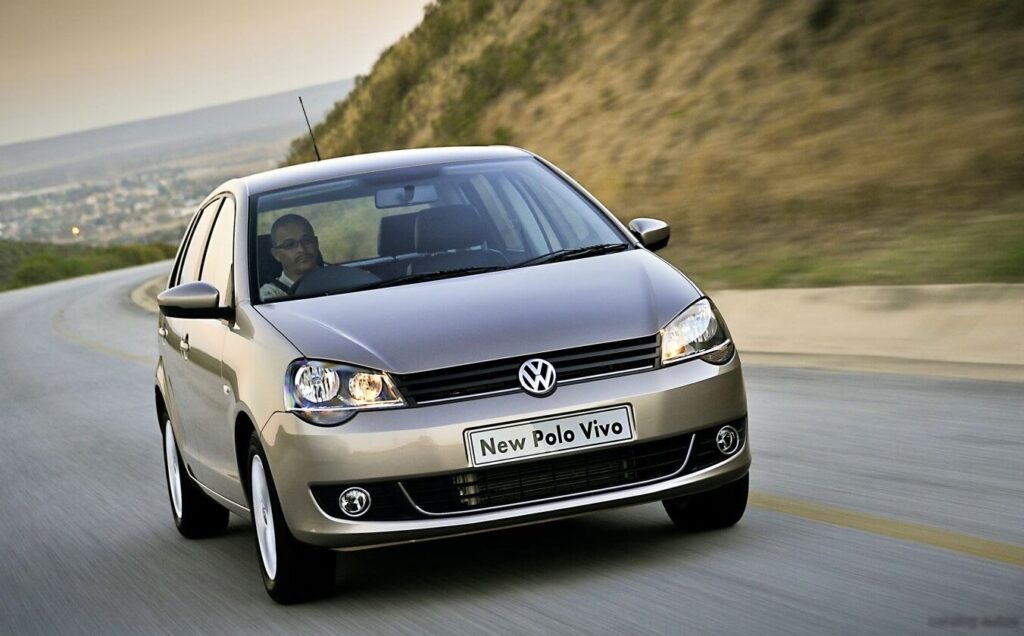
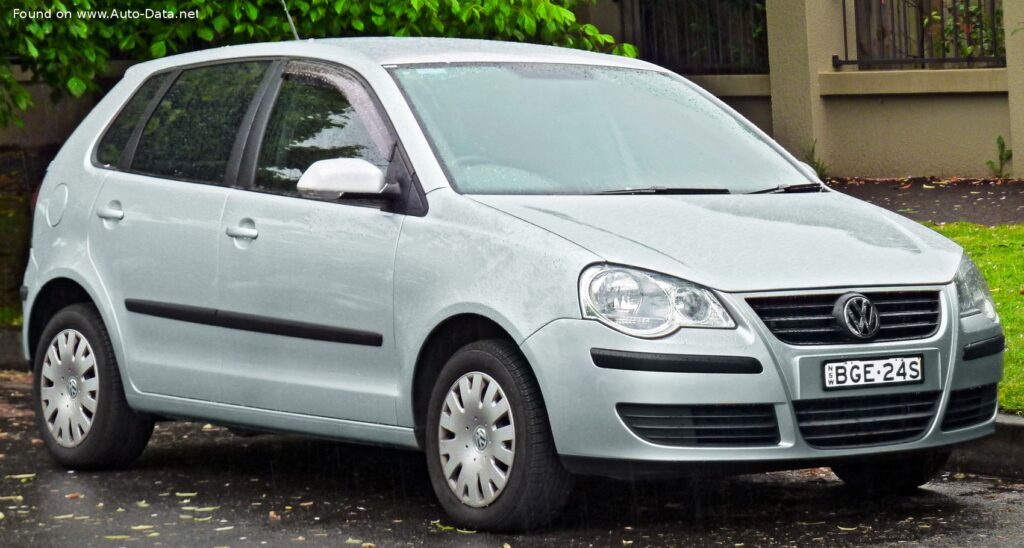
The Volkswagen Polo IV (9N, facelift 2005) introduced a refreshed aesthetic that subtly modernized the fourth-generation design. While retaining the underlying structure of the 9N generation, the facelift brought updated front and rear fascias, giving it a more contemporary and mature appearance. The front end received new headlights and a revised grille, aligning it more closely with Volkswagen’s evolving design language seen in larger models like the Golf. At the rear, new taillight clusters and a reshaped bumper contributed to a fresher look.
This particular variant is a 5-door hatchback, a highly practical body style that maximizes interior space and versatility within a compact footprint. With seating for five occupants, the Polo offered a comfortable and well-appointed cabin for its class. The interior design was characterized by typical Volkswagen practicality and quality, with durable materials and logical control layouts. While not luxurious, the cabin was designed to be ergonomic and user-friendly, a hallmark of the brand.
In terms of dimensions, the Polo IV measured 153.43 inches in length, 64.96 inches in width, and 57.68 inches in height, with a wheelbase of 96.85 inches. These compact dimensions made it exceptionally maneuverable in tight city streets and easy to park, a crucial advantage in crowded European urban environments. The vehicle’s curb weight of 2414.06 lbs (1095 kg) contributed to its nimble feel and efficiency. Cargo capacity was also practical, with a minimum trunk space of 9.53 cubic feet (270 liters) that could expand to a generous 36.37 cubic feet (1030 liters) with the rear seats folded down, making it suitable for grocery runs or weekend trips.
Safety features for the era included standard ABS (Anti-lock Braking System), a critical assisting system for maintaining control during hard braking. The Polo featured ventilated disc brakes at the front and disc brakes at the rear, providing reliable stopping power. Suspension consisted of coil springs at the front and a trailing arm setup at the rear, contributing to a comfortable ride quality and stable handling. Hydraulic power steering, utilizing a steering rack and pinion system, offered a direct and communicative feel to the driver.
Technical Specifications
| General Information | |
| Brand | Volkswagen |
| Model | Polo |
| Generation | Polo IV (9N, facelift 2005) |
| Type (Engine) | 1.6 (105 Hp) Tiptronic 5-d |
| Start of production | 2005 year |
| End of production | 2009 year |
| Powertrain Architecture | Internal Combustion engine |
| Body type | Hatchback |
| Seats | 5 |
| Doors | 5 |
| Performance Specs | |
| Fuel consumption (economy) – urban | 10 l/100 km (23.5 US mpg) |
| Fuel consumption (economy) – extra urban | 5.9 l/100 km (39.9 US mpg) |
| Fuel consumption (economy) – combined | 7.4 l/100 km (31.8 US mpg) |
| Fuel Type | Petrol (Gasoline) |
| Acceleration 0 – 60 mph | 10.7 sec |
| Acceleration 0 – 100 km/h | 11.3 sec |
| Maximum speed | 187 km/h (116.2 mph) |
| Weight-to-power ratio | 10.4 kg/Hp (95.9 Hp/tonne) |
| Weight-to-torque ratio | 7.4 kg/Nm (135.2 Nm/tonne) |
| Engine Specs | |
| Power | 105 Hp @ 5700 rpm. |
| Power per liter | 65.7 Hp/l |
| Torque | 148 Nm @ 4500 rpm (109.16 lb.-ft. @ 4500 rpm) |
| Engine layout | Front, Transverse |
| Engine Model/Code | BTS |
| Engine displacement | 1598 cm3 (97.52 cu. in.) |
| Number of cylinders | 4 |
| Engine configuration | Inline |
| Cylinder Bore | 76.5 mm (3.01 in.) |
| Piston Stroke | 86.9 mm (3.42 in.) |
| Compression ratio | 11:1 |
| Number of valves per cylinder | 4 |
| Fuel injection system | Multi-port manifold injection |
| Engine aspiration | Naturally aspirated engine |
| Valvetrain | DOHC |
| Engine oil capacity | 3.6 l (3.8 US qt) |
| Coolant | 6 l (6.34 US qt) |
| Space, Volume and Weights | |
| Kerb Weight | 1095 kg (2414.06 lbs.) |
| Max. weight | 1650 kg (3637.63 lbs.) |
| Max load | 555 kg (1223.57 lbs.) |
| Trunk (boot) space – minimum | 270 l (9.53 cu. ft.) |
| Trunk (boot) space – maximum | 1030 l (36.37 cu. ft.) |
| Fuel tank capacity | 45 l (11.89 US gal) |
| Dimensions | |
| Length | 3897 mm (153.43 in.) |
| Width | 1650 mm (64.96 in.) |
| Height | 1465 mm (57.68 in.) |
| Wheelbase | 2460 mm (96.85 in.) |
| Front track | 1435 mm (56.5 in.) |
| Rear (Back) track | 1425 mm (56.1 in.) |
| Drivetrain, brakes and suspension specs | |
| Drivetrain Architecture | The Internal combustion engine (ICE) drives the front wheels of the vehicle. |
| Drive wheel | Front wheel drive |
| Number of gears and type of gearbox | 6 gears, automatic transmission |
| Front suspension | Coil spring |
| Rear suspension | Trailing arm |
| Front brakes | Ventilated discs |
| Rear brakes | Disc |
| Assisting systems | ABS (Anti-lock braking system) |
| Steering type | Steering rack and pinion |
| Power steering | Hydraulic Steering |
| Tires size | 165/70 R14 |
| Wheel rims size | 14 |
Legacy & Market Impact
The Volkswagen Polo IV (9N, facelift 2005) 1.6 (105 Hp) Tiptronic 5-d solidified the Polo’s reputation as a premium player in the European supermini segment. While the Polo had always been positioned slightly above rivals in terms of perceived quality and refinement, this generation, particularly after the 2005 facelift, further enhanced that perception. It competed directly with formidable contenders such as the Ford Fiesta, Opel Corsa (Vauxhall Corsa in the UK), Renault Clio, and Peugeot 206/207, often outperforming many in terms of interior finish and a more mature driving experience.
Its historical significance stems from its role in bridging the gap between basic economy cars and more upscale compacts. For many European consumers, the Polo represented an attainable entry point into the Volkswagen brand, offering a taste of the quality and engineering associated with the Golf, but in a more compact and fuel-efficient package. The availability of a relatively powerful 1.6-liter engine paired with an advanced 6-speed Tiptronic automatic transmission was a significant draw, offering a level of convenience and performance that was not universally standard in this class. This made it particularly appealing to drivers seeking ease of use in urban environments without sacrificing the ability to handle longer journeys comfortably.
The Polo IV’s enduring popularity was a testament to its well-rounded package. It was praised for its comfortable ride, predictable handling, and robust build quality, which contributed to its strong resale values in many markets. Its design, while conservative by some standards, was widely regarded as timeless and elegant, contributing to its broad appeal across different demographics. The 2005 facelift ensured the Polo remained visually competitive and technologically relevant throughout its production run until 2009, paving the way for the even more successful fifth-generation Polo. The 1.6-liter Tiptronic variant, in particular, showcased Volkswagen’s commitment to offering diverse powertrain options, catering to a wide range of customer preferences within the vital supermini category, further cementing the Polo’s status as a true automotive icon in its primary markets.