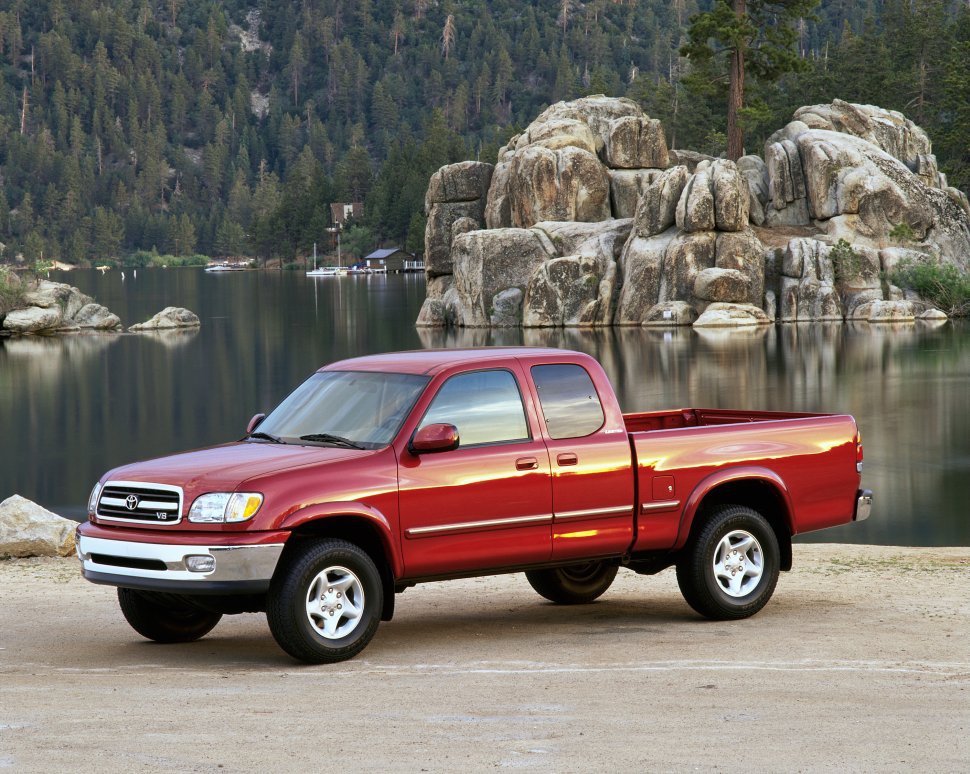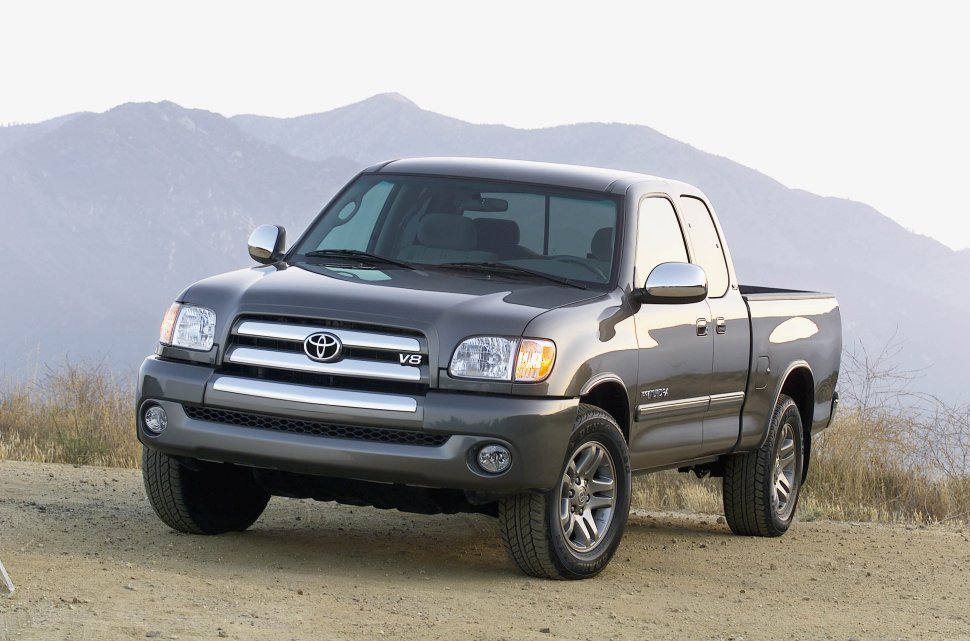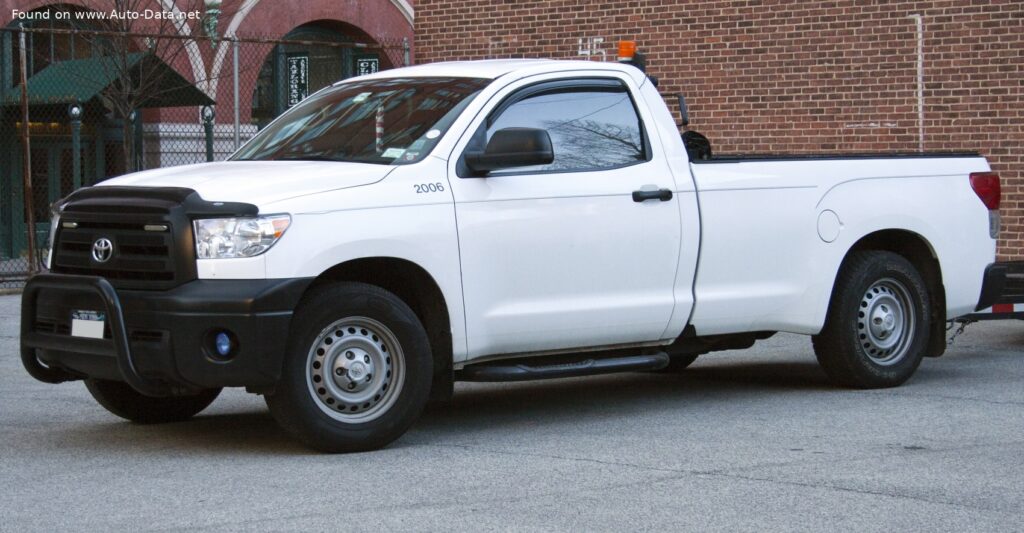
The Toyota Tundra II Regular Cab Long Bed (facelift 2010) 5.7 V8 32V (381 Hp) Automatic represents a significant offering in the highly competitive North American full-size pickup truck market. Introduced as part of the second-generation Tundra’s mid-cycle refresh, this particular configuration underscored Toyota’s commitment to providing a robust, capable, and reliable workhorse for consumers. Produced from 2010 to 2013, this iteration of the Tundra was engineered to challenge the long-standing dominance of domestic manufacturers, offering substantial power, impressive towing capacity, and the renowned Toyota reputation for durability. The Regular Cab Long Bed variant, in particular, catered to buyers prioritizing maximum cargo space and utility, making it a staple for fleets, tradespeople, and individuals requiring serious hauling and towing capabilities without the added passenger capacity of extended or crew cab models. Its powertrain architecture, centered around a potent internal combustion engine, drives the rear wheels, a traditional and effective setup for a heavy-duty pickup.
Engine & Performance: The Heart of the Toyota Tundra II Regular Cab Long Bed (facelift 2010)
At the core of the 2010-2013 Toyota Tundra II Regular Cab Long Bed lies the formidable 5.7-liter V8 32V engine, an powerplant renowned for its robust output and reliability. Codenamed 3UR-FE, this naturally aspirated engine delivers a stout 381 horsepower at 5600 rpm, translating to a power-per-liter rating of 67.3 hp/liter. More critically for a truck of this caliber, it produces an impressive 401.23 lb.-ft. of torque at a relatively low 3600 rpm, providing ample grunt for heavy loads and challenging terrain. The engine’s configuration features a V-engine layout with eight cylinders, each equipped with four valves, totaling 32 valves. This DOHC (Double Overhead Camshaft) design, coupled with Toyota’s advanced VVT-i (Variable Valve Timing with intelligence) system, optimizes valve timing for improved power output across the rev range and enhanced fuel efficiency, a crucial factor for large displacement engines.
Fuel is delivered via a multi-port manifold injection system, ensuring precise and efficient combustion. With a compression ratio of 10.2:1, the engine is optimized for regular gasoline. The powertrain is mated to a smooth and durable 6-speed automatic transmission, designed to effectively manage the engine’s considerable torque and power, providing seamless shifts whether cruising on the highway or navigating challenging work sites. This combination results in a weight-to-power ratio of 5.8 kg/Hp (approximately 12.79 lbs/Hp) and a weight-to-torque ratio of 4.1 kg/Nm (approximately 9.04 lbs/Nm), indicating a strong performance foundation for its class. Despite its power, fuel economy figures for the 5.7L V8 are typical for a full-size truck of its era: approximately 14 US mpg in urban driving and 18.1 US mpg on the highway, reflecting its primary role as a heavy-duty hauler rather than an economy leader. The substantial 26.42 US gallon fuel tank ensures a practical driving range for extended journeys or demanding workdays.
Design & Features
The Toyota Tundra II Regular Cab Long Bed (facelift 2010) is a quintessential American pickup truck in its design and functionality, despite its Japanese origins. The “Regular Cab Long Bed” designation immediately communicates its purpose: a focus on utility and cargo capacity over passenger space. With two doors and seating for three occupants, this configuration maximizes the bed length, offering an impressive 228.7 inches (5809 mm) overall length, a 145.67-inch (3700 mm) wheelbase, and a generous 79.88-inch (2029 mm) width. These dimensions, combined with a 10.2-inch (259 mm) ground clearance, ensure a commanding presence and robust capability for both on-road and light off-road duties. The 2010 facelift brought subtle enhancements, typically involving minor revisions to the grille, headlights, and interior trim, keeping the Tundra fresh and competitive without altering its proven, rugged aesthetic.
Underneath its purposeful exterior, the Tundra features a robust chassis designed for durability and heavy workloads. The suspension system comprises a double wishbone setup at the front, providing precise steering and comfortable ride characteristics, while the rear utilizes a traditional leaf spring arrangement, ideal for managing heavy loads and maintaining stability. This combination contributes to a maximum payload capacity of 2089.98 lbs (948 kg) and an impressive permitted trailer load with brakes of 10800.45 lbs (4899 kg), making it a serious contender for towing large trailers or equipment. Braking performance is handled by ventilated discs at both the front and rear, complemented by an Anti-lock Braking System (ABS) for enhanced safety and control under various driving conditions. The hydraulic power steering, utilizing a rack and pinion system, offers predictable and responsive handling for a vehicle of its size. The truck rides on 255/70 R18 tires mounted on 8.0J x 18-inch wheel rims, providing a balance of traction, durability, and ride comfort. With an approach angle of 27 degrees and a departure angle of 26 degrees, the Tundra is well-equipped to tackle varied terrain, further cementing its position as a versatile work and utility vehicle.
Technical Specifications
| Category | Specification |
|---|---|
| Brand | Toyota |
| Model | Tundra |
| Generation | Tundra II Regular Cab Long Bed (facelift 2010) |
| Type (Engine) | 5.7 V8 32V (381 Hp) Automatic |
| Start of Production | 2010 year |
| End of Production | 2013 year |
| Powertrain Architecture | Internal Combustion engine |
| Body Type | Pick-up |
| Seats | 3 |
| Doors | 2 |
| Fuel Consumption (Urban) | 14 US mpg (16.8 l/100 km) |
| Fuel Consumption (Extra Urban) | 18.1 US mpg (13 l/100 km) |
| Fuel Type | Petrol (Gasoline) |
| Weight-to-Power Ratio | 12.79 lbs/Hp (5.8 kg/Hp) |
| Weight-to-Torque Ratio | 9.04 lbs/Nm (4.1 kg/Nm) |
| Power | 381 Hp @ 5600 rpm |
| Power per Liter | 67.3 Hp/l |
| Torque | 401.23 lb.-ft. @ 3600 rpm (544 Nm) |
| Engine Layout | Front, Longitudinal |
| Engine Model/Code | 3UR-FE |
| Engine Displacement | 345.58 cu. in. (5663 cm3) |
| Number of Cylinders | 8 |
| Engine Configuration | V-engine |
| Cylinder Bore | 3.7 in. (94 mm) |
| Piston Stroke | 4.02 in. (102 mm) |
| Compression Ratio | 10.2:1 |
| Number of Valves per Cylinder | 4 |
| Fuel Injection System | Multi-port manifold injection |
| Engine Aspiration | Naturally aspirated engine |
| Valvetrain | DOHC, VVT-i |
| Kerb Weight | 4909.69 lbs. (2227 kg) |
| Max. Weight (GVWR) | 6999.68 lbs. (3175 kg) |
| Max Load (Payload) | 2089.98 lbs. (948 kg) |
| Fuel Tank Capacity | 26.42 US gal (100 l) |
| Permitted Trailer Load with Brakes (12%) | 10800.45 lbs. (4899 kg) |
| Length | 228.7 in. (5809 mm) |
| Width | 79.88 in. (2029 mm) |
| Height | 75.79 in. (1925 mm) |
| Wheelbase | 145.67 in. (3700 mm) |
| Front Track | 67.91 in. (1725 mm) |
| Rear (Back) Track | 67.91 in. (1725 mm) |
| Ride Height (Ground Clearance) | 10.2 in. (259 mm) |
| Minimum Turning Circle (Turning Diameter) | 43.96 ft. (13.4 m) |
| Approach Angle | 27° |
| Departure Angle | 26° |
| Drivetrain Architecture | The Internal combustion engine (ICE) drives the rear wheels of the vehicle. |
| Drive Wheel | Rear wheel drive |
| Number of Gears and Type of Gearbox | 6 gears, automatic transmission |
| Front Suspension | Double wishbone |
| Rear Suspension | Leaf spring |
| Front Brakes | Ventilated discs |
| Rear Brakes | Ventilated discs |
| Assisting Systems | ABS (Anti-lock braking system) |
| Steering Type | Steering rack and pinion |
| Power Steering | Hydraulic Steering |
| Tires Size | 255/70 R18 |
| Wheel Rims Size | 8.0J x 18 |
Legacy & Market Impact
The Toyota Tundra II Regular Cab Long Bed (facelift 2010) 5.7 V8 32V (381 Hp) Automatic carved out a notable niche in the fiercely competitive North American full-size pickup truck segment. While never quite reaching the sales volumes of the segment leaders from Ford (F-Series), Chevrolet (Silverado), and Ram (1500), the Tundra earned a formidable reputation for its unwavering reliability, robust engineering, and strong resale value. For many buyers, it represented a compelling alternative to the domestic offerings, combining Japanese manufacturing precision with the brawn and capability expected of a true work truck.
In its primary market, the Tundra’s second generation, particularly after the 2010 facelift, was recognized for its powerful engine options, especially the 5.7L V8, which offered competitive horsepower and torque figures against its rivals. The Regular Cab Long Bed configuration was specifically aimed at commercial users and individuals who prioritized maximum utility and towing capacity. Its generous bed length and high payload rating made it a practical choice for construction, landscaping, and other industries where cargo space and durability were paramount. Competitors like the Ford F-150 XL, Chevrolet Silverado 1500 Work Truck, and Ram 1500 Tradesman in similar regular cab, long bed, V8 configurations presented stiff competition, often vying for the same fleet and commercial buyers through aggressive pricing and extensive dealer networks.
Historically, the Tundra’s impact lies in its successful establishment of Toyota as a serious player in the full-size truck market, a segment traditionally dominated by American brands. The second generation, including the 2010 facelift model, demonstrated Toyota’s commitment to understanding and meeting the unique demands of American truck buyers. Its reputation for longevity and minimal maintenance costs has contributed to a loyal customer base, and many of these trucks remain on the road today, a testament to their enduring quality. The Tundra’s presence encouraged innovation among all manufacturers, pushing the boundaries of power, capability, and features in the full-size segment. The 2010 facelift, with its refined aesthetics and continued mechanical excellence, ensured the Tundra remained a relevant and respected choice for those seeking a dependable and powerful full-size pickup.