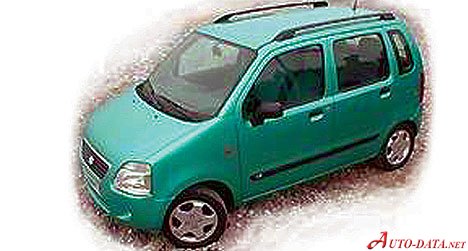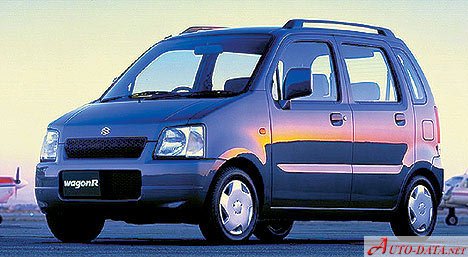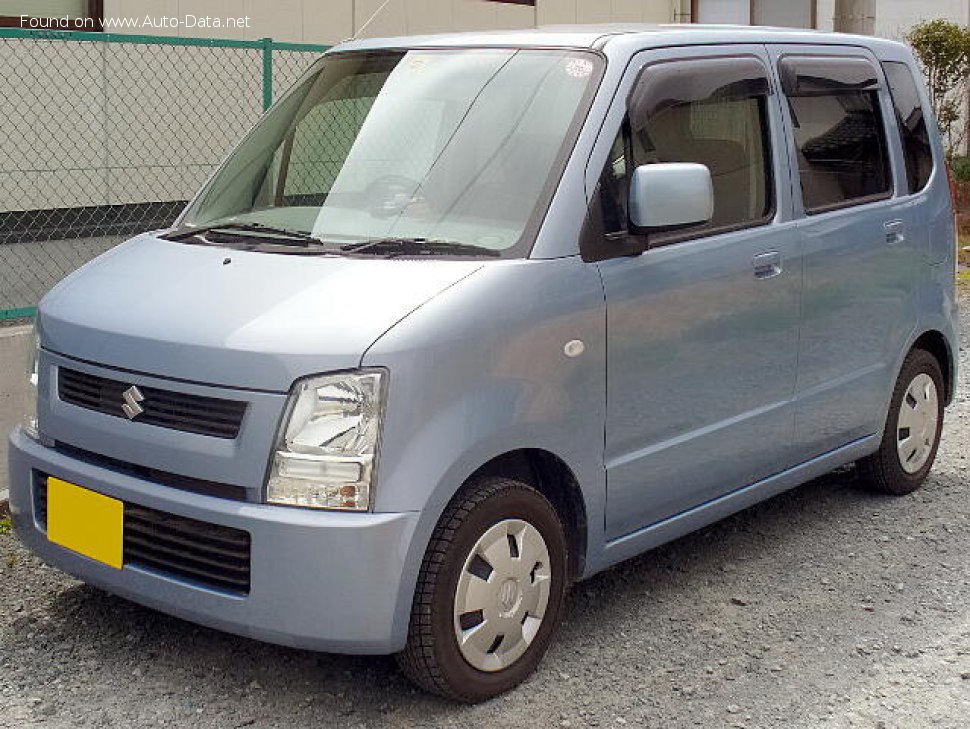
The Suzuki Wagon R 0.7 turbo (64 Hp) 4WD represents a pivotal model within Suzuki’s highly successful and influential Wagon R series, specifically from its generation produced between 2003 and 2008. This particular iteration, often identified by its potent turbocharged 0.7-liter engine and all-wheel-drive capability, cemented the Wagon R’s status as a leader in Japan’s unique “Kei car” segment. Kei cars, or light automobiles, are a vehicle category originating in Japan, subject to strict regulations on engine displacement, power output, and physical dimensions. These regulations were designed to promote smaller, more fuel-efficient vehicles suitable for Japan’s often-congested urban environments and narrow roads, while also offering tax and insurance benefits to owners. The Wagon R, with its distinctive “tall boy” design and compact footprint, masterfully navigated these constraints, offering remarkable interior space and practicality for its size. While not officially sold in the United States, the Suzuki Wagon R’s engineering ingenuity and market dominance in Asia provide valuable insights into automotive design optimized for specific regional demands.
Engine and Performance of the Suzuki Wagon R 0.7 turbo (64 Hp) 4WD
At the heart of this specific Suzuki Wagon R model lies the venerable K6A turbo engine, a sophisticated powertrain designed to maximize performance within the stringent Kei car regulations. This inline three-cylinder engine, with a displacement of 658 cubic centimeters (approximately 0.7 liters or 40.15 cubic inches), is a testament to Suzuki’s engineering prowess in extracting significant power from a diminutive package. The K6A features a Double Overhead Camshaft (DOHC) valvetrain with four valves per cylinder, ensuring efficient airflow and combustion. Crucially, the engine is equipped with a turbocharger and an intercooler, technologies typically found in larger, more performance-oriented vehicles. This forced induction system allows the engine to generate an impressive 64 horsepower at 6500 revolutions per minute, a figure that pushes the very limit of Kei car power regulations. The power output per liter is an exceptional 97.3 horsepower per liter, highlighting the engine’s high specific output.
Beyond raw horsepower, the K6A turbo delivers a healthy 106 Nm (or 78.18 lb.-ft.) of torque, peaking at a relatively low 3500 rpm. This low-end torque is vital for urban driving, providing brisk acceleration from a standstill and making the car feel responsive despite its small engine size. The engine’s front, longitudinal layout contributes to a balanced weight distribution, while the multi-port manifold injection system ensures precise fuel delivery. With a compression ratio of 8.4:1, optimized for forced induction, the engine operates efficiently on standard gasoline. The vehicle’s lightweight construction, with a kerb weight of just 800 kg (1763.7 lbs), contributes to an excellent power-to-weight ratio of 12.5 kg/Hp (or 80 Hp/tonne) and a torque-to-weight ratio of 7.5 kg/Nm (or 132.5 Nm/tonne). This combination of a potent turbocharged engine, low weight, and a precise 5-speed manual transmission provides surprisingly spirited performance for a car of its class, making it agile and enjoyable in its intended urban environment. Furthermore, the inclusion of an all-wheel-drive (4×4) system enhances traction and stability, particularly beneficial in regions with varied weather conditions, adding another layer of versatility to this compact minivan.
Design and Features of the Suzuki Wagon R
The Suzuki Wagon R’s design is a masterclass in packaging efficiency, defined by its “tall boy” minivan body type. Measuring just 3395 mm (133.66 inches) in length, 1475 mm (58.07 inches) in width, and 1645 mm (64.76 inches) in height, the Wagon R perfectly adheres to Kei car dimension limits, allowing it to navigate narrow city streets and fit into tight parking spaces with ease. Despite its remarkably compact external dimensions, the tall roofline and cleverly designed interior provide seating for five occupants, a notable achievement for a vehicle of this size. The five-door configuration further enhances practicality, offering easy access to both front and rear seats, as well as the cargo area.
The exterior styling, while utilitarian, is characterized by its upright stance and boxy profile, maximizing internal volume. Its relatively long wheelbase of 2360 mm (92.91 inches) in proportion to its overall length helps to create a stable ride and contributes to the generous cabin space. Inside, the design prioritizes functionality and versatility. The seating arrangements are often flexible, allowing for various configurations to accommodate passengers or cargo. While specific luxury features might vary by trim level, the Wagon R typically includes essential modern conveniences for its era. Safety features for the 2003-2008 generation included an Anti-lock Braking System (ABS) as an assisting system, which was an important standard for vehicle safety. The braking system itself comprises disc brakes at the front and drum brakes at the rear, a common and effective setup for vehicles in this class. Steering is managed by a rack and pinion system, aided by hydraulic power steering, providing predictable and light steering feel, crucial for urban maneuverability. The 30-liter (7.93 US gal) fuel tank capacity, while modest, is appropriate for a car designed for short-to-medium range urban travel, contributing to its overall efficiency package.
Technical Specifications
| Category | Specification |
|---|---|
| Brand | Suzuki |
| Model | Wagon R |
| Generation | Wagon R |
| Type (Engine) | 0.7 turbo (64 Hp) 4WD |
| Start of Production | 2003 year |
| End of Production | 2008 year |
| Powertrain Architecture | Internal Combustion engine |
| Body type | Minivan |
| Seats | 5 |
| Doors | 5 |
| Fuel Type | Petrol (Gasoline) |
| Weight-to-power ratio | 12.5 kg/Hp, 80 Hp/tonne |
| Weight-to-torque ratio | 7.5 kg/Nm, 132.5 Nm/tonne |
| Power | 64 Hp @ 6500 rpm. |
| Power per liter | 97.3 Hp/l |
| Torque | 106 Nm @ 3500 rpm. (78.18 lb.-ft. @ 3500 rpm.) |
| Engine layout | Front, Longitudinal |
| Engine Model/Code | K6A turbo |
| Engine displacement | 658 cm3 (0.7 l, 40.15 cu. in.) |
| Number of cylinders | 3 |
| Engine configuration | Inline |
| Cylinder Bore | 68 mm (2.68 in.) |
| Piston Stroke | 60.4 mm (2.38 in.) |
| Compression ratio | 8.4:1 |
| Number of valves per cylinder | 4 |
| Fuel injection system | Multi-port manifold injection |
| Engine aspiration | Turbocharger, Intercooler |
| Valvetrain | DOHC |
| Engine oil capacity | 3 l (3.17 US qt | 2.64 UK qt) |
| Kerb Weight | 800 kg (1763.7 lbs.) |
| Fuel tank capacity | 30 l (7.93 US gal | 6.6 UK gal) |
| Length | 3395 mm (133.66 in.) |
| Width | 1475 mm (58.07 in.) |
| Height | 1645 mm (64.76 in.) |
| Wheelbase | 2360 mm (92.91 in.) |
| Drive wheel | All wheel drive (4×4) |
| Number of gears and type of gearbox | 5 gears, manual transmission |
| Front brakes | Disc |
| Rear brakes | Drum |
| Assisting systems | ABS (Anti-lock braking system) |
| Steering type | Steering rack and pinion |
| Power steering | Hydraulic Steering |
Legacy and Market Impact of the Suzuki Wagon R
The Suzuki Wagon R’s legacy, particularly the 0.7 turbo (64 Hp) 4WD variant from 2003-2008, is deeply intertwined with the success and evolution of the Kei car segment in Japan. Since its initial introduction in 1993, the Wagon R has consistently been one of Japan’s best-selling Kei cars, defining the segment’s “tall wagon” or “tall boy” style that prioritizes interior volume and practicality within a minimal footprint. Its impact was profound, inspiring numerous competitors from other Japanese manufacturers to adopt similar designs, including models like the Daihatsu Move, Honda Life, and Mitsubishi eK Wagon.
This particular generation of the Wagon R continued to build on that reputation, offering a compelling blend of efficiency, utility, and surprising performance for its class. The turbocharged K6A engine, pushing the 64 HP power limit, combined with the available all-wheel-drive system and a manual transmission, made it a versatile choice for a wide array of Japanese consumers. It served as a reliable daily commuter in congested cities, a practical family vehicle for small families, and even a capable companion for light rural duty thanks to its 4WD system. Its enduring popularity underscored its fundamental appeal: a highly efficient, space-maximizing, and affordable vehicle that perfectly met the unique demands of the Japanese market.
While not a global car in the sense of being sold universally, the Wagon R’s design principles and engineering solutions have subtly influenced automotive design beyond Japan. Its success demonstrated that compact dimensions and small engines could be combined with clever packaging and advanced technology (like turbocharging and DOHC valvetrains) to create highly functional and desirable vehicles. The Wagon R remains a testament to Suzuki’s expertise in designing and manufacturing compact, efficient, and robust vehicles, leaving an indelible mark on the landscape of Asian automotive history and demonstrating how stringent regulations can foster remarkable innovation.