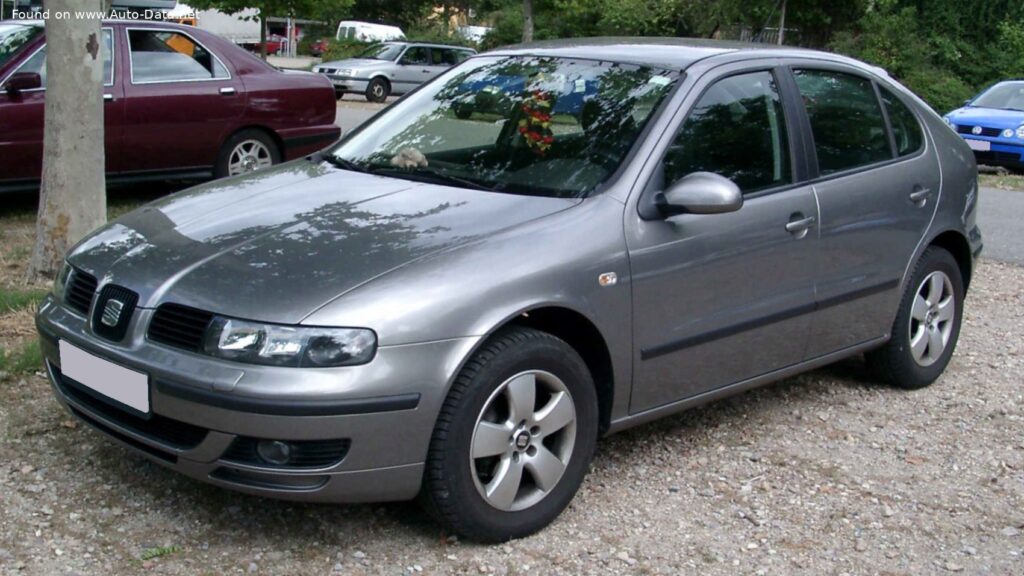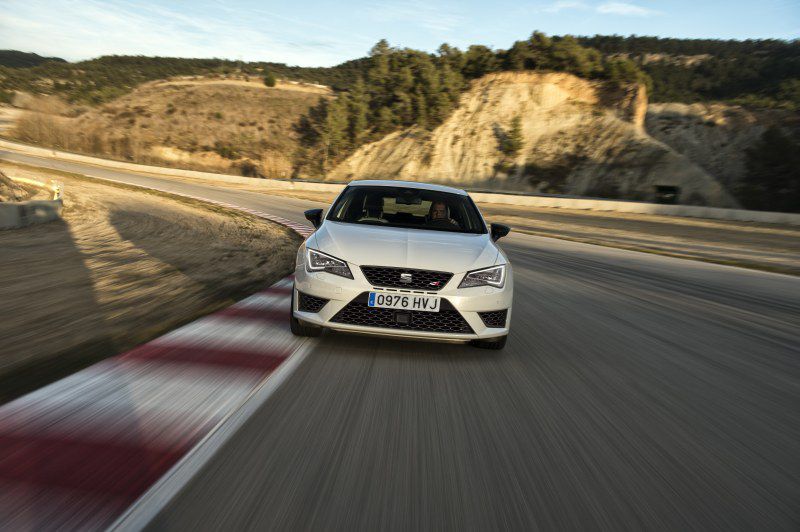
The Seat Leon III SC FR 1.4 TSI (150 Hp) ACT start/stop represents a compelling blend of sportiness, efficiency, and advanced technology within the compact segment of the European automotive market. Produced by the Spanish marque Seat, a subsidiary of the Volkswagen Group, this particular variant of the third-generation Leon was available from May 2014 to 2016. As a three-door Sport Coupe (SC), it carved out a niche for buyers seeking a more dynamic and visually assertive alternative to its five-door hatchback sibling, without sacrificing the practicality inherent in the Leon family. While Seat vehicles are not officially sold in the United States, their engineering and market positioning offer a fascinating insight into the diverse preferences and regulatory landscapes of the global automotive industry. This model, with its potent yet economical 1.4-liter TSI engine and advanced features like Active Cylinder Technology (ACT), epitomized the modern European compact performance vehicle, balancing spirited driving dynamics with impressive fuel economy and lower emissions, adhering to the stringent Euro 6 standard.
Engine and Performance: The Heart of the Seat Leon III SC FR 1.4 TSI (150 Hp) ACT start/stop
At the core of the Seat Leon III SC FR 1.4 TSI (150 Hp) ACT start/stop lies a sophisticated powertrain designed for both spirited acceleration and remarkable efficiency. The engine, designated by the code CZEA, is a 1.4-liter (1395 cm3 or 85.13 cu. in.) inline four-cylinder unit, transversely mounted at the front. This direct-injection gasoline engine is boosted by a turbocharger and intercooler, ensuring a robust power delivery across a wide rev range. It produces a maximum output of 150 horsepower (Hp) between 5000 and 6000 rpm, delivering a power-to-liter ratio of 107.5 Hp/l, which is commendable for its displacement.
More impressive, perhaps, is the torque output: 250 Nm, or 184.39 lb.-ft., available from a low 1500 rpm and sustained up to 3500 rpm. This broad torque band is crucial for responsive acceleration in everyday driving and contributes significantly to the car’s dynamic feel. The power is efficiently transmitted to the front wheels via a precise 6-speed manual transmission, offering an engaging driving experience. Performance figures underscore this capability, with the Leon III SC FR accelerating from 0 to 60 mph in a brisk 7.8 seconds, and reaching a top speed of 133.59 mph (215 km/h).
Beyond raw performance, this engine is a technological showcase for efficiency. The inclusion of Active Cylinder Technology (ACT) is a standout feature. This system allows the engine to deactivate two of its four cylinders under light to moderate loads, effectively reducing fuel consumption and emissions. Combined with the Start/Stop system, which automatically shuts off the engine when the vehicle is stationary and restarts it upon clutch engagement, the 1.4 TSI achieves impressive fuel economy. The combined cycle consumption is rated at 4.7 liters per 100 kilometers, translating to an excellent 50 US mpg. Even in urban driving, it achieves 40.6 US mpg, and on the highway, it can reach an outstanding 56 US mpg. These figures, coupled with CO2 emissions of just 109 g/km, highlight its compliance with the Euro 6 emission standard, making it an environmentally conscious choice for its time.
Design and Features: Sport Coupe Aesthetics and Modern Practicality
The Seat Leon III SC FR distinguishes itself with its “SC” designation, signifying a Sport Coupe body type. This three-door configuration, while sometimes less practical than a five-door, lends the vehicle a distinctly sportier and more dynamic profile. With an overall length of 166.77 inches (4236 mm), a width of 71.26 inches (1810 mm), and a height of 56.34 inches (1431 mm), the Leon SC appears squat and purposeful. Its shorter wheelbase of 102.32 inches (2599 mm) compared to the five-door Leon further contributes to its agile handling characteristics and compact, athletic stance.
The FR trim level typically denotes a sport-oriented package, which in the Leon SC would have included distinctive exterior styling cues such as unique alloy wheels, a more aggressive front bumper, and possibly a rear spoiler. Inside, the FR treatment usually brings sport seats, a flat-bottom steering wheel, and bespoke trim accents that elevate the cabin’s sporty ambiance. The interior is designed to comfortably accommodate five occupants, despite the three-door layout, offering a balance between sportiness and everyday usability. The trunk space is respectable for a compact coupe, offering a minimum of 13.42 cubic feet (380 liters), which can be expanded to a generous 40.61 cubic feet (1150 liters) with the rear seats folded, providing ample versatility for luggage or cargo.
In terms of driver assistance and safety, the Leon III SC FR was equipped with essential systems like ABS (Anti-lock Braking System), a fundamental safety feature for modern vehicles. As part of the Volkswagen Group, it would have benefited from a robust chassis and structural integrity. The steering system, a rack and pinion setup, ensures precise and direct feedback, contributing to the engaging driving experience characteristic of the FR trim. The Kerb Weight of 2669.8 lbs (1211 kg) contributes to its agile feel, providing a favorable weight-to-power ratio of 8.1 kg/Hp. This combination of design, performance, and practical features made the Seat Leon III SC FR 1.4 TSI (150 Hp) ACT start/stop a highly competitive and desirable option in the European hot hatch and compact coupe segments, appealing to drivers who sought a blend of style, efficiency, and driving pleasure.
Technical Specifications
| Brand | Seat |
| Model | Leon |
| Generation | Leon III SC |
| Type (Engine) | FR 1.4 TSI (150 Hp) ACT start/stop |
| Start of production | May, 2014 |
| End of production | 2016 |
| Powertrain Architecture | Internal Combustion engine |
| Body type | Coupe |
| Seats | 5 |
| Doors | 3 |
| Fuel consumption (economy) – urban | 5.8 l/100 km (40.6 US mpg) |
| Fuel consumption (economy) – extra urban | 4.2 l/100 km (56 US mpg) |
| Fuel consumption (economy) – combined | 4.7 l/100 km (50 US mpg) |
| CO2 emissions | 109 g/km |
| Fuel Type | Petrol (Gasoline) |
| Acceleration 0 – 60 mph | 7.8 sec |
| Maximum speed | 133.59 mph (215 km/h) |
| Emission standard | Euro 6 |
| Weight-to-power ratio | 8.1 kg/Hp (123.9 Hp/tonne) |
| Weight-to-torque ratio | 4.8 kg/Nm (206.4 Nm/tonne) |
| Power | 150 Hp @ 5000-6000 rpm |
| Power per liter | 107.5 Hp/l |
| Torque | 250 Nm (184.39 lb.-ft.) @ 1500-3500 rpm |
| Engine layout | Front, Transverse |
| Engine Model/Code | CZEA |
| Engine displacement | 1395 cm3 (1.4 liters / 85.13 cu. in.) |
| Number of cylinders | 4 |
| Engine configuration | Inline |
| Cylinder Bore | 74.5 mm (2.93 in.) |
| Piston Stroke | 80 mm (3.15 in.) |
| Compression ratio | 10.5:1 |
| Number of valves per cylinder | 4 |
| Fuel injection system | Direct injection |
| Engine aspiration | Turbocharger, Intercooler |
| Engine oil capacity | 4 liters (4.23 US qt) |
| Coolant | 8 liters (8.45 US qt) |
| Engine systems | Start & Stop System, Cylinder deactivation system |
| Kerb Weight | 1211 kg (2669.8 lbs) |
| Max. weight | 1740 kg (3836.04 lbs) |
| Max load | 529 kg (1166.25 lbs) |
| Trunk (boot) space – minimum | 380 liters (13.42 cu. ft.) |
| Trunk (boot) space – maximum | 1150 liters (40.61 cu. ft.) |
| Fuel tank capacity | 50 liters (13.21 US gal) |
| Length | 4236 mm (166.77 in.) |
| Width | 1810 mm (71.26 in.) |
| Height | 1431 mm (56.34 in.) |
| Wheelbase | 2599 mm (102.32 in.) |
| Front track | 1534 mm (60.39 in.) |
| Rear (Back) track | 1508 mm (59.37 in.) |
| Drivetrain Architecture | Internal combustion engine drives the front wheels |
| Drive wheel | Front wheel drive |
| Number of gears and type of gearbox | 6 gears, manual transmission |
| Assisting systems | ABS (Anti-lock braking system) |
| Steering type | Steering rack and pinion |