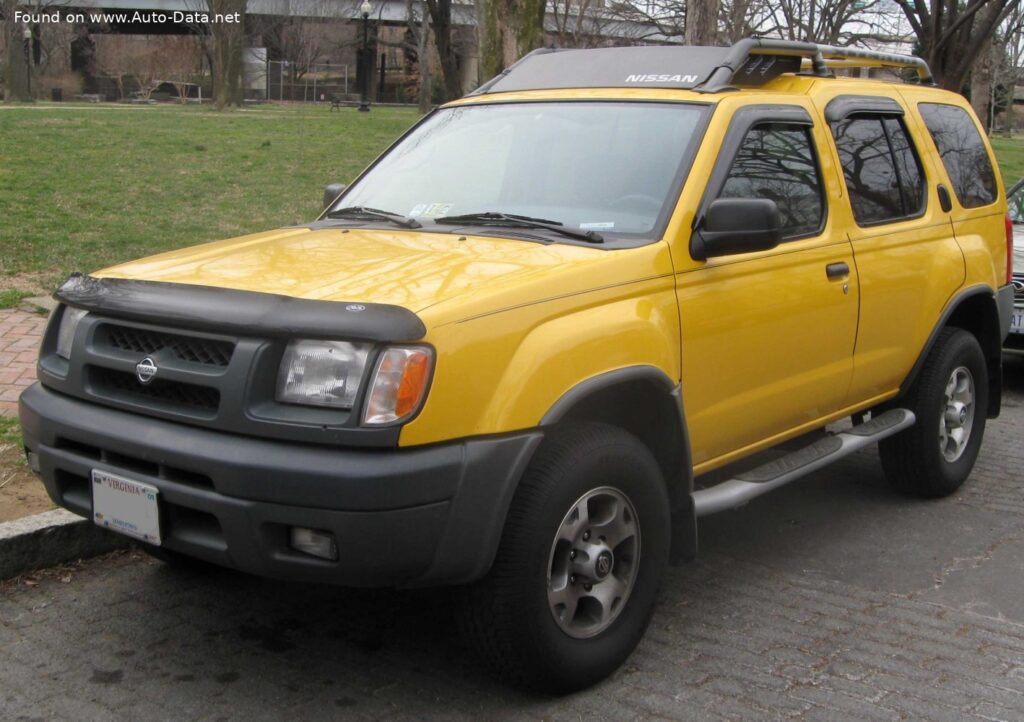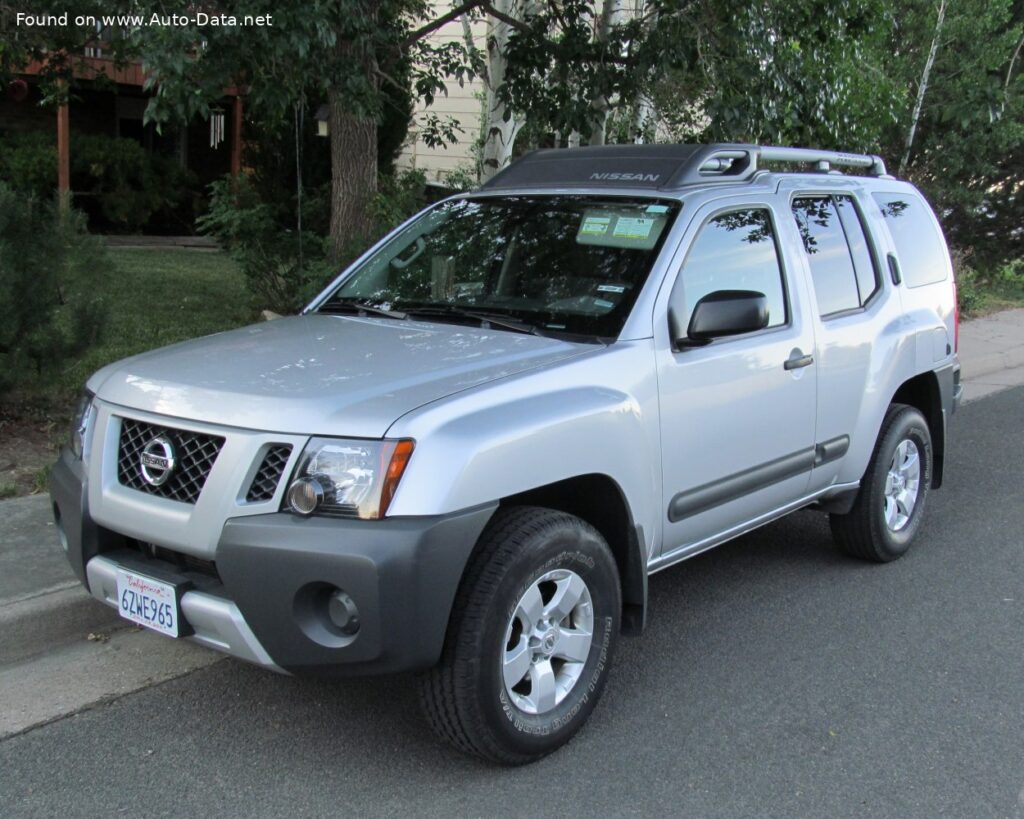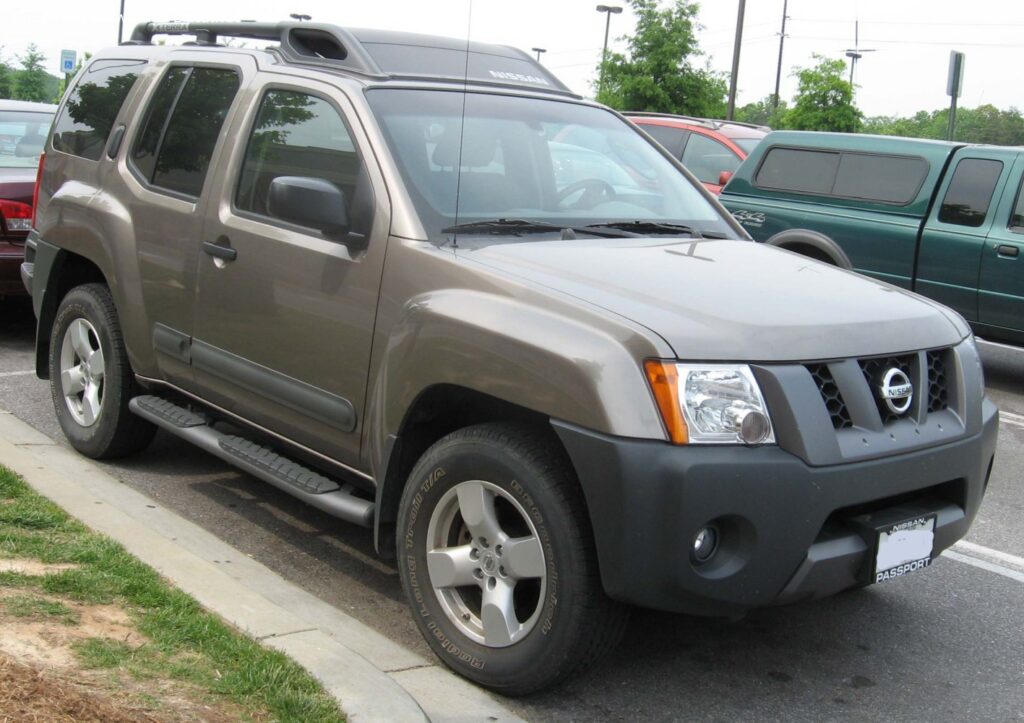
The Nissan Xterra II 4.0 V6 (265 Hp) Automatic represents a pivotal chapter in the evolution of purpose-built sport utility vehicles, specifically catering to the North American market’s demand for rugged, off-road capable transport. Launched in 2005, this second-generation Xterra built upon the success of its predecessor, solidifying its reputation as a no-nonsense adventure machine. Produced until 2008 in this specific configuration, the Xterra II was designed from the ground up to tackle challenging terrains while offering a practical, durable package for daily use. It squarely positioned itself in the mid-size SUV segment, appealing to outdoor enthusiasts and those seeking a vehicle that could confidently venture beyond paved roads.
The Nissan Xterra II: A Legacy of Off-Road Prowess
The Nissan Xterra II, introduced for the 2005 model year, marked a significant departure from its first-generation counterpart, migrating to Nissan’s then-new F-Alpha platform, a robust body-on-frame architecture shared with the contemporary Frontier pickup and Pathfinder SUV. This foundation immediately signaled its intent: superior durability and off-road capability. The 4.0 V6 (265 Hp) Automatic variant was a cornerstone of this generation, offering a potent blend of power and refined transmission for both challenging trails and highway cruising. Its production run from 2005 to 2008 saw it compete fiercely in a segment increasingly dominated by more car-like crossovers, yet the Xterra stubbornly maintained its authentic, truck-based SUV identity.
Powertrain and Performance Dynamics
At the heart of the Nissan Xterra II 4.0 V6 (265 Hp) Automatic lies the venerable VQ40DE engine, a 3954 cm³ (241.29 cu. in.) naturally aspirated V6 powerplant. This engine, a member of Nissan’s highly regarded VQ engine family, was engineered for robust performance and reliability. It delivers a substantial 265 horsepower at 5600 rpm, providing ample power for both spirited on-road acceleration and demanding off-road maneuvers. The engine’s strength is further amplified by its impressive torque output of 281.01 lb.-ft. (381 Nm) peaking at a relatively accessible 4000 rpm. This broad torque band is crucial for crawling over obstacles and confidently towing, characteristics highly valued by the Xterra’s target demographic.
The VQ40DE engine features a DOHC (Double Overhead Camshaft) valvetrain with 4 valves per cylinder, a compression ratio of 9.7:1, and a multi-port manifold injection system, all contributing to its efficient combustion and power delivery. With a power per liter rating of 67 Hp/l, it demonstrates a healthy balance of output for its displacement. The engine’s layout is front, longitudinal, which is typical for a rear-wheel-drive or four-wheel-drive truck-based platform, optimizing weight distribution and drivetrain efficiency. The engine oil capacity is 5.1 liters (5.39 US quarts), and it requires gasoline as its fuel type, meeting LEV2-LEV emission standards, reflecting Nissan’s commitment to environmental responsibility during its production era.
Power is transmitted to the rear wheels via a smooth and durable 5-speed automatic transmission, a fitting choice for an SUV designed for both daily driving and rugged use. While the specific model discussed here features rear-wheel drive, many Xterra II models were also available with advanced four-wheel-drive systems, further enhancing their off-road credentials. The vehicle’s weight-to-power ratio stands at a respectable 7.1 kg/Hp (140.3 Hp/tonne), indicating strong acceleration capabilities for its class. Fuel economy figures, while not the primary focus for a vehicle of this type, are competitive for its segment and era: 16 US mpg (14.7 l/100 km) in urban conditions and 22 US mpg (10.7 l/100 km) on the highway, facilitated by a generous 21.13 US gallon (80 liter) fuel tank, ensuring a decent cruising range for extended adventures.
Exterior and Interior Design Philosophy
The design of the Nissan Xterra II 4.0 V6 was unmistakably rugged and functional, reflecting its adventurous spirit. With a length of 178.7 inches (4539 mm), a width of 72.8 inches (1849 mm), and a height of 74.88 inches (1902 mm), it possessed a substantial and imposing presence. The 106.3-inch (2700 mm) wheelbase contributed to a stable ride, while the wide front and rear tracks of 61.81 inches (1570 mm) enhanced stability, particularly on uneven terrain. A defining characteristic was its elevated stance, offering a ground clearance ranging from 8.31 to 9.49 inches (211-241 mm), which was critical for navigating obstacles off-road.
The Xterra’s exterior styling was characterized by its distinctive “stepped roof” design, which not only provided additional headroom for rear passengers but also integrated a sturdy roof rack with a built-in gear basket, a practical feature for carrying outdoor equipment. Large, flared wheel arches accommodated robust tire sizes, including 265/75 R16 or 265/65 R17, underscoring its off-road readiness. The vehicle’s approach angle (30.5-33.2°), departure angle (27.3-29.4°), and ramp-over angle (22.1-24.6°) were impressive for a production SUV, allowing it to navigate steep inclines, descents, and crests with confidence. The body type is a traditional 5-door SUV, comfortably seating five occupants, providing versatile passenger and cargo carrying capabilities.
Inside, the Xterra II prioritized utility and durability. The cabin featured hard-wearing materials designed to withstand the rigors of an active lifestyle. Practicality was paramount, with numerous storage compartments and easy-to-clean surfaces. The cargo area was exceptionally versatile, offering a minimum trunk space of 35.21 cu. ft. (997 liters) and expanding to a cavernous 65.69 cu. ft. (1860 liters) with the rear seats folded, making it ideal for hauling camping gear, sports equipment, or supplies for an expedition. The vehicle also boasted a substantial permitted trailer load with brakes of 5000.08 lbs. (2268 kg), further extending its utility for towing boats, ATVs, or small trailers.
Chassis, Drivetrain, and Off-Road Capability
The Nissan Xterra II’s robust chassis and drivetrain architecture were fundamental to its identity as a serious off-road contender. The vehicle’s rear-wheel-drive configuration (with available four-wheel-drive options not detailed in this specific data set) provided a solid foundation, leveraging the torque of the VQ40DE engine effectively. Braking performance was handled by ventilated discs at both the front and rear, complemented by an Anti-lock Braking System (ABS) for enhanced control during emergency stops or on slippery surfaces. The steering system utilized a hydraulic rack and pinion setup, offering a direct and communicative feel, which is beneficial for precise steering control, especially in off-road scenarios.
The Xterra II’s design emphasized durability and capability, with features tailored for the demanding conditions of off-road driving. Its sturdy suspension components, combined with the significant ground clearance and favorable approach/departure angles, allowed it to traverse challenging terrain where many other SUVs would falter. The overall architecture was a testament to Nissan’s engineering prowess in creating a vehicle that could seamlessly transition from urban commuting to wilderness exploration, offering reliability and confidence to its drivers. The Xterra II’s design and mechanical specifications underscore its role as a true utility vehicle, built to endure and perform.
Technical Specifications of the Nissan Xterra II 4.0 V6 (265 Hp) Automatic
| Brand | Nissan |
| Model | Xterra |
| Generation | Xterra II |
| Type (Engine) | 4.0 V6 (265 Hp) Automatic |
| Start of production | 2005 year |
| End of production | 2008 year |
| Powertrain Architecture | Internal Combustion engine |
| Body type | SUV |
| Seats | 5 |
| Doors | 5 |
| Fuel consumption (urban) | 14.7 l/100 km (16 US mpg) |
| Fuel consumption (extra urban) | 10.7 l/100 km (22 US mpg) |
| Fuel Type | Petrol (Gasoline) |
| Emission standard | LEV2-LEV |
| Weight-to-power ratio | 7.1 kg/Hp (140.3 Hp/tonne) |
| Weight-to-torque ratio | 5 kg/Nm (201.7 Nm/tonne) |
| Power | 265 Hp @ 5600 rpm |
| Power per liter | 67 Hp/l |
| Torque | 381 Nm (281.01 lb.-ft.) @ 4000 rpm |
| Engine layout | Front, Longitudinal |
| Engine Model/Code | VQ40DE |
| Engine displacement | 3954 cm³ (241.29 cu. in.) |
| Number of cylinders | 6 |
| Engine configuration | V-engine |
| Cylinder Bore | 95.5 mm (3.76 in.) |
| Piston Stroke | 92 mm (3.62 in.) |
| Compression ratio | 9.7:1 |
| Number of valves per cylinder | 4 |
| Fuel injection system | Multi-port manifold injection |
| Engine aspiration | Naturally aspirated engine |
| Valvetrain | DOHC |
| Engine oil capacity | 5.1 l (5.39 US qt) |
| Coolant | 10.2 l (10.78 US qt) |
| Kerb Weight | 1889-1901 kg (4164.53 – 4190.99 lbs.) |
| Trunk (boot) space – minimum | 997 l (35.21 cu. ft.) |
| Trunk (boot) space – maximum | 1860 l (65.69 cu. ft.) |
| Fuel tank capacity | 80 l (21.13 US gal) |
| Permitted trailer load with brakes (12%) | 2268 kg (5000.08 lbs.) |
| Length | 4539 mm (178.7 in.) |
| Width | 1849 mm (72.8 in.) |
| Height | 1902 mm (74.88 in.) |
| Wheelbase | 2700 mm (106.3 in.) |
| Front track | 1570 mm (61.81 in.) |
| Rear (Back) track | 1570 mm (61.81 in.) |
| Ride height (ground clearance) | 211-241 mm (8.31 – 9.49 in.) |
| Approach angle | 30.5-33.2° |
| Departure angle | 27.3-29.4° |
| Ramp-over (brakeover) angle | 22.1-24.6° |
| Drivetrain Architecture | Internal combustion engine (ICE) drives the rear wheels |
| Drive wheel | Rear wheel drive |
| Number of gears and type of gearbox | 5 gears, automatic transmission |
| Front brakes | Ventilated discs |
| Rear brakes | Ventilated discs |
| Assisting systems | ABS (Anti-lock braking system) |
| Steering type | Steering rack and pinion |
| Power steering | Hydraulic Steering |
| Tires size | 265/75 R16; 265/65 R17 |