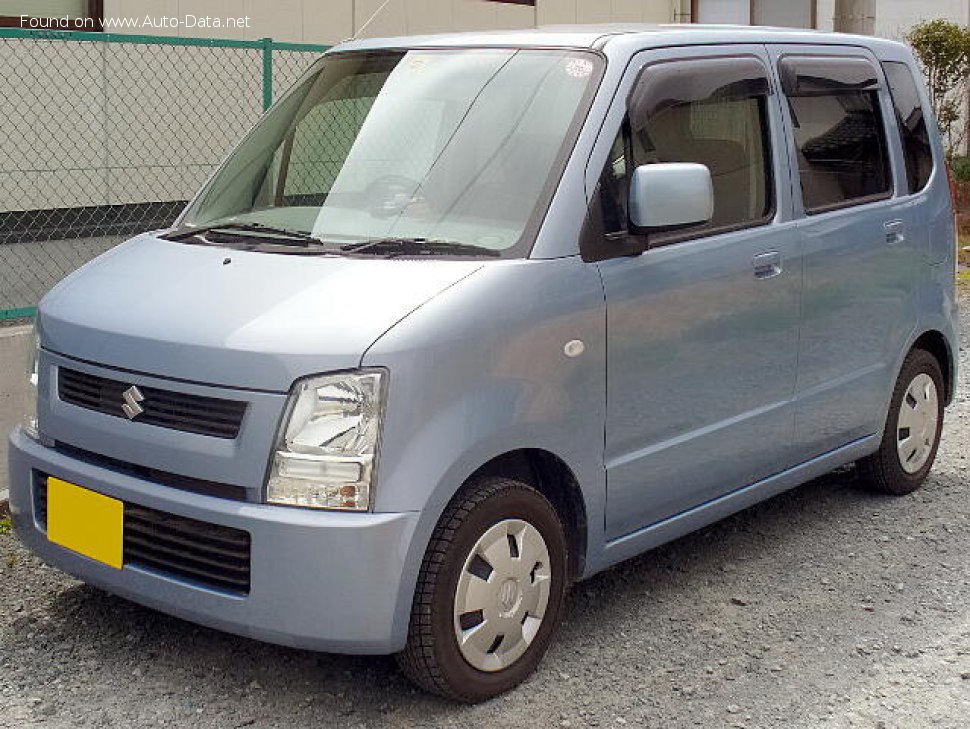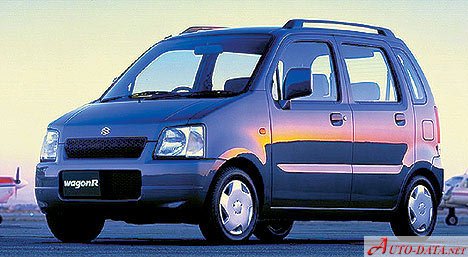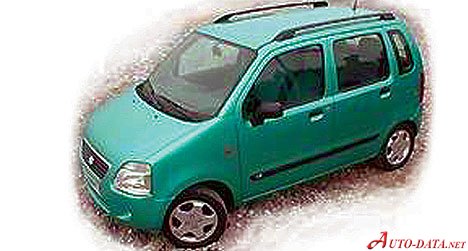
The Suzuki Wagon R+ (EM) represents a distinctive chapter in compact automotive design, particularly relevant to European and Asian markets where space efficiency and maneuverability are paramount. Launched in 1998, this specific generation, denoted by the EM chassis code, built upon the innovative “tallboy” concept pioneered by its Japanese Domestic Market (JDM) predecessor, the Wagon R. While never officially sold in the United States, the Wagon R+ carved a niche as a highly practical and economical mini-MPV (Multi-Purpose Vehicle), offering surprising interior volume within exceptionally compact exterior dimensions. The variant under scrutiny, the Suzuki Wagon R+ (EM) 1.0 i (69 Hp) 4×4, further distinguished itself by incorporating an all-wheel-drive system, enhancing its versatility and appeal in regions prone to challenging weather or varied terrain, all while adhering to the core principles of affordability and urban suitability.
Engineering and Performance of the Suzuki Wagon R+ (EM) 1.0 i (69 Hp) 4×4
At the heart of the 1998-2000 Suzuki Wagon R+ (EM) 1.0 i (69 Hp) 4×4 lies a compact yet remarkably efficient powertrain designed for balanced performance and fuel economy. This particular model is equipped with Suzuki’s K10A engine, a naturally aspirated, 997 cubic centimeter (approximately 1.0-liter) inline four-cylinder unit. Despite its modest displacement, the K10A engine was engineered with modern specifications for its time, featuring a multi-port manifold injection system and a four-valve-per-cylinder OHC (Overhead Camshaft) valvetrain. This configuration allowed for optimal fuel delivery and combustion, contributing to both its power output and efficiency.
The engine delivers a respectable 69 horsepower at a relatively high 7000 revolutions per minute (rpm), showcasing its free-revving nature. Torque output stands at 88 Newton-meters (64.91 lb.-ft.) peaking at 3500 rpm. These figures, while not indicative of high-performance, were entirely adequate for the vehicle’s intended purpose: urban commuting, light cargo hauling, and comfortable passenger transport. The power-to-weight ratio of 12.7 kg/Hp (78.9 Hp/tonne) and a torque-to-weight ratio of 9.9 kg/Nm (100.6 Nm/tonne) highlight the vehicle’s lightweight construction, which allowed it to feel more sprightly than its raw power figures might suggest. The engine’s compact size, with a cylinder bore of 68 mm and a piston stroke of 68.6 mm, combined with a 10:1 compression ratio, speaks to its efficient design.
Power is channeled to all four wheels via a robust 5-speed manual transmission, a choice that provides drivers with direct control over gear selection and contributes to the vehicle’s engaging driving character. The all-wheel-drive (4×4) system was a significant differentiator for the Wagon R+ in its segment. Unlike more complex or heavy AWD systems found in larger SUVs, Suzuki’s implementation was likely a simpler, lighter system designed to provide enhanced traction in slippery conditions, such as snow, ice, or unpaved roads, rather than for serious off-road excursions. This added capability broadened its appeal, especially in markets where such conditions are common. Performance figures include a top speed of 140 km/h (86.99 mph), which is more than sufficient for regional highways, and impressive fuel economy. The urban fuel consumption is rated at 7.6 liters per 100 kilometers (30.9 US mpg), while the extra-urban cycle achieves an even more frugal 5 liters per 100 kilometers (47 US mpg), underscoring its economical nature for daily driving.
Design, Features, and Practicality
The design philosophy behind the Suzuki Wagon R+ (EM) revolved around maximizing interior space and utility within a minimal footprint. Its minivan body type, often referred to as a “tallboy” design, is immediately recognizable by its upright stance and boxy silhouette. This design choice, though unconventional by American aesthetic standards of the time, was a stroke of genius for urban environments. The vehicle measures a mere 3410 mm (134.25 inches) in length, 1575 mm (62.01 inches) in width, and stands 1700 mm (66.93 inches) tall. These compact dimensions make it exceptionally agile and easy to park in crowded cityscapes, a crucial advantage in its primary markets.
Despite its diminutive external dimensions, the Wagon R+ offers seating for five occupants and features five doors, providing easy access for both passengers and cargo. The high roofline translates directly into generous headroom for all occupants, making the cabin feel far more spacious than its exterior might suggest. The vehicle’s practicality is further emphasized by its remarkable trunk (boot) space, which offers a minimum of 635 liters (22.42 cubic feet) – an astonishing figure for a vehicle of this size, highlighting the efficiency of its packaging. This cargo capacity, combined with the versatility of folding rear seats, made the Wagon R+ a highly capable vehicle for hauling groceries, luggage, or even small furniture items.
For its era, the Wagon R+ (EM) incorporated essential safety and convenience features. Standard equipment included an Anti-lock Braking System (ABS), a significant safety enhancement that helps prevent wheel lock-up during hard braking, allowing the driver to maintain steering control. The steering system utilized a rack and pinion setup, known for its direct feel and responsiveness, which contributed to the vehicle’s nimble handling characteristics. The compact 9.6-meter (31.5-foot) minimum turning circle further underscored its urban agility. The vehicle rode on 155/65 R13 tires mounted on 13-inch wheel rims, a practical choice that offered a balance of ride comfort and cost-effectiveness for tire replacement.
Chassis, Drivetrain, and Driving Dynamics
The chassis and suspension setup of the Suzuki Wagon R+ (EM) 1.0 i (69 Hp) 4×4 were engineered to provide a comfortable ride and stable handling, particularly for its primary role as an urban commuter with occasional excursions. The front suspension utilized a spring strut system, a common and effective design that balances ride comfort with precise steering response. At the rear, a torsion beam suspension was employed, known for its compact nature and ability to contribute to interior space maximization while still offering adequate handling characteristics for a vehicle of this type. This combination provided a compliant ride over varied road surfaces, absorbing bumps and imperfections effectively.
Braking performance was handled by ventilated discs at the front, offering superior heat dissipation and consistent stopping power, paired with disc brakes at the rear. The inclusion of disc brakes on all four wheels, especially for a vehicle in this segment and era, was a notable feature, enhancing overall braking efficiency and control, particularly when combined with the ABS system. The all-wheel-drive system, coupled with the manual transmission, provided a direct and engaging driving experience. While not designed for extreme off-roading, the 4×4 capability offered a significant advantage in adverse weather conditions, providing enhanced grip and stability on slippery roads. This made the Wagon R+ a more reassuring vehicle to drive in regions experiencing snow or heavy rain, or for navigating unpaved country roads that might challenge a conventional front-wheel-drive car.
The vehicle’s dimensions, including a wheelbase of 2335 mm (91.93 inches), a front track of 1360 mm (53.54 inches), and a rear track of 1355 mm (53.35 inches), contributed to its stable stance despite its tall profile. The kerb weight of 875 kg (1929.04 lbs.) was exceptionally light, further aiding fuel efficiency and maneuverability. With a maximum permissible weight of 1330 kg (2932.15 lbs.) and a maximum load capacity of 455 kg (1003.1 lbs.), the Wagon R+ demonstrated its capability to carry a substantial amount of passengers and cargo relative to its size. The fuel tank capacity of 42 liters (11.1 US gallons) provided a decent range, complementing its economical fuel consumption figures and suitability for longer journeys outside of urban centers.
Technical Specifications: Suzuki Wagon R+ (EM) 1.0 i (69 Hp) 4×4
| Brand | Suzuki |
| Model | Wagon R+ |
| Generation | Wagon R+ (EM) |
| Type (Engine) | 1.0 i (69 Hp) 4×4 |
| Start of production | 1998 year |
| End of production | 2000 year |
| Powertrain Architecture | Internal Combustion engine |
| Body type | Minivan |
| Seats | 5 |
| Doors | 5 |
| Fuel consumption (economy) – urban | 7.6 l/100 km (30.9 US mpg) |
| Fuel consumption (economy) – extra urban | 5 l/100 km (47 US mpg) |
| Fuel Type | Petrol (Gasoline) |
| Maximum speed | 140 km/h (86.99 mph) |
| Weight-to-power ratio | 12.7 kg/Hp, 78.9 Hp/tonne |
| Weight-to-torque ratio | 9.9 kg/Nm, 100.6 Nm/tonne |
| Power | 69 Hp @ 7000 rpm |
| Power per liter | 69.2 Hp/l |
| Torque | 88 Nm @ 3500 rpm (64.91 lb.-ft. @ 3500 rpm) |
| Engine layout | Front, Transverse |
| Engine Model/Code | K10A |
| Engine displacement | 997 cm3 (60.84 cu. in.) |
| Number of cylinders | 4 |
| Engine configuration | Inline |
| Cylinder Bore | 68 mm (2.68 in.) |
| Piston Stroke | 68.6 mm (2.7 in.) |
| Compression ratio | 10:1 |
| Number of valves per cylinder | 4 |
| Fuel injection system | Multi-port manifold injection |
| Engine aspiration | Naturally aspirated engine |
| Valvetrain | OHC |
| Engine oil capacity | 3.5 l (3.7 US qt) |
| Coolant | 3.5 l (3.7 US qt) |
| Kerb Weight | 875 kg (1929.04 lbs.) |
| Max. weight | 1330 kg (2932.15 lbs.) |
| Max load | 455 kg (1003.1 lbs.) |
| Trunk (boot) space – minimum | 635 l (22.42 cu. ft.) |
| Fuel tank capacity | 42 l (11.1 US gal) |
| Length | 3410 mm (134.25 in.) |
| Width | 1575 mm (62.01 in.) |
| Height | 1700 mm (66.93 in.) |
| Wheelbase | 2335 mm (91.93 in.) |
| Front track | 1360 mm (53.54 in.) |
| Rear (Back) track | 1355 mm (53.35 in.) |
| Minimum turning circle (turning diameter) | 9.6 m (31.5 ft.) |
| Drive wheel | All wheel drive (4×4) |
| Number of gears and type of gearbox | 5 gears, manual transmission |
| Front suspension | Spring Strut |
| Rear suspension | Torsion |
| Front brakes | Ventilated discs |
| Rear brakes | Disc |
| Assisting systems | ABS (Anti-lock braking system) |
| Steering type | Steering rack and pinion |
| Tires size | 155/65 R13 |
| Wheel rims size | 13 |